Day 390 to 401 – Side trip to Galapagos Islands, Ecuador
Day 402 to 409 – Layover @ Quito (bike/gear rebuild/acclimatization)
After a 4 month hiatus in the USA we returned with our bikes & gear to Quito, Ecuador, but before setting off again on the bicycles we decided to take a side trip to the Galapagos Islands. Visiting the Galapagos has been on our dream list for a long time but we never thought it would be attainable because (we thought) it was so costly. It wasn’t until we met a world traveler while sailing in the Caribbean from Panama to Colombia (to avoid the Darien Gap) that we learned the Galapagos could be done on a budget. Now while we are so close we decided to go for it!
We booked airline tickets out of Quito and it was a mere 2 hour flight to get to these iconic islands. In true nerdy fashion, prior to the trip we studied up on Darwin & the unique species of the Galapagos. We flew into the island of San Cristobal and stayed 3 nights, ferried to Santa Cruz where we stayed another 3 nights, ferried to Isabela for 4 nights and then back to Santa Cruz for an additional 2 nights before flying back to Quito. Our time in the Galapagos was fantastic, a great way to re-set our bodies and brains into the travel mind-set while observing unique and abundant wildlife.
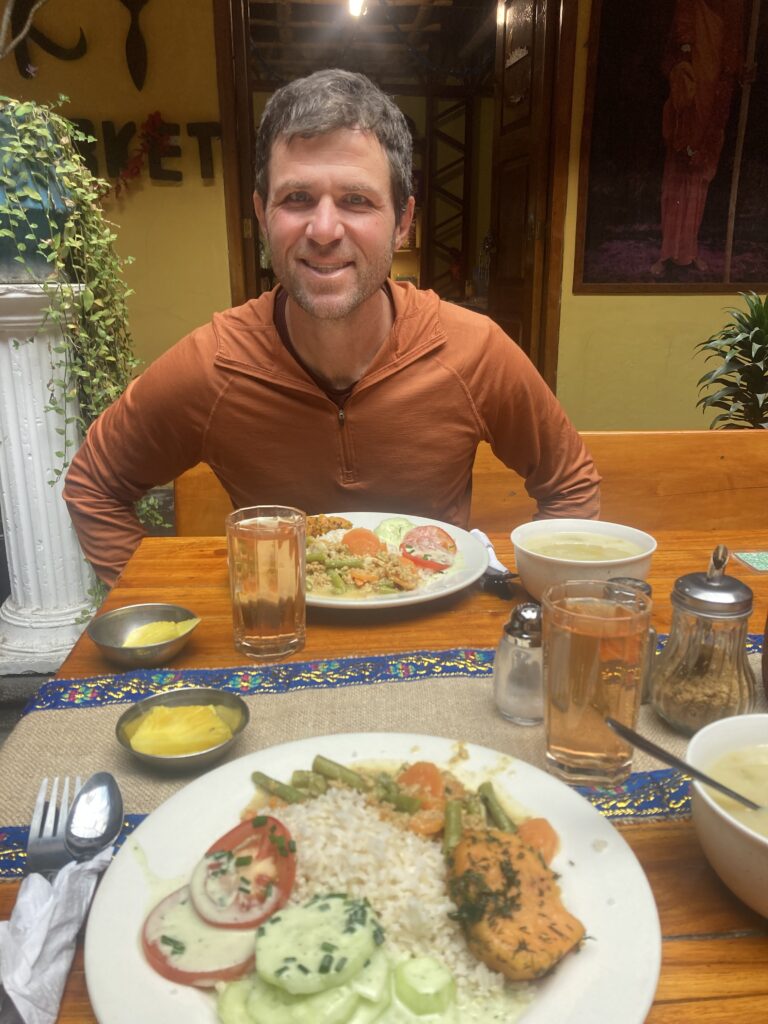
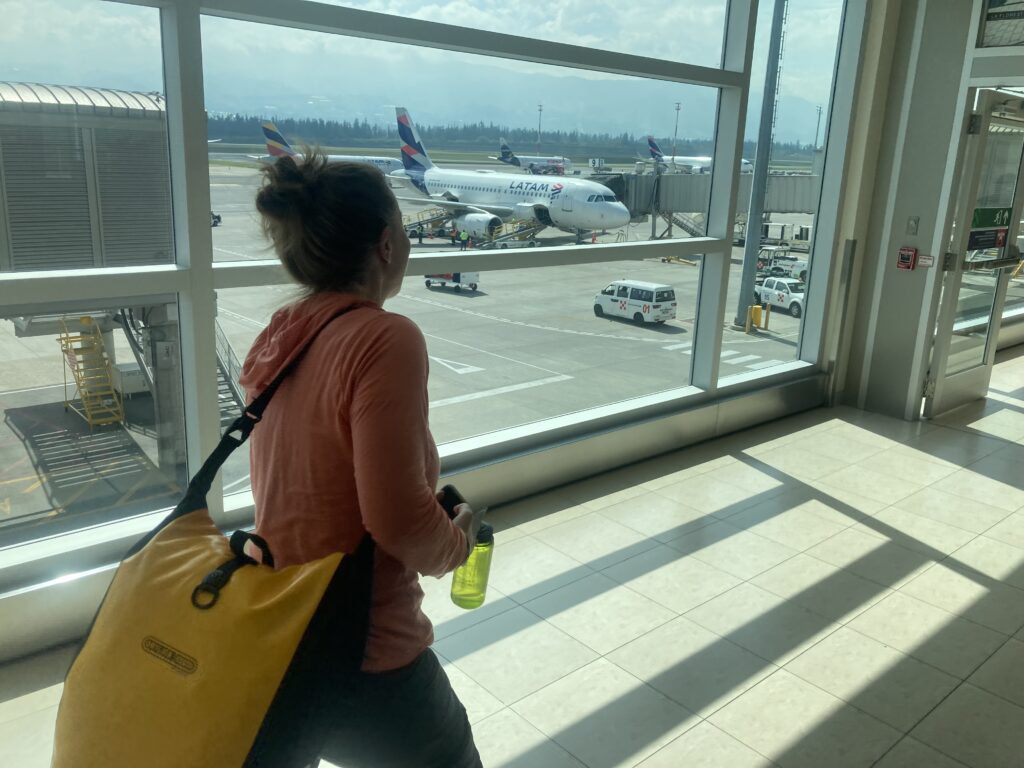
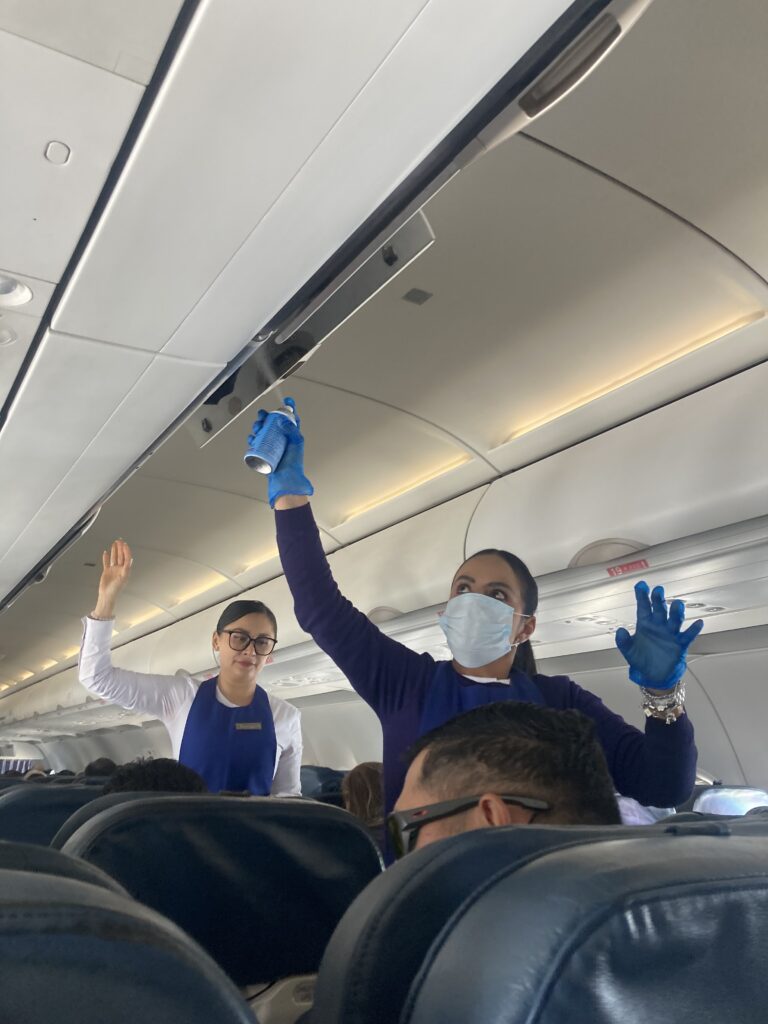
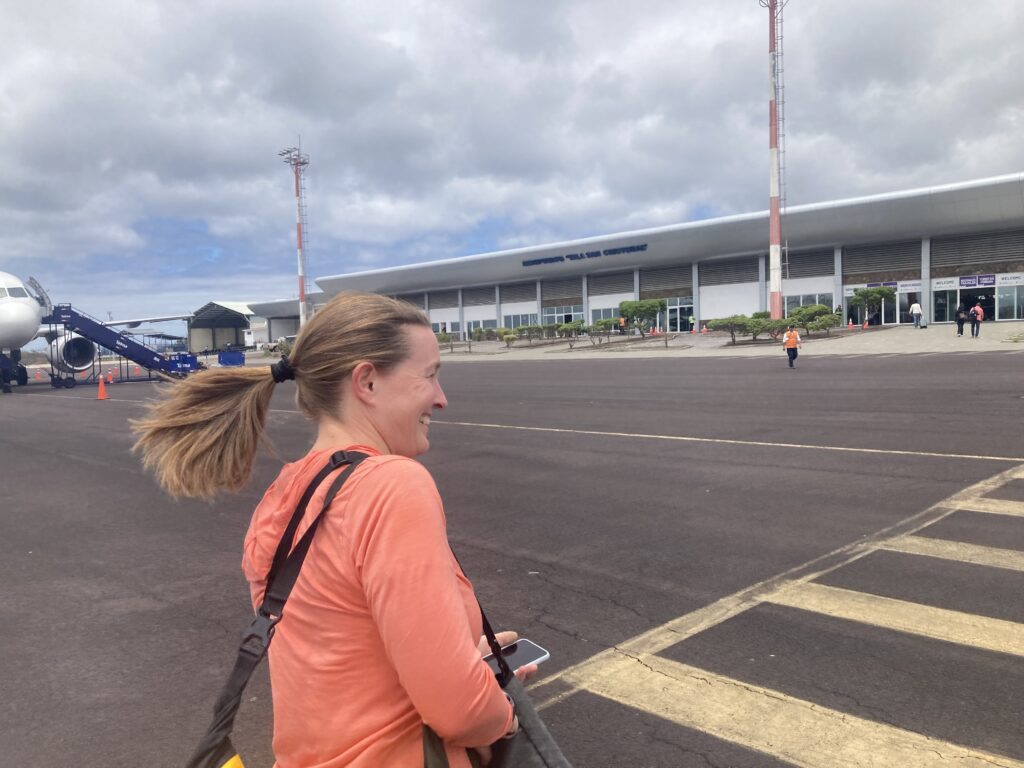
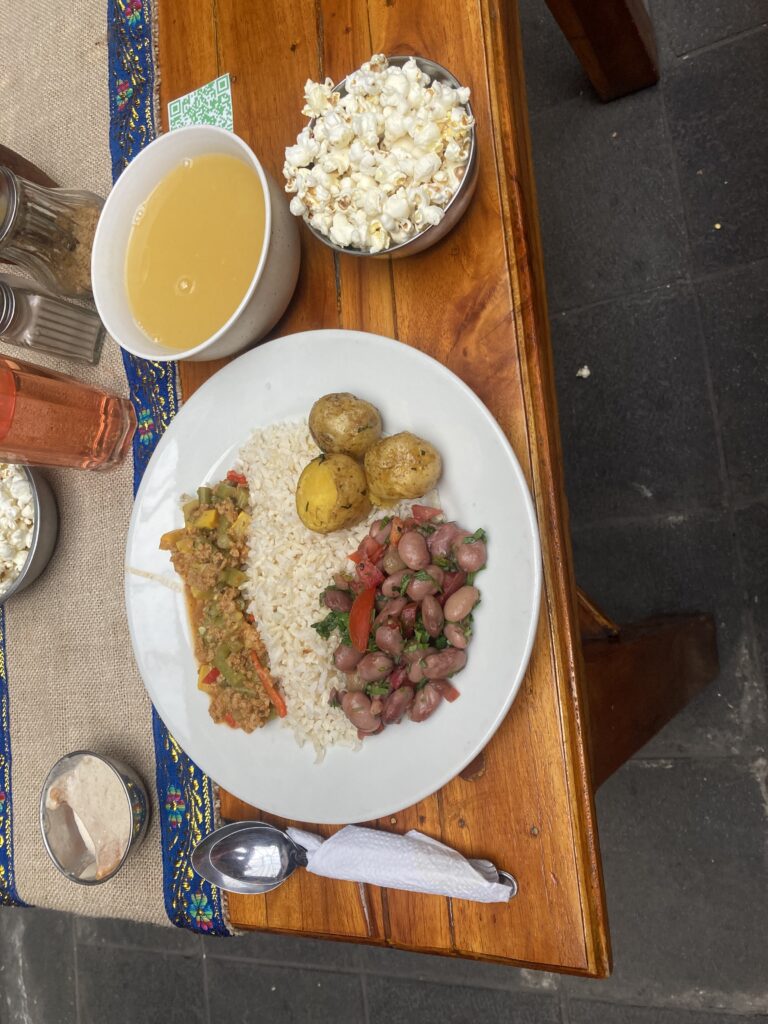
Before leaving Quito we went to our favorite “Menu del dia” with the Hare Krishnas 🙂 Back at the Quito airport but with way less luggage this time. “Wasn’t I here just two days ago?”In an attempt to prevent invasive species, the overhead luggage compartments were fumigated prior to landing in Galapagos – don’t worry it’s WHO approvedNo jet ways – they unloaded the plane from the front & rear by rolling staircases. Don’t step outside of that marked pedestrian areas or you’ll get yelled at, right Patricia?
San Cristobal
San Cristobal (pop 6,000) was the first island we visited – known for its large sea lion colony and long necked tortoises who must reach high into the trees for their food. San Cristobal is also home to a naval base who’s main purpose is conservation of the Galapagos Marine Reserve which stretches 40 miles out from the islands.
We were shocked at how close we could get to the animals without them being scared away – the national park requires you stay 2 meters from the animals but occasionally it was not possible to keep this distance as the animals were right on the trails.
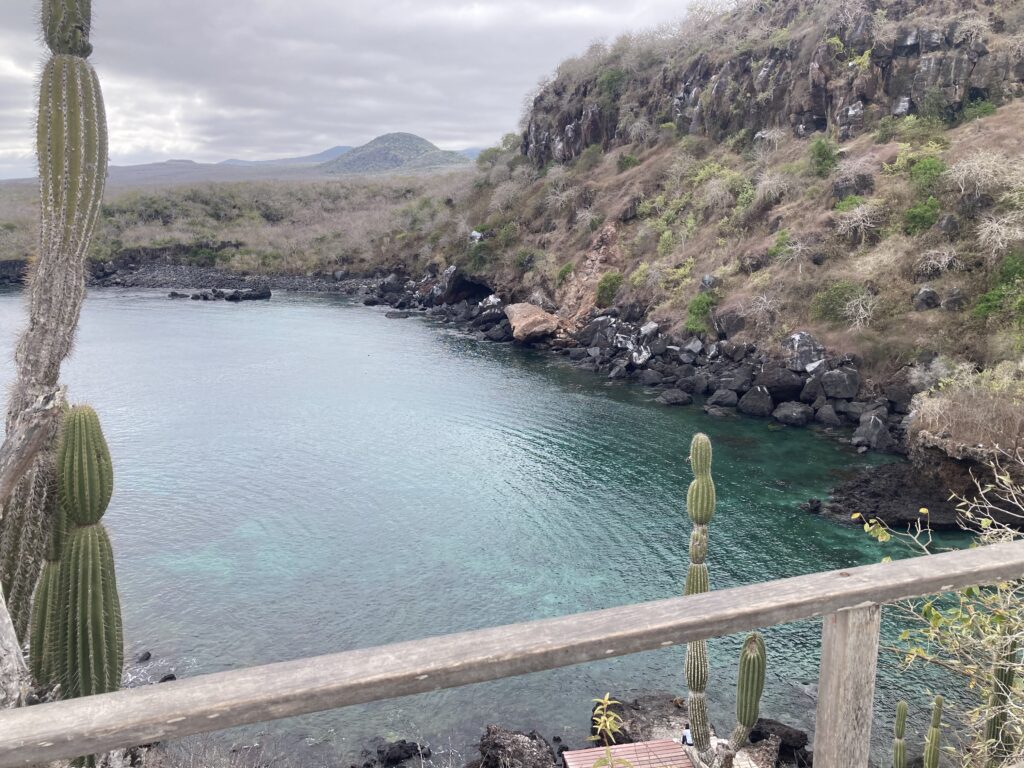
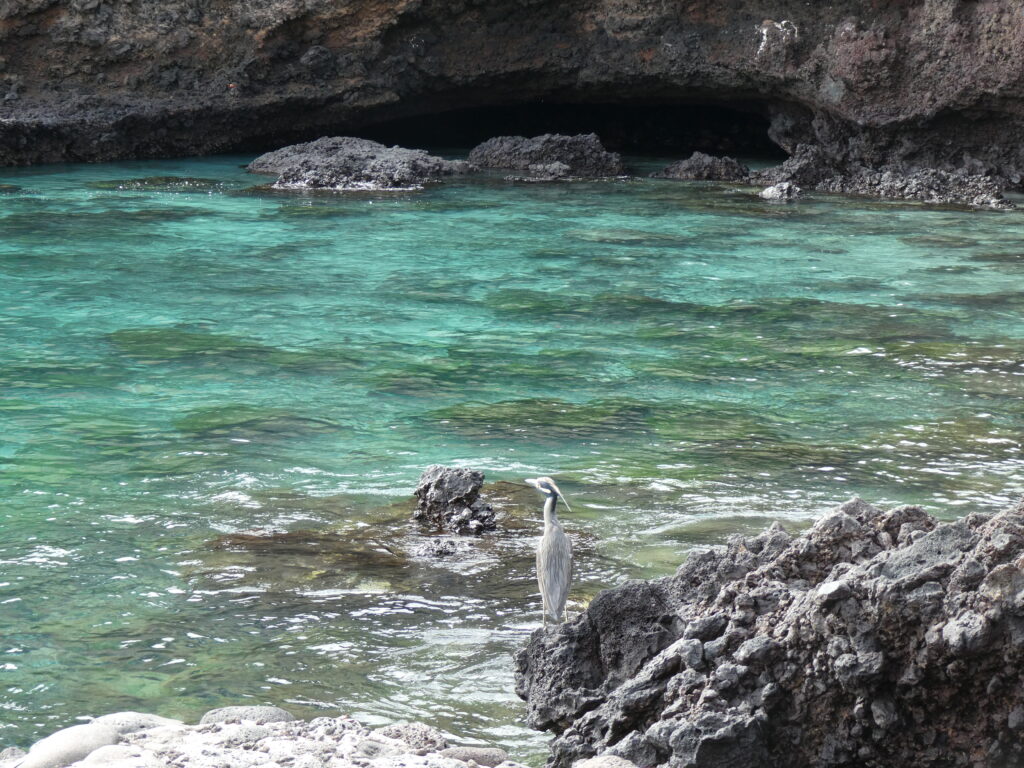
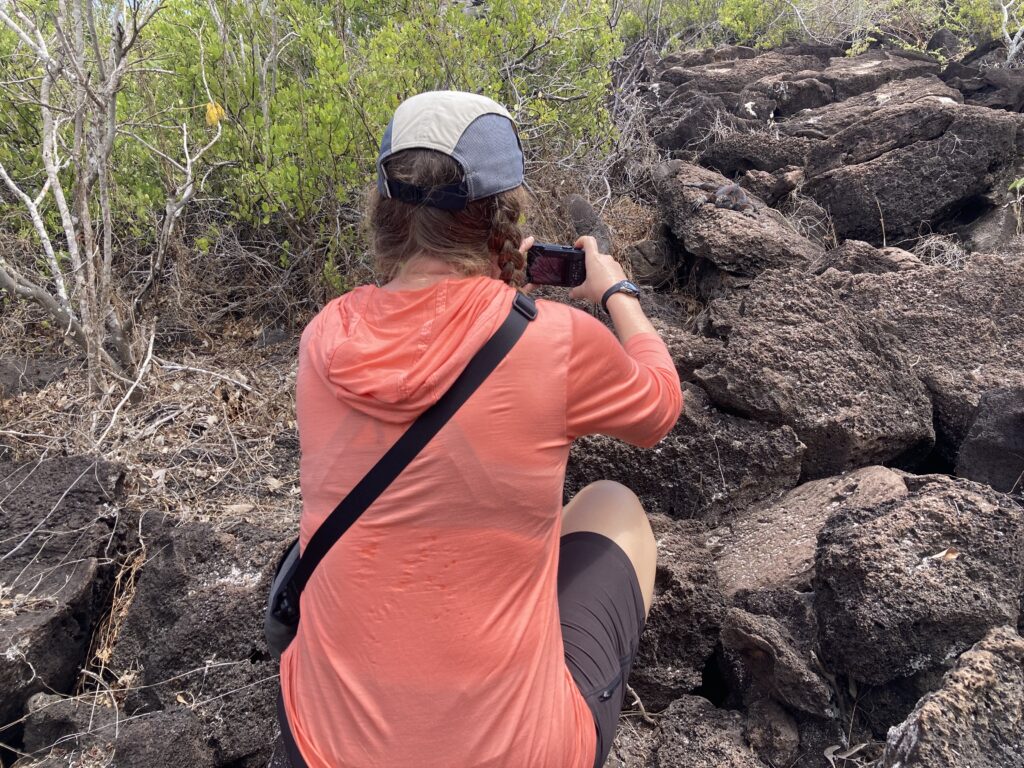
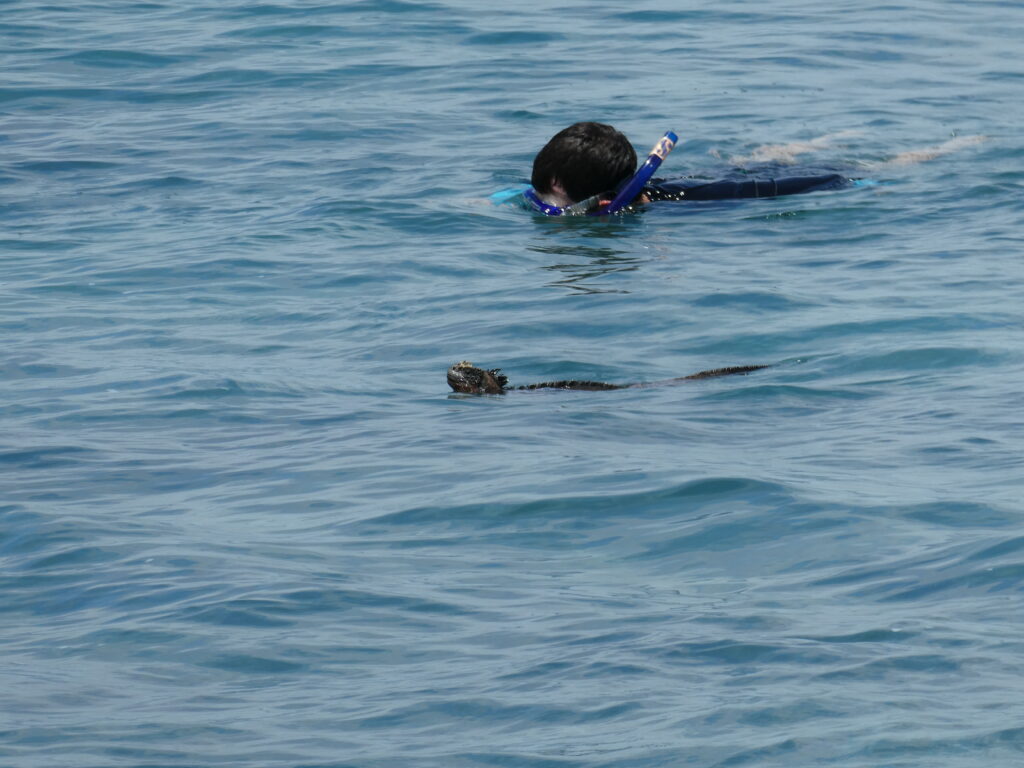
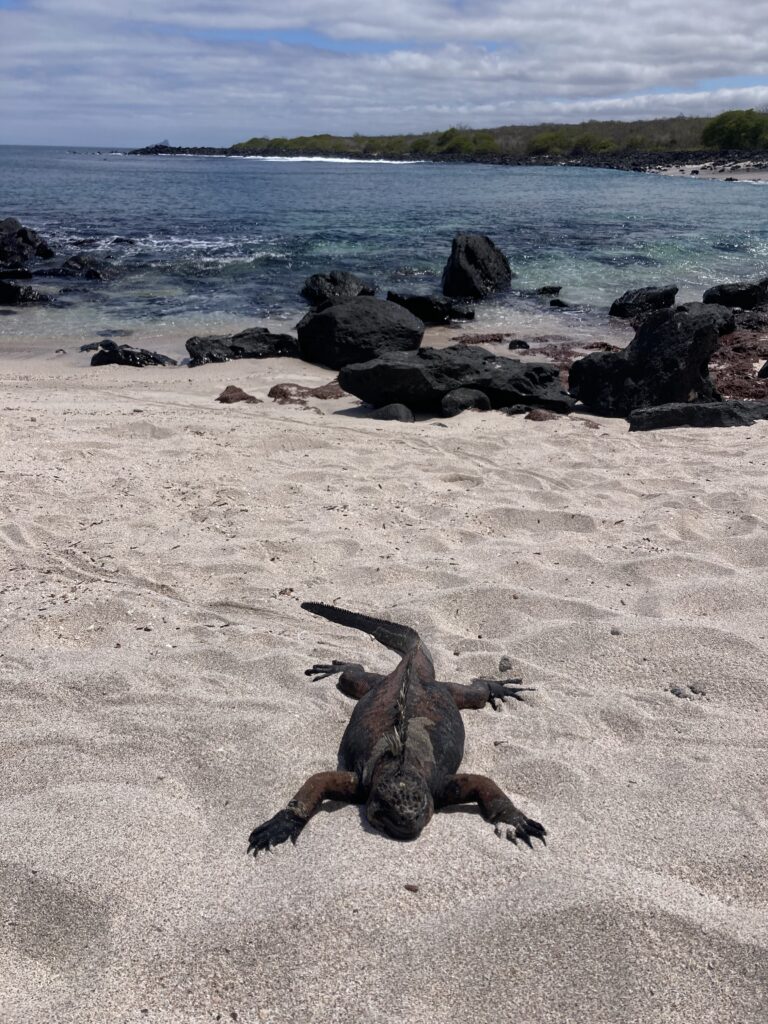
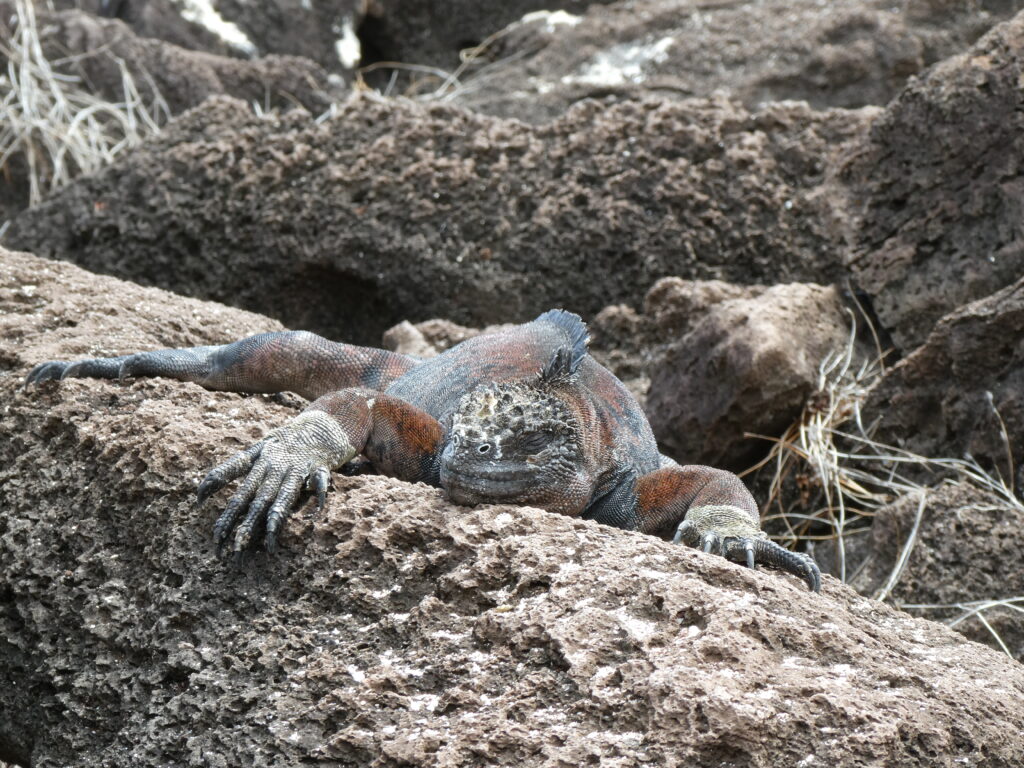
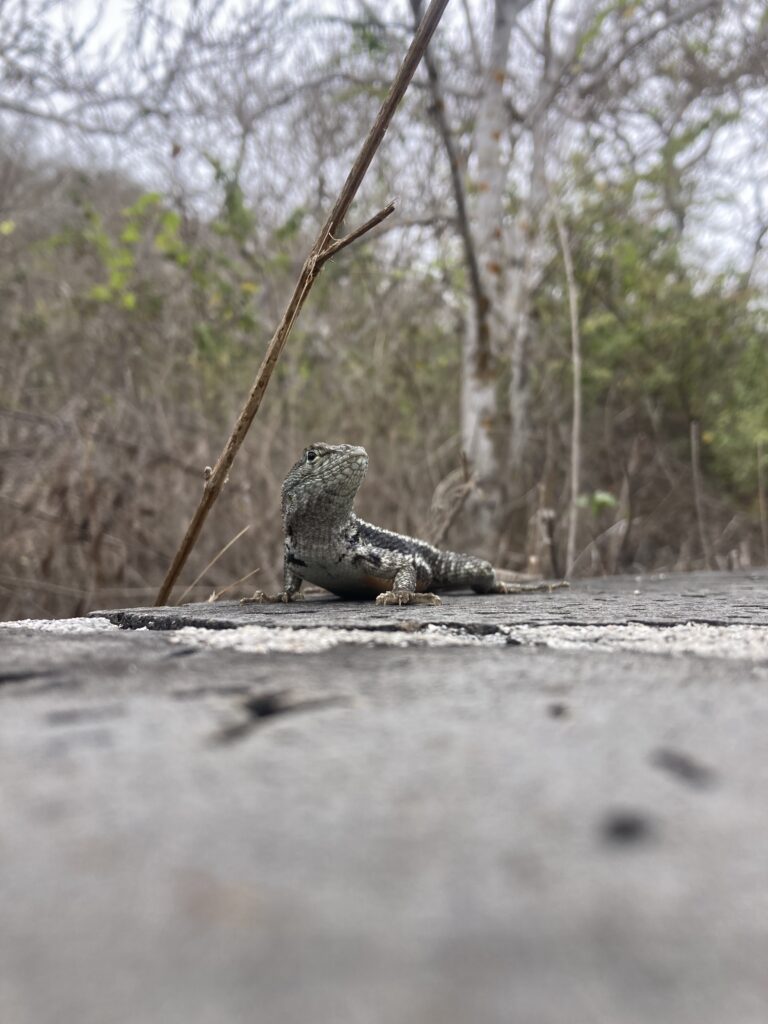
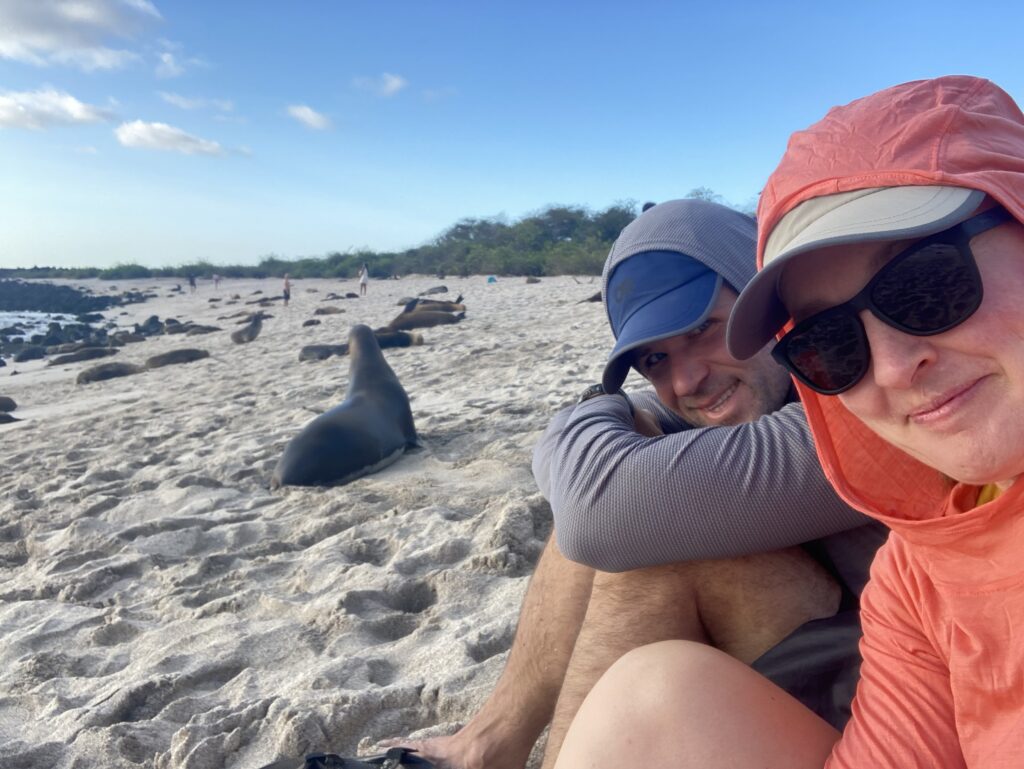
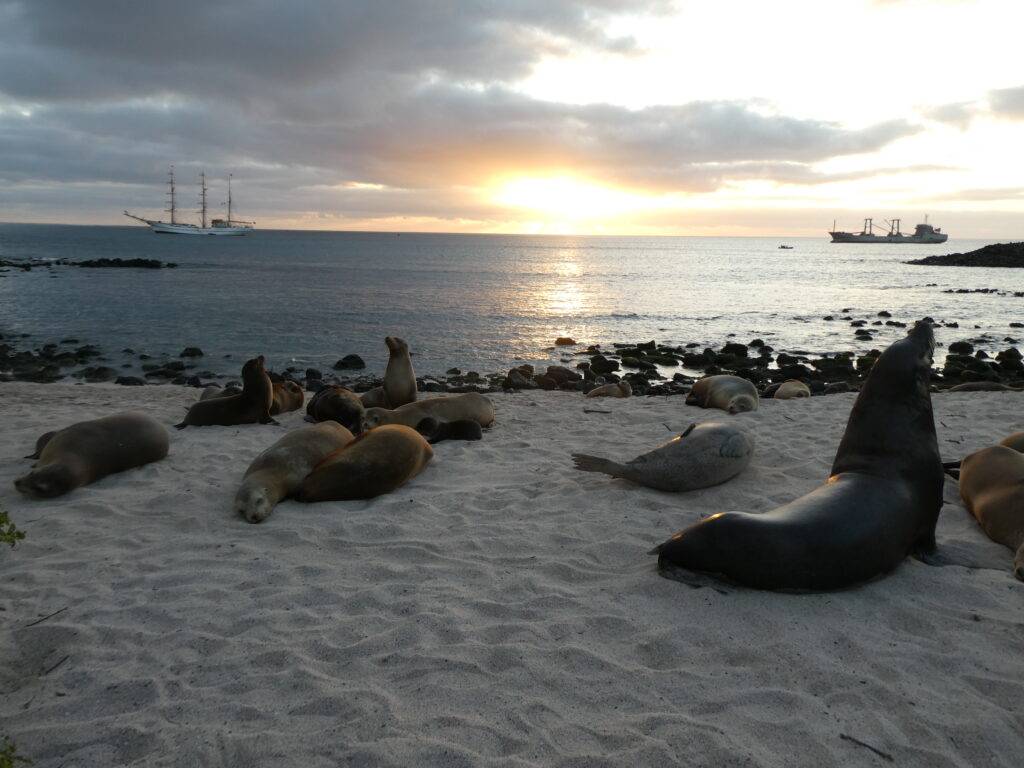
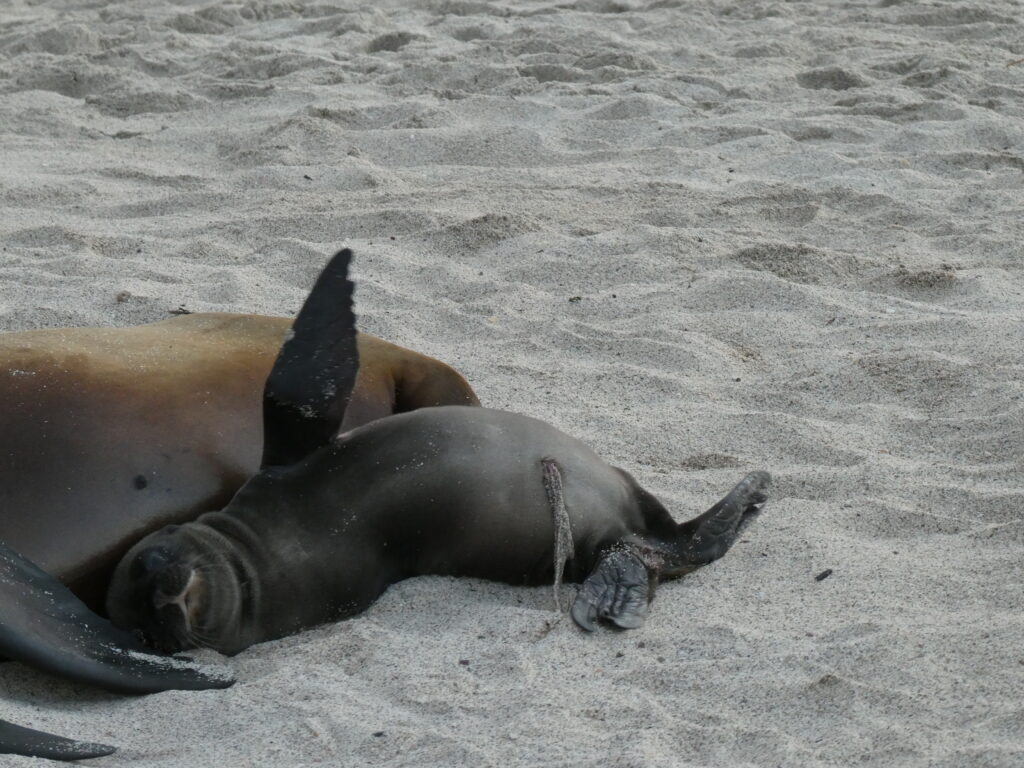
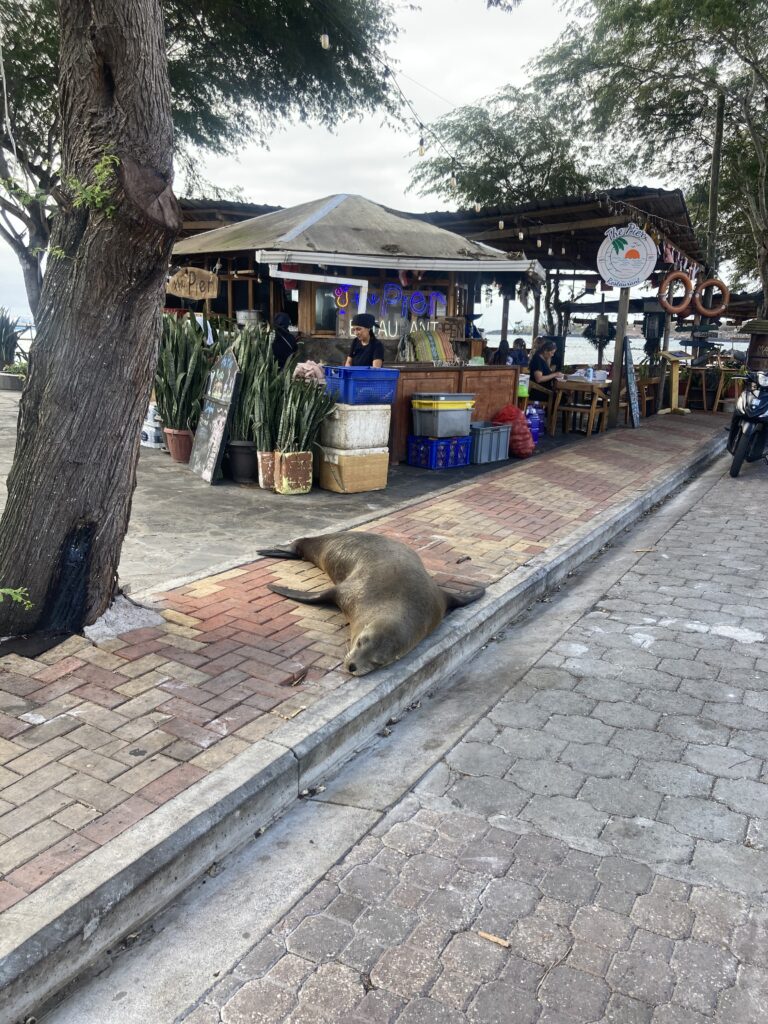
Our favorite snorkeling spot on San Cristobal, Muelle Tijeretas. We set an alarm and hiked here at sunrise to enjoy this bay entirely to ourselves for 2 hours…and then the cruise ship showed up just as we needed to change clothesYou know the snorkeling has to be good when a Galapagos Blue Heron is hunting in the same areaPatricia captures a marine iguana on the lava rock with the “real camera” – this large lava rock was our hiking trail to get to the Playa Baquerizo (a beach named after a former Vice President from Ecuador) Dustin snorkels next to a marine iguana – he was giddy to have seen them feed underwater. The marine iguana (endemic to the Galapagos) is famous for it’s evolutionary changes to allow for swimming, feeding on rocks, and consuming salt water.A marine iguana sun bathes after a swim to find foodThis marine iguana was taking a snooze on a lava rock as we hiked pastAs we hiked to various beaches along lava rock trails many lava lizards greeted usWe set down our towel away from any animals to watch the sunset at Playa Punta Carola and this male sea lion let us know he was guarding his territory with his loud barking – at one point we had to get up and let him have his space.Sunset at Playa Punta Carola on San Cristobal where the sea lions take over the beach – it was an amazing to simply sit and watch them interact, especially the alpha males who guarded their harem. This little pup still had the umbilical cord attached! This was quite the difficult picture to get as s/he kept squirming and nursing.On San Cristobal sea lions were everywhere – on sidewalks, in the street, on benches – people and cars simply moved around them.
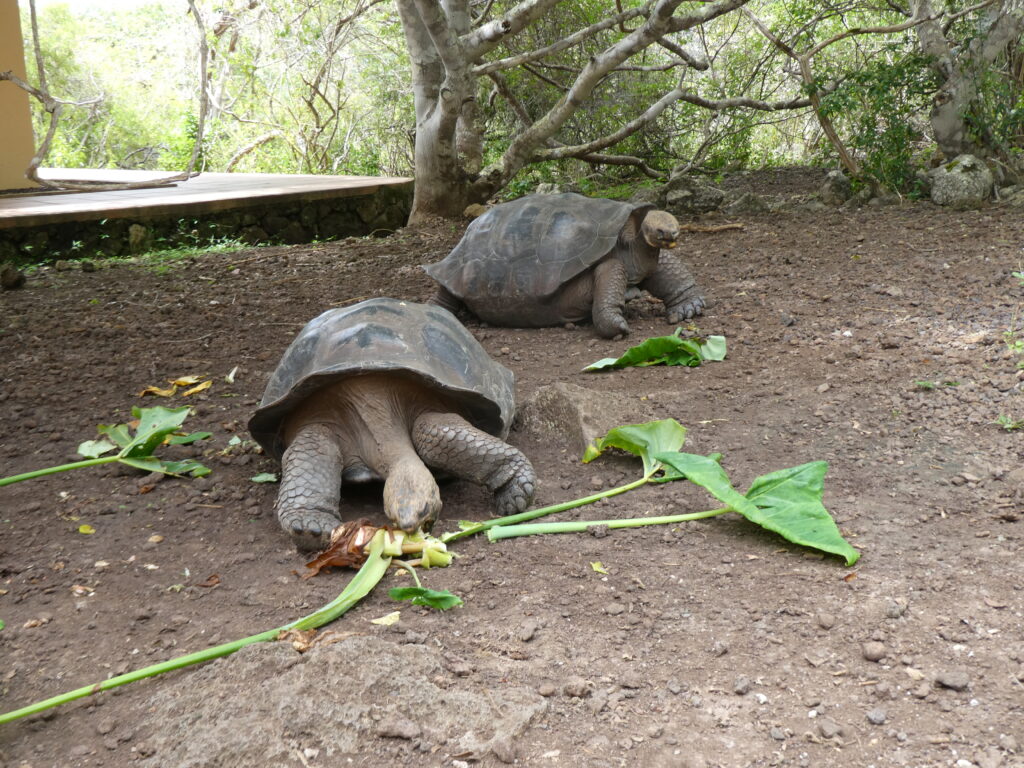
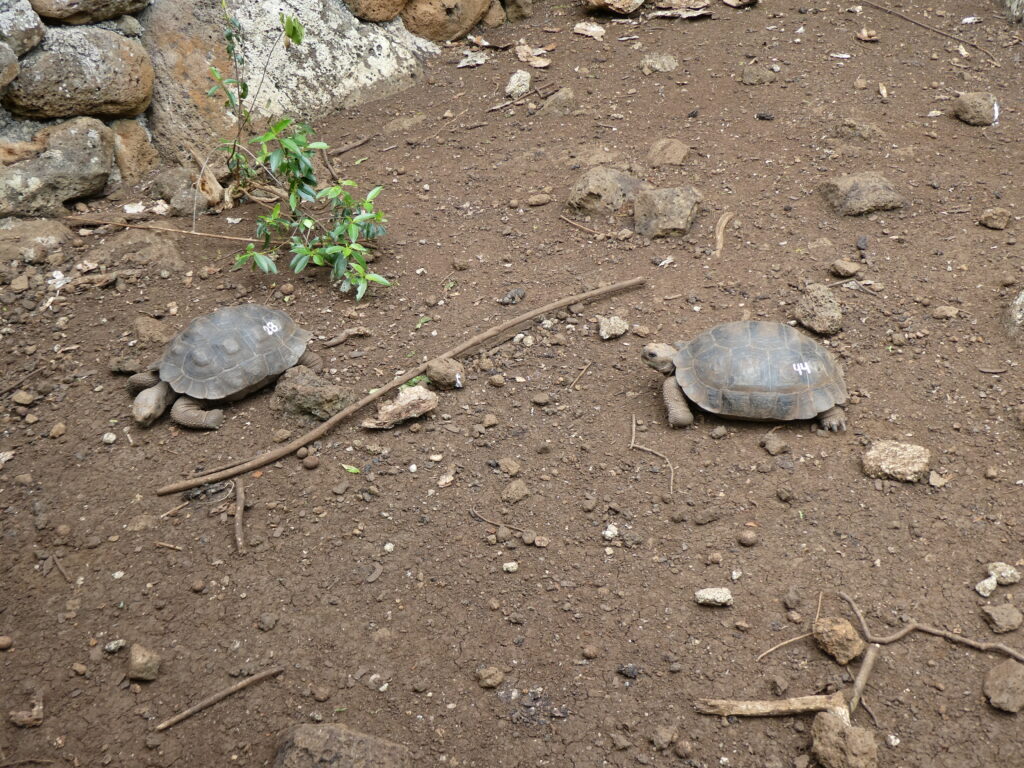
Each island we visited had a tortoise breeding center or reserve to help sustain the population of the Galapagos Giant Tortoise – they are threatened by invasive rats brought by ships that eat their eggs and young.
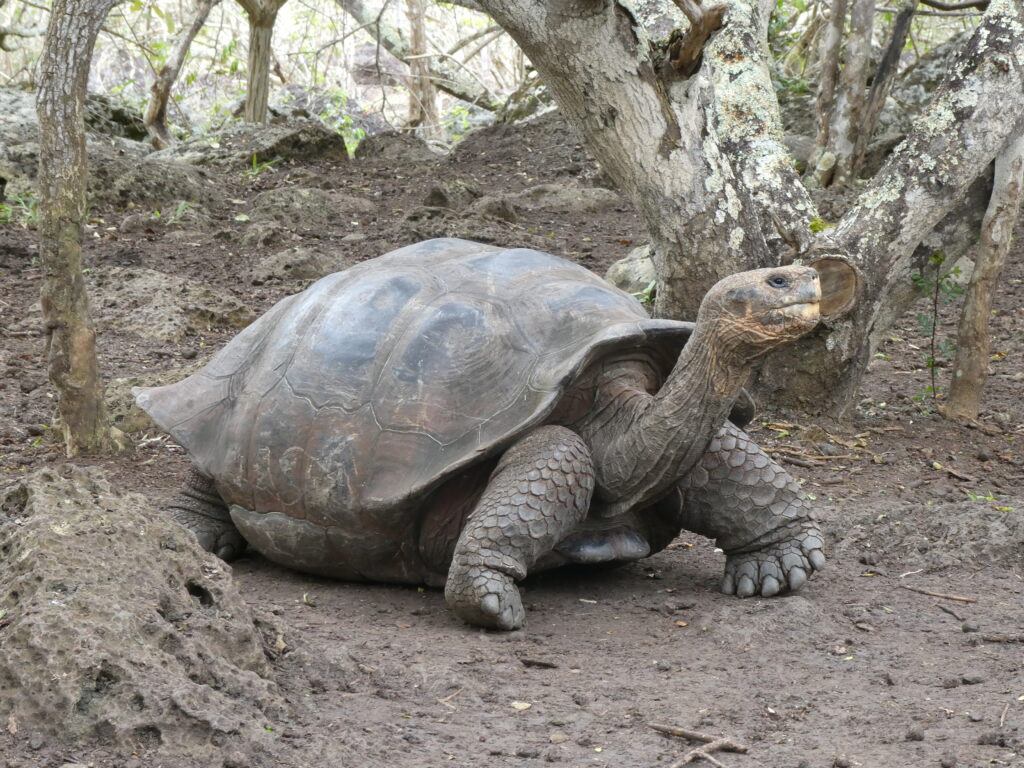
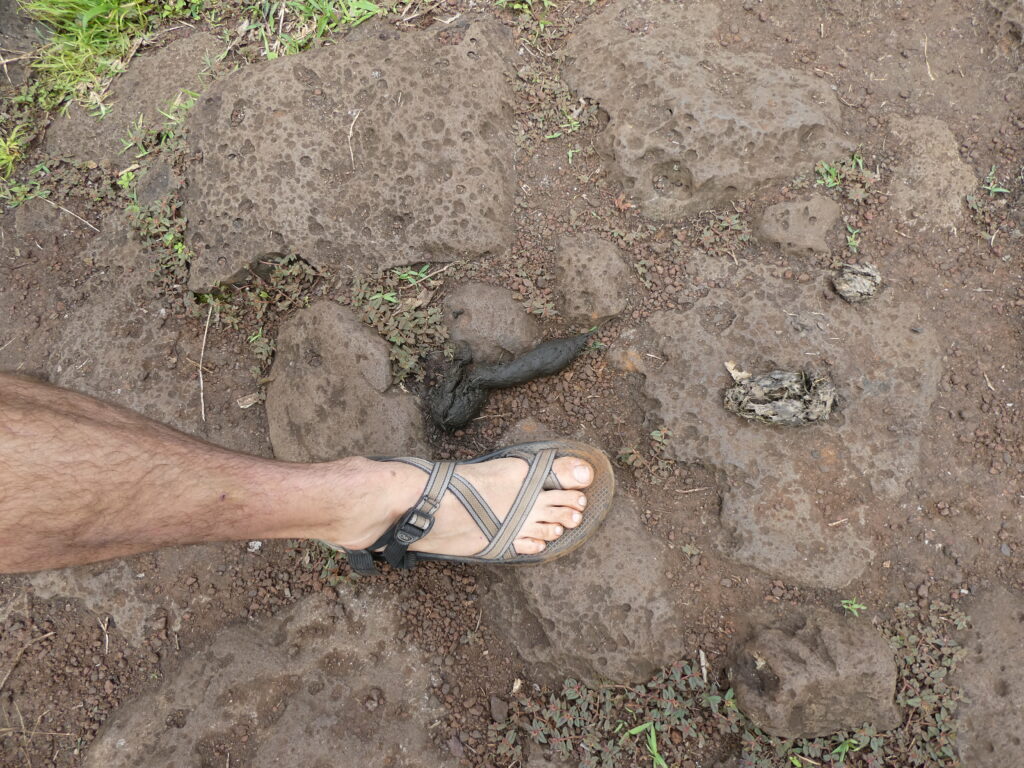
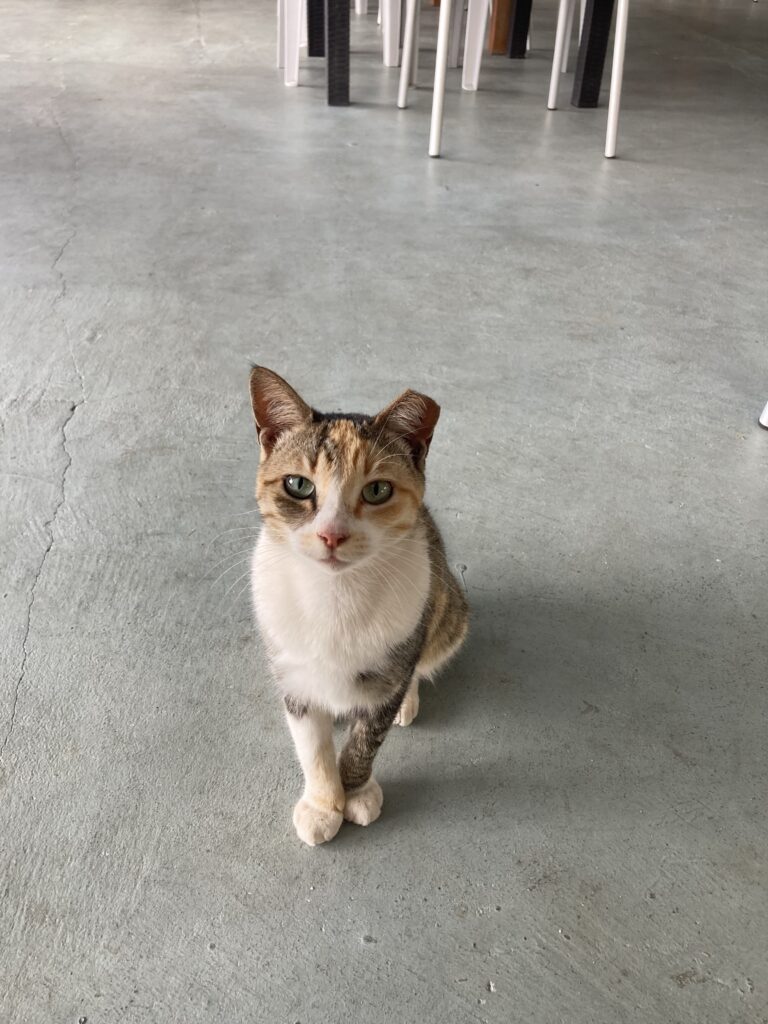
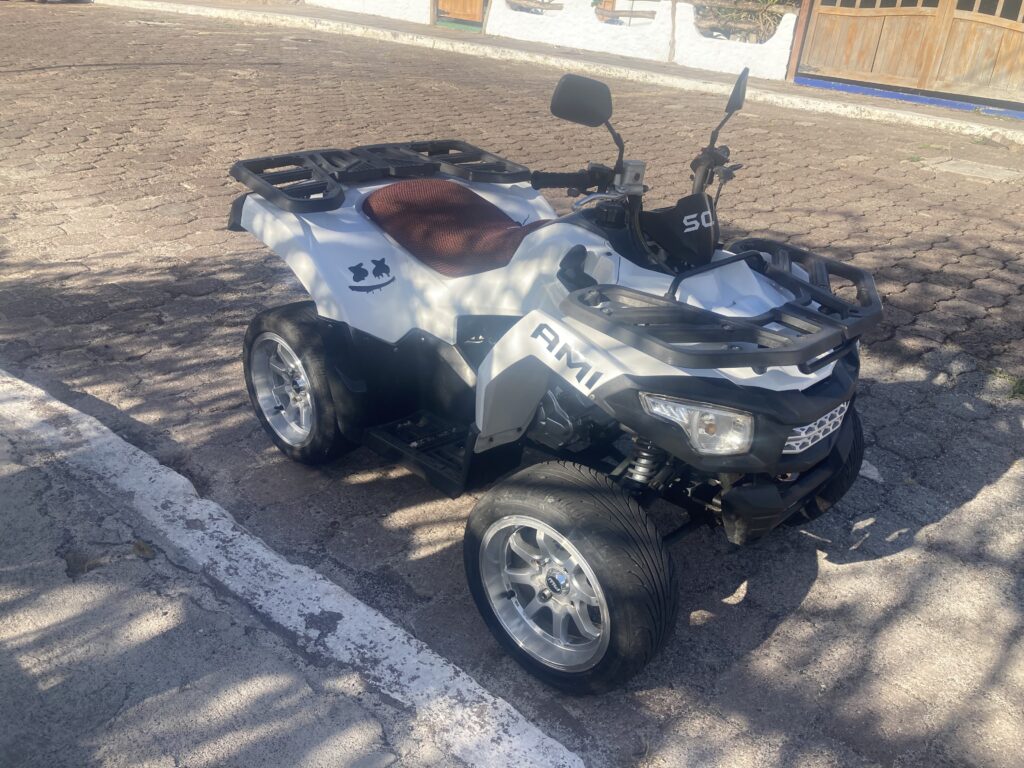
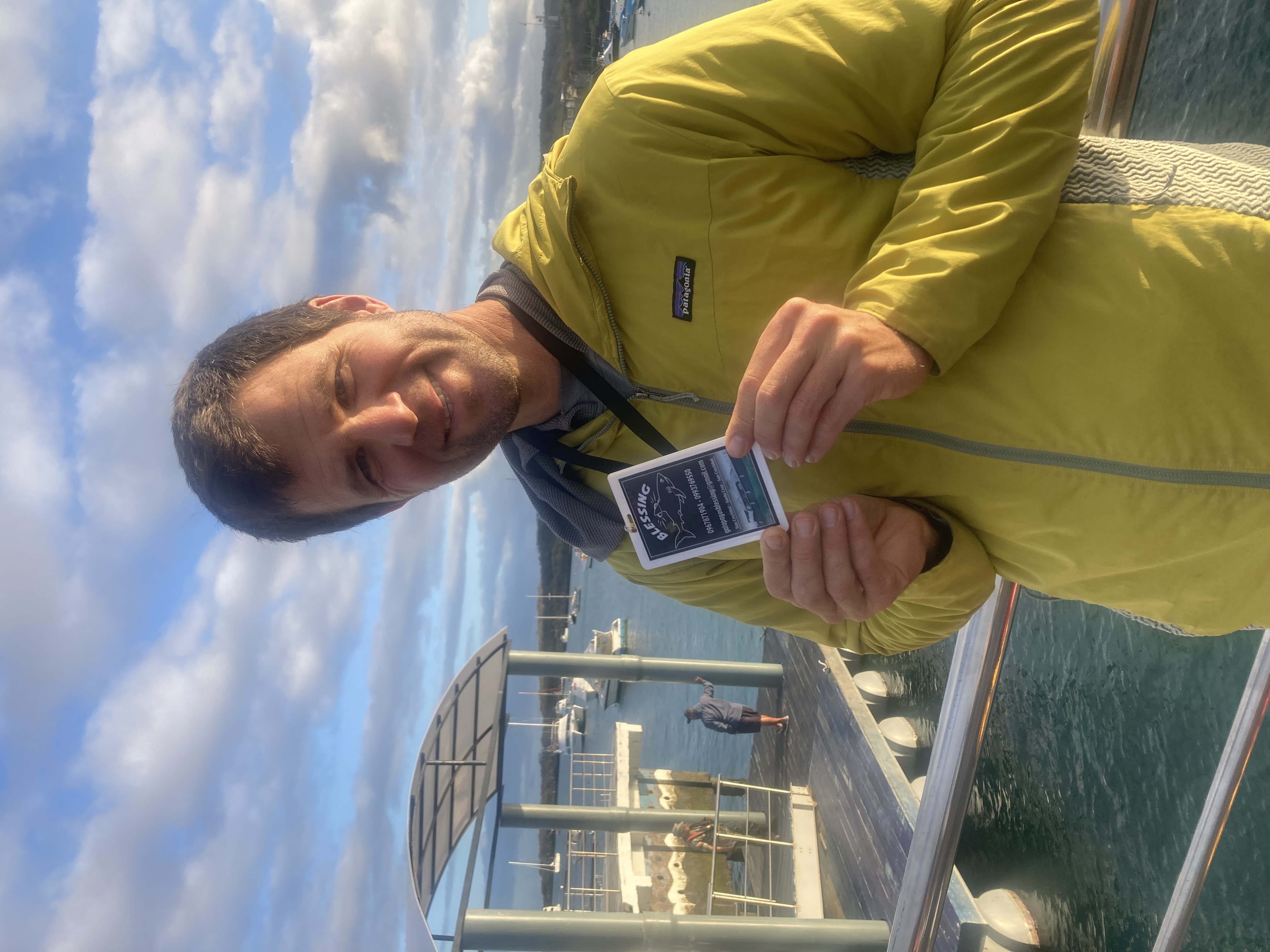
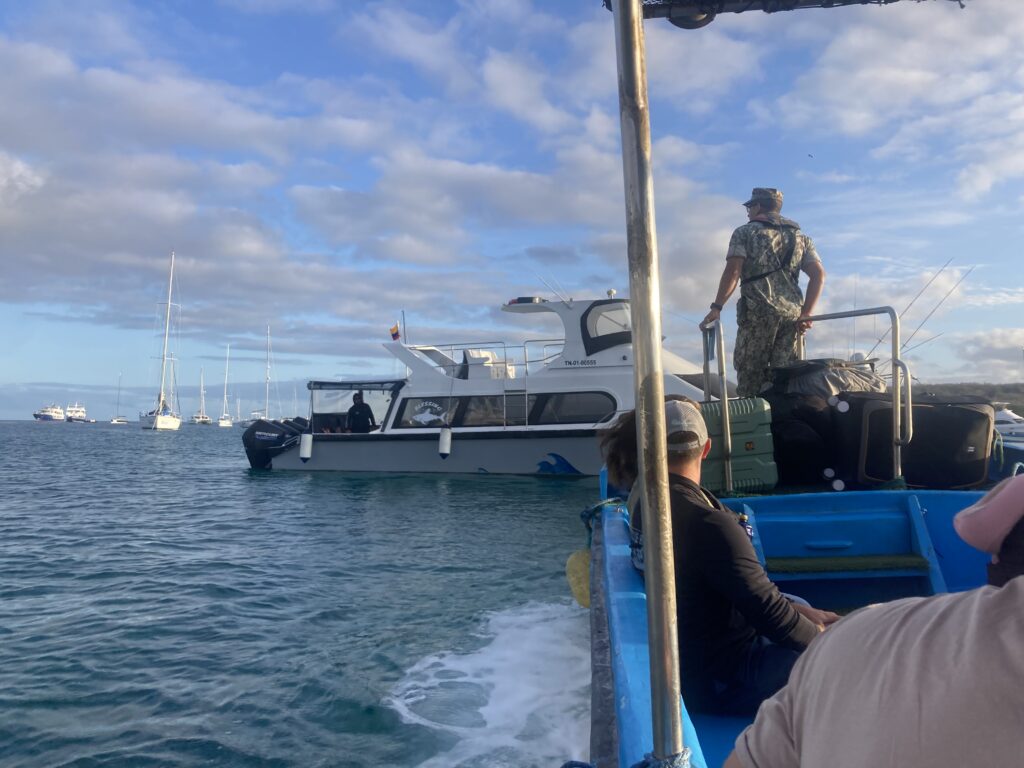
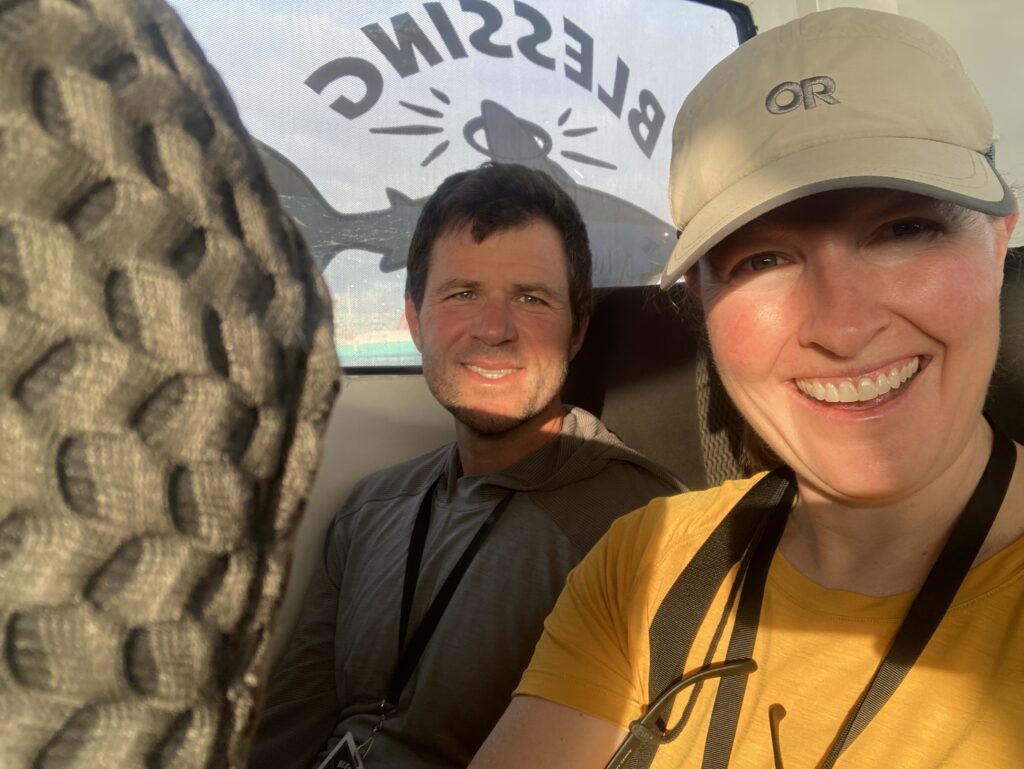
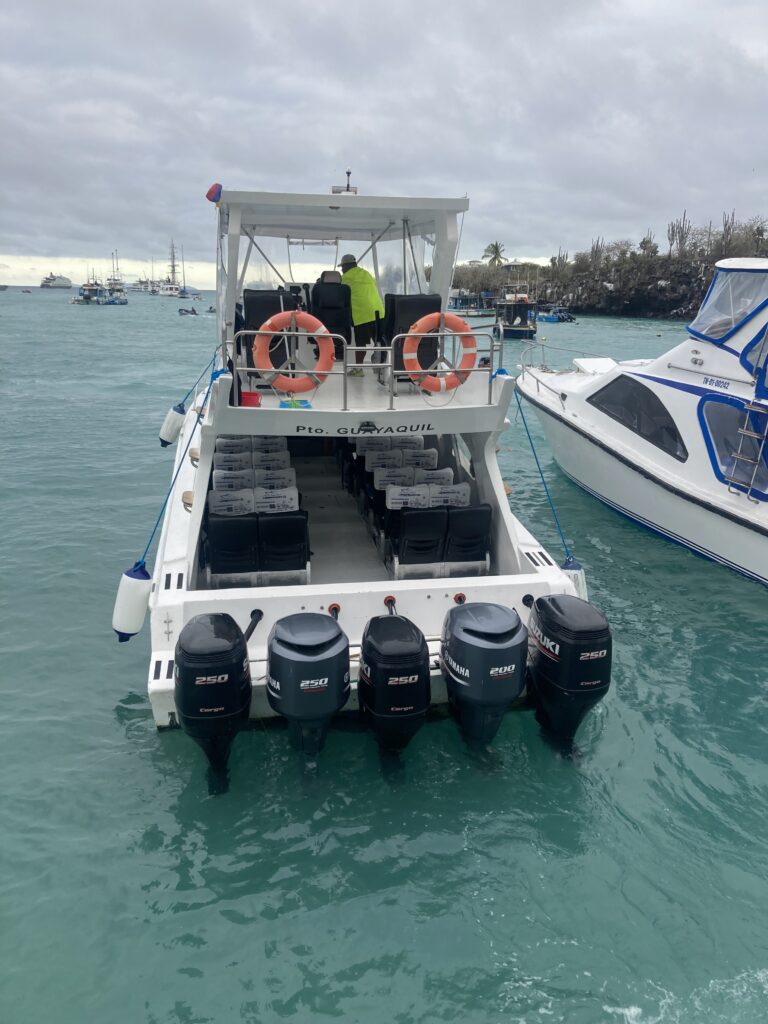
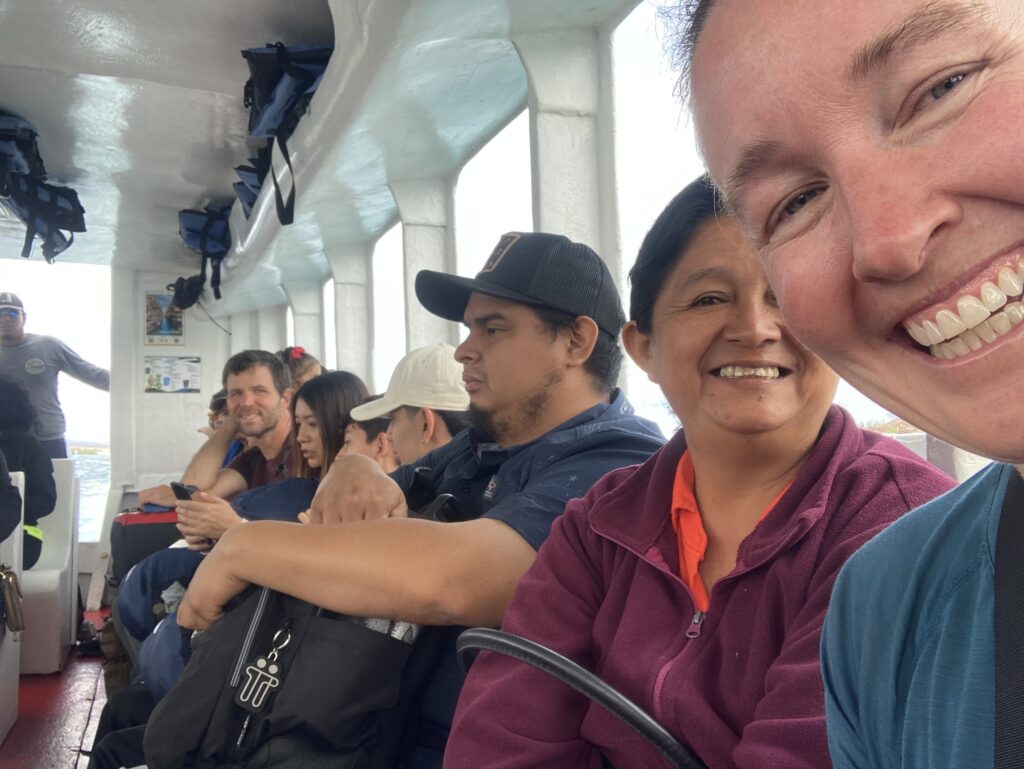
The San Cristobal Giant Galapagos Tortoise has a longer neck and the shell is turned up behind the neck to allow for a higher reach when obtaining food. These young adults (50 years old) were munching on some plantsTwo littles at the tortoise breeding center on San Cristobal – notice the numbering on their shells. We also learned that each tortoise at the breeding center is micro-chipped in their leg to track them.Big tortoise means big poop – watch your step!A feline friend joined us for lunch on San Cristobal – her/his ear is clipped to indicate sterilization of a feral cat. Life on San Cristobal – a 4-wheeler with regular car tires, a very practical transportation option for the island. To transit from San Cristobal to Santa Cruz we took a ferry. As there were a few different boats, they had a very organized (and tourist proofed) process by giving each passenger a lanyard with your ferry’s name which acted as your ticket.Lacking extensive dock infrastructure, we had to take a water taxi out to our ferry – on the front of this water taxi is a member of the military & all the luggage. Moving from island to island was highly regulated and we had to have our baggage x-rayed each time. In addition, on two of our three ferries the military came aboard and photographed all the passengers.Similar to airline travel, on board the ferry we had free wifi and snacks/drinks during the 2-hour transit.
Santa Cruz
The second island that we visited was Santa Cruz (pop 18,000) the main hub island of the Galapagos where most passengers and goods first arrive. Santa Cruz has the all the conveniences of a small coastal town and is the main jumping off point of the Galapagos. We decided to rent bicycles and travel up into the highlands as recommended by our AirBnB host (who also conveniently rented bicycles) – he was just not used to tourists going on a 50km (30 mile) ride without having a taxi shuttle them up the hill first.
Interestingly, and refreshingly, the Galapagos does not allow tourists to rent cars or motorbikes – you must use a tour, taxi or bicycle to get around – shockingly we chose bicycles 🙂 We made a day of the bicycle adventure stopping at lava tunnels, climbing up to the high mesa, and cruising down to one of the beaches before returning to town with very sore bums and missing our touring bicycles.
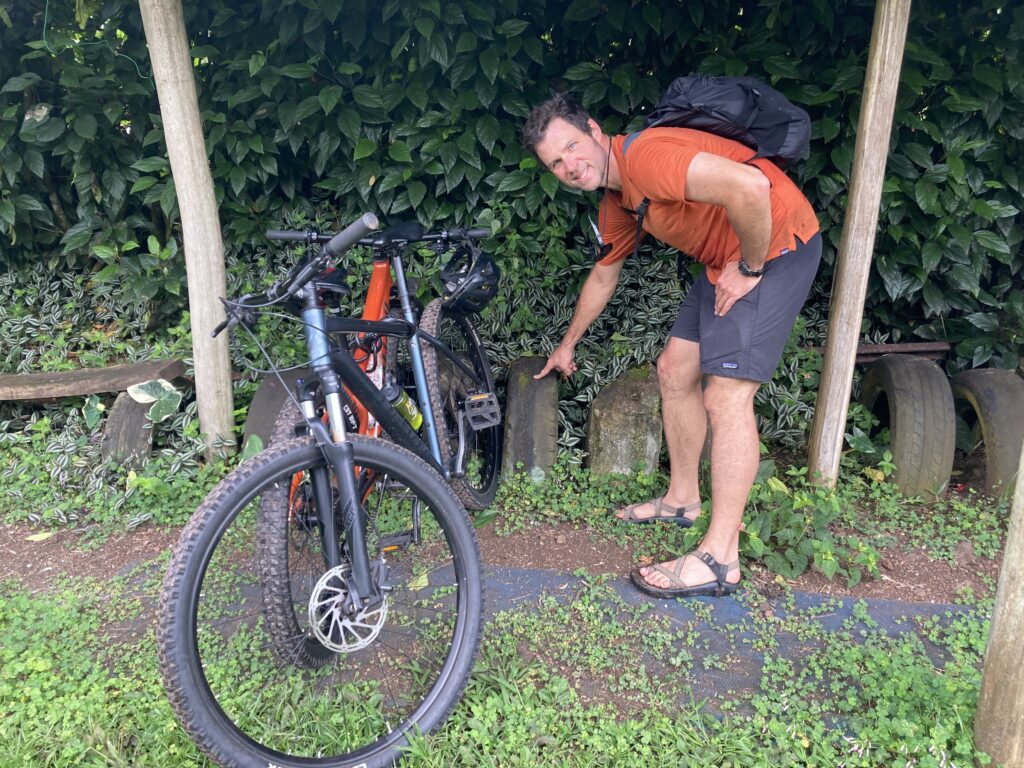
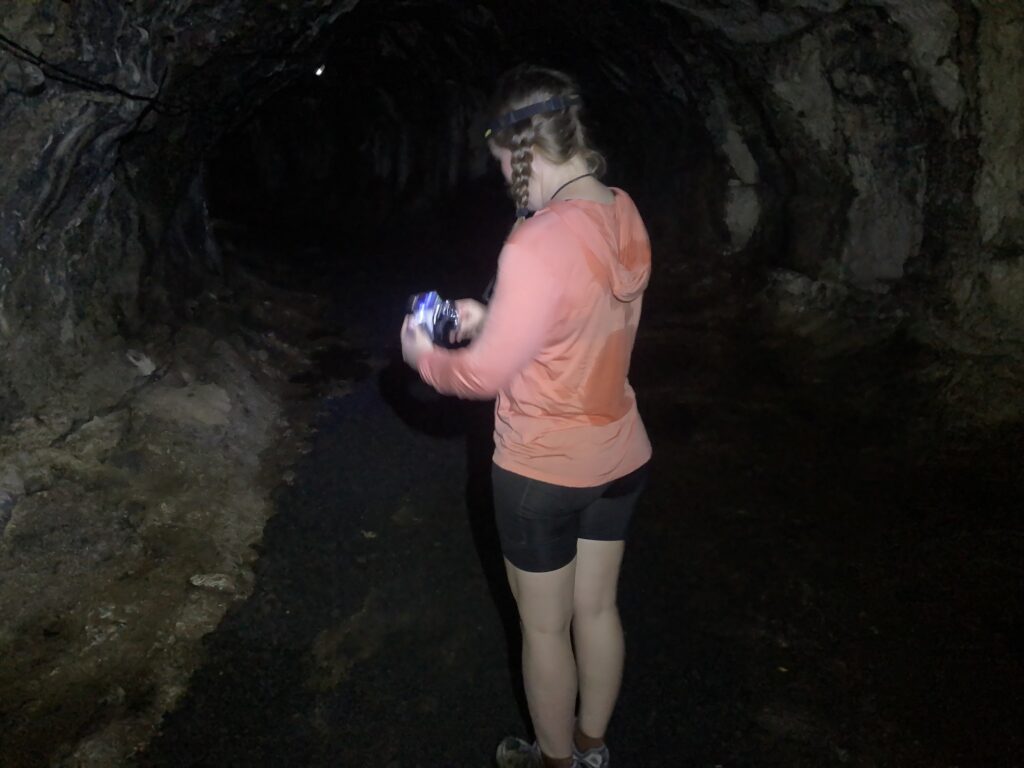
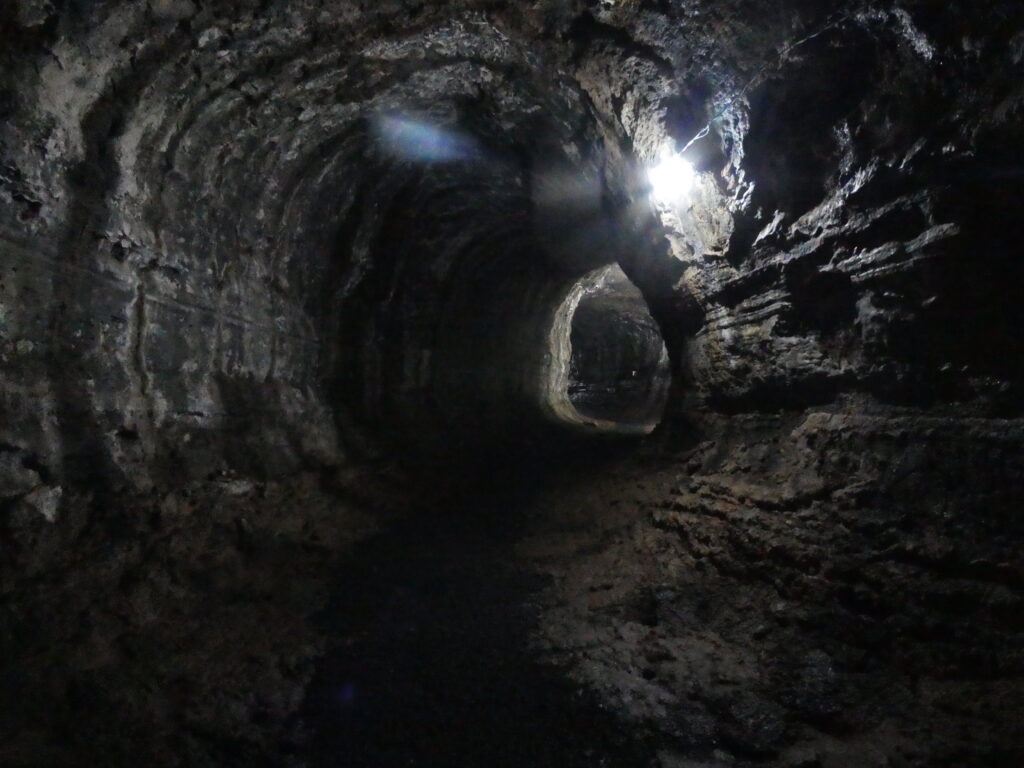
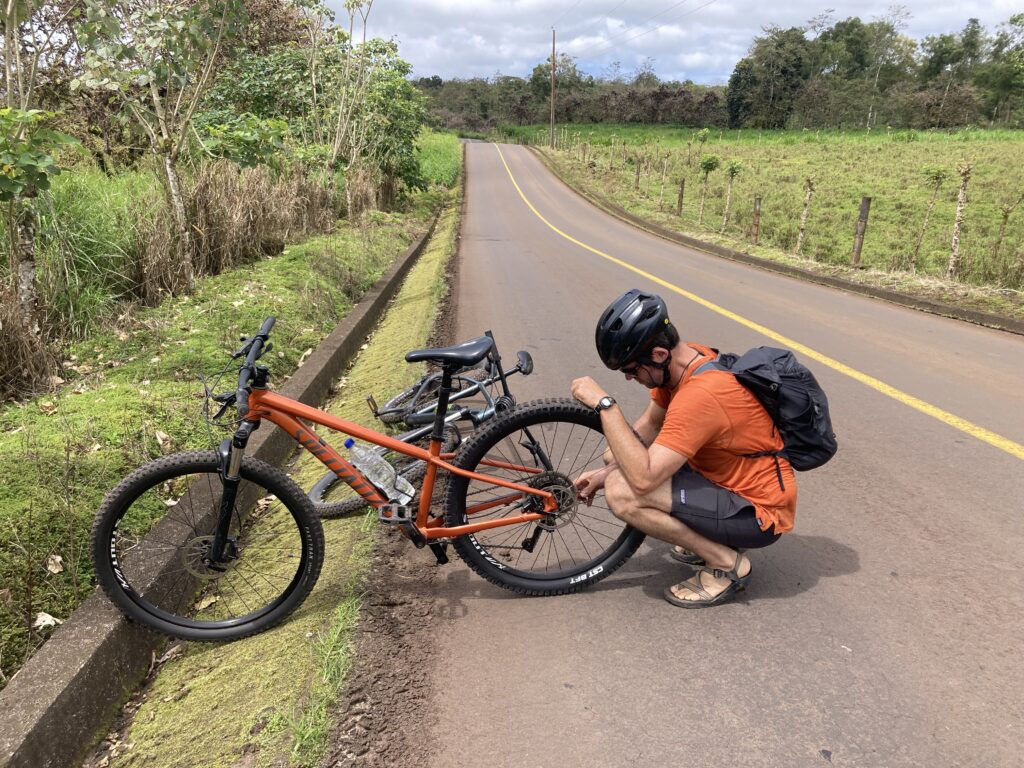
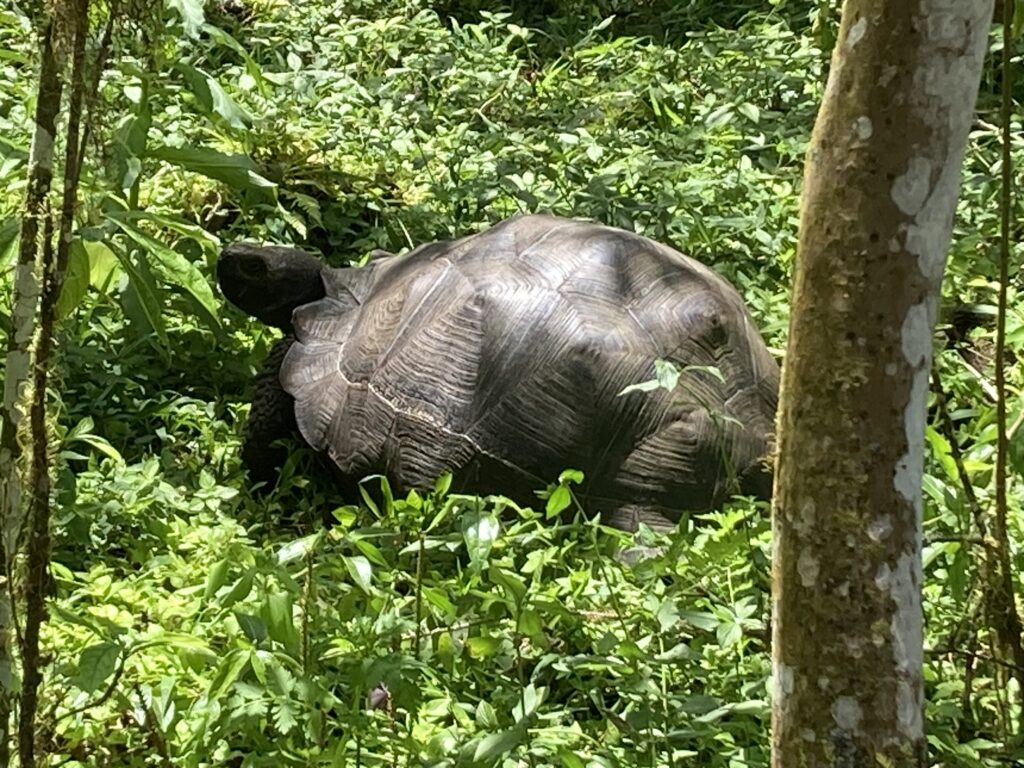
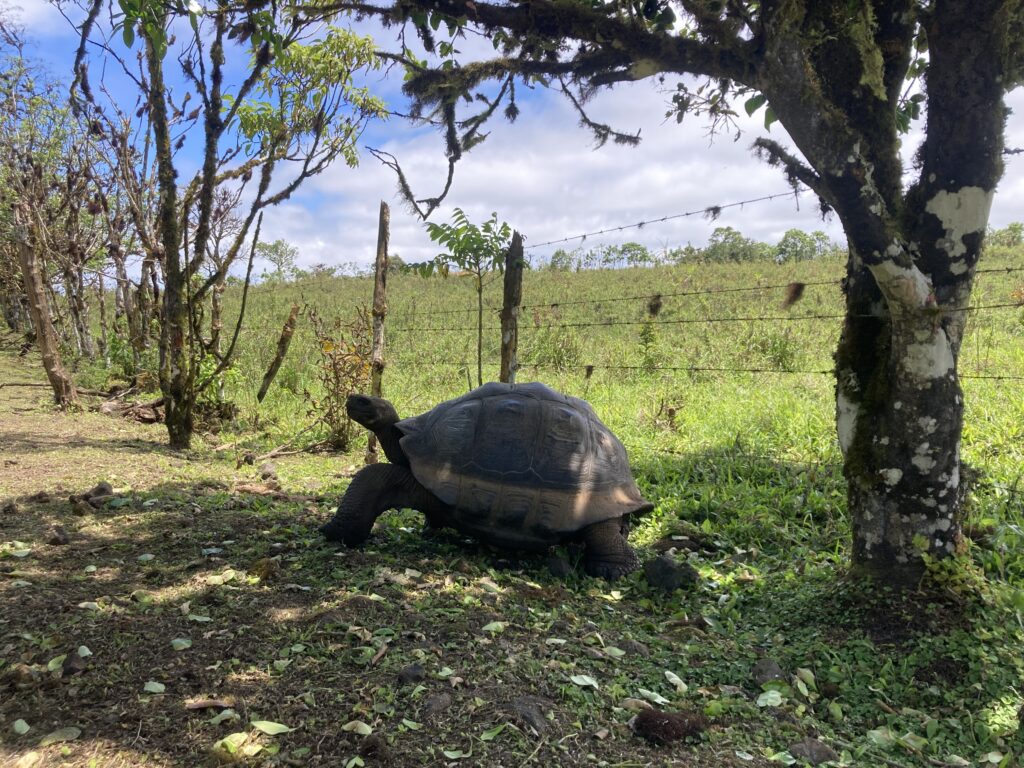
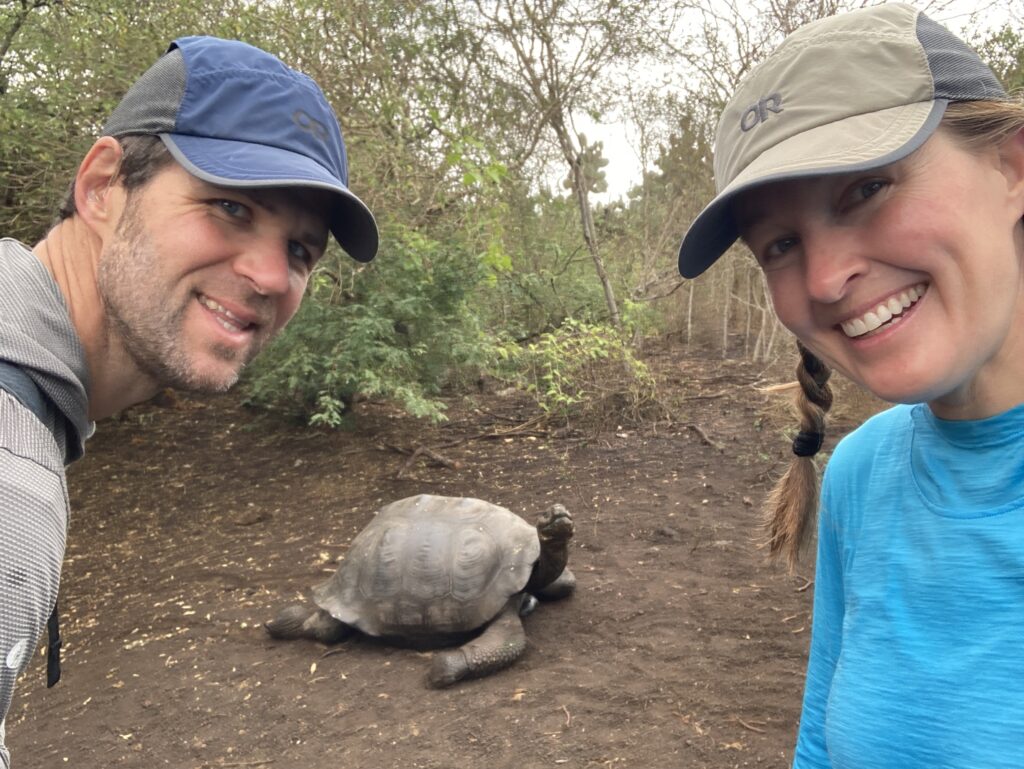
A bike rack made out of old tiresPatricia prepares her headlamp for the lava tunnels.Los Tunels de Amor (The tunnels of love) was one of the stops on our Santa Cruz bicycle adventure – this lava tube went for 2km requiring a headlamp to guide our way. Even though we had “good” rental bikes they weren’t quite tuned…here Dustin is pulling Patricia’s chain out of the spokes because low-limit setting for the granny gear was not correct. Finding the Galapagos Giant Tortoise in the wild was so thrilling – we knew this guy was nearby when we saw his fresh “evidence” on the trail. Notice the shorter neck and non-turned shell because of ground feeding on Santa Cruz.
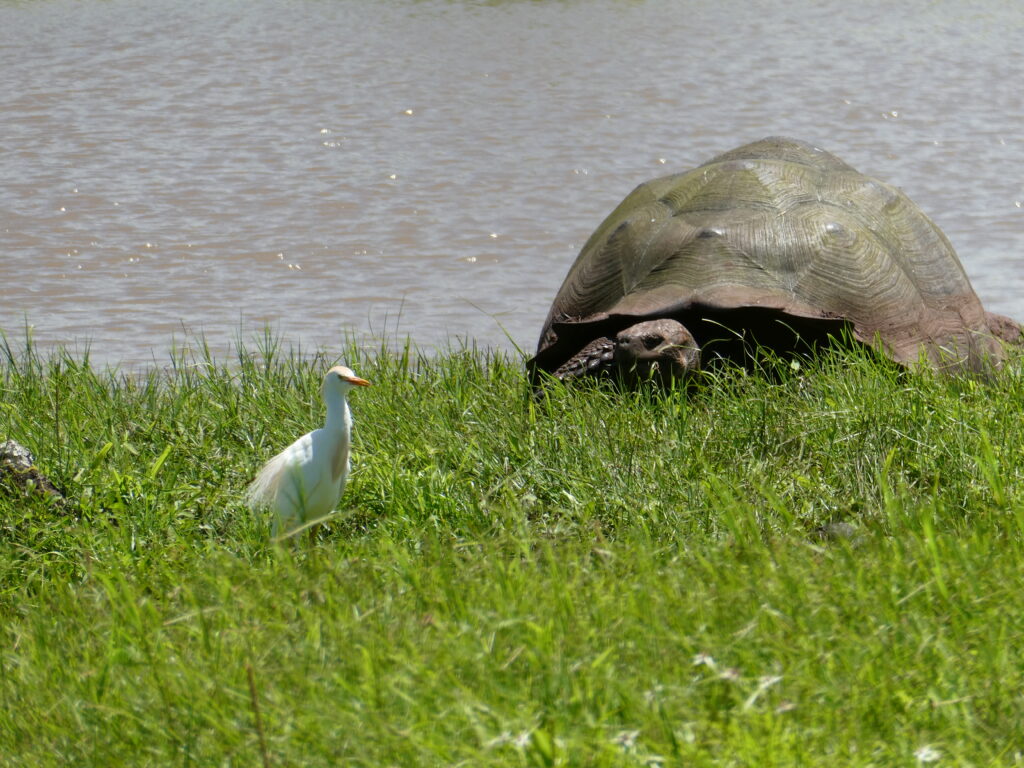
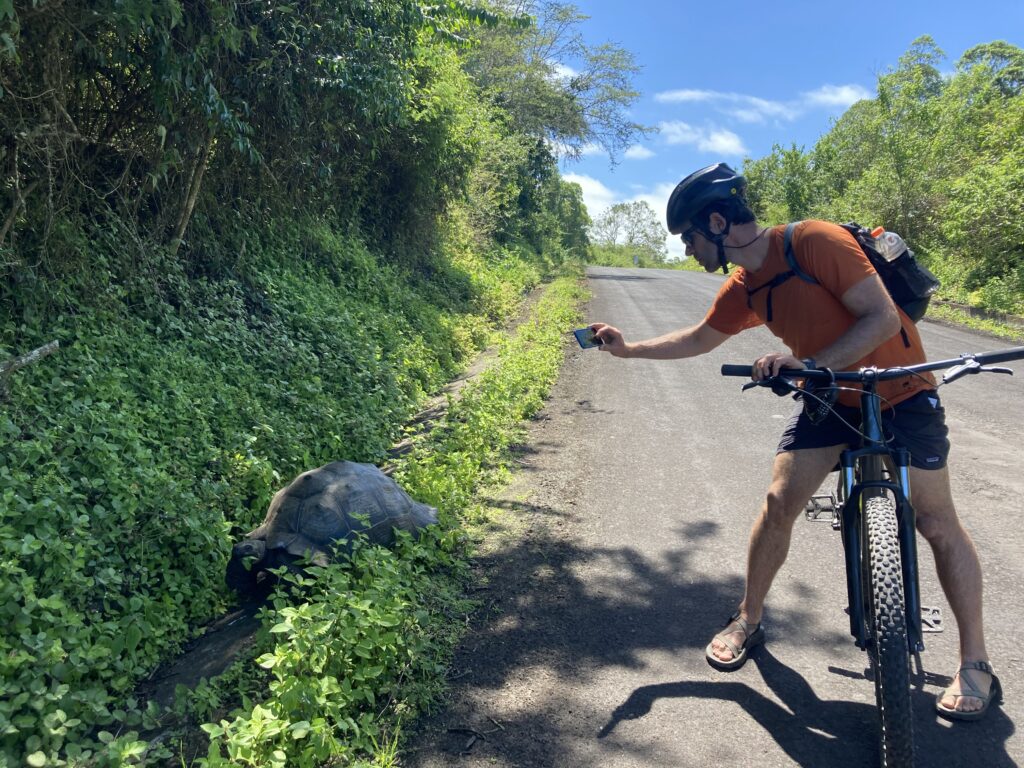
By the end of the bicycle adventure we had seen 20(!) Giant Galapagos Tortoises in their natural environment, many right along the road. Here are a few images of our new friends:
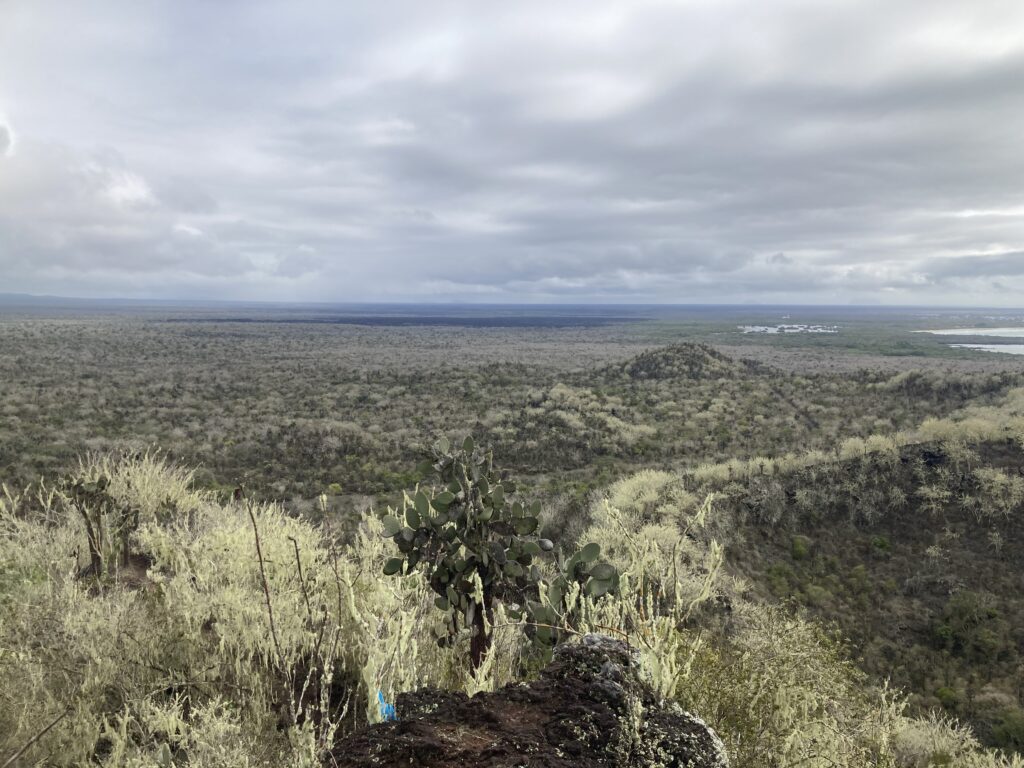
After cycling up into the highlands we were able to get a great view of the island and outlying islets.
Our last stop on the Santa Cruz bicycle adventure was Playa El Garrapatero with its mix of lava rock, turquoise waters and white sand beach – a great place to take a break before the 7km climb back into the highlands and then downhill roll into town.
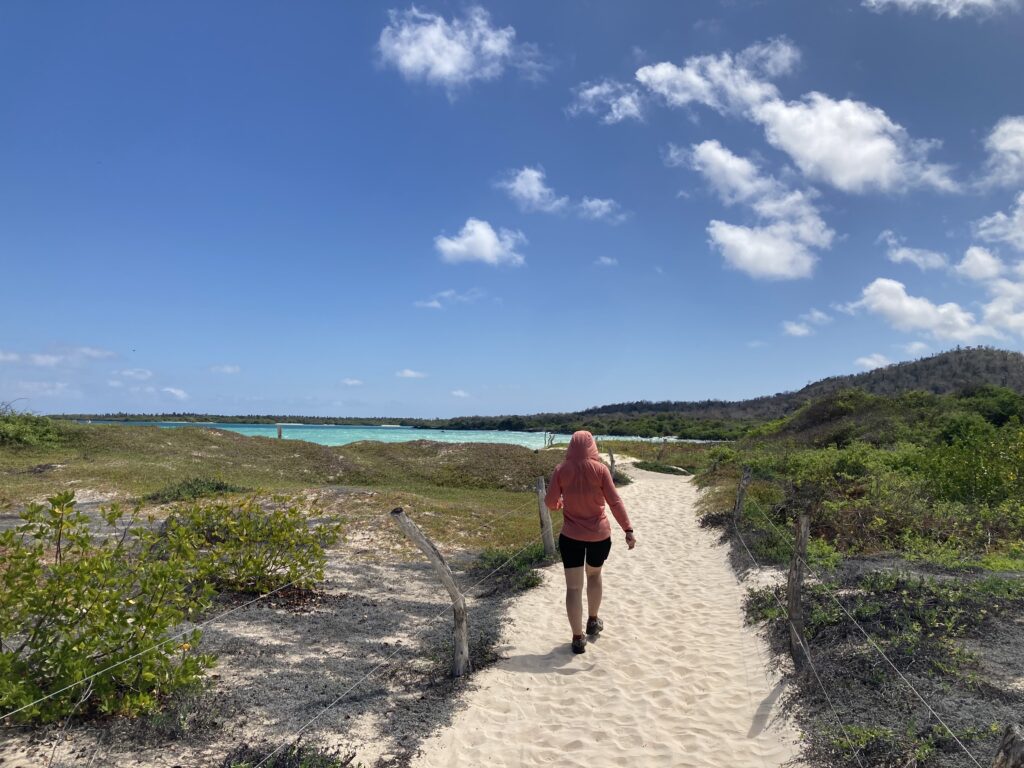
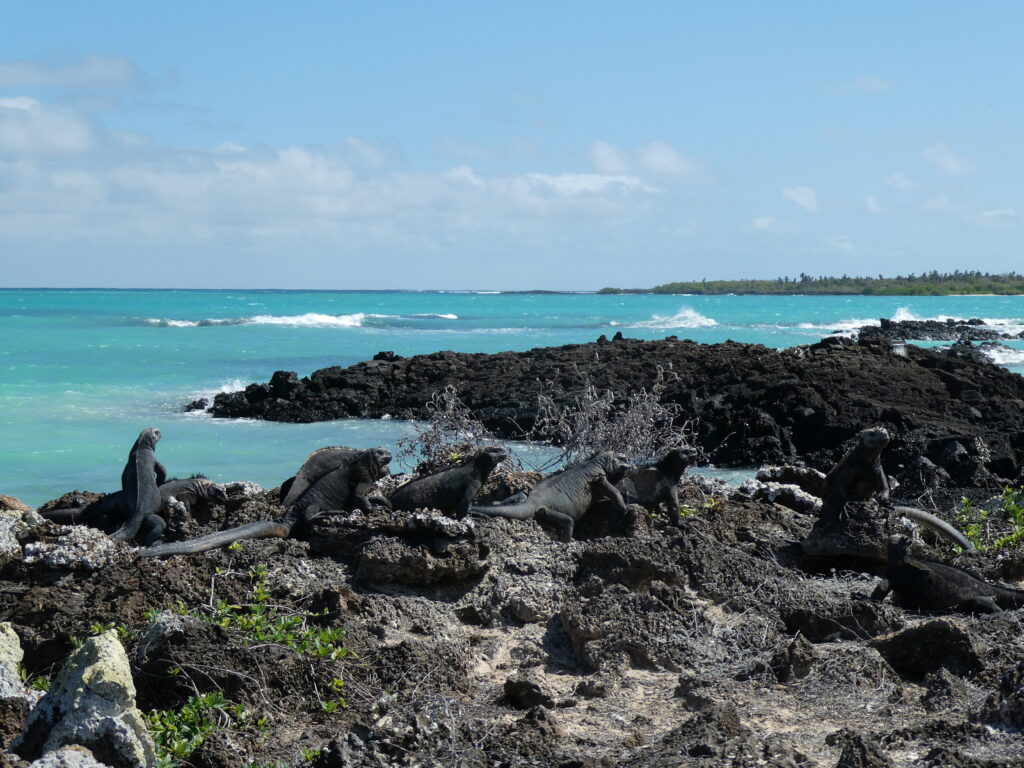
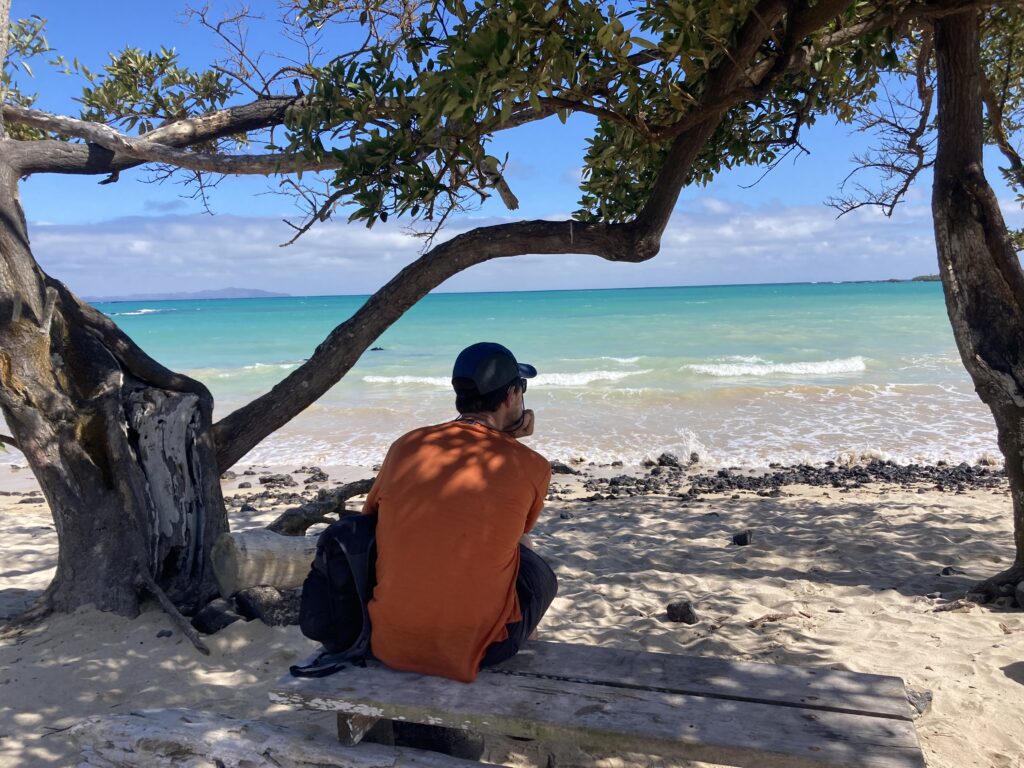
Patricia walks out to Playa El Garrapatero – happy to be off the (very) uncomfortable bike seat for a while…Look closely to see all the marine iguanas in this image – they are statue still and then colored like the lava rocks that we almost missed them!Taking a break from the rental bicycles at Playa El Garrapatero – in the distance (on the left horizon) you can see one of the uninhabited islands of the Galapagos, Isla Santa Fe.
Life in Puerto Ayora (Santa Cruz)
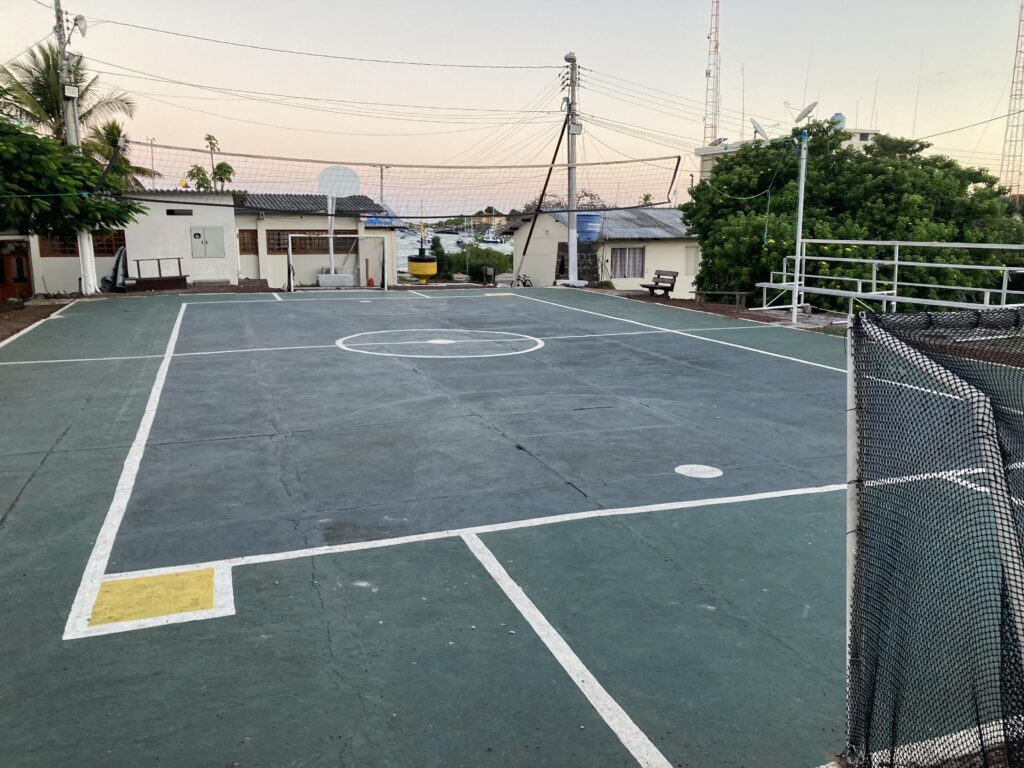
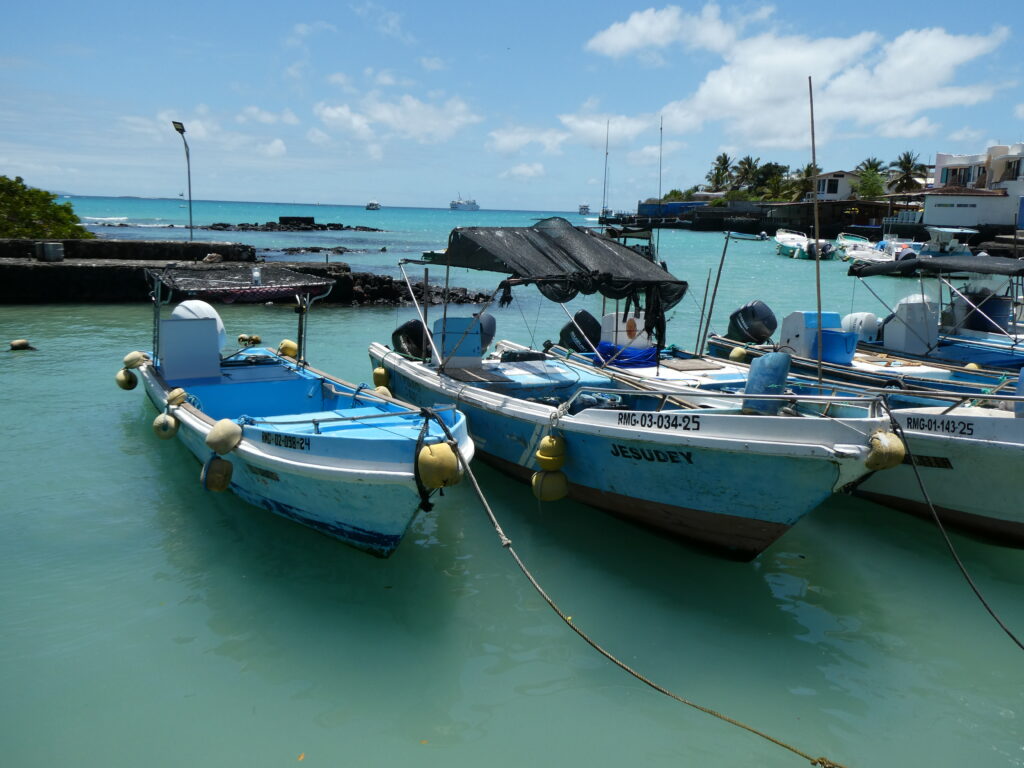
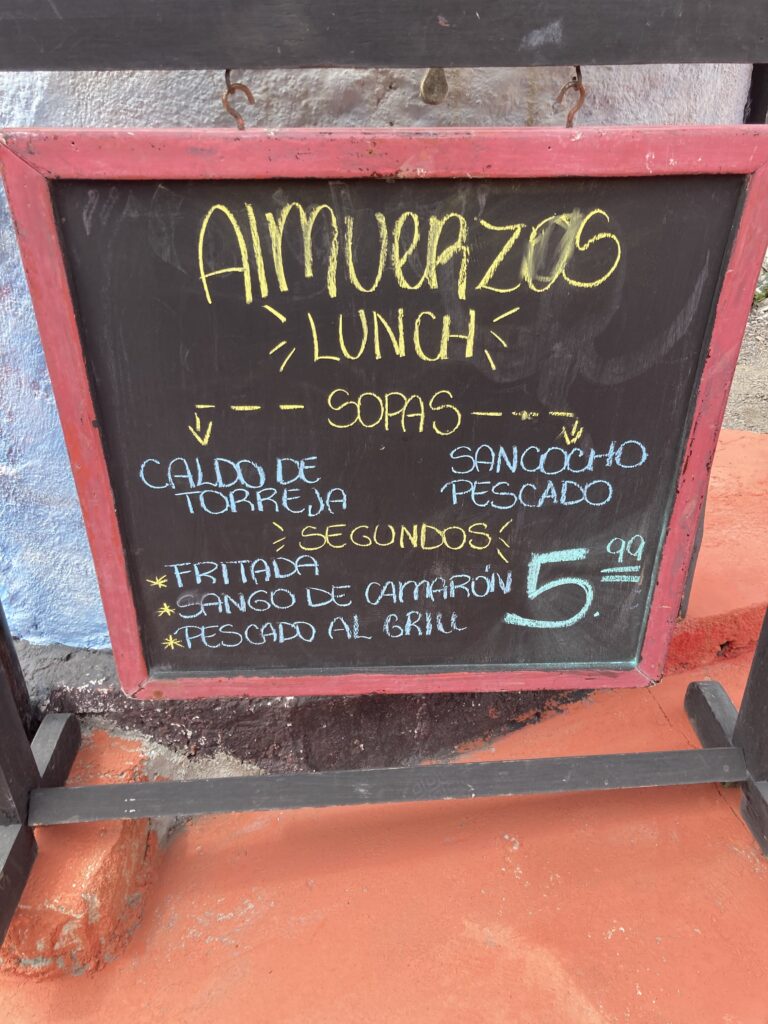
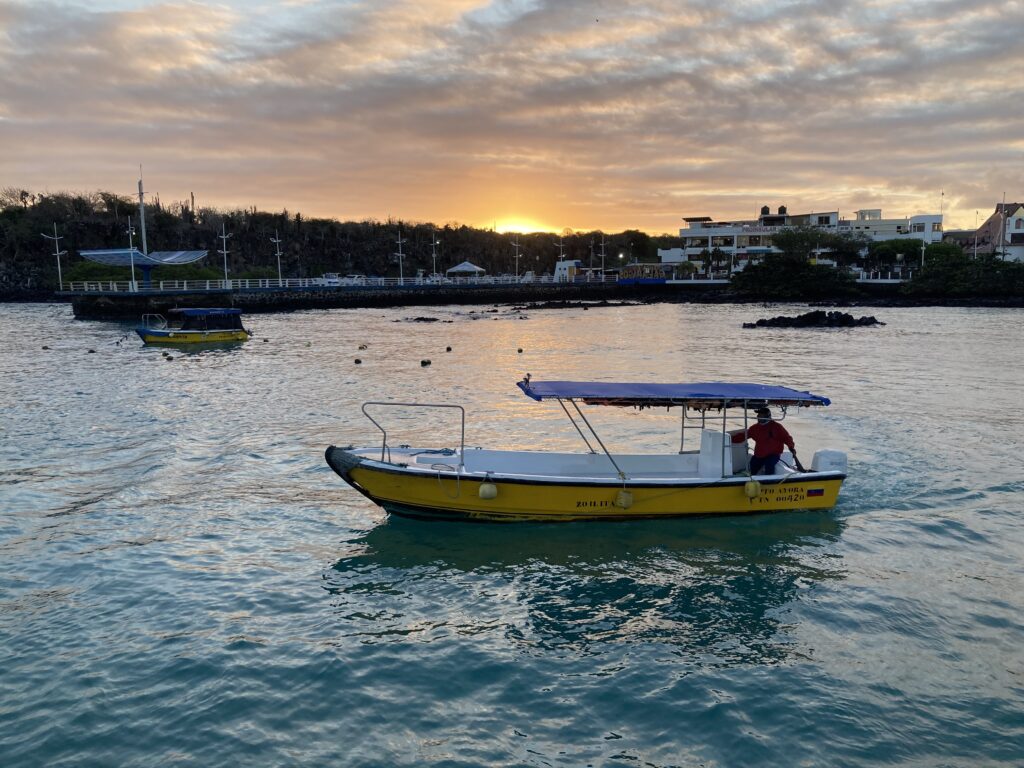
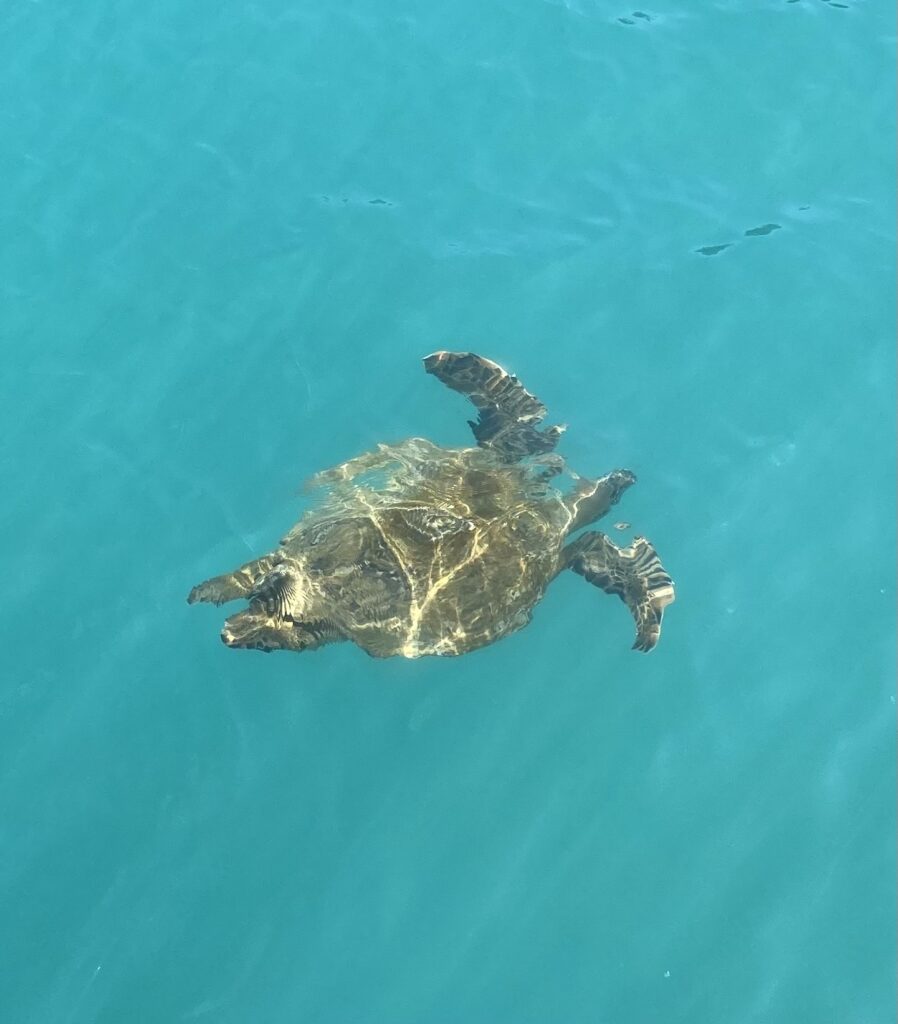
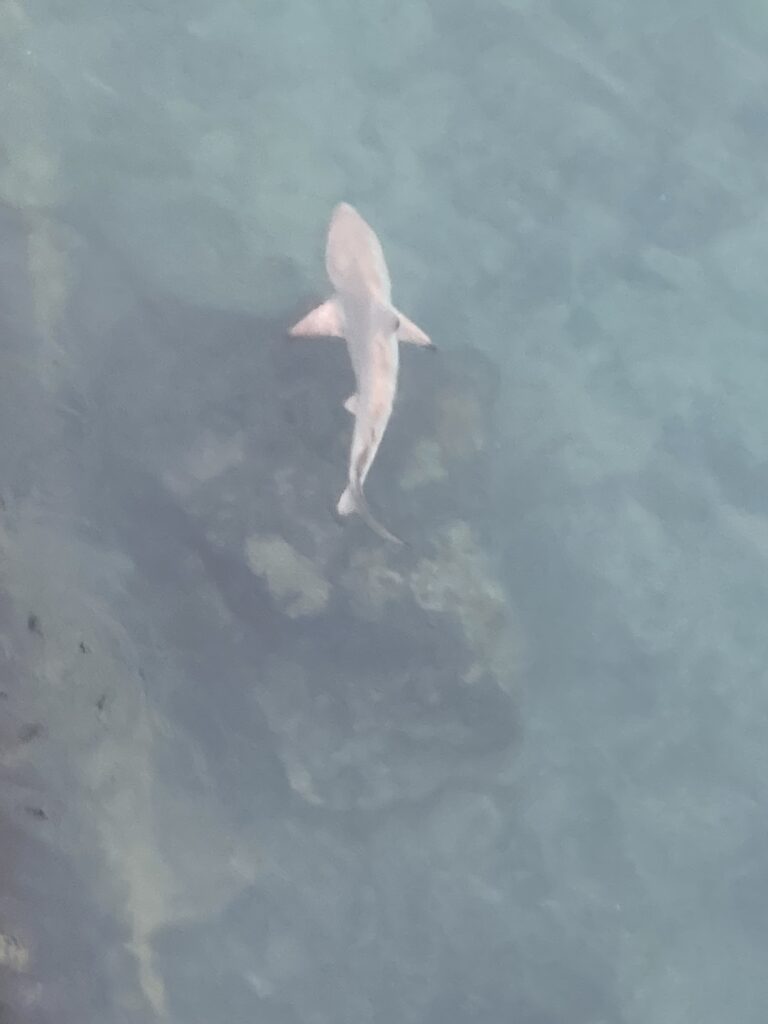
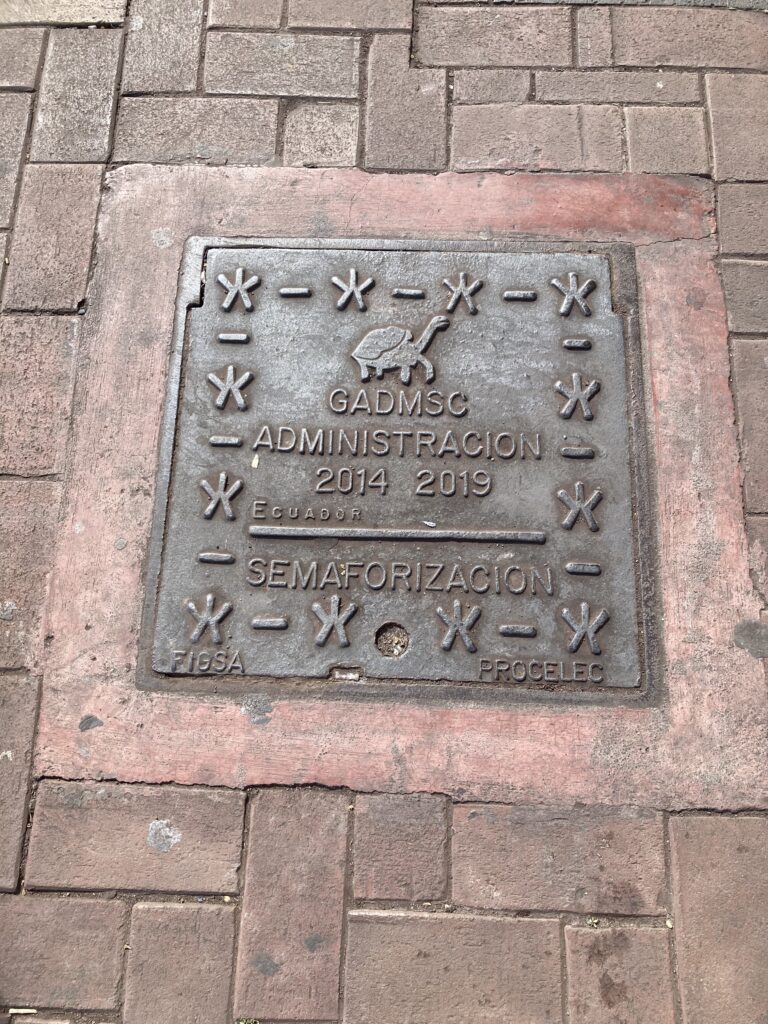
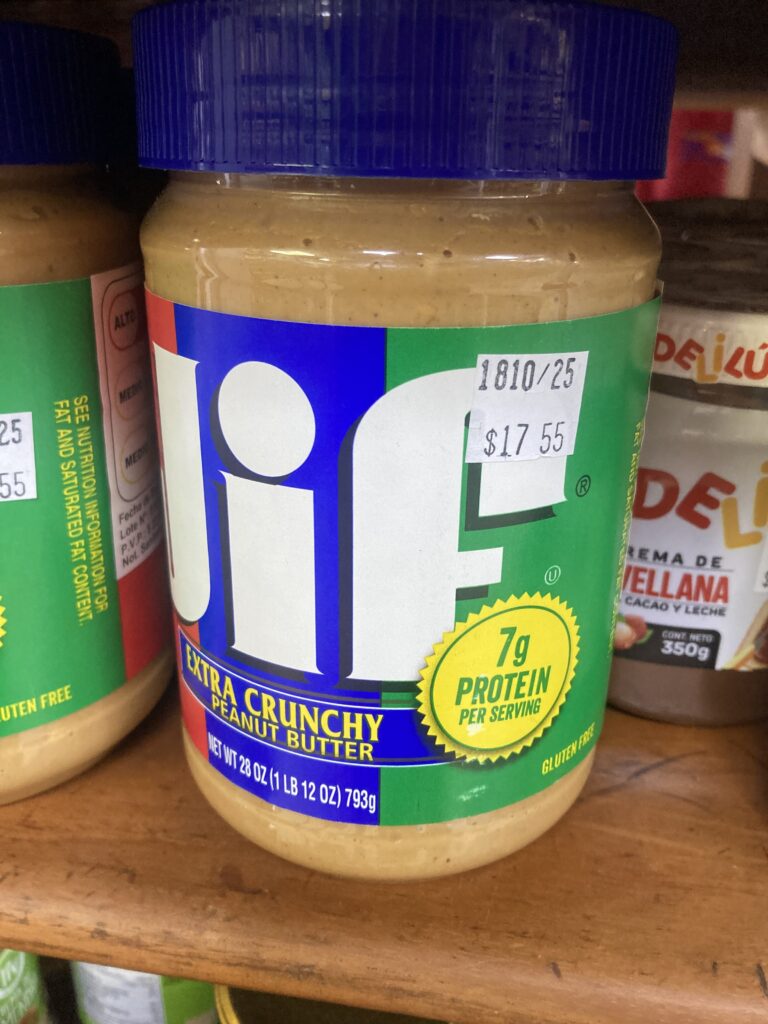
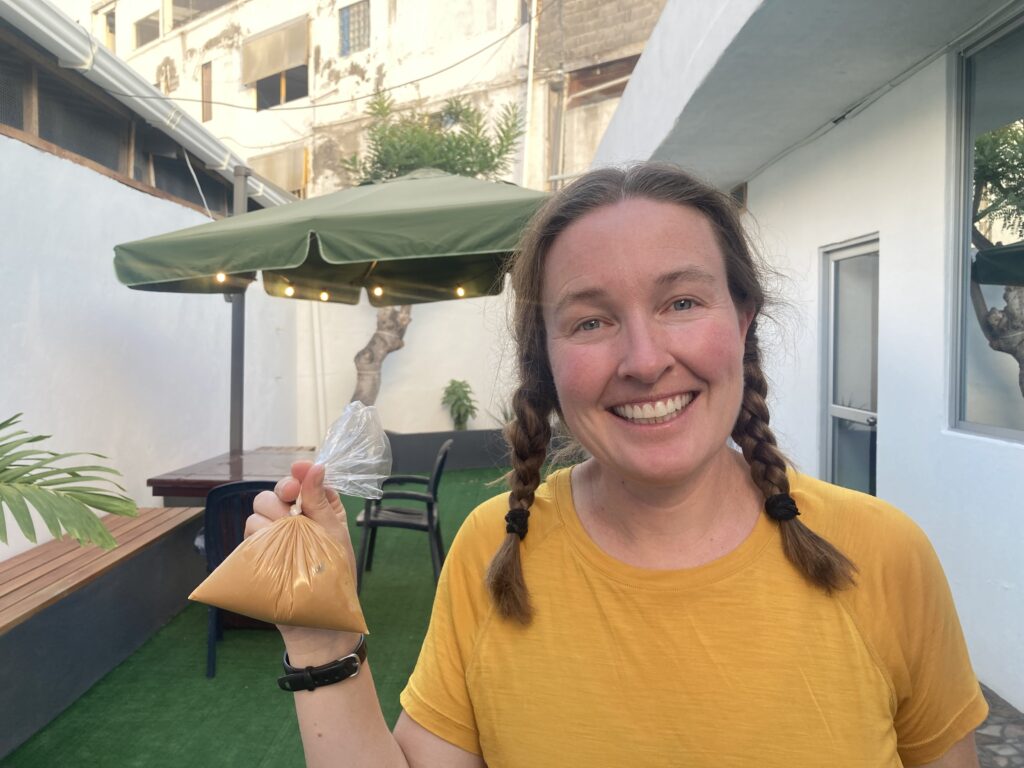
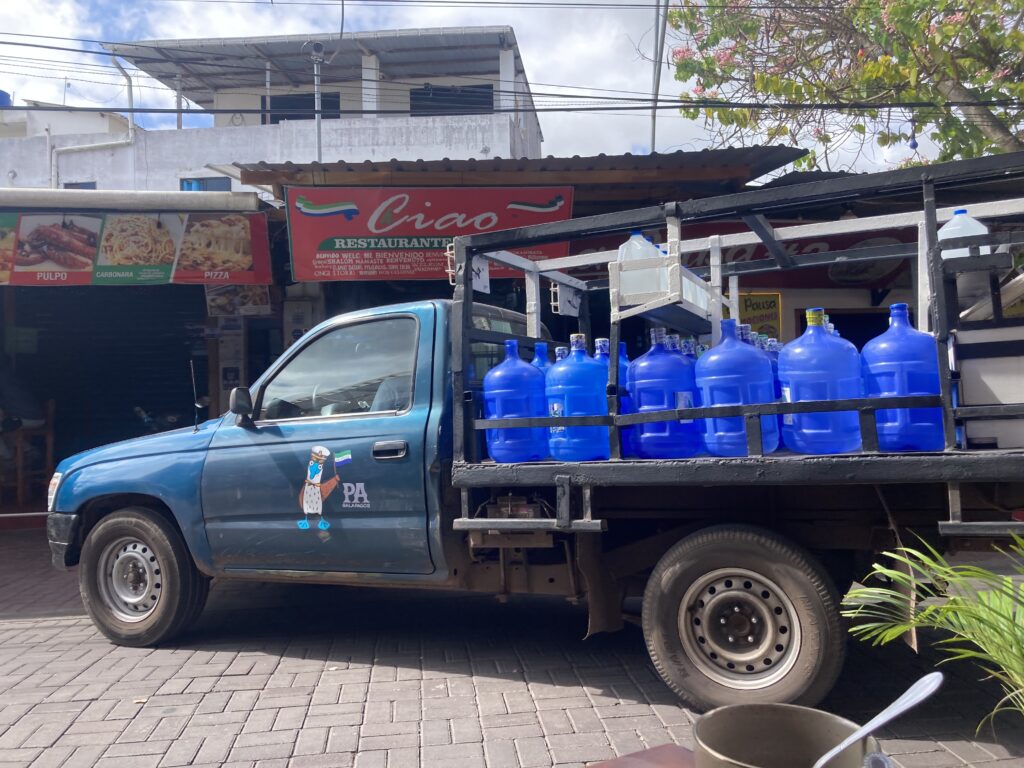
Since grass is difficult to grow on the volcanic base we observed many hard surface soccer fields. This photo shows a net in the middle of the court used for a very popular game, Ecuavoley, which is similar to volleyball but played with a soccerball, higher net & three athletes on each team. Fishing boats in the harbor. Almuerzos – a large lunch is common in Ecuador complete with a big bowl of soup & then a full plate of food. Most locals eat this meal mid afternoon followed by siesta and then have a small snack type dinner.A water taxi in the Santa Cruz boat harbor – we saw some awesome marine life in the same area including 10 sharks at one time, a giant sting ray, a sea turtle, and two octopuses.Sea turtle in the boat harbor on Santa Cruz – some of our best marine life (including two octopuses!!) were seen walking the docks at the boat harborBlack tipped shark right in the harbor on Santa CruzA utility cover on Santa Cruz complete with a tortoiseSince everything must be shipped in, some of the food prices in the Galapagos were shocking…don’t worry we follow “eat like the locals” and found mantequilla de mani (peanut butter) at a local tienda. Mantequilla de mani from the local tienda $1 🙂 Water is a scarce resource in the Galapagos with the tap water being undrinkable (as compared to Quito where the tap water is fine) – bottled water delivery was often seen on each island. It appeared there were desalination operations but when we tried to clean gear we realized the shower water was still fairly salty.
Isabela
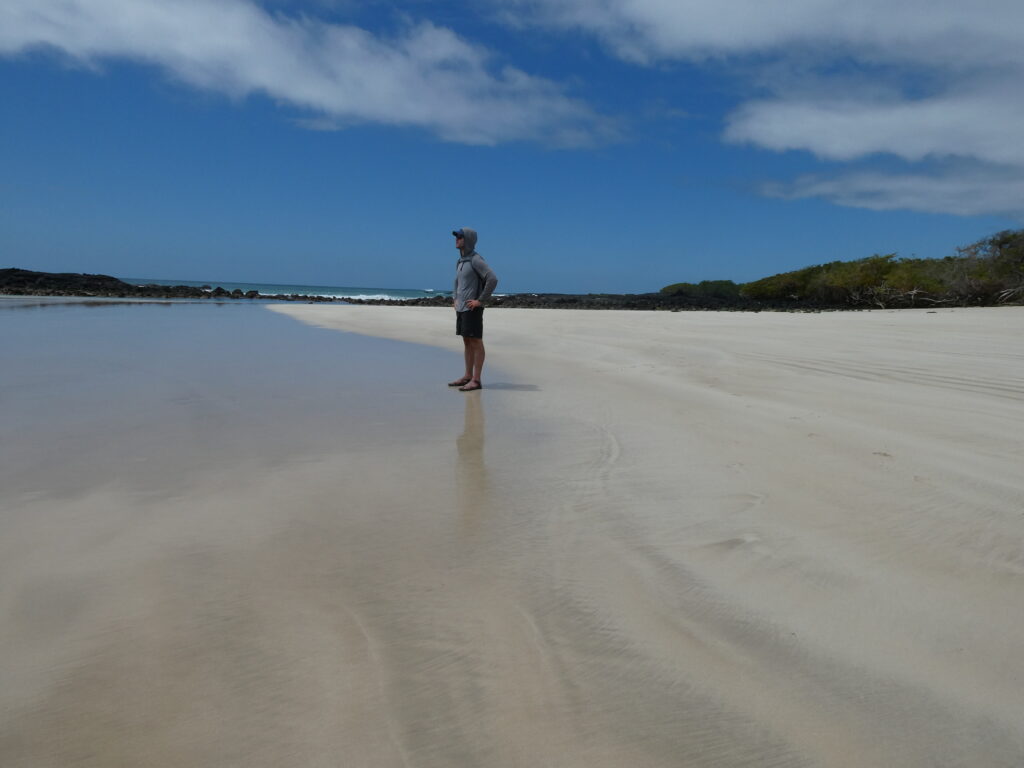
The last island we visited was Isla Isabela (pop 2,000) – this island was less urban and had fewer tourists than the two previous islands we explored. Isabela, formed by six volcanoes, is the largest of the Galapagos Islands but most of the island is not accessible, the majority of tourist activities occur in a small area on the southern coast of the island. Isabela did allow for more bicycling, hiking, and snorkeling.
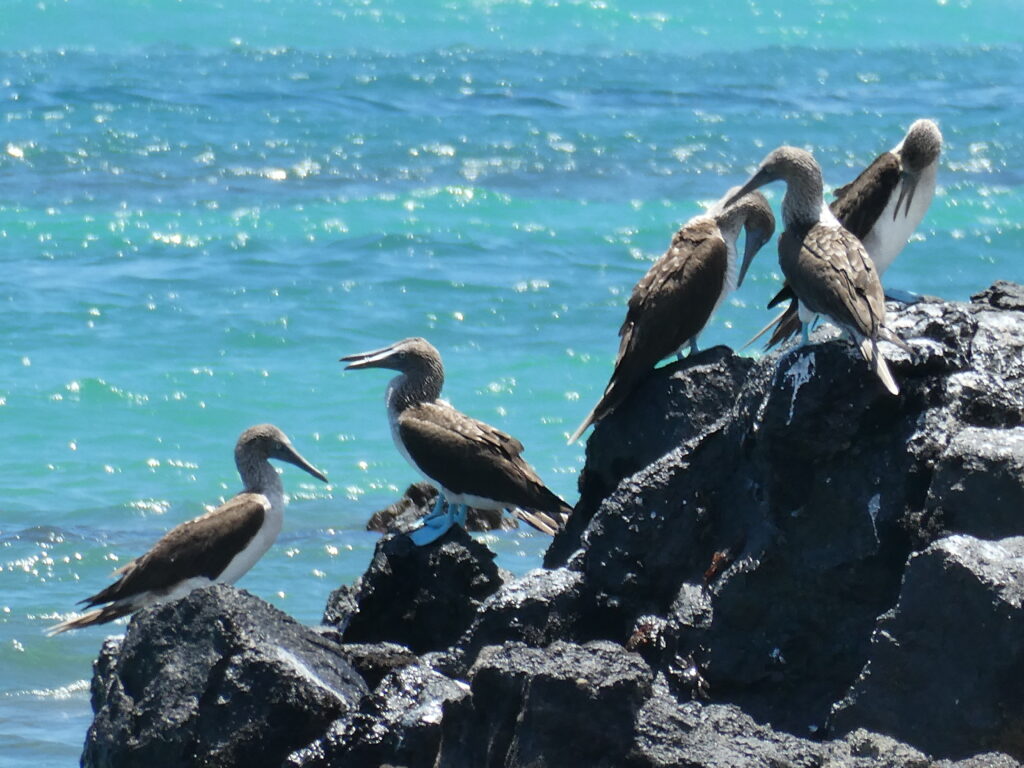
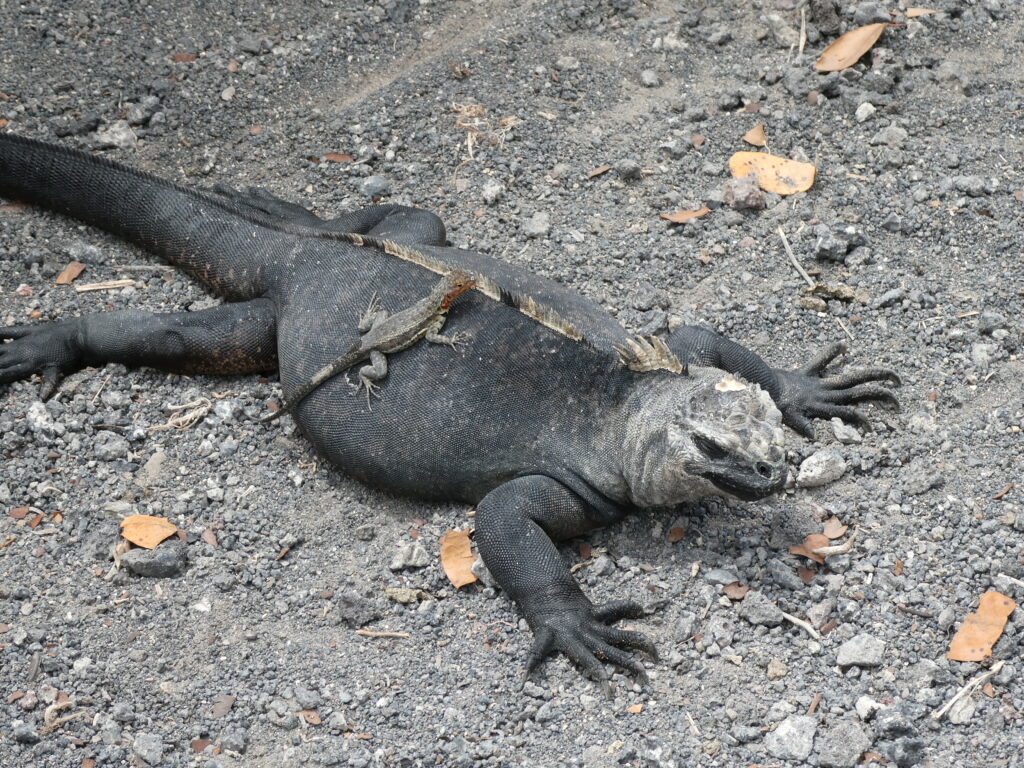
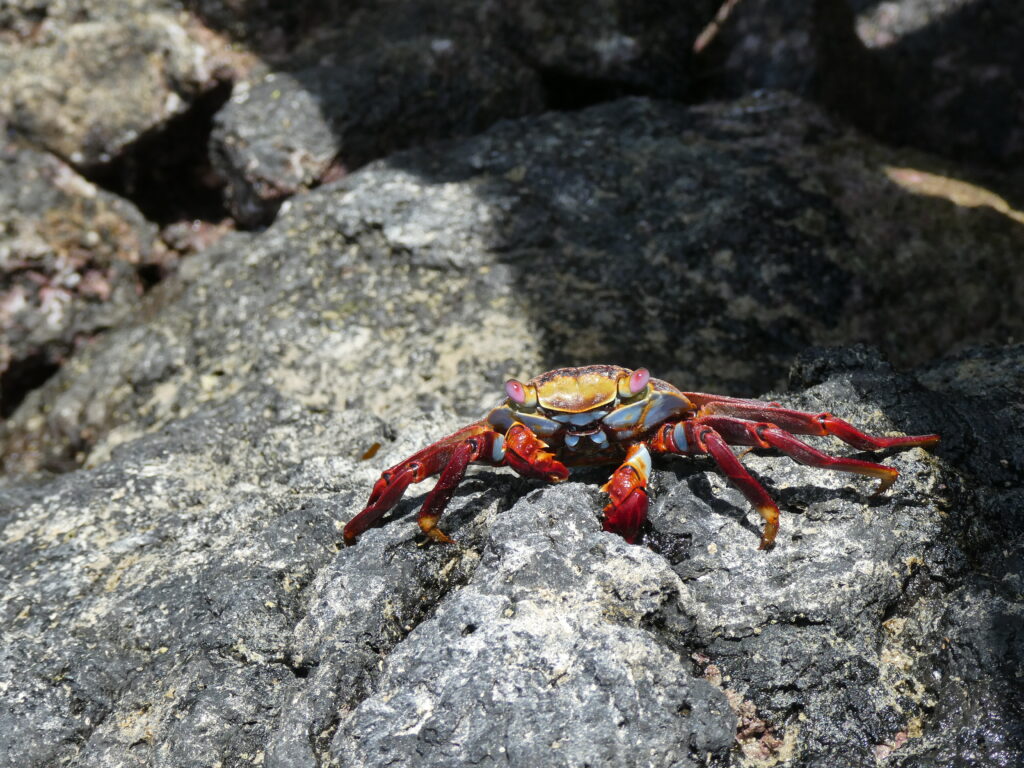
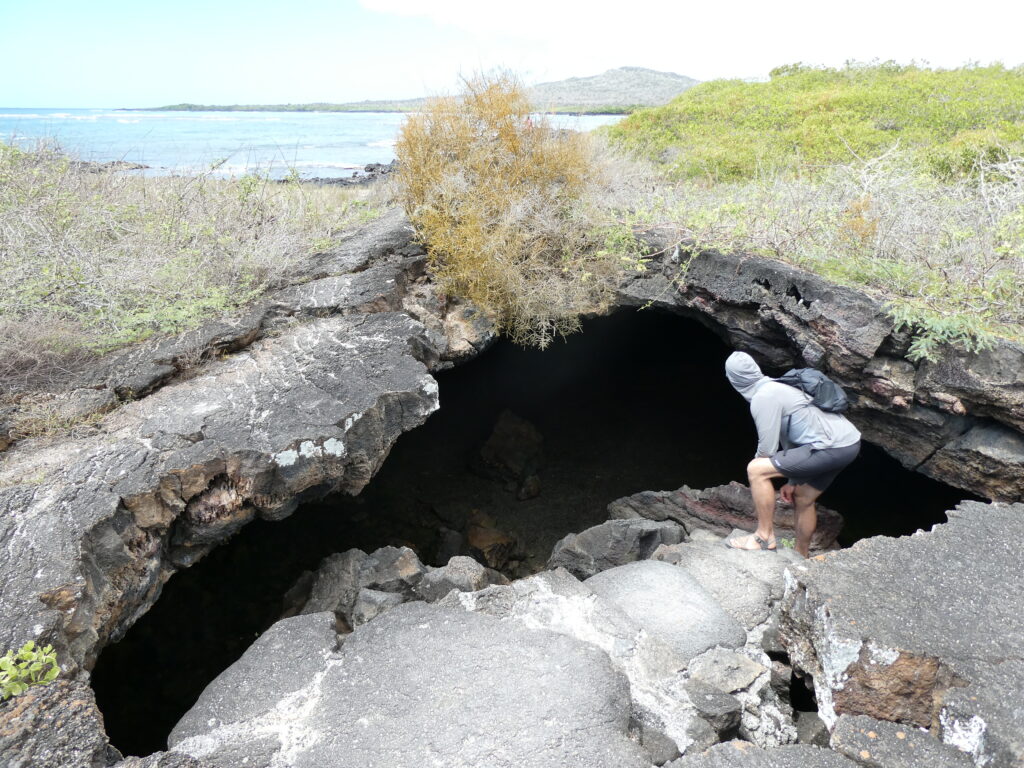
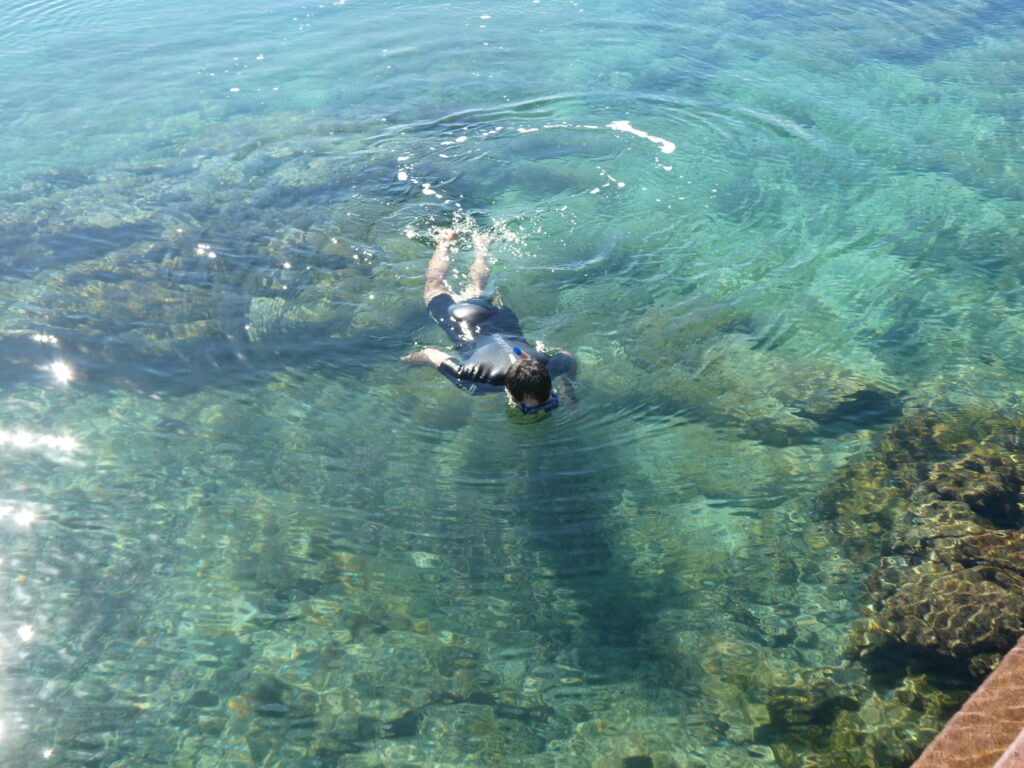
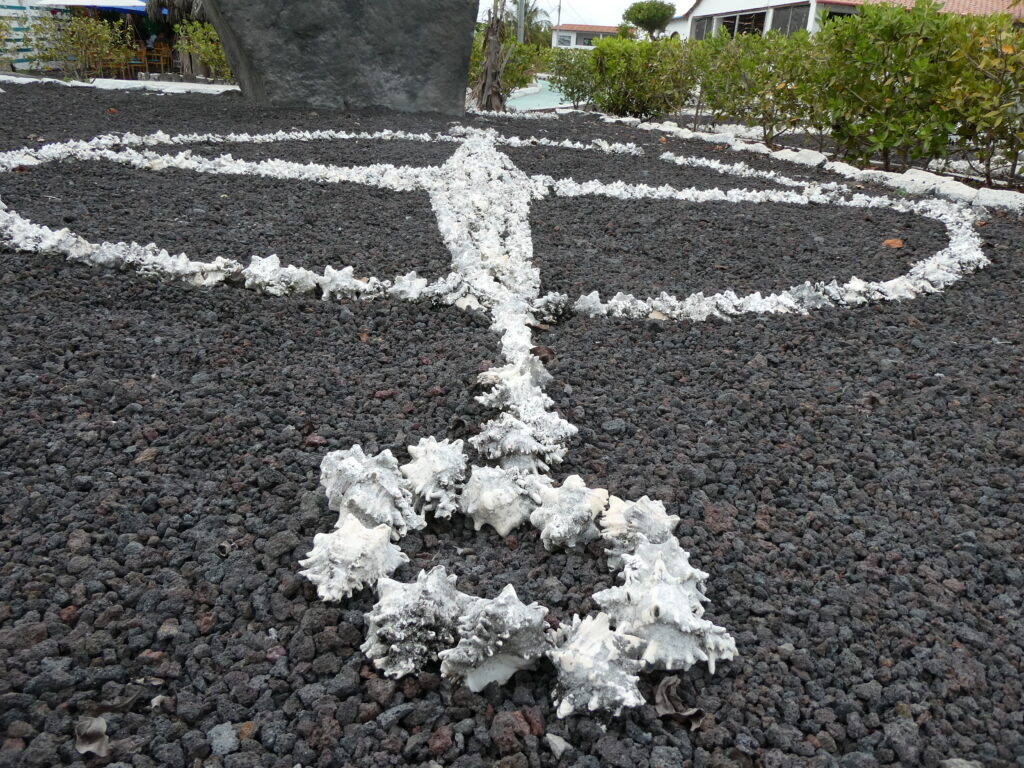
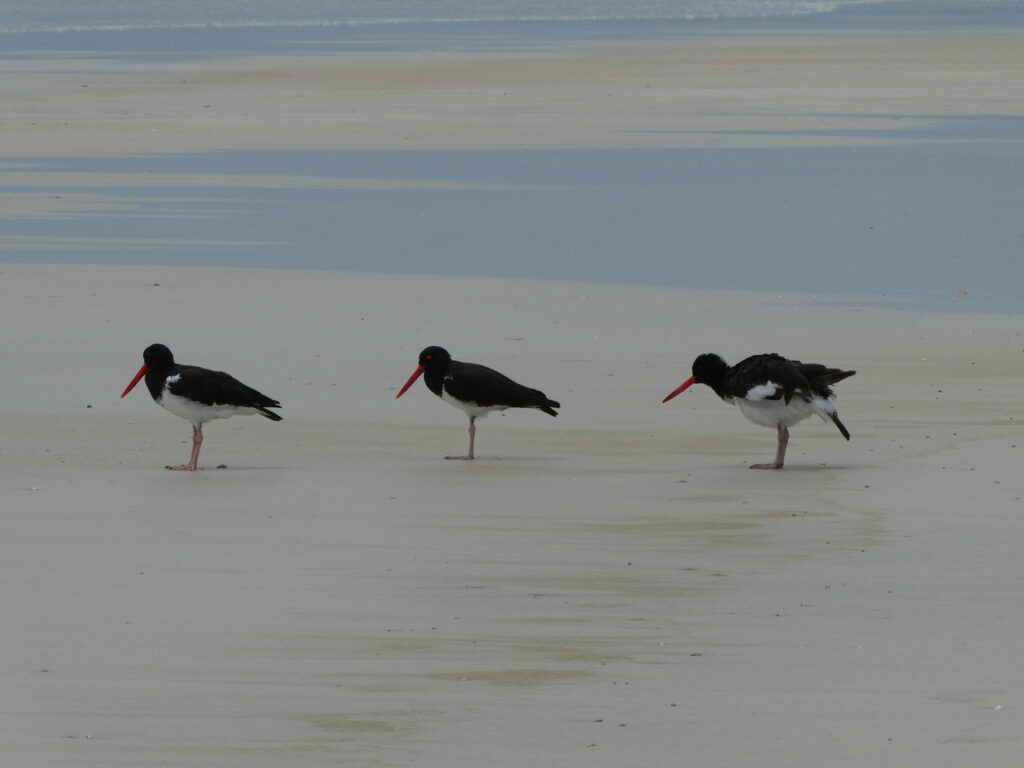
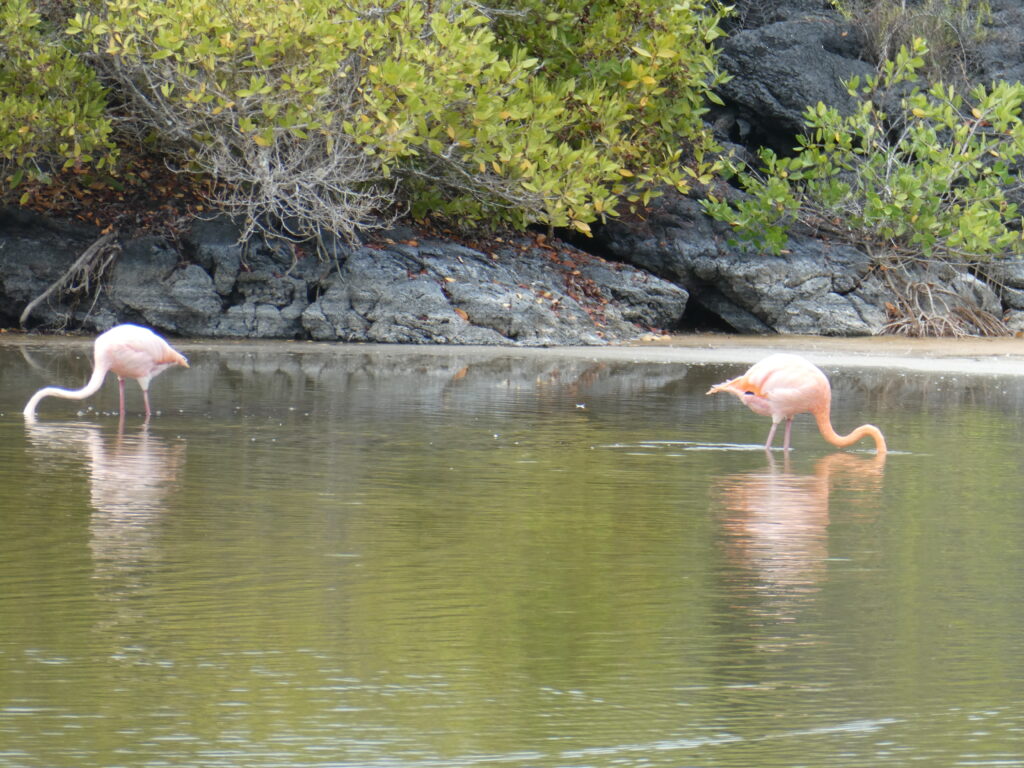
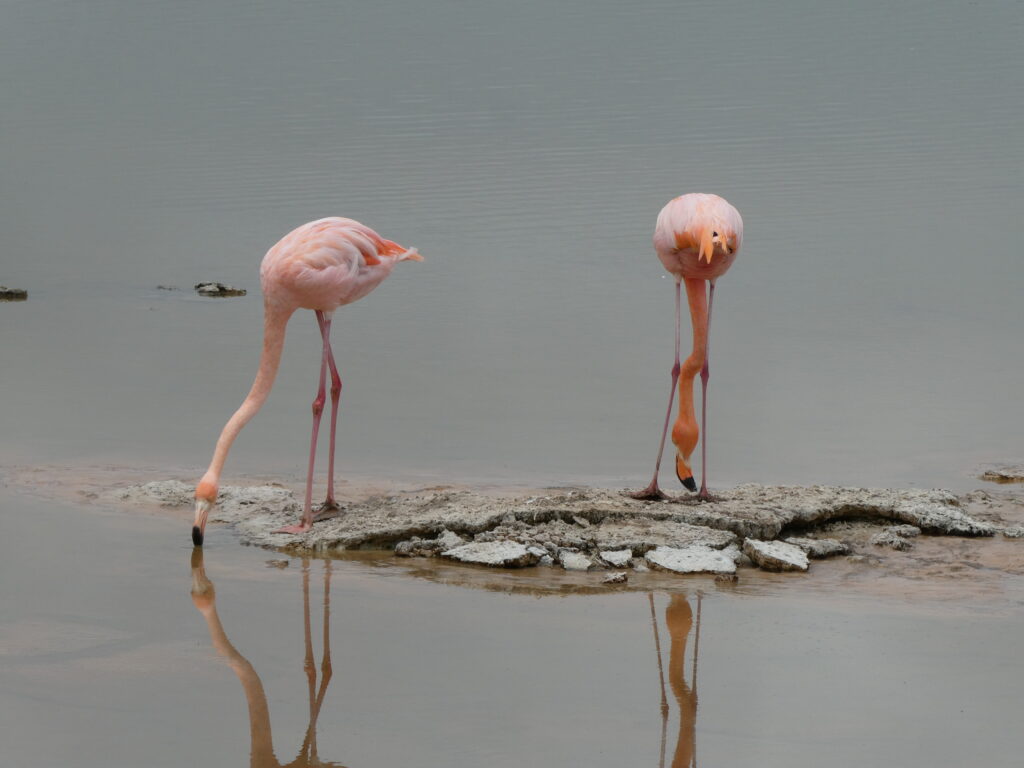
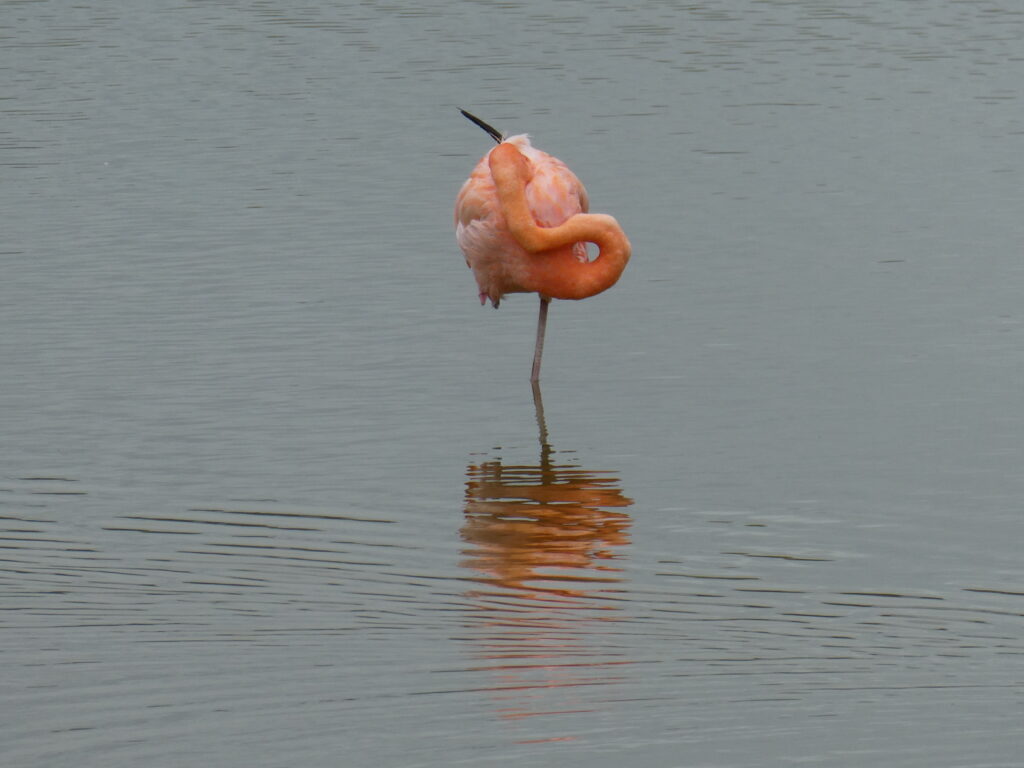
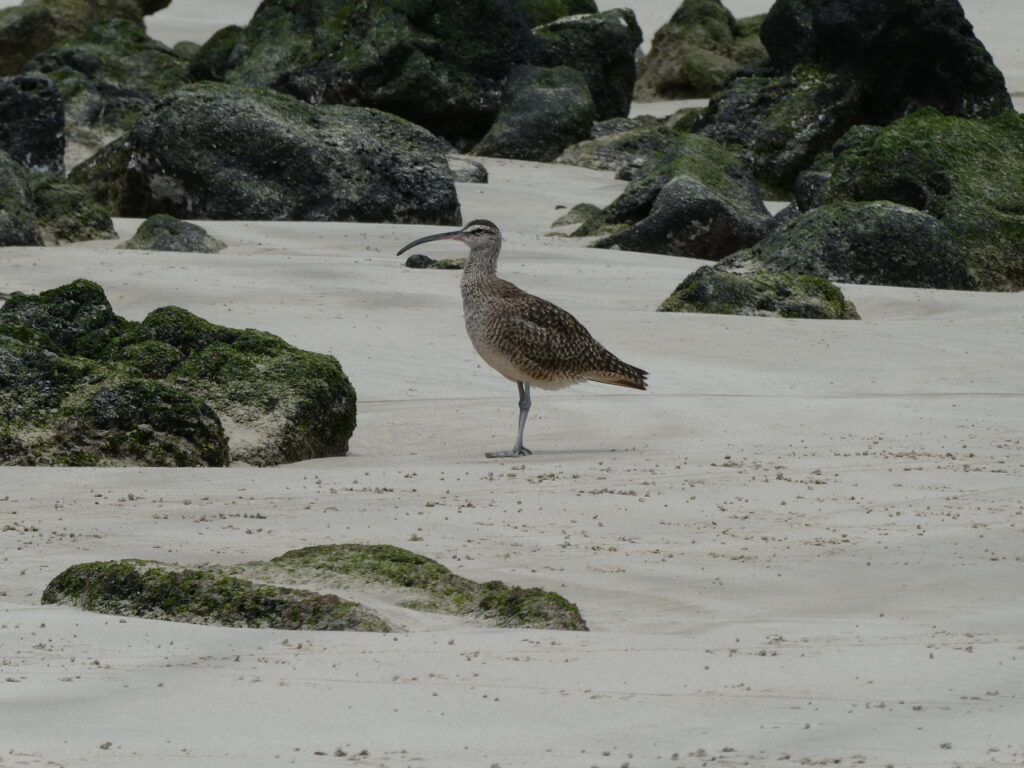
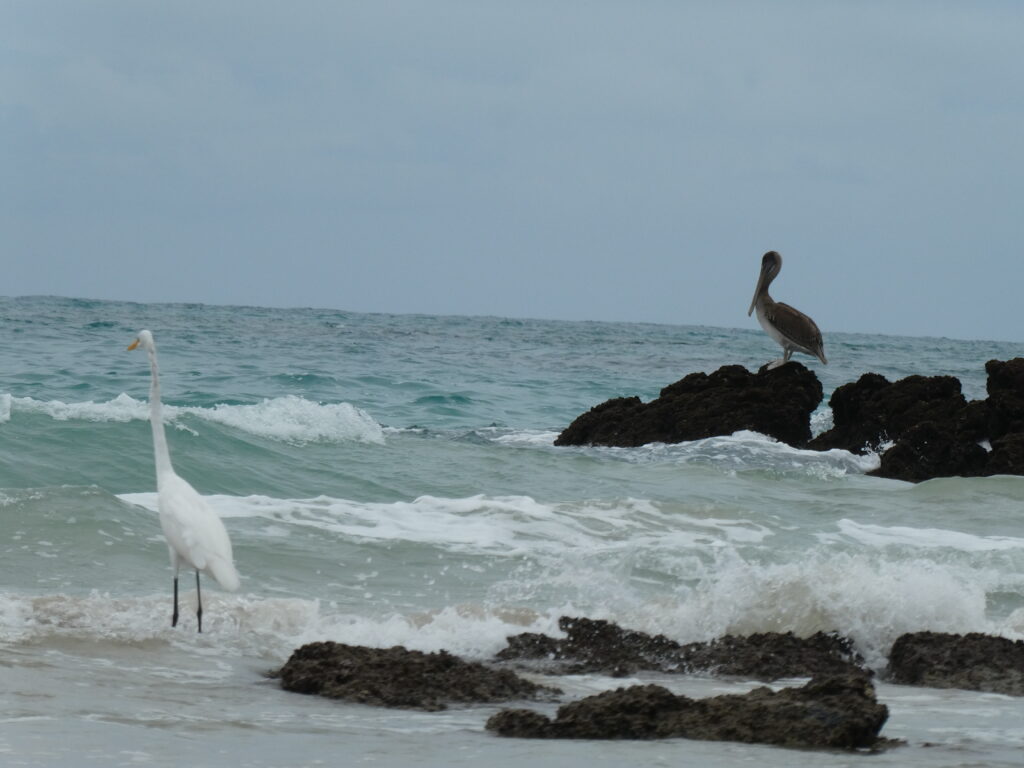
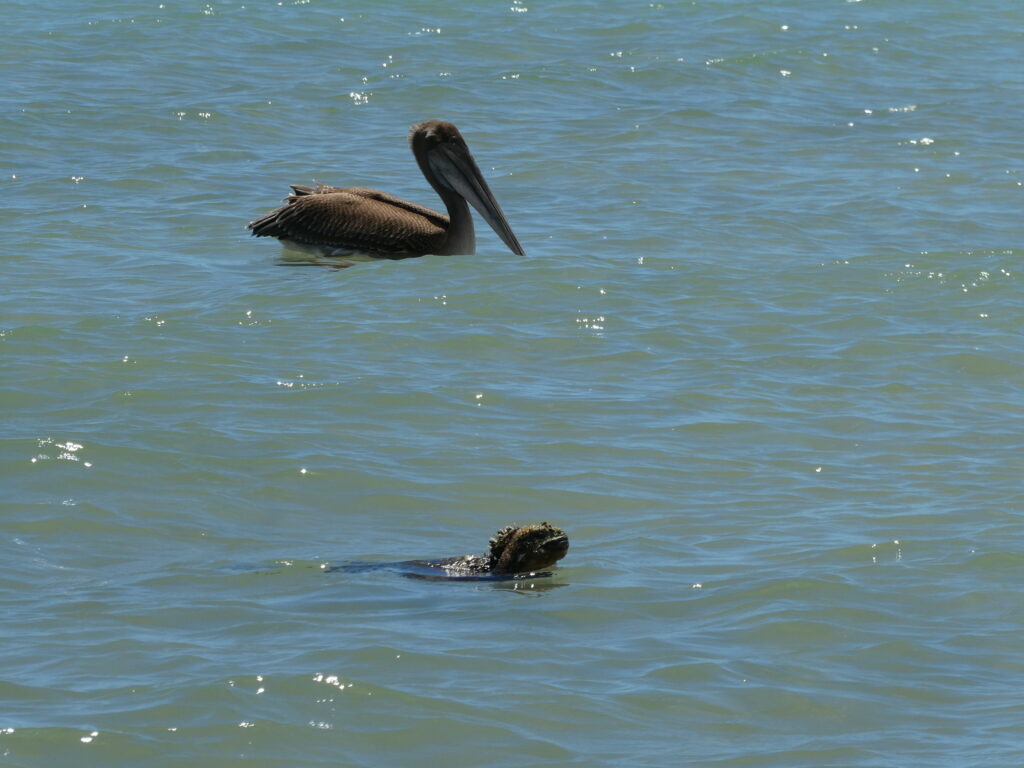
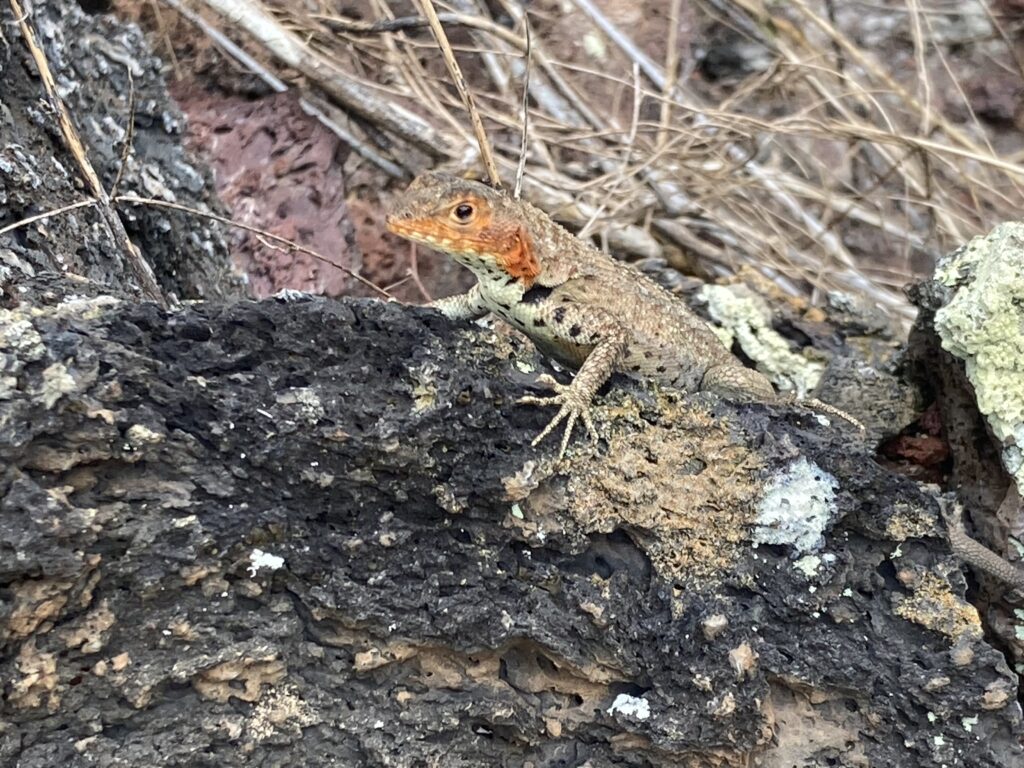
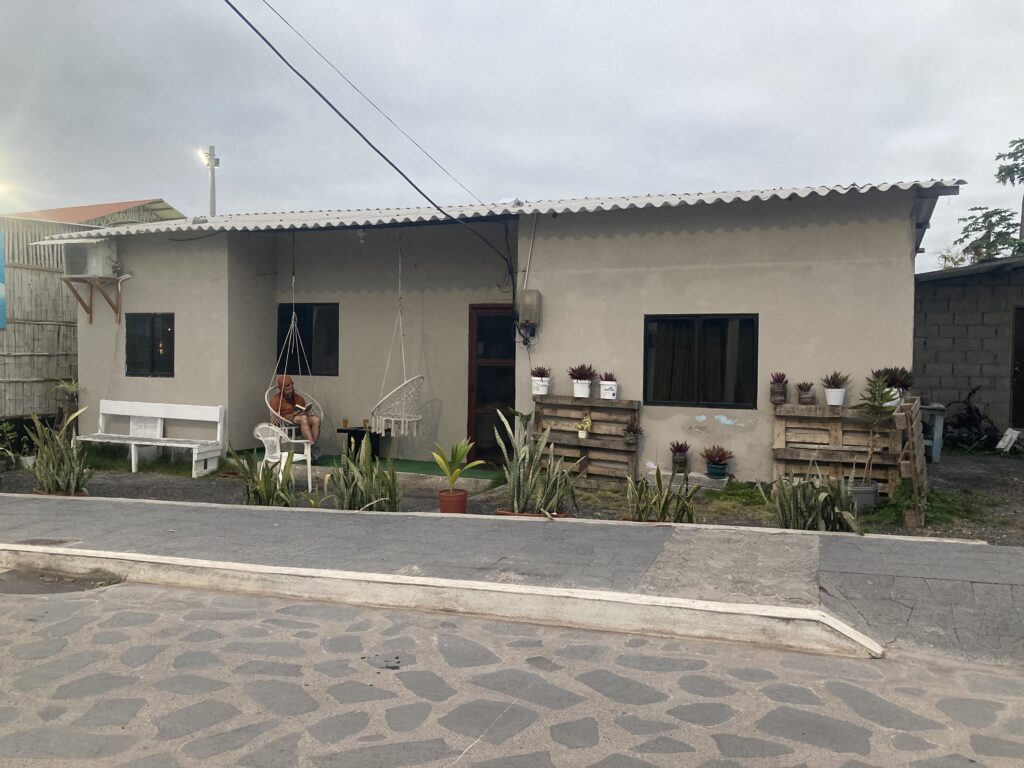
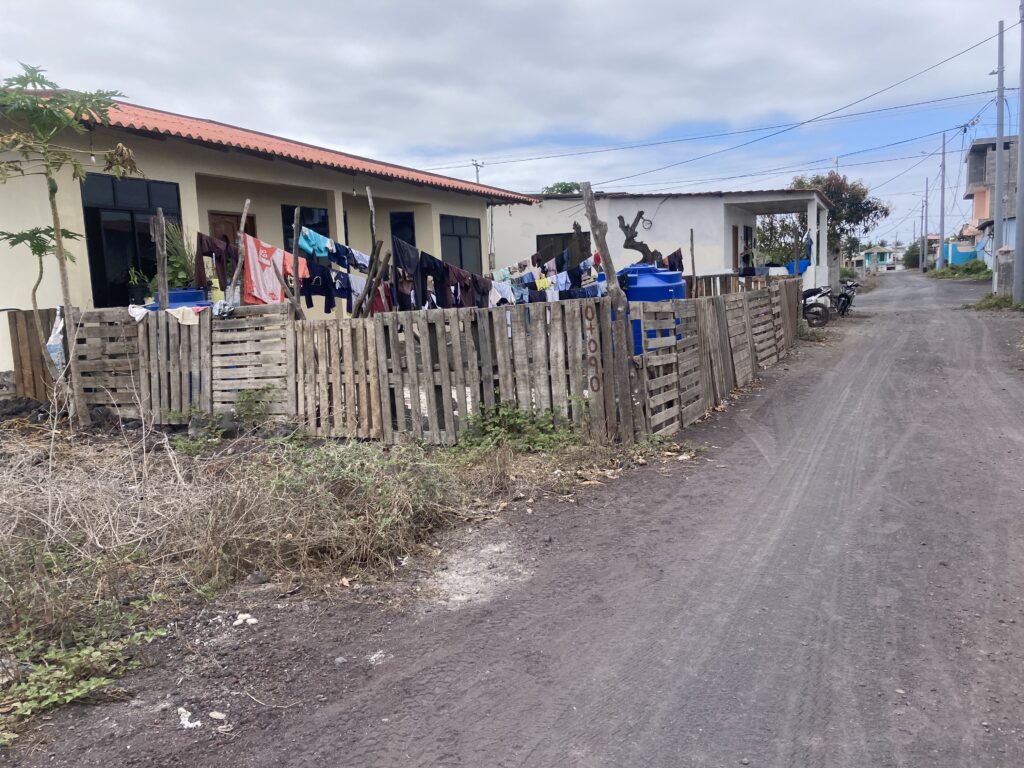
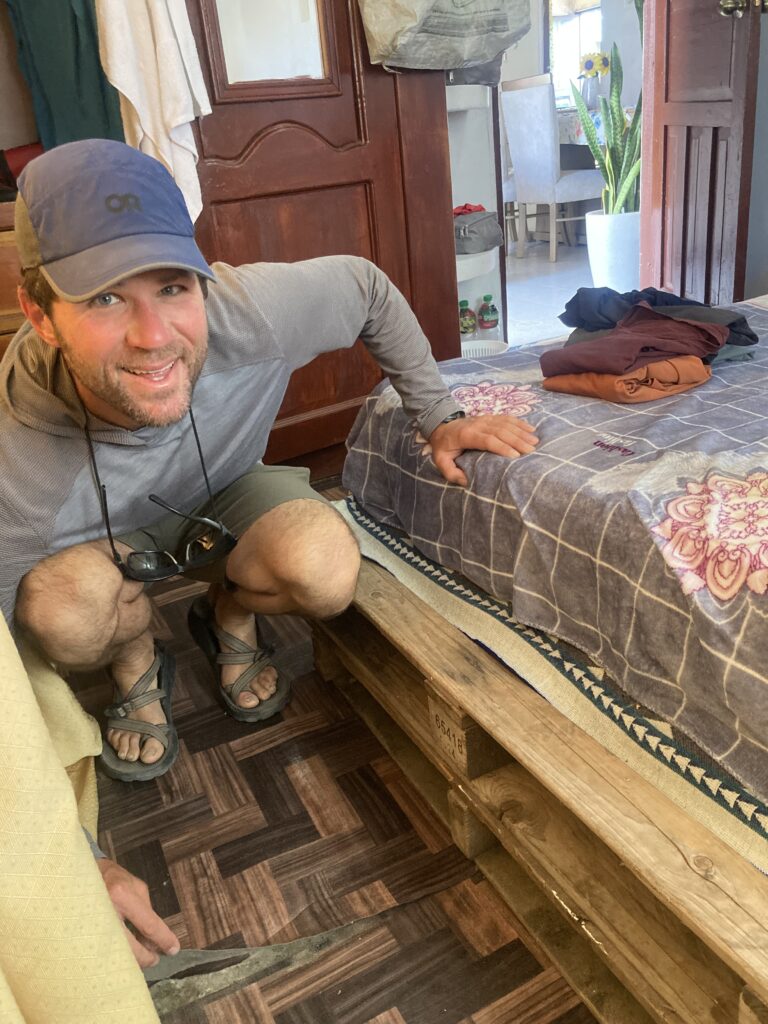
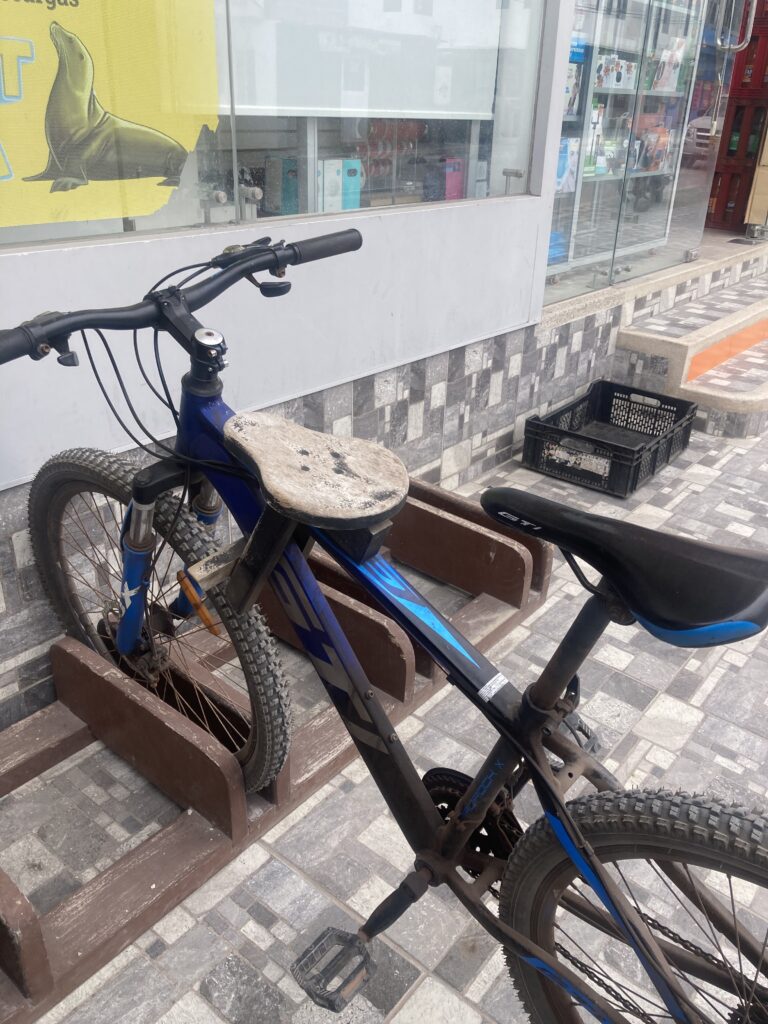
We spotted this colony of blue footed boobies (check out those BLUE feet) off the coast of Isabela. It was amazing to watch them torpedo dive into the water to catch their meals.We only saw this once so we’re not sure how common it is…a lava lizard on top of a marine iguana…is this some sort of symbiosis? A sally lightfoot crab on Isabela Puerto Villamil beach was a mix of pristine white sand and black volcanic rockDustin checks out a lava cave formed by magma cooling at different rates and then collapsingDustin snorkels at Concha Perla on Isabela – we rented him a wetsuit for a couple days to combat the chilly water. This compass rose on Isabela was made by the color contrast between the black lava rock & bleached out conch shells. Three American oystercatchers along the beach Galapagos Flamingos feed in the shallow lagoon – the entire Galapagos flamingo population is estimated between 300 – 500 individuals and is considered endangered. Galapagos flamingos feed by sucking in lagoon water and then filtering it for the small marine life they consume.After eating, a Galapagos flamingo sleeps on one leg with its neck curled and turned.The Whimbrel is a migratory bird that uses the Galapagos as a stopover before heading north to breed – they will travel up to 4,000km during migration!An egret & brown pelican hunt for their food along the beach. A marine iguana swims in front of a Galapagos brown pelican – both endemic species to the islands. Lava lizard on Isabela – the orange coloration indicates a mature female ready for breeding.Dustin reads on the front porch of our homestay on Isabela – notice the pallets being reused to hold up planters. Since all consumer goods must be shipped into the Galapagos there is an abundance of pallets remaining – here these leftover pallets were used to make a fence. We observed pallets used for door stoops, cafe furniture & even our bed frame.Dustin shows our pallet framed bed and the flooring of our accommodation on Isabela. Bicycles were the most prevalent form of transportation used by the locals on Isabela – cars are expensive to import and then are taxed at at almost 75% of purchase price, insurance & freight. This bicycle shows a second seat that was commonly used for children and adults sitting side saddle.
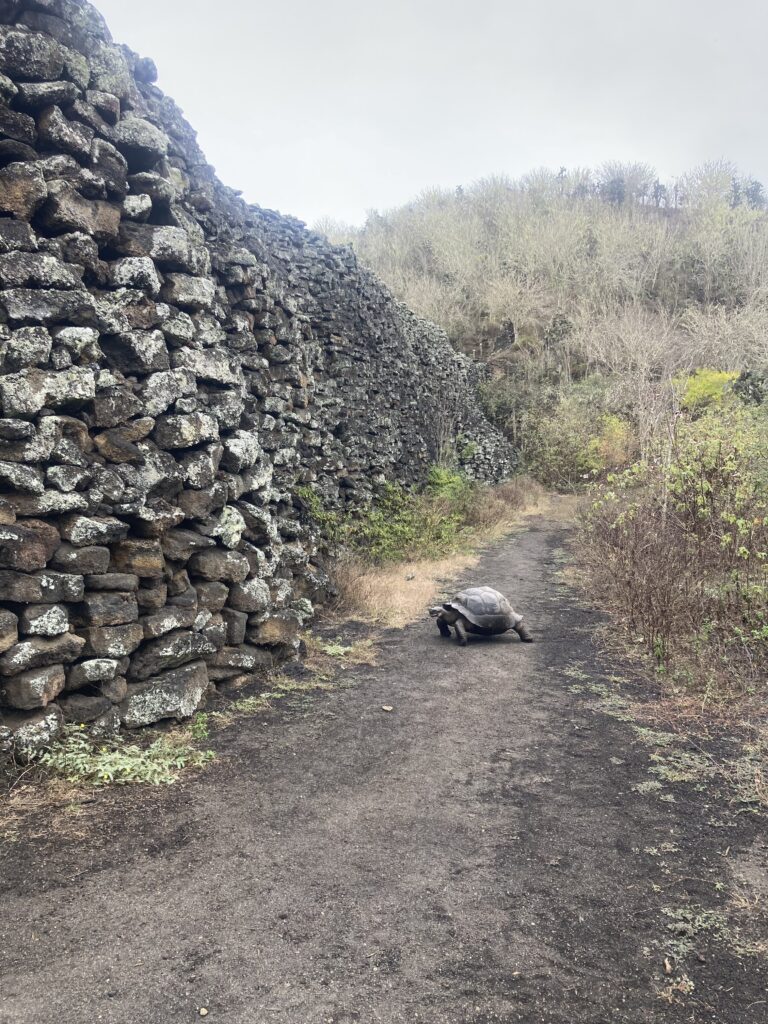
For us, Isabela offered another rental bicycle adventure – this time we cycled for 47km along the coast and then up into the highlands. Along the coast we found more tortoises, marine iguanas, and a historical wall built by prisoners from when the Galapagos was used as a penal colony.
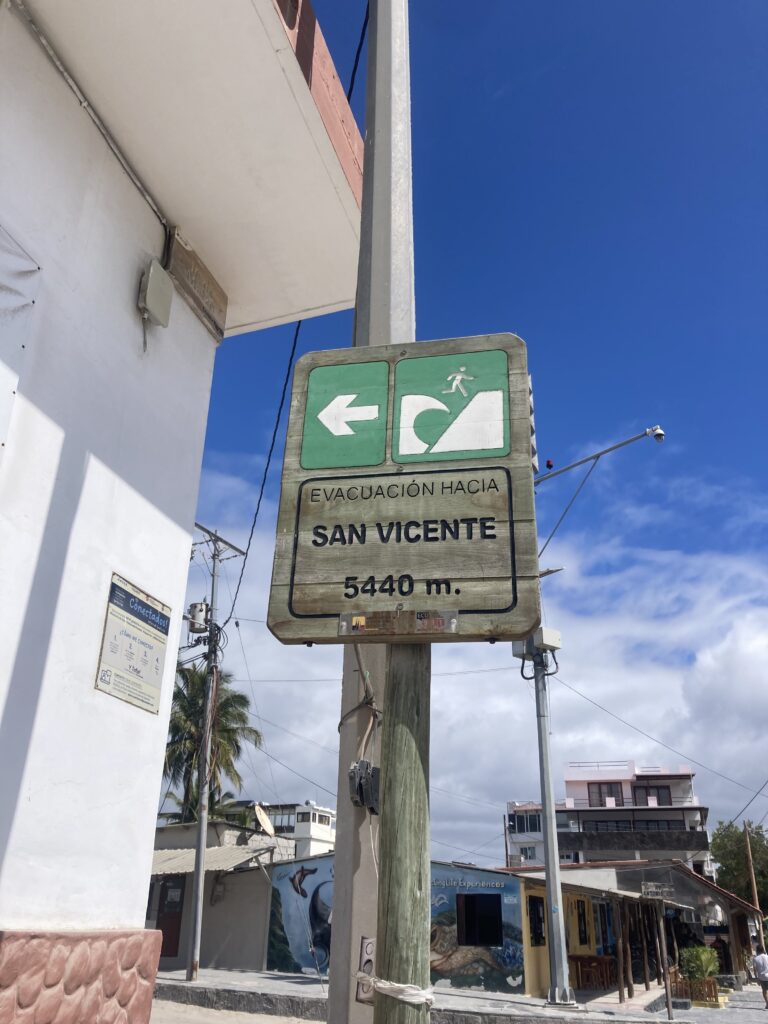
Isla Isabela is formed from 6 volcanoes – the one closest to town is a shield volcano which, because of low viscosity lava, forms a shallow dome similar to a shield. As opposed to a stratovolcanoes which form steep cones, the shield volcano allows for gradual bicycle/car climbing into the highlands. There was only one road out of town and this was also the tsunami evacuation route labeled almost every 200 meters from town. From town it was over 5km (3 miles) to the tsunami safety zone because of the gradual volcanic slope.
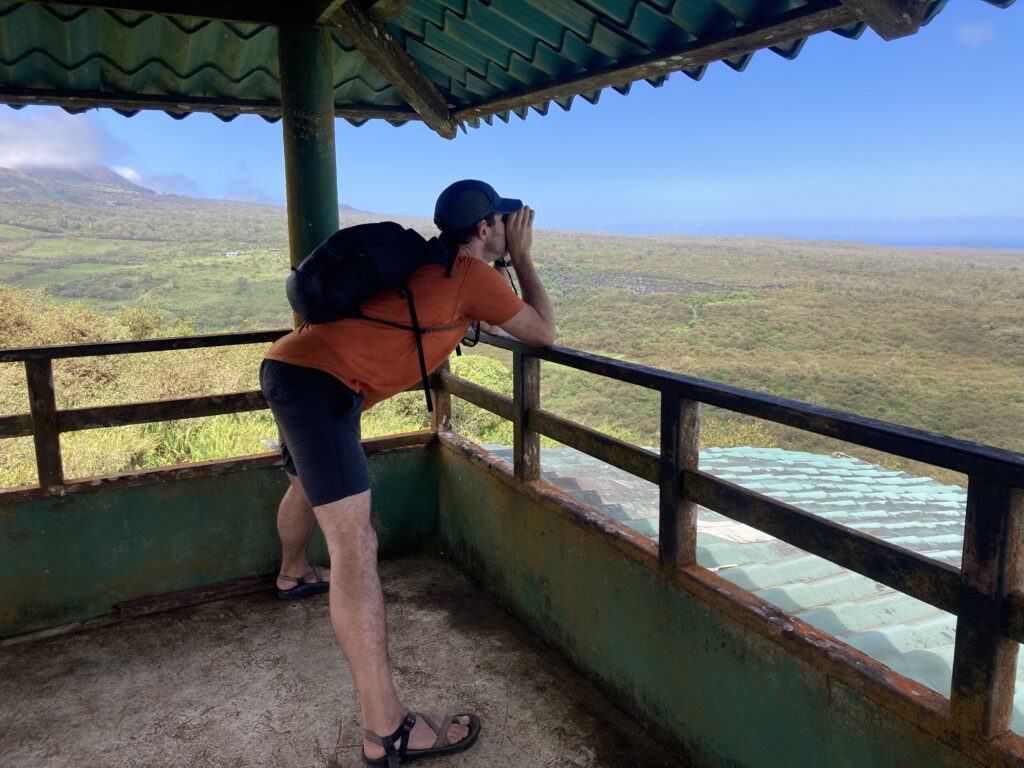
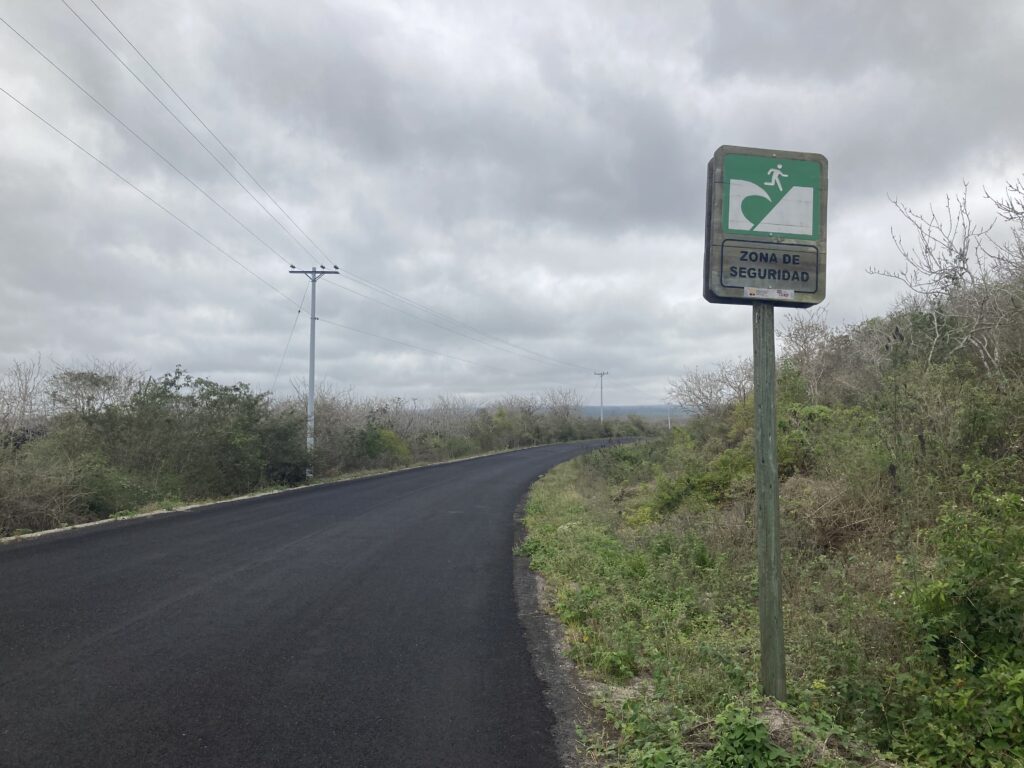
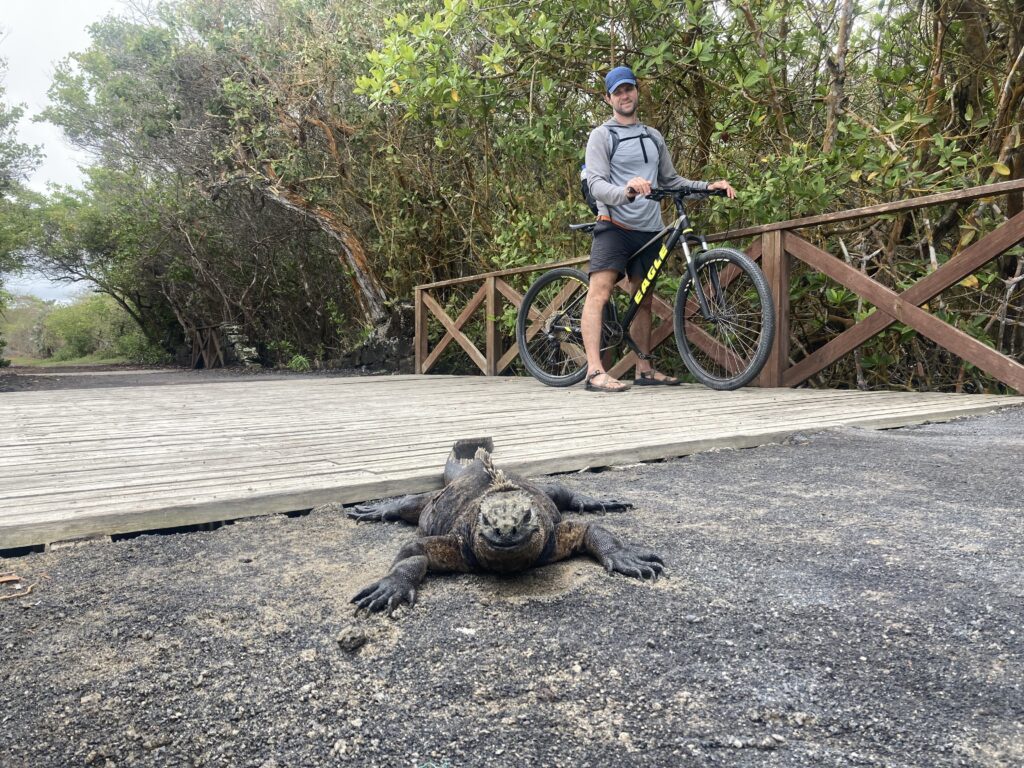
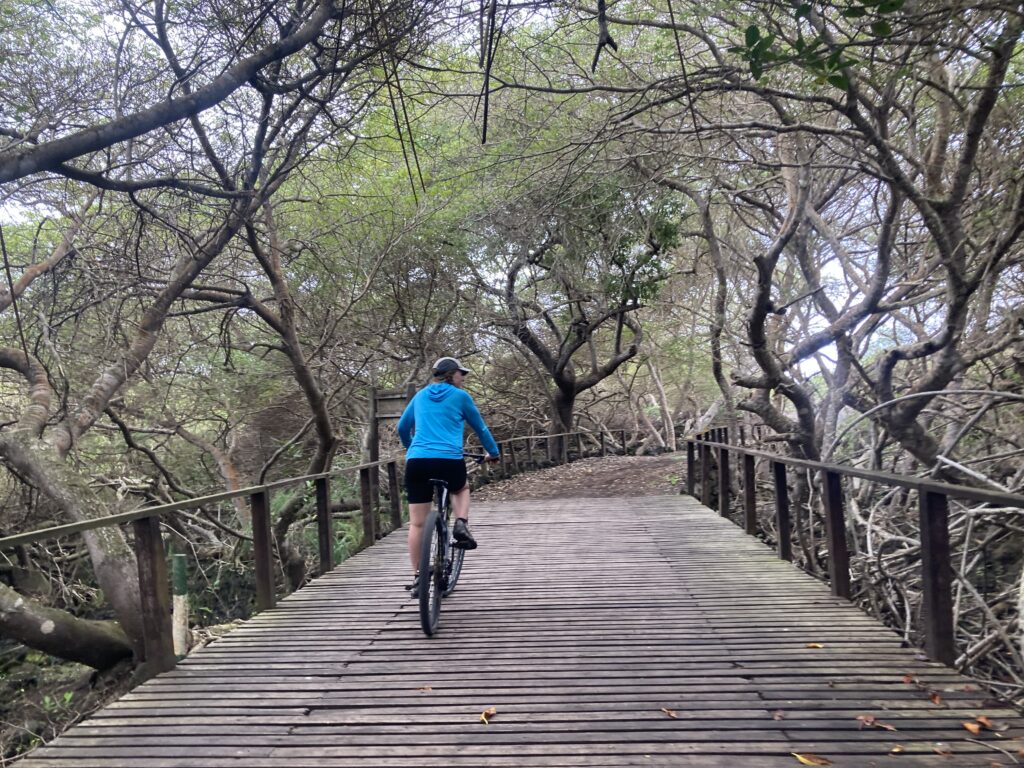
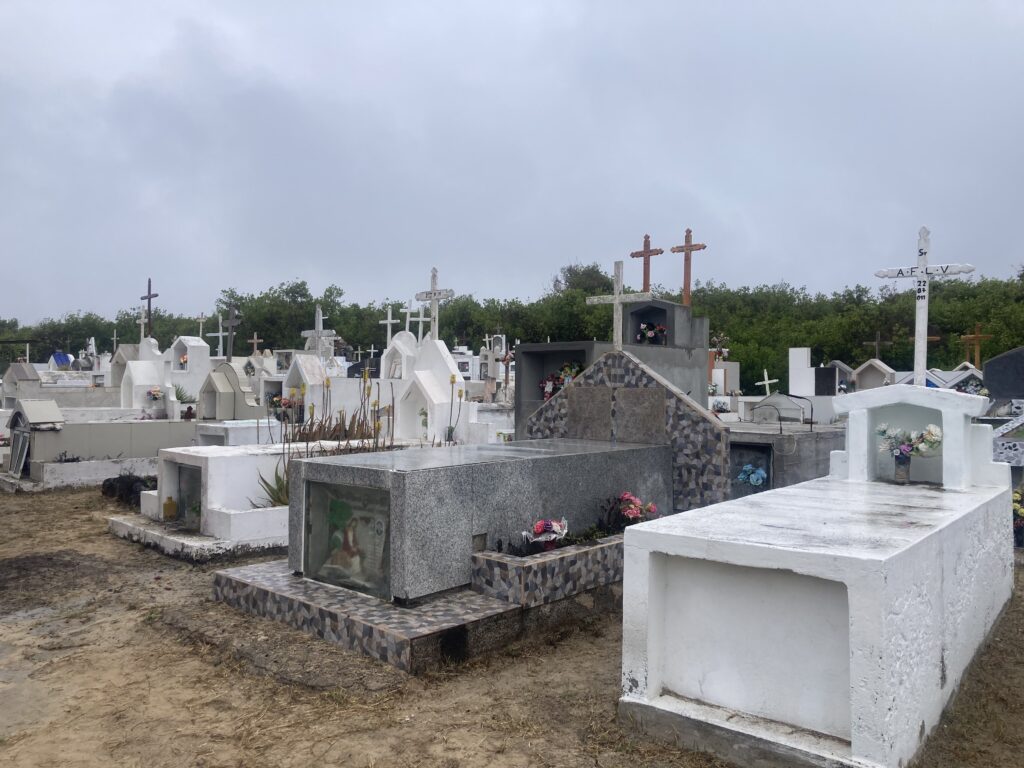
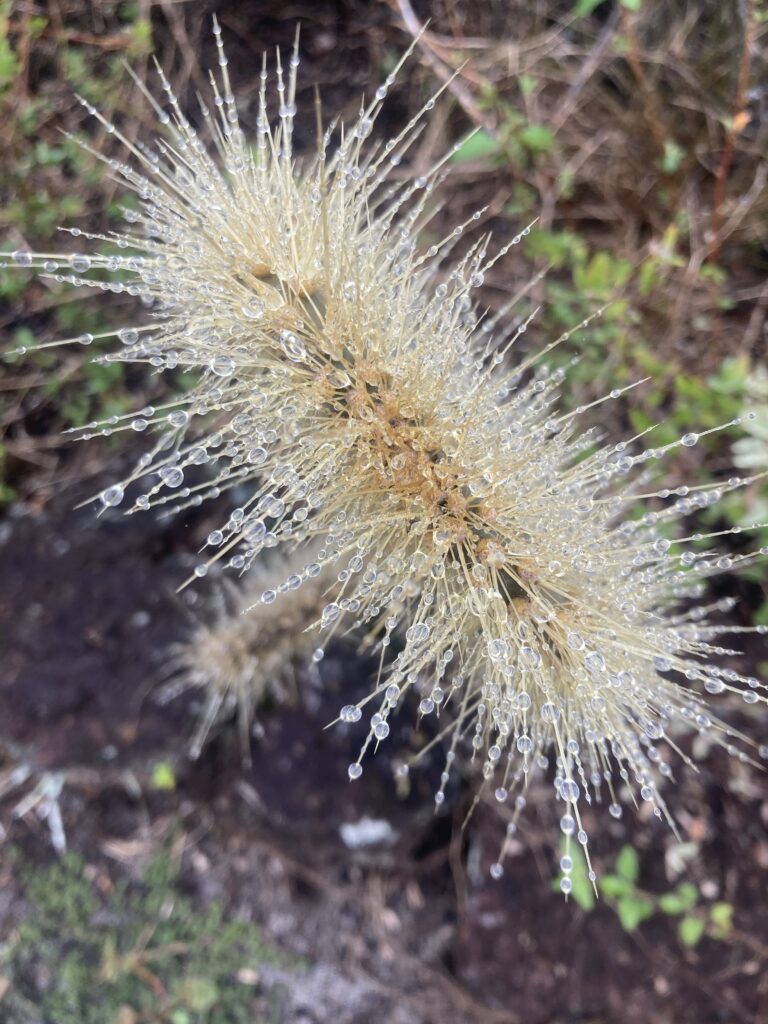
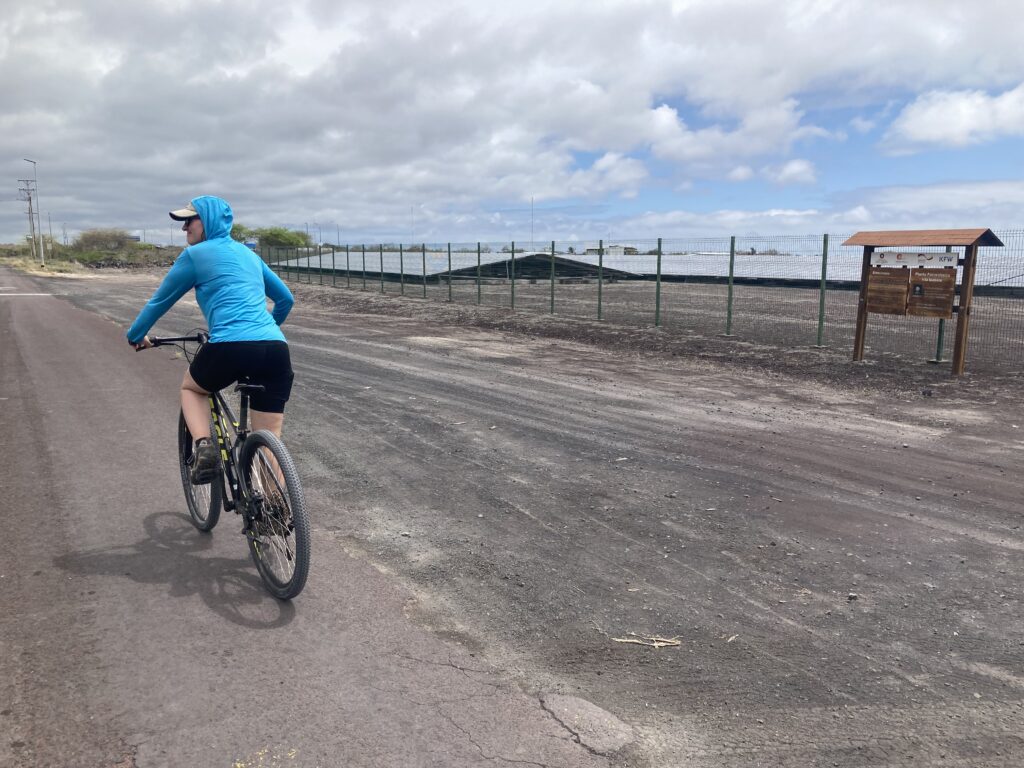
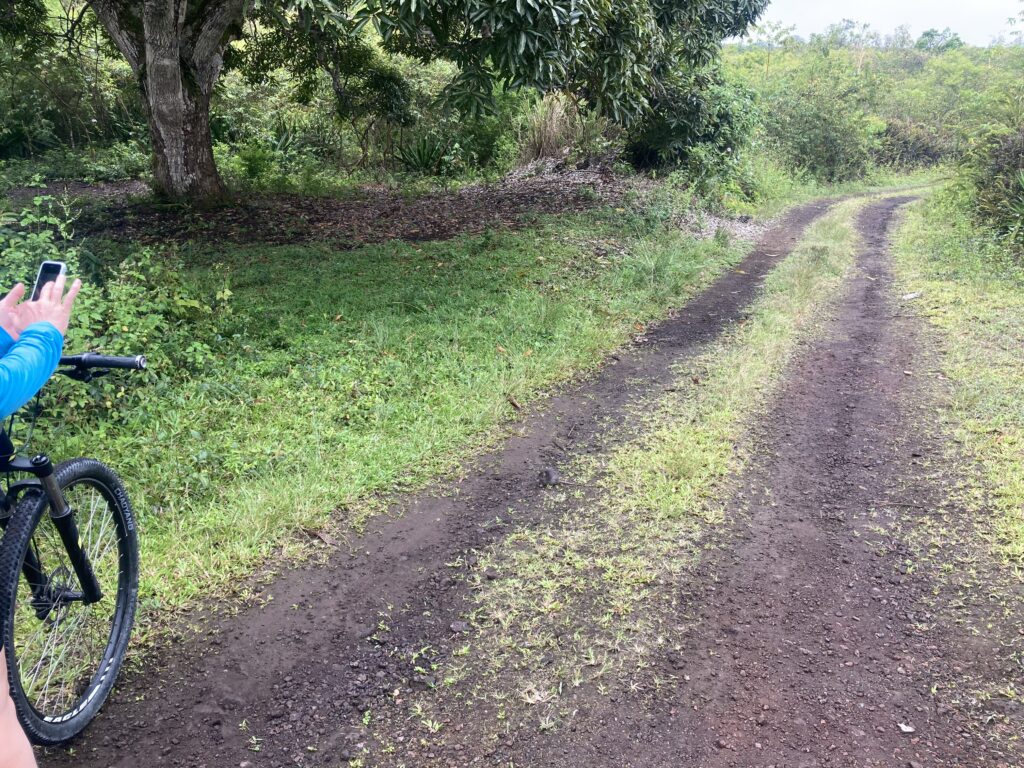
Tsunami evacuation sign – from town (essentially at sea level) evacuees must travel 5.4km (over 3 miles) to gain enough elevation to avoid a potential tsunami wave because of the large broad slopes of the shield volcano, Sierra Negra. The tsunami evacuation signs, posted every 200 meters, gradually counted down the distance until we reached “zona de seguridad” Another marine iguana greets us on our bicycle tour of IsabelaPatricia rides through a mangrove forest on IsabelaA cemetery on Isabela very close to the beach – caskets are not buried due to the flooding risk.The “Wall of Tears” was built by prisoners sent to the Galapagos between 1945 & 1959 when Isabela was used as a penal colony. The Galapagos does not receive much rainfall so many plants and animals rely on the moisture from the air – here a cactus demonstrates amazing water droplets obtained from condensation in the atmosphere.This cheeky fellow must get a lot of selfies with tourists, it knew how to pose for pictures. Check out that smile. On our way up to the highlands Patricia cycles next to a solar farm – since we are at the equator, panels are arranged like a low angle roof gable.Here Patricia tries (but fails) to take a picture of a rat we observed in the highlands – its the dark spot in the left tire track about 7 feet from her bicycle. We observed MANY of these rats (mostly flattened) on the road after being run over. This invasive species, first introduced by sailing ships in the 17th century, are a threat to the eggs and hatchlings of the island’s native species. There is an ongoing effort to control the rat population on the islands.From a viewpoint about halfway up into the highlands one can observe the vast gradual slopes caused by the Sierra Negra shield volcano.
We returned to Santa Cruz for a couple nights before our flight out and pretty much just chilled and walked the town, harbor and beaches – of course, Dustin got in another snorkeling session.
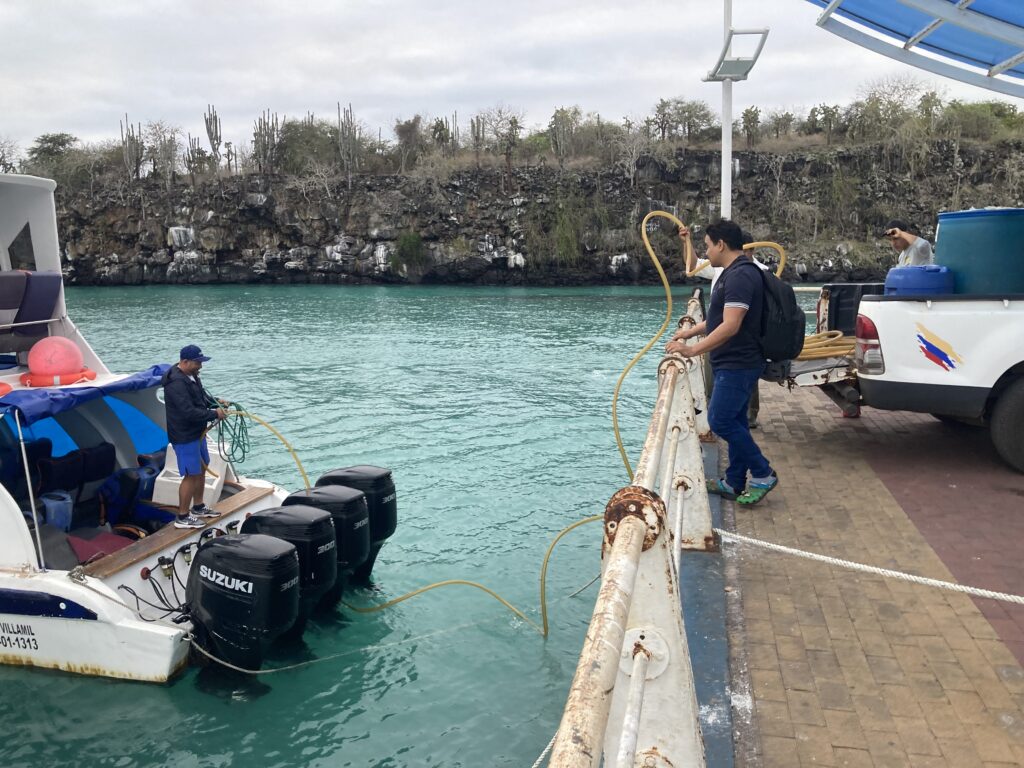
This is one of the ferries we took between islands – here is it finished with its workday and waits to refuel at the dock. Boat refueling wasn’t exactly what we were used to and was interesting to observe the process. The military came and inspected the hoses & fuel barrels (blue on right).On the short taxi/ferry to get to Baltra where the airport is located. Interestingly, Balta was a US military base from 1942 – 1945 to protect the Panama canal – on our bus ride to the airport, after the ferry across the channel, old military infrastructure could be observed.
Overall, our trip to the Galapagos was wonderful and we are so thankful we were able to visit these iconic islands. Patricia made a “Budget Tip Sheet” for the bicycling community but we thought we’d share it here in case anyone is interested.
Quito
After the Galapagos we returned to the large urban city of Quito (pop 2.7 million) to rebuild the bicycles, shakedown our gear, and most importantly acclimatize to the higher elevation. Quito is at an elevation of 9,300 feet and boy could we feel it in our lungs when we first arrived – this high elevation living was exacerbated by our accommodation being on the 3rd floor in the Quito hills.
We allowed ourselves about one week to get all of our chores done & start rebuilding our nerves of steel for urban bicycling in Latin America. This extended time also allowed us to enjoy some of the culture offered in Quito as well.
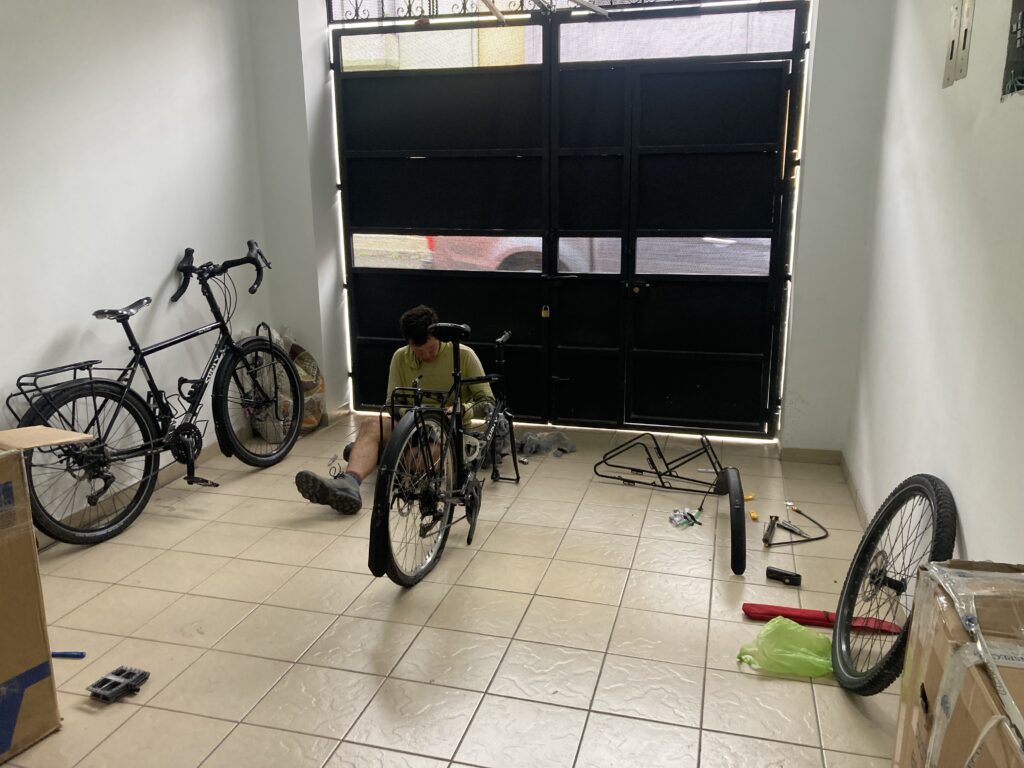
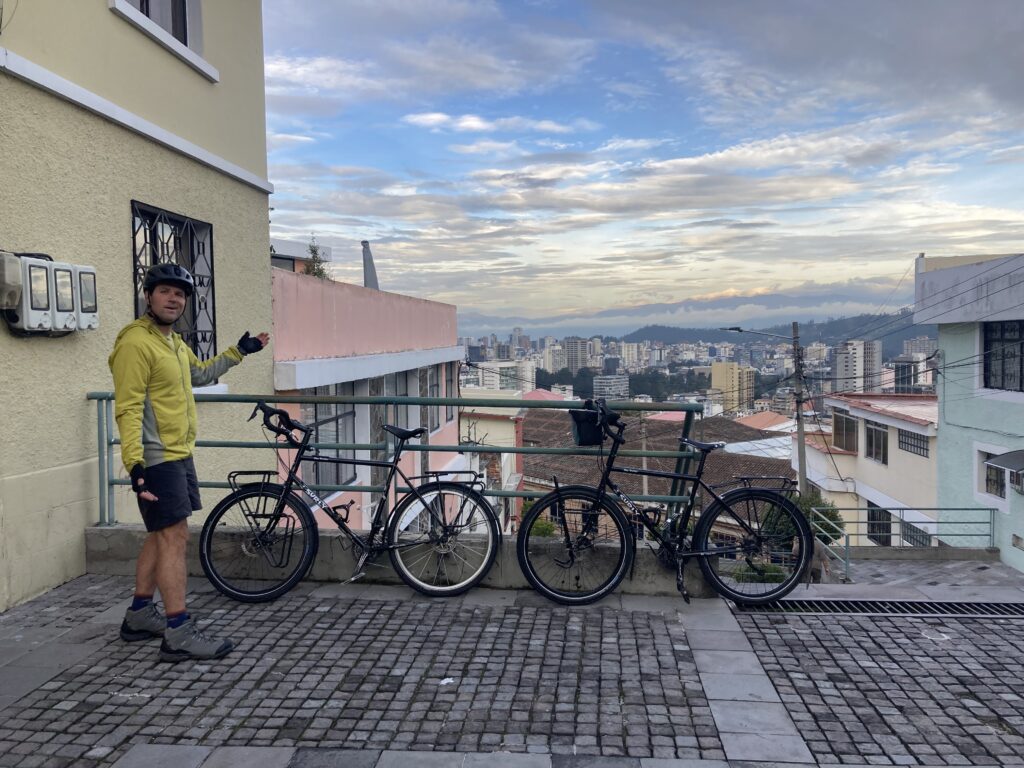
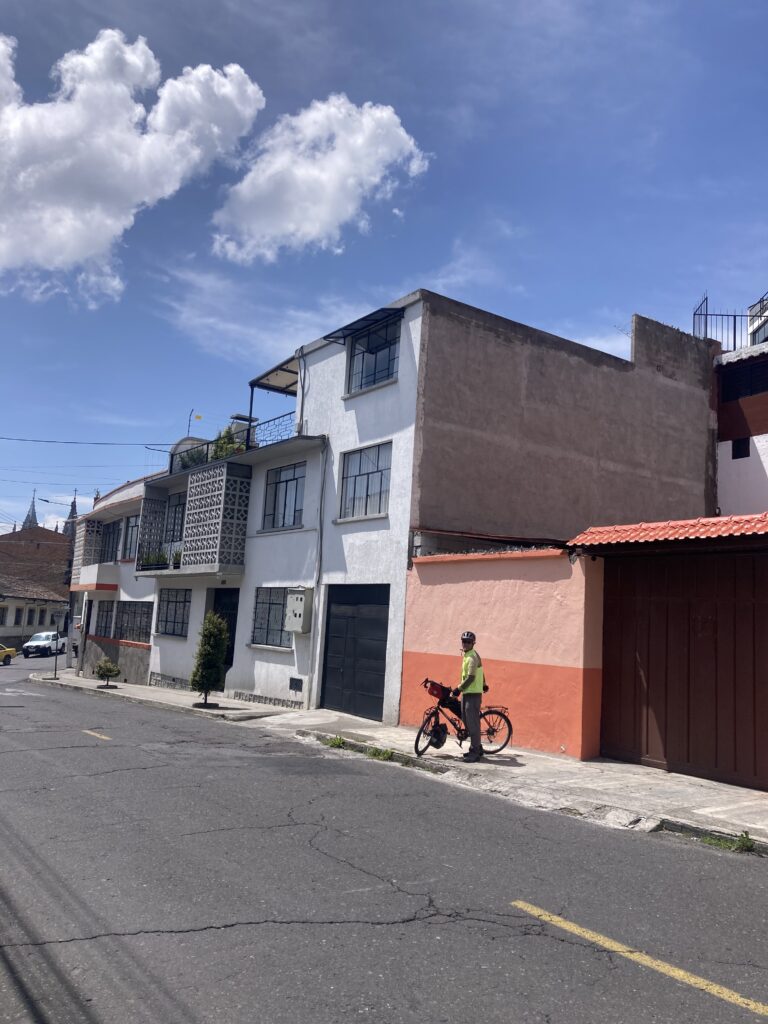
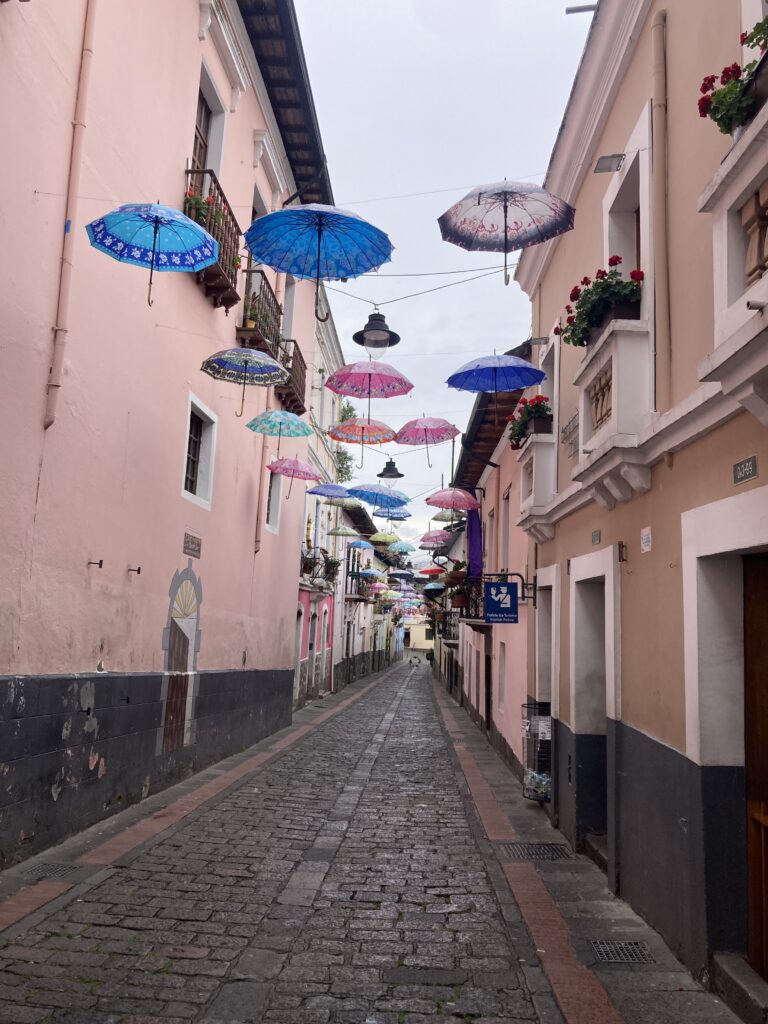
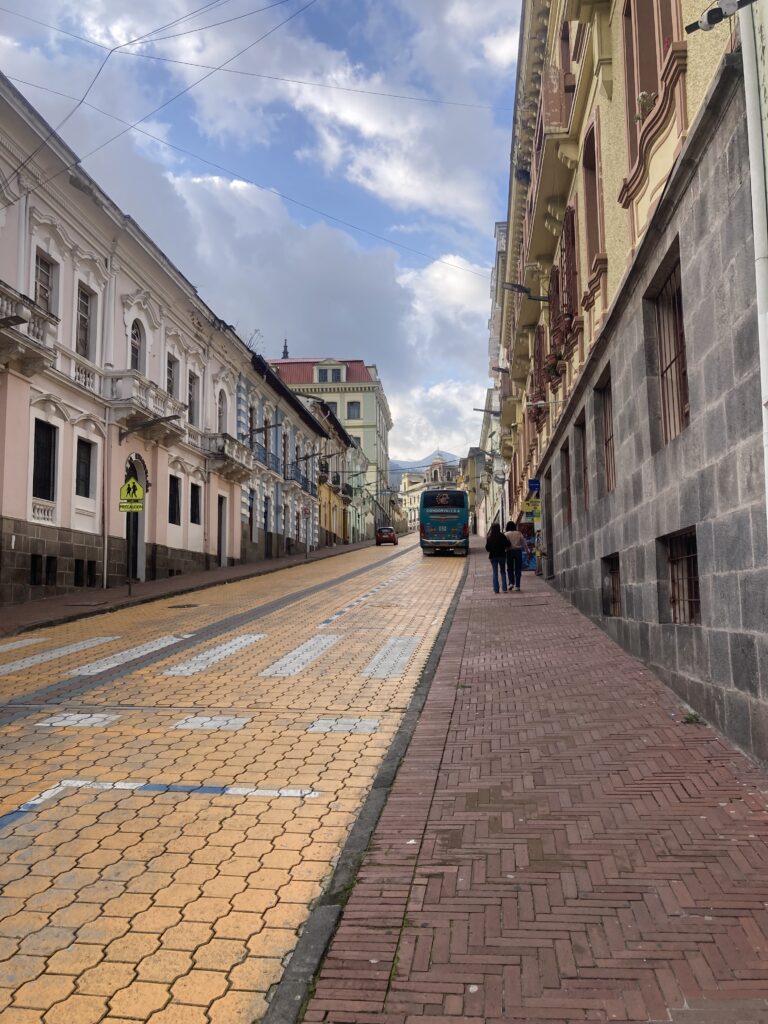
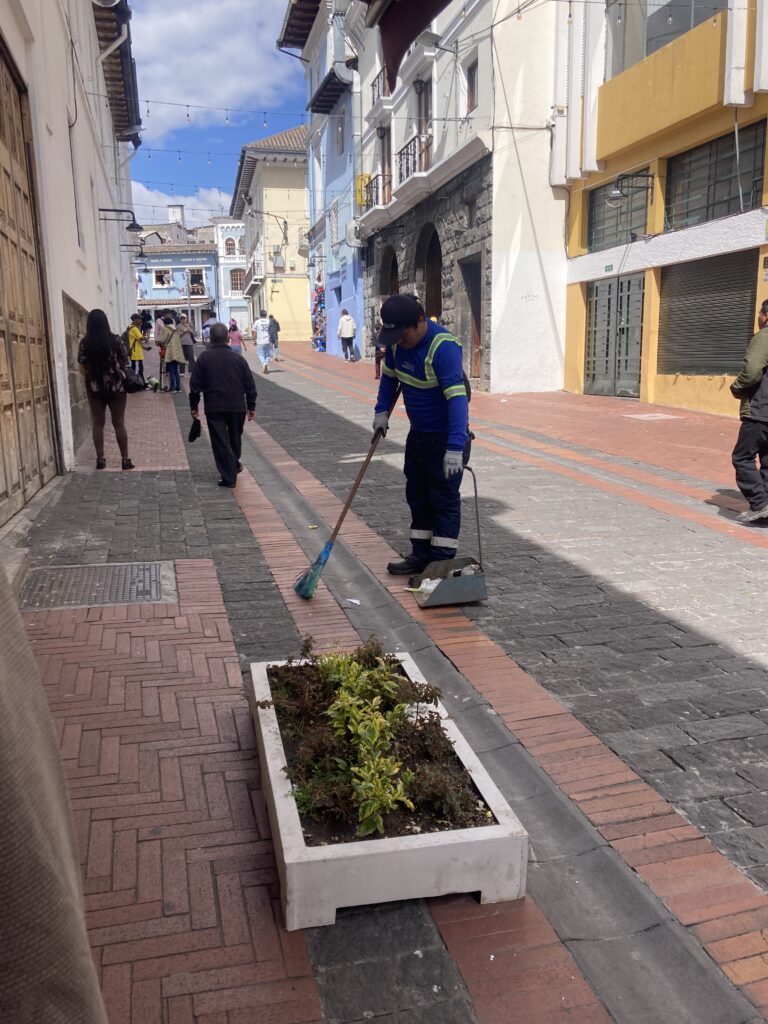
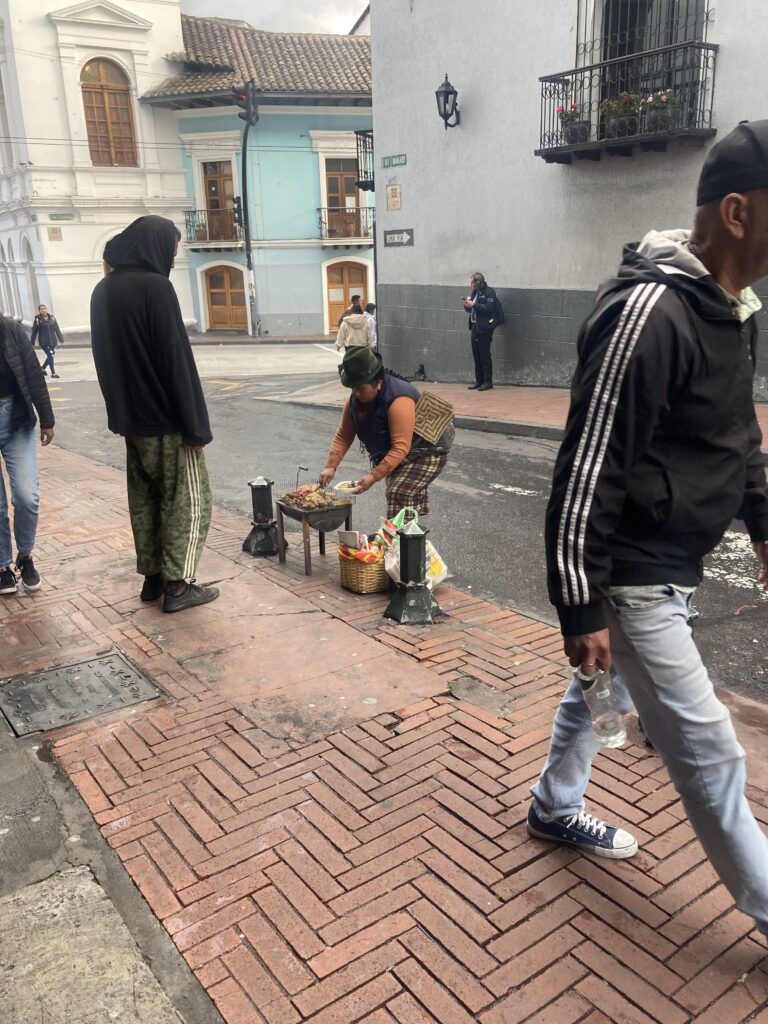
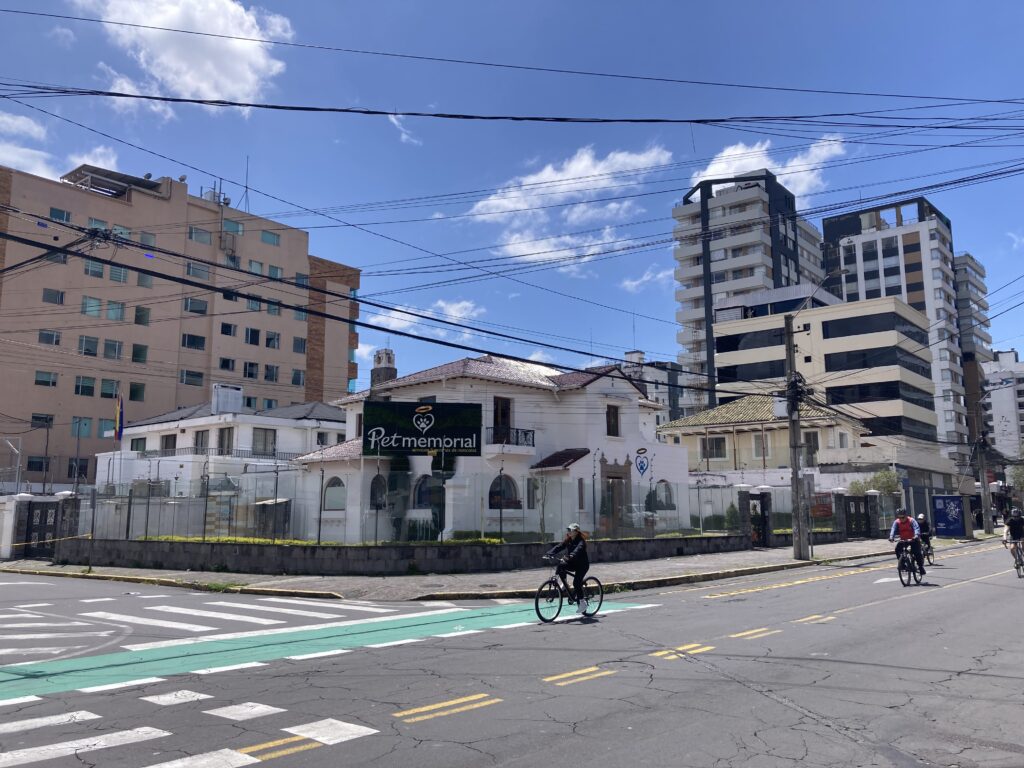
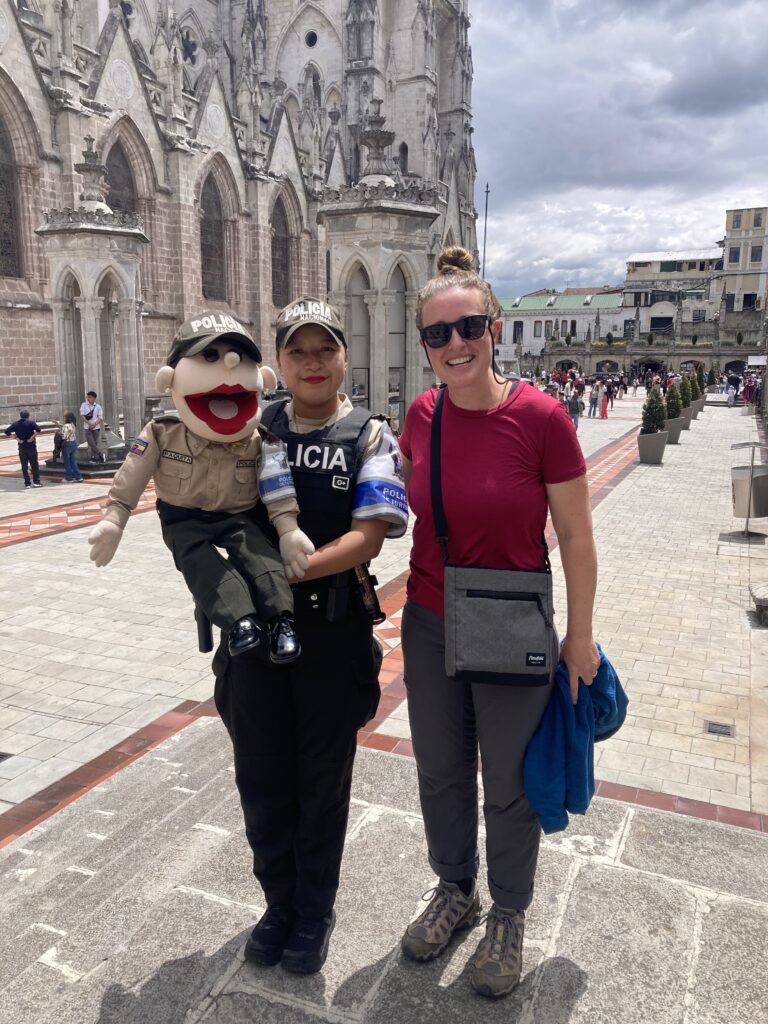
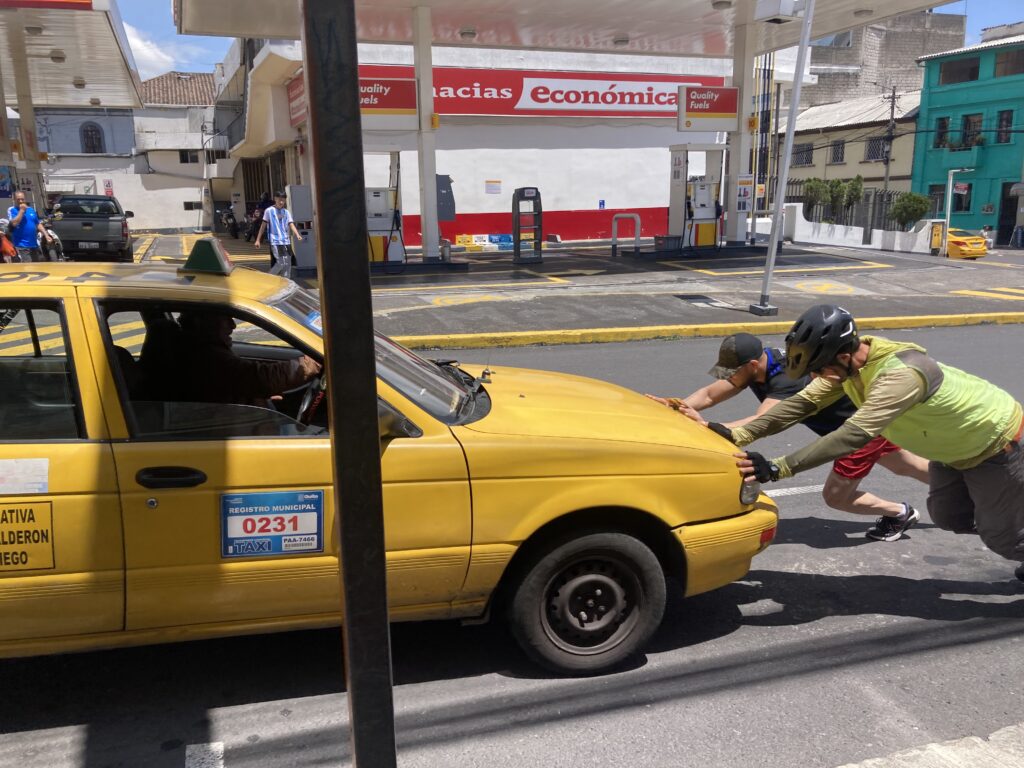
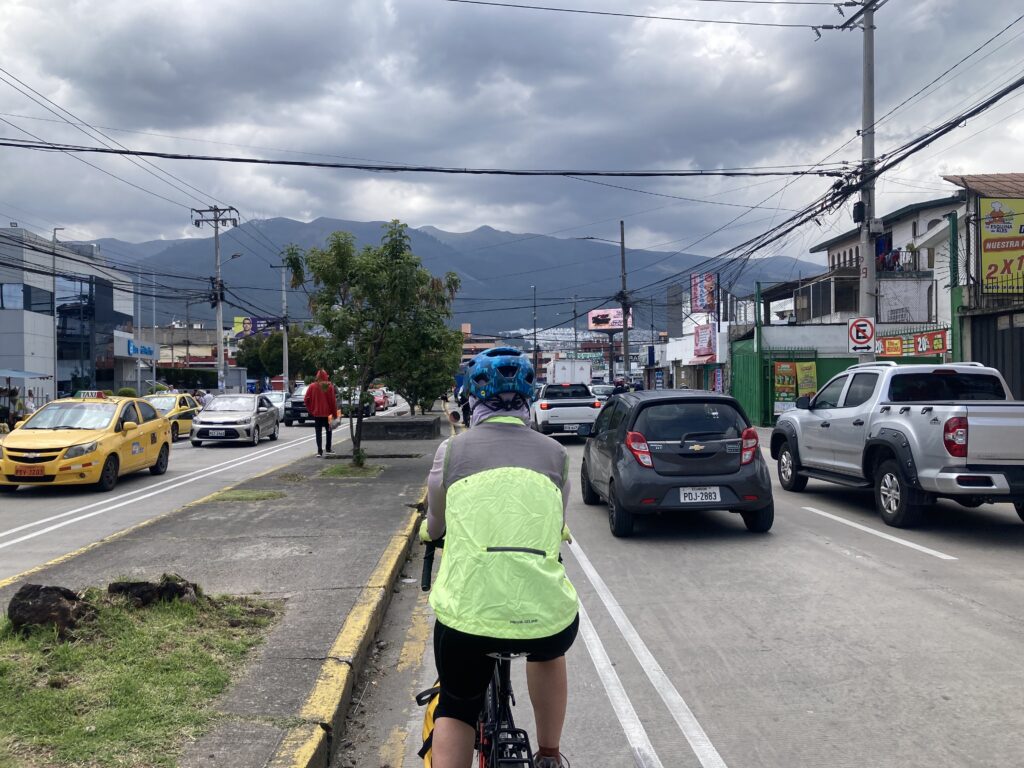
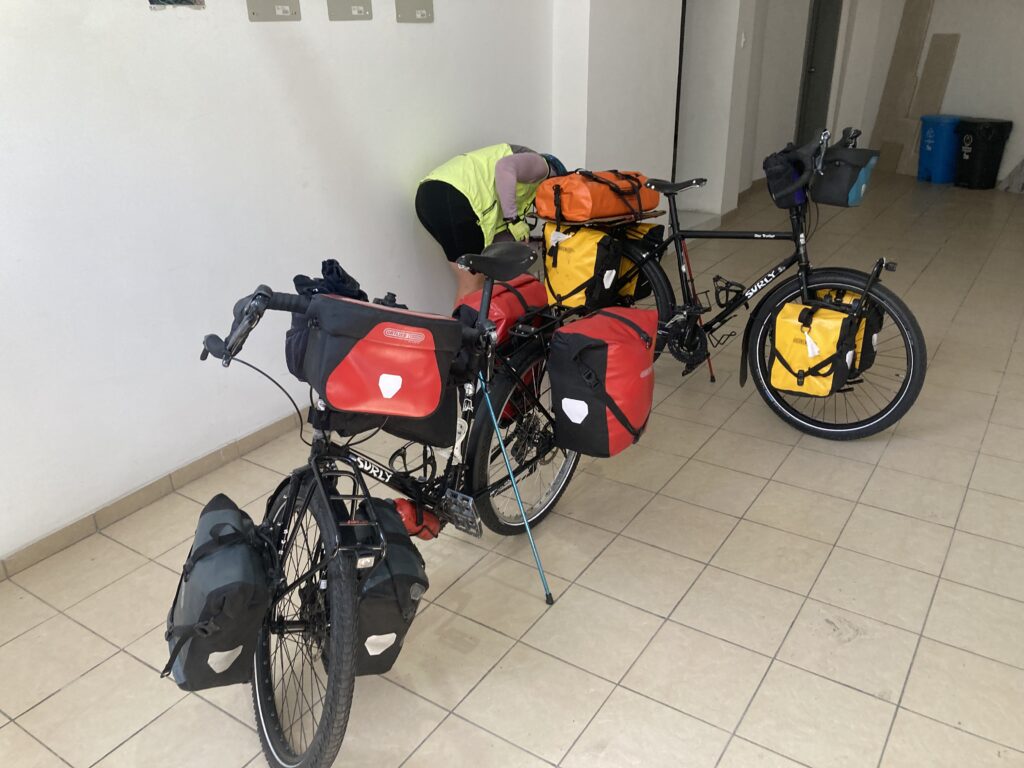
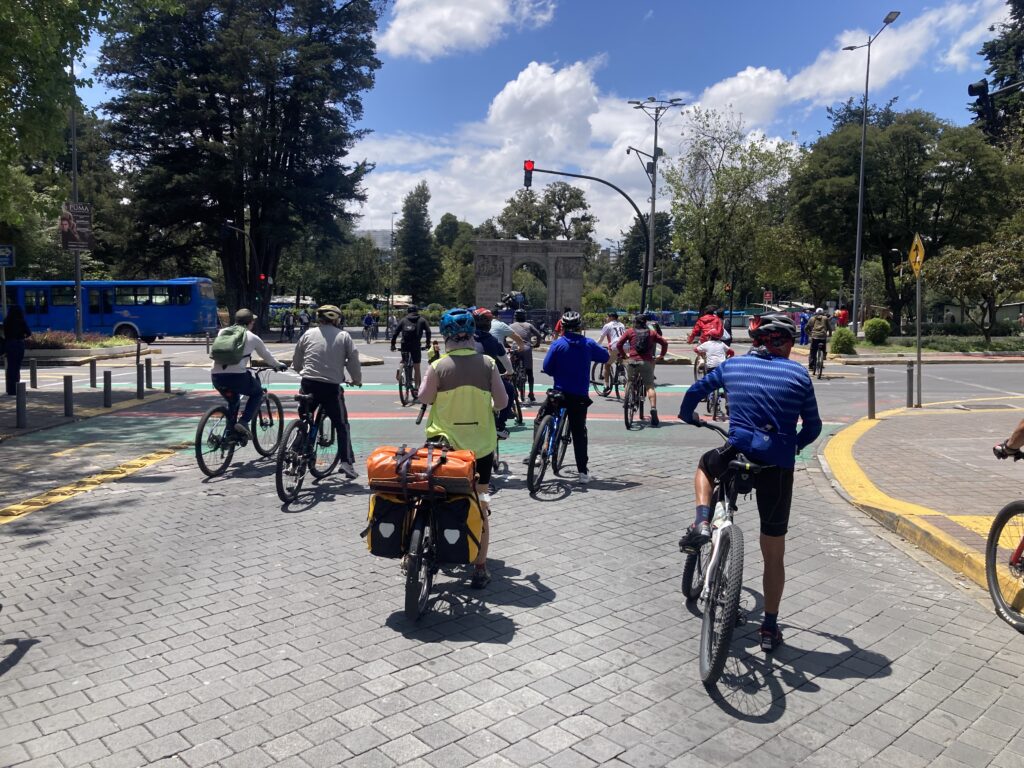
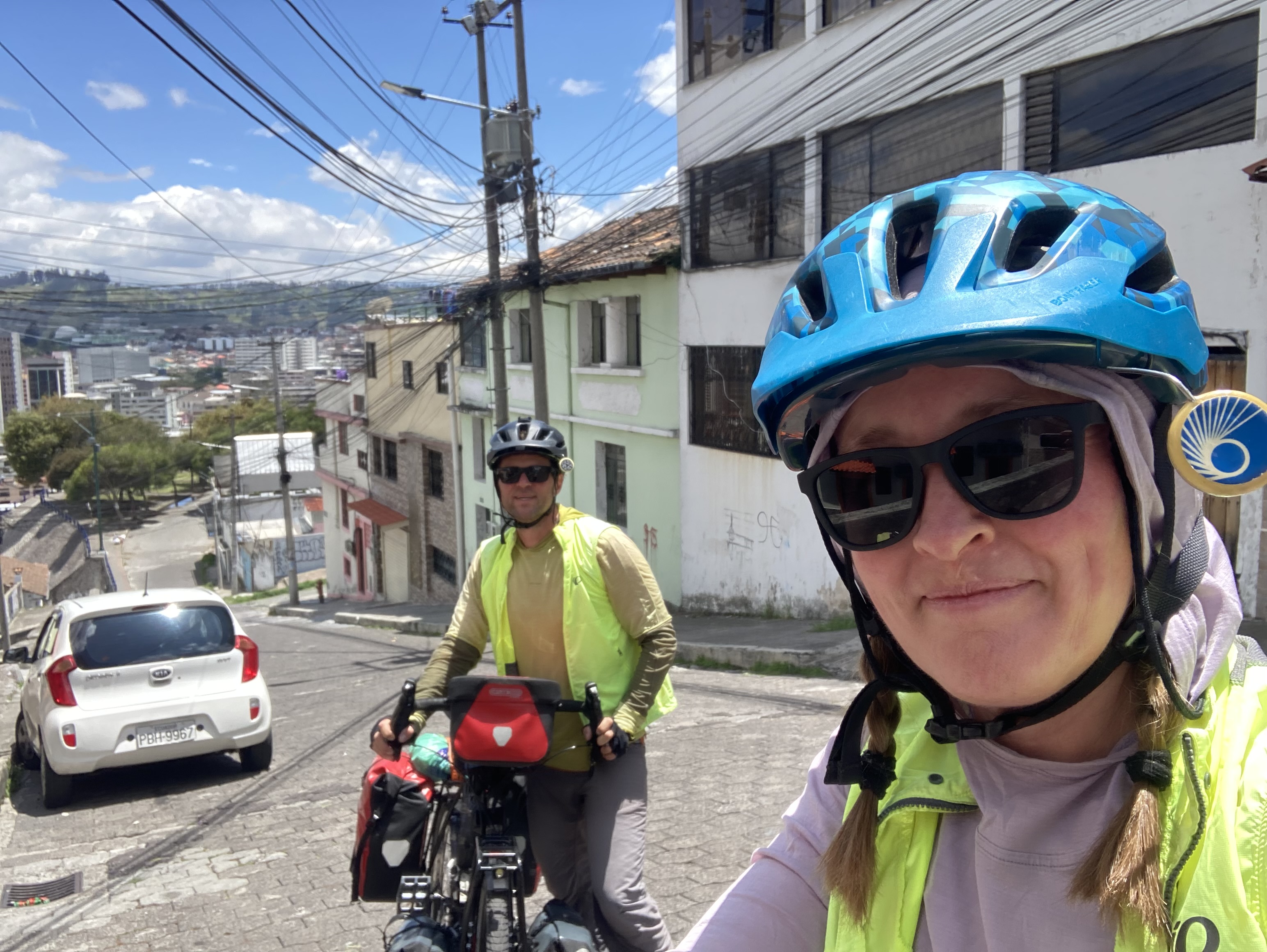
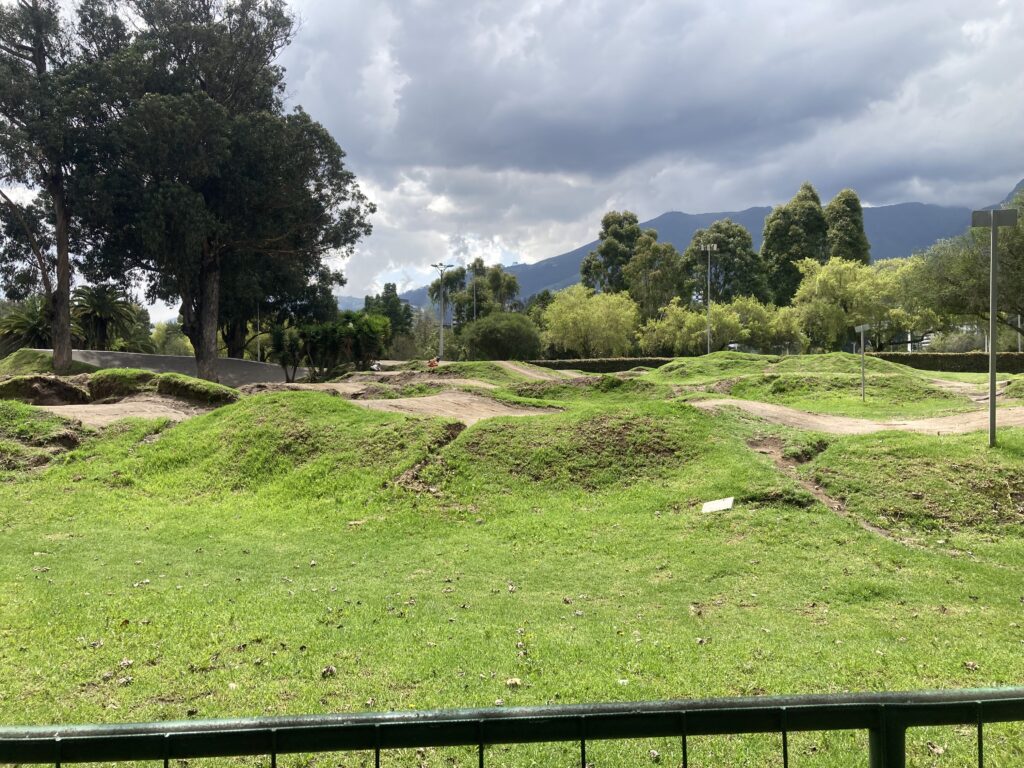
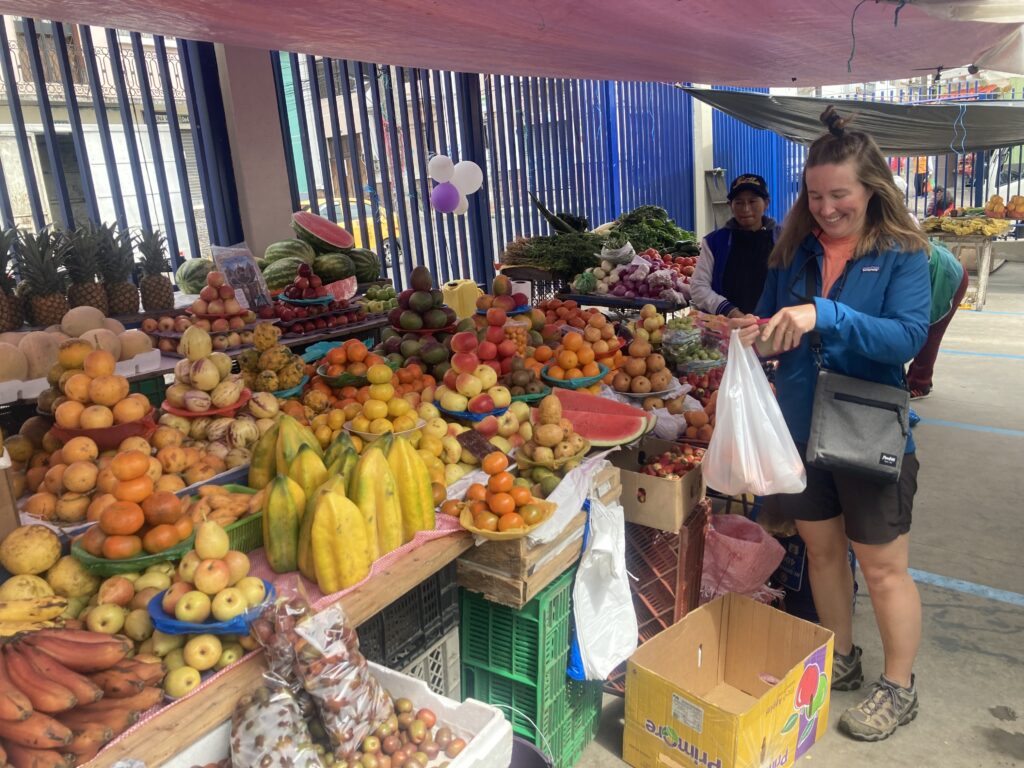
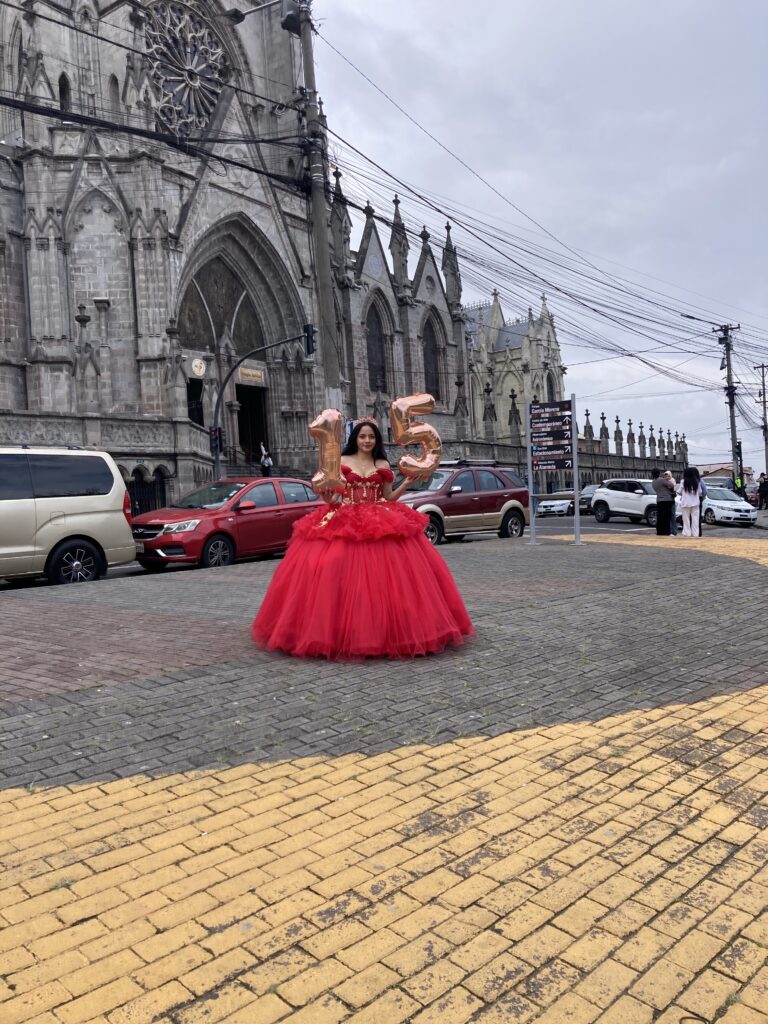
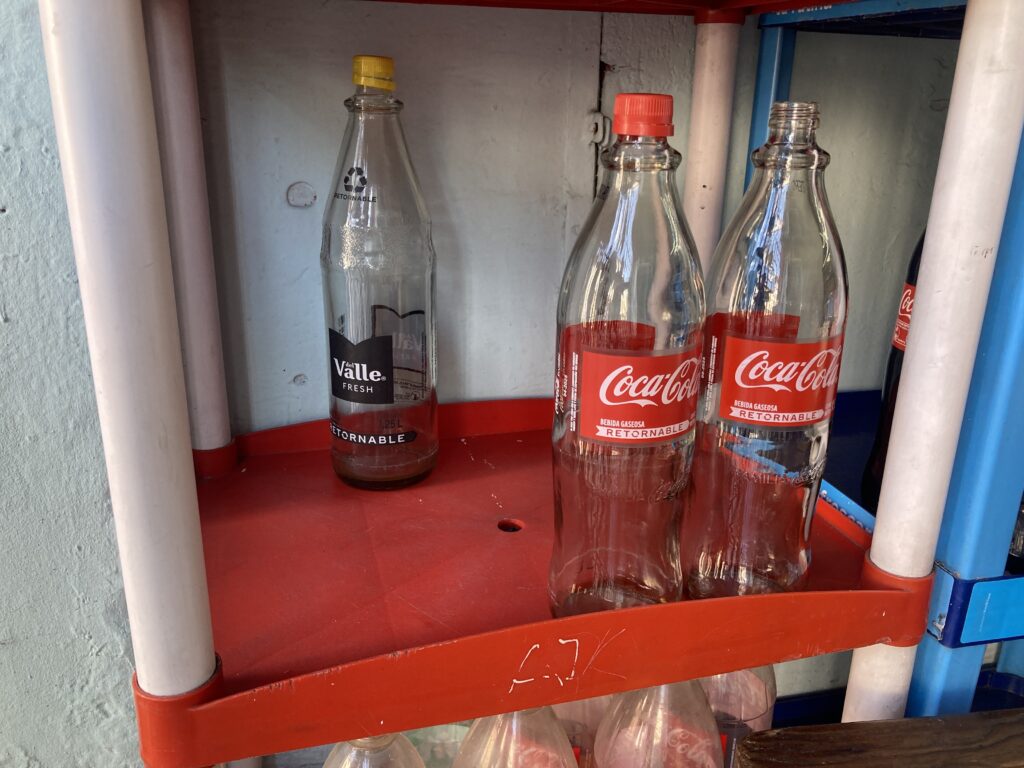
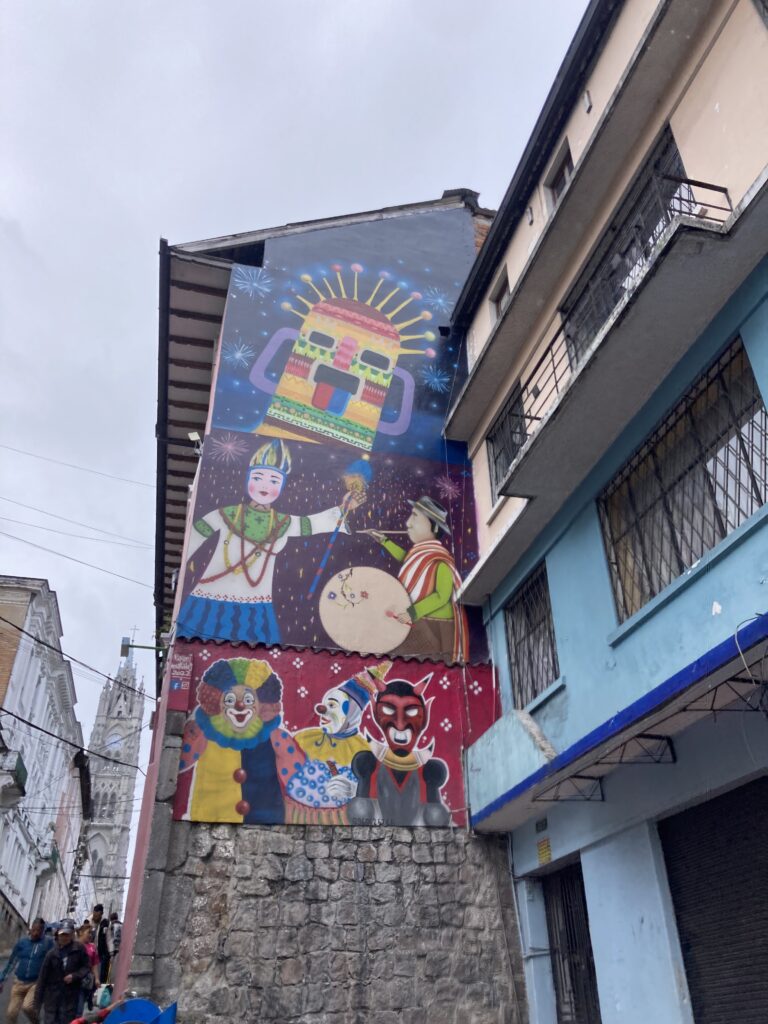
Dustin rebuilds the bicycles in the garage of our AirBnB – our host, Gustavo, was fantastic and allowed us to store our bicycles/gear while we traveled to the Galpagos and then gave us room in the garage for the bicycle rebuild.To test out the rebuild we did an 8 block shakedown ride – we love our AirBnB but one downside is that it is in the Quito hills…not great for biking when we have to push up a 20% grade to get back. The views are wonderful, even right from our apartment 🙂 For our second shakedown we rode a 33km figure-8 through Quito and into the hills on the other side of the valley. Here Dustin waits to cross the street from our AirBnB (we are on the 3rd floor of the white & black building) before setting out on the ride.We ate a few too many times with the Hare Krishnas – we loved their vegan Menu del Dias Quito street scene – these umbrellas sure would have come in useful during the almost daily afternoon rains. Our apartment was up this hill, and then two hills – our lungs never quite got used to the steep climbsQuito was a very clean city (at least in the old town) and we’d after see workers sweeping up trash and vendors cleaning in front of their shopsA native woman sells meals on the streets of QuitoJust like Americans, many Ecuadorians are crazy about their “mascotas” (pets) – this white funeral home was only for pets. Sunday is “family day” when many of the shops are closed and people enjoy the outdoors with biking, visiting churches or sitting in the parks. In this photo, the police were at the basilica doing community outreach & wanted a picture with Patricia.Dustin helps push a taxi into the gas station – the driver recruited Dustin while he waited outside the grocery store for Patricia. We did an “unloaded” shakedown to regain our nerves for riding with traffic and help acclimatize to higher elevation cycling. Next was a “loaded” shakedown to remember what its like to pedal & control a *very* heavy bicycle – luckily we did this loaded shakedown during Ciclopaseo (cycling Sunday) when they close down a few major thru-fares and traffic is lighter.Patricia waits to cross the street during Ciclopaseo – every Sunday Quito closes down a few major streets and only allows pedestrian traffic. We received many curious looks for our unique bicycle loads and a few friendly locals that asked about our trip. Climbing back to our apartment was “hike-a-bike” as we could not pedal our loaded bikes up the 20+% grade.Similar to New York City’s Central Park, Quito has La Carolina Parque – a huge park in the middle of the city offering many different activities. Here we watched BMX racers speed through this course in La Carolina. Patricia buys “mandarinas” at the market near our apartmentA girl celebrating her Quinceañera or 15th birthday poses for pictures at the basilica. We often seen these dresses for sale but rarely see them in use as most Quinceañera parties are a private affair with similar grandeur of a wedding. Large returnable glass bottles – these are maybe 1 liter. Many building in Quito are decorated with art or painted murals.
During our time in Quito we were also able to connect with other travelers – Felicity & Peter from the UK/Belgium/Portugal and Zhana & Paul from the US/Russia. Felicity & Peter we first met in the Galapagos and our paths kept crossing on different islands, then we found out they were headed back to Quito where our paths crossed again! Zhana & Paul we initially met up from our bicyclists WhatsApp group – we offered to buy their extra Peruvian Soles since we were headed in that direction. It was awesome to meet other similar travelers, swap experiences, and get ideas for the road ahead.
Back in the saddle
Tomorrow we are back in the saddle touring – we hope we are ready! We’ve planned some “mild” days to get our bodies used to bicycling with heavy loads in the Andes again.
We plan to travel Ecuador & Peru until March of 2026 when we will once again return to the USA to work on our cabin. As always, these plans are subject to change based on our physical & mental conditions. Thanks for coming along on our journey!
What an amazing adventure! Thank you for taking us along with you!!! Contined prayers for safety! God’s Peace!
What an amazing adventure! Thank you for taking us along with you!!! Contined prayers for safety! God’s Peace!
Thanks Sandy – miss you!!
Your adventures are always amazing. Love seeing your interactions with the people and the wild life. We leave for Quito on 11/28 and will then embark on a cruise of the Galápagos Islands. It is so exciting for us to see the experiences you are having. Praying for safe travels as you get back on the bikes! Rita and Bob Aksamit
A cruise through the Galapagos will be awesome – I think you’ll see many of the outlying islands that we missed – what an experience! We added Galapagos cruise to our “dream list” 🙂
Have a wonderful time!!
You were able to see some great wildlife in the Galapagos. Glad you are taking the time to be ready to resume your tour. Stay safe and enjoy the journey!
We might have taken a little too much time…had a little bit of cabin fever set in…but we’re off today 🙂
Absolutely amazing trip, have fun and take it easy! Thanks for sharing and being a positive interlude in the day.
Thanks Sharon – Glad we can bring positivity 🙂
What great creatures you saw! The pictures were great! I’m so glad you were able to visit the Galapagos Island, as you had dreamed of doing. Prayers continue for your safety.
thanks Diane – yes we certainly saw some interesting animals 🙂
Amazing! The Galápagos Islands have been on my bucket list for 45 years. I am so envious, but so enjoy watching your travels. Happy biking!
Do it! The Galapagos were so cool & it doesn’t have to break the bank (we were shocked…)
I love traveling vicariously with you! So enjoyed the tortoises and variety of Avians!
God speed and enjoy the ride. I also love the connections you make with locals and other cyclists.
Thank for the message Jeanette – you’d love all the birds…we barely captured a fraction of them!
Thank you for all the details of your experience in the Galapagos. Miriam and I will be there in February for a week or so, and are grateful for your many tips. Godspeed as you proceed into Chile.
Thanks for following along & the message – enjoy the Galapagos!!!
What an amazing adventure! Thank you for taking us along with you!!! Contined prayers for safety! God’s Peace!
What an amazing adventure! Thank you for taking us along with you!!! Contined prayers for safety! God’s Peace!
Thanks Sandy – miss you!!
Your adventures are always amazing. Love seeing your interactions with the people and the wild life. We leave for Quito on 11/28 and will then embark on a cruise of the Galápagos Islands. It is so exciting for us to see the experiences you are having. Praying for safe travels as you get back on the bikes! Rita and Bob Aksamit
A cruise through the Galapagos will be awesome – I think you’ll see many of the outlying islands that we missed – what an experience! We added Galapagos cruise to our “dream list” 🙂
Have a wonderful time!!
You were able to see some great wildlife in the Galapagos. Glad you are taking the time to be ready to resume your tour. Stay safe and enjoy the journey!
We might have taken a little too much time…had a little bit of cabin fever set in…but we’re off today 🙂
Absolutely amazing trip, have fun and take it easy! Thanks for sharing and being a positive interlude in the day.
Thanks Sharon – Glad we can bring positivity 🙂
What great creatures you saw! The pictures were great! I’m so glad you were able to visit the Galapagos Island, as you had dreamed of doing. Prayers continue for your safety.
thanks Diane – yes we certainly saw some interesting animals 🙂
Amazing! The Galápagos Islands have been on my bucket list for 45 years. I am so envious, but so enjoy watching your travels. Happy biking!
Do it! The Galapagos were so cool & it doesn’t have to break the bank (we were shocked…)
I love traveling vicariously with you! So enjoyed the tortoises and variety of Avians!
God speed and enjoy the ride. I also love the connections you make with locals and other cyclists.
Thank for the message Jeanette – you’d love all the birds…we barely captured a fraction of them!
Thank you for all the details of your experience in the Galapagos. Miriam and I will be there in February for a week or so, and are grateful for your many tips. Godspeed as you proceed into Chile.
Thanks for following along & the message – enjoy the Galapagos!!!