Day 455 – Balsas to remote camp (restaurant) – 21km/1050m
Day 456 – remote camp to Celendin – 38km/1262m
Day 457 – Layover @ Celendin
Day 458 – Celendin to Cajamarca – 103km/1460m
Day 459 – 462 – Layover @ Cajamarca, Peru
Total bicycling distance: 11,150 miles (17,952 km) Total bicycling climbing: 591,667 feet (180,373 meters) Countries: 12 Broken rear wheels: 2
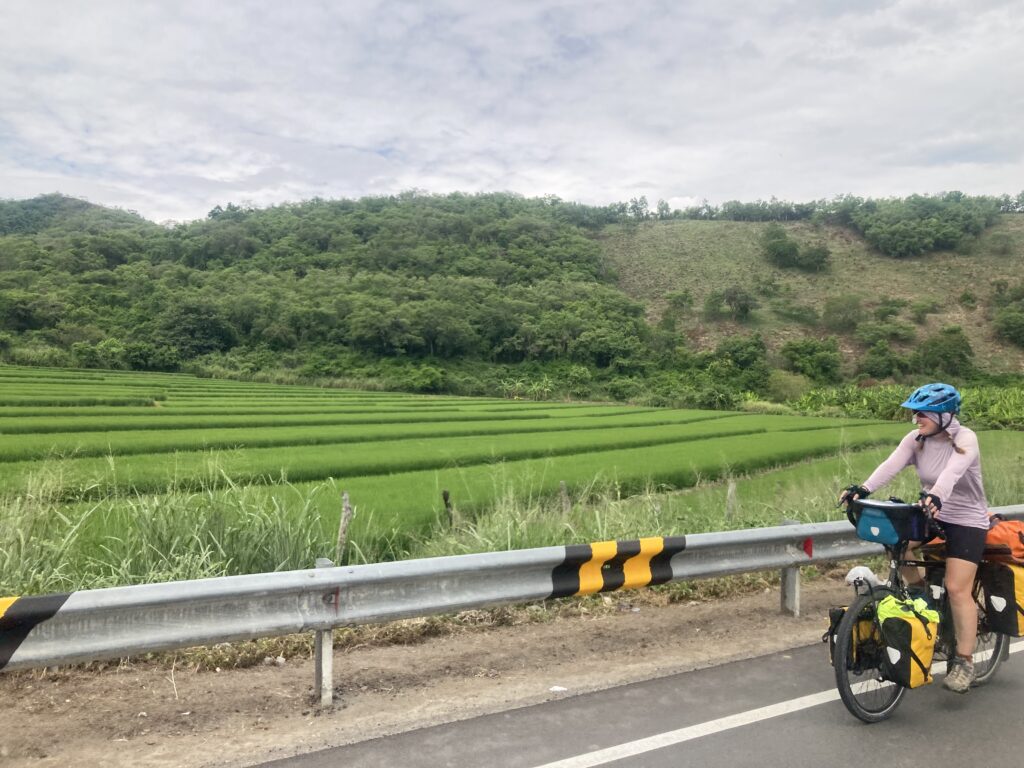
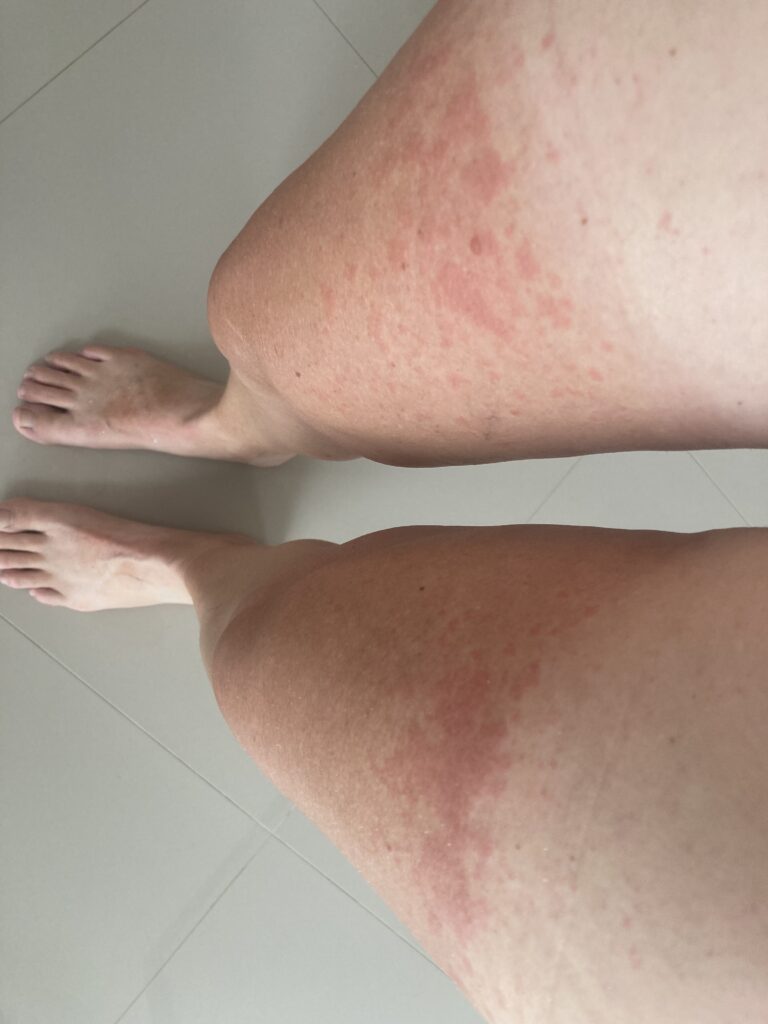
From San Ignacio, Peru we dropped down significantly to the high jungle town of Jaen and boy did we feel the heat and humidity immediately. It was a long riding day of 111 kilometers (almost 69 miles) and with the heat Patricia’s sweat rash started up again so we went fancy and got our first place with air conditioning in quite some time. The route mainly followed the river where we saw our first rice growing of the entire trip.
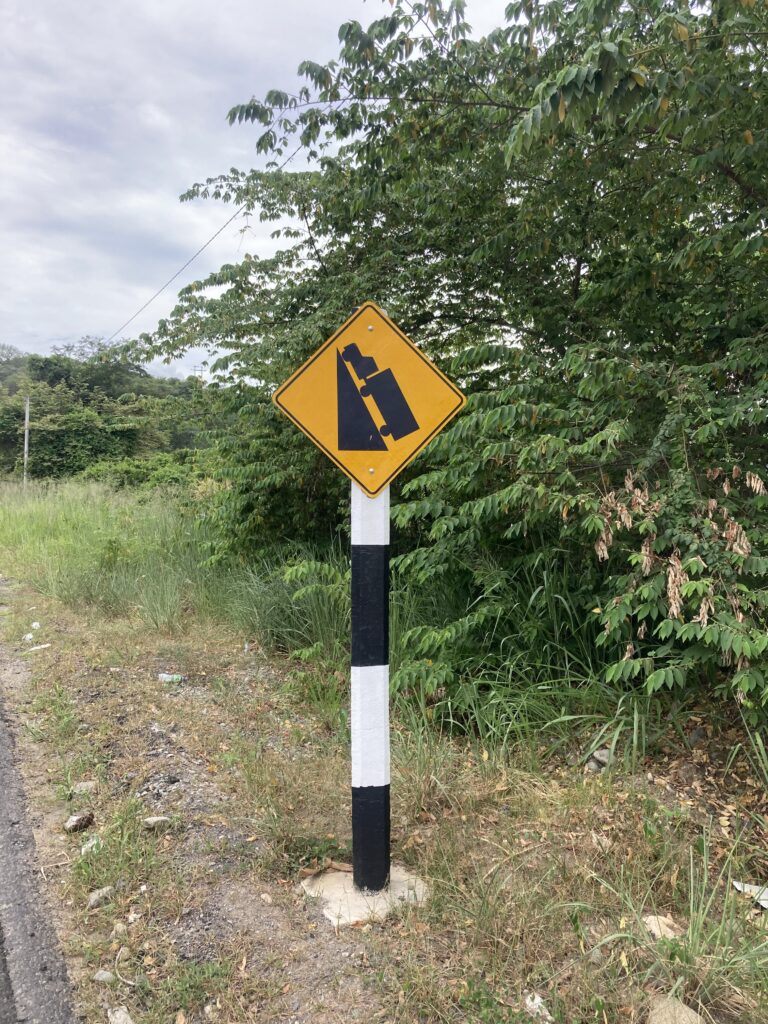
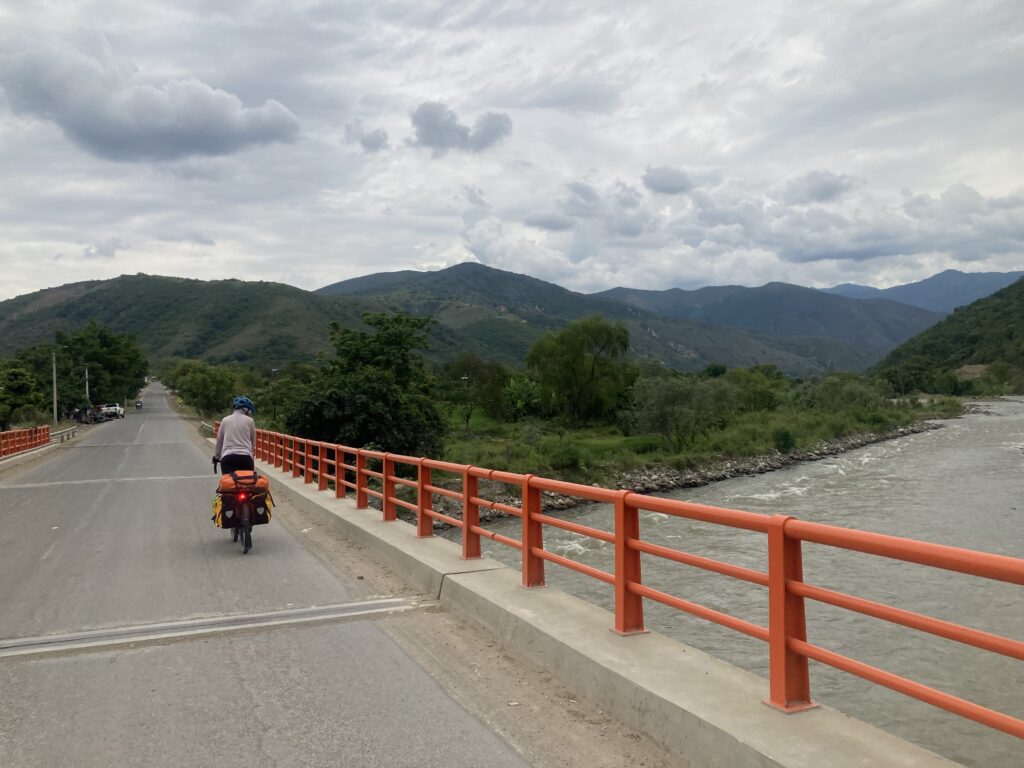
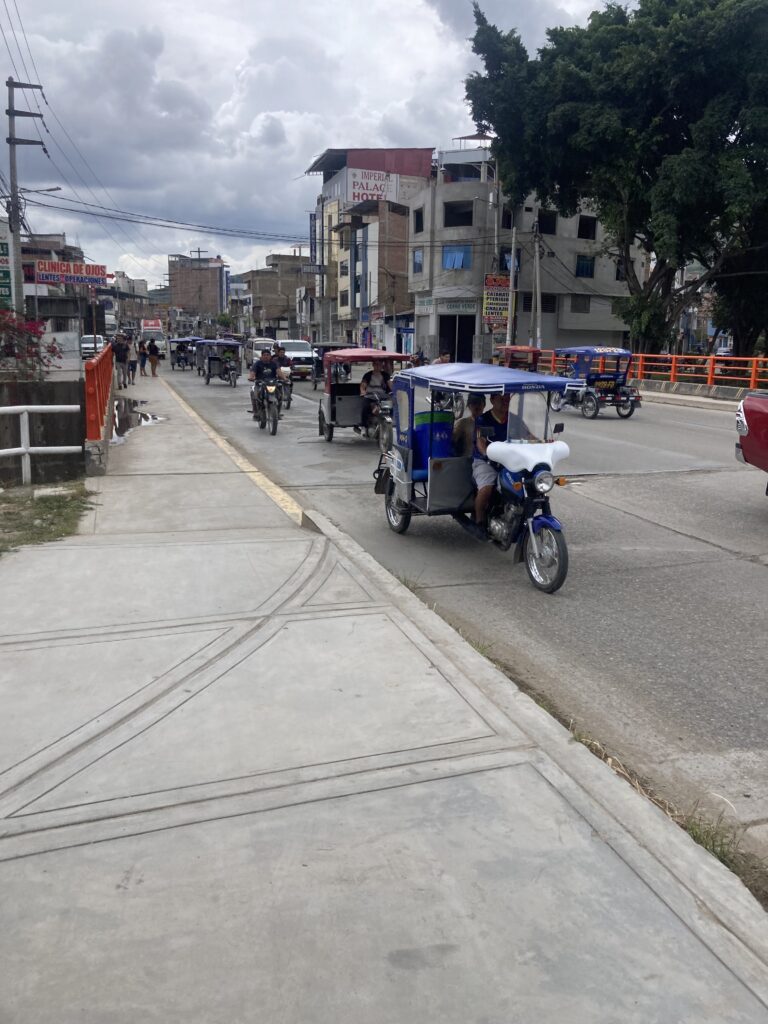
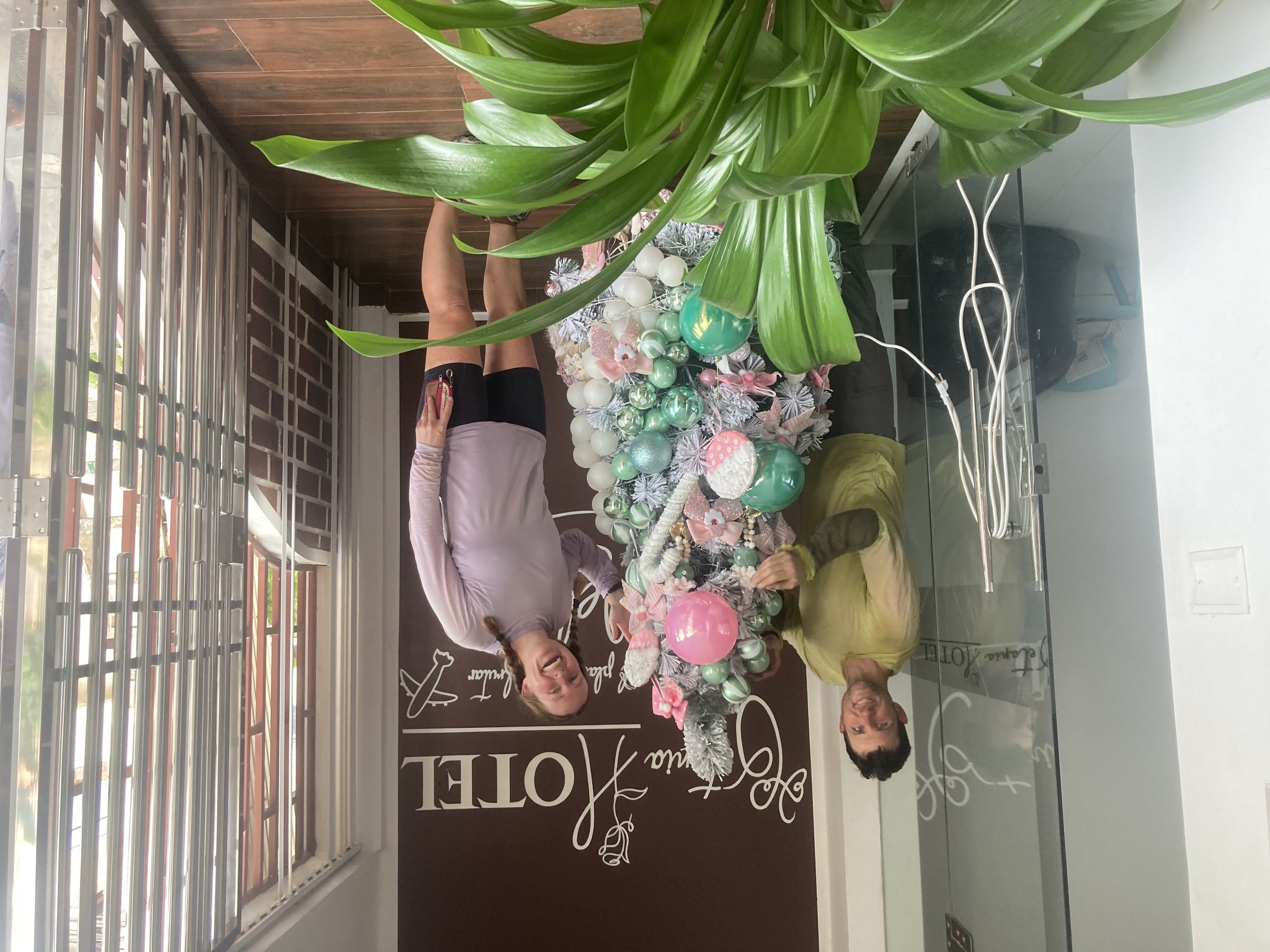
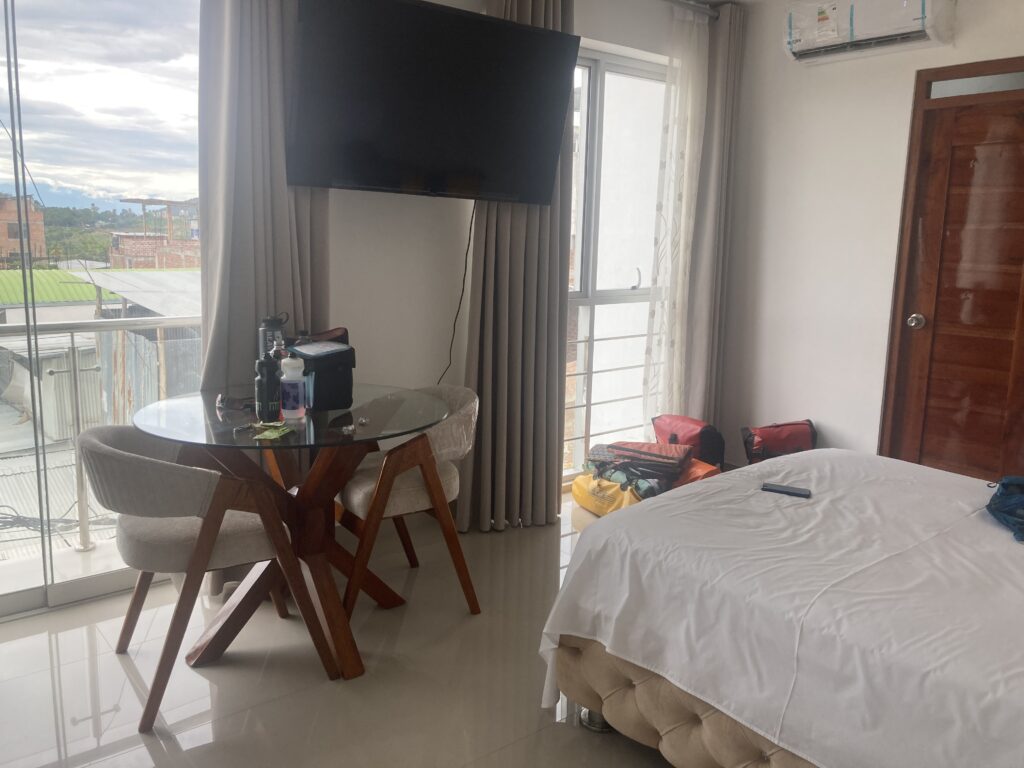
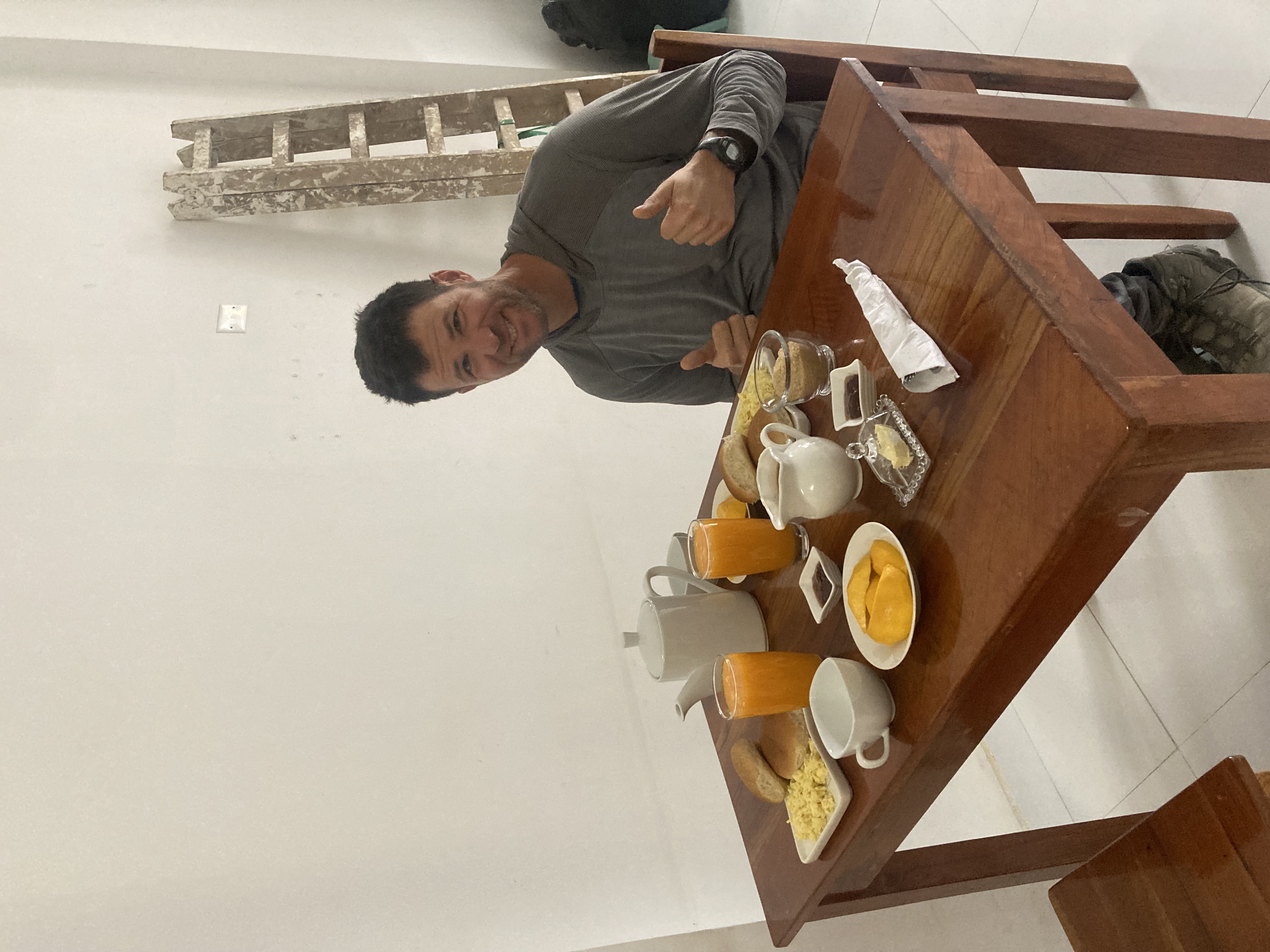
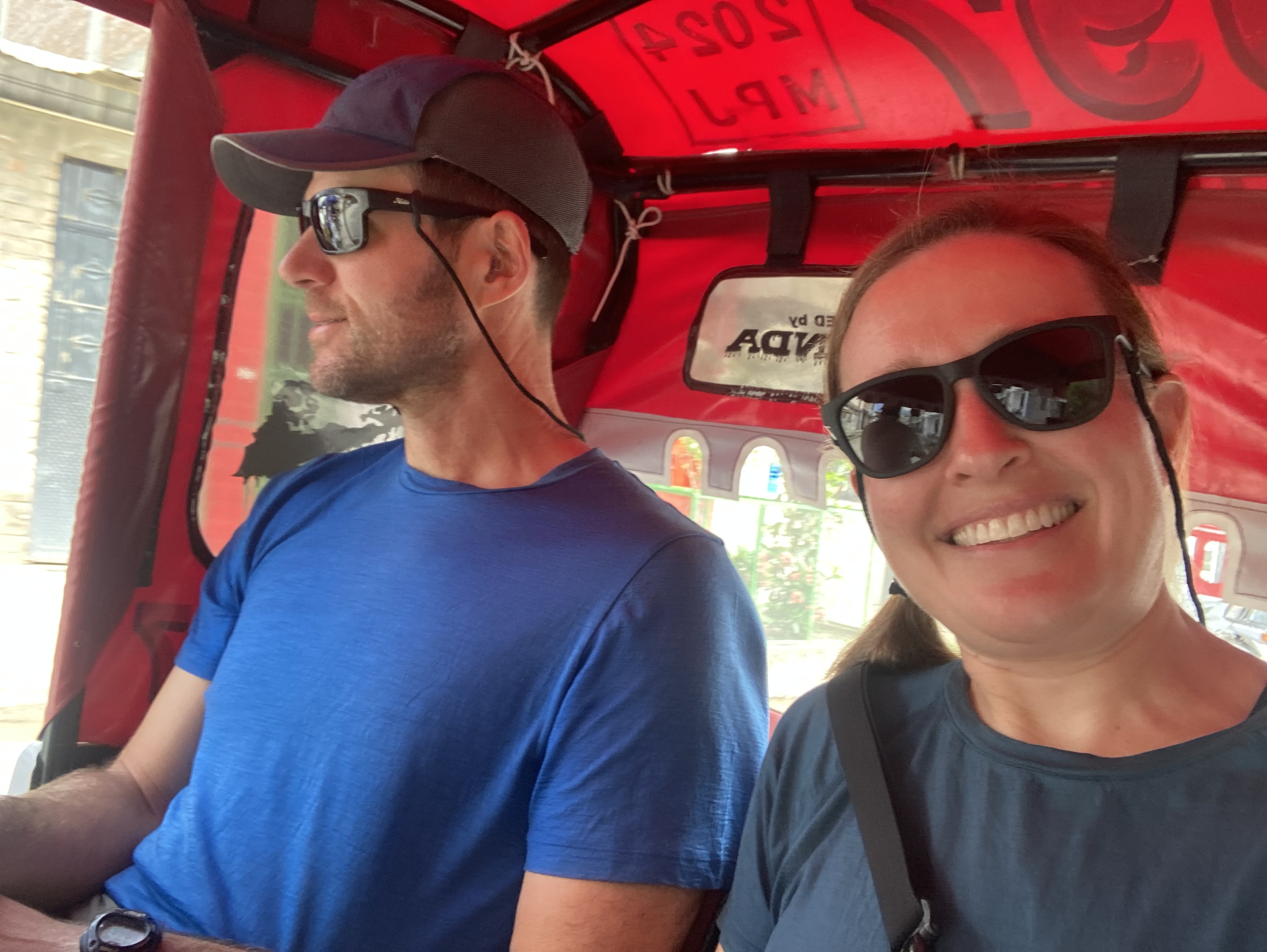
Rice paddies – first of the trip! These were between San Ignacio & Jaen, Peru. SUPER steep climb – not really! We laughed at how a downhill sign was mounted to show an uphill 🙂 Finally crossing the river we rode beside most of the day toward Jaen. We rode with crazy traffic on our way into & out of Jaen. While we were in town we took the “motokar” taxis a few times to save our legs and keep a bit coolerPatricia’s sweat/heat rash is back – seems to be a recurring theme when it’s hot & humid – we went all out and got air-conditioning to try and reduce the swelling/itch 🙂 We had a posh accommodation in Jaen (with air-conditioning & breakfast!) for two nights – we’ll just call that left picture our Christmas card 🙂
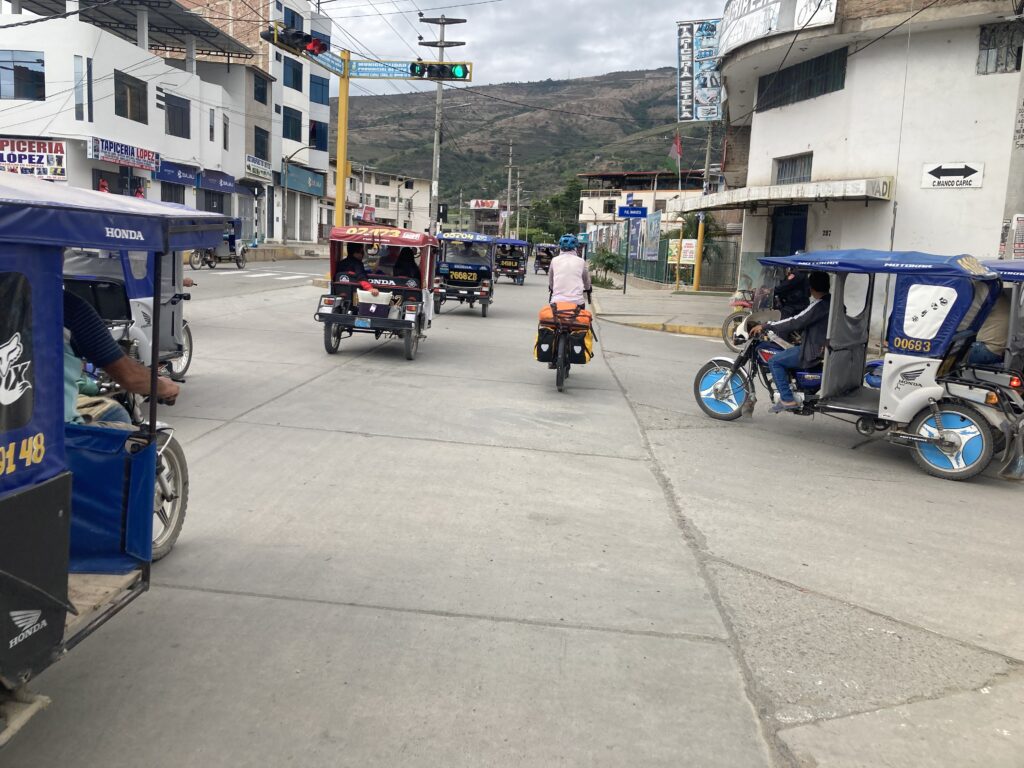
Jaen is a Peruvian city of about 100,000 people and it seems like just as many motos! There were motorbikes & motokars (three wheeled people/anything transporters) everywhere. With the heat and humidity we even took a few motokar rides – it didn’t seem to matter how far we went everyride was 3 soles (about $1). So far the medium sized cities of Peru that we have stopped in do not appear to have busses but rather moto transportation is widely available. It was difficult to be a pedestrian with inconsistent sidewalks and motos zooming everywhere.
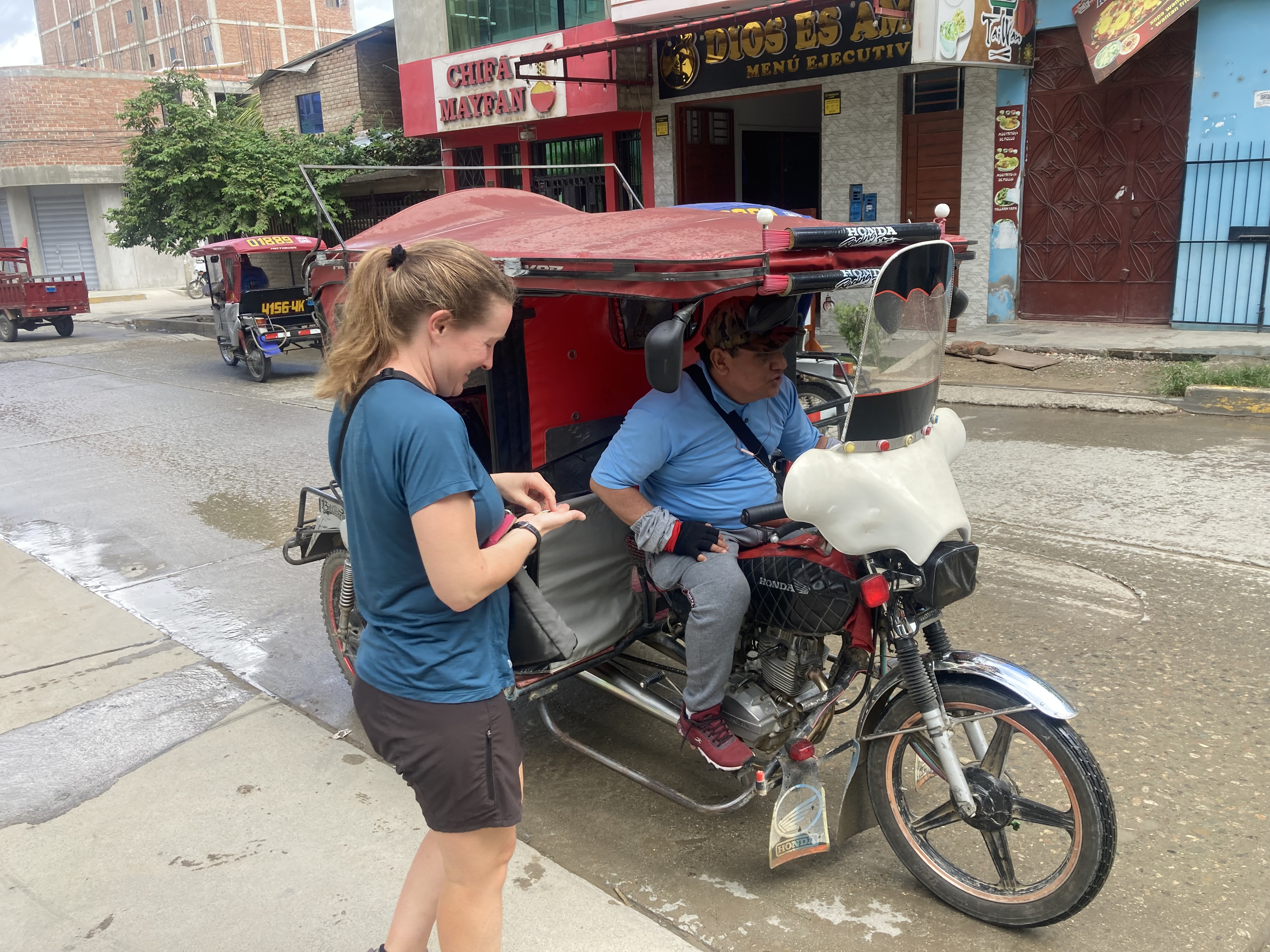
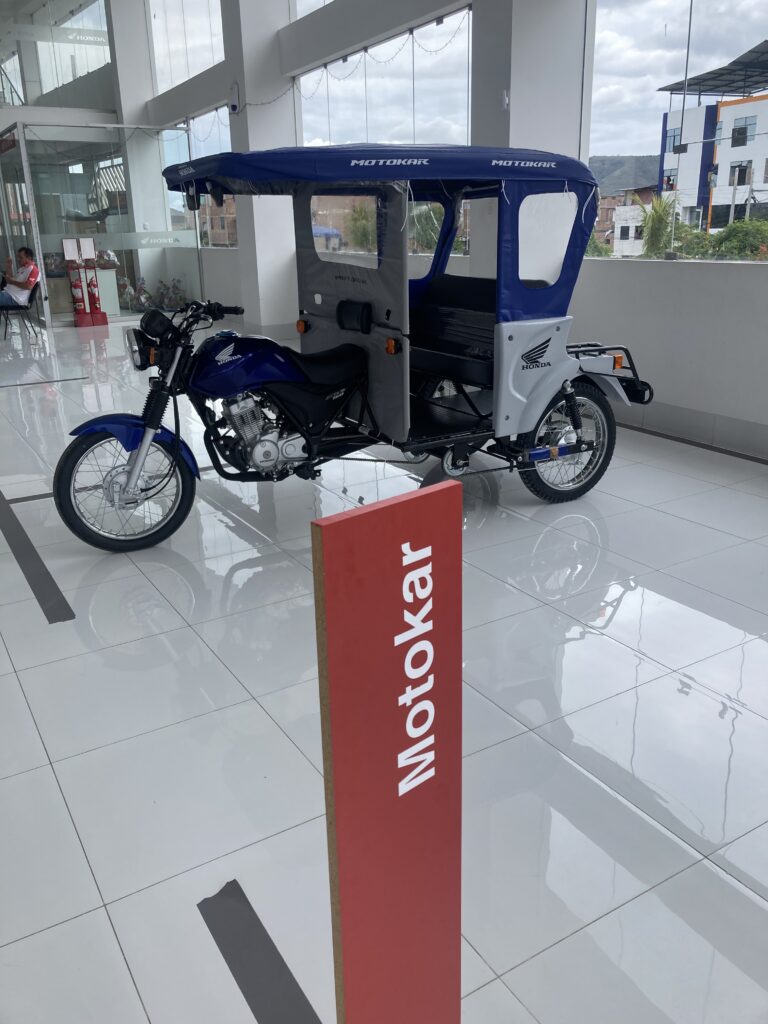
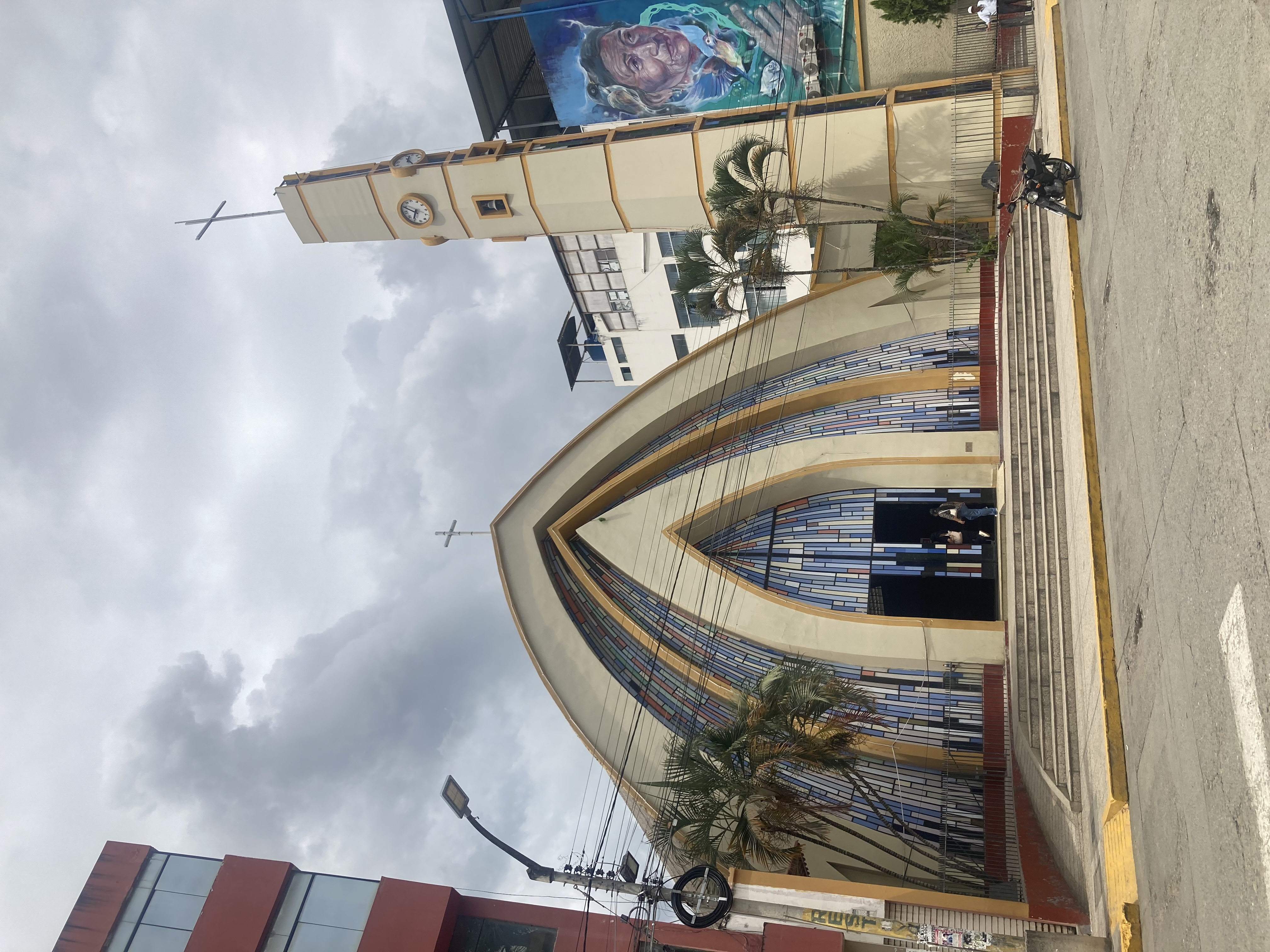
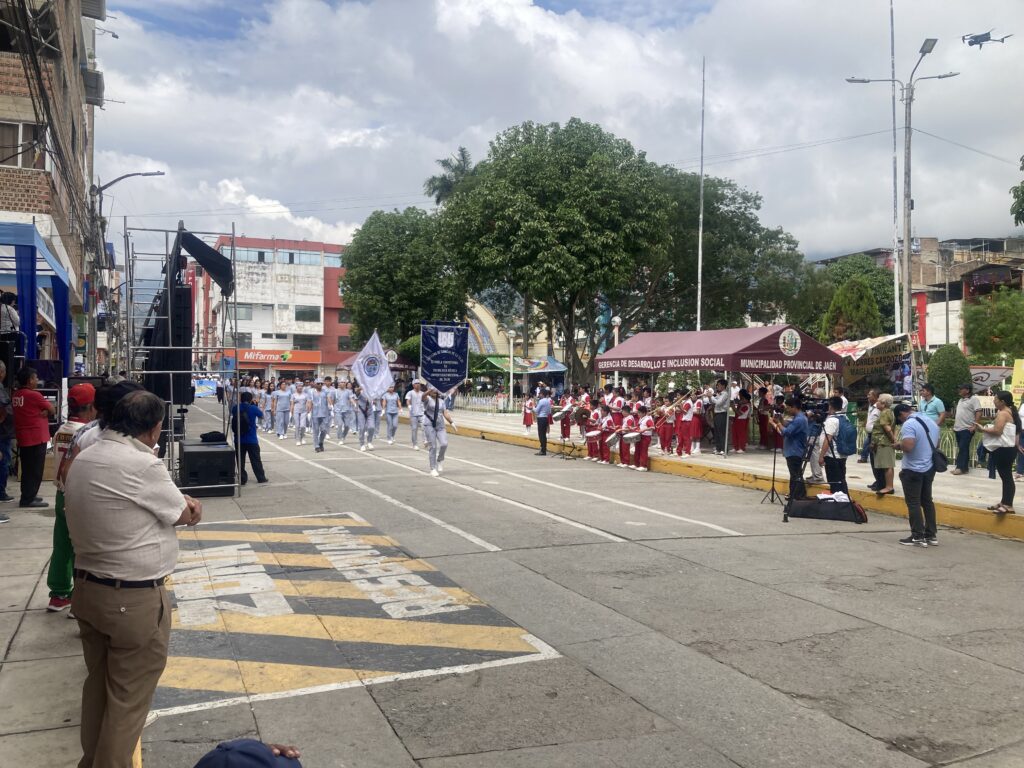
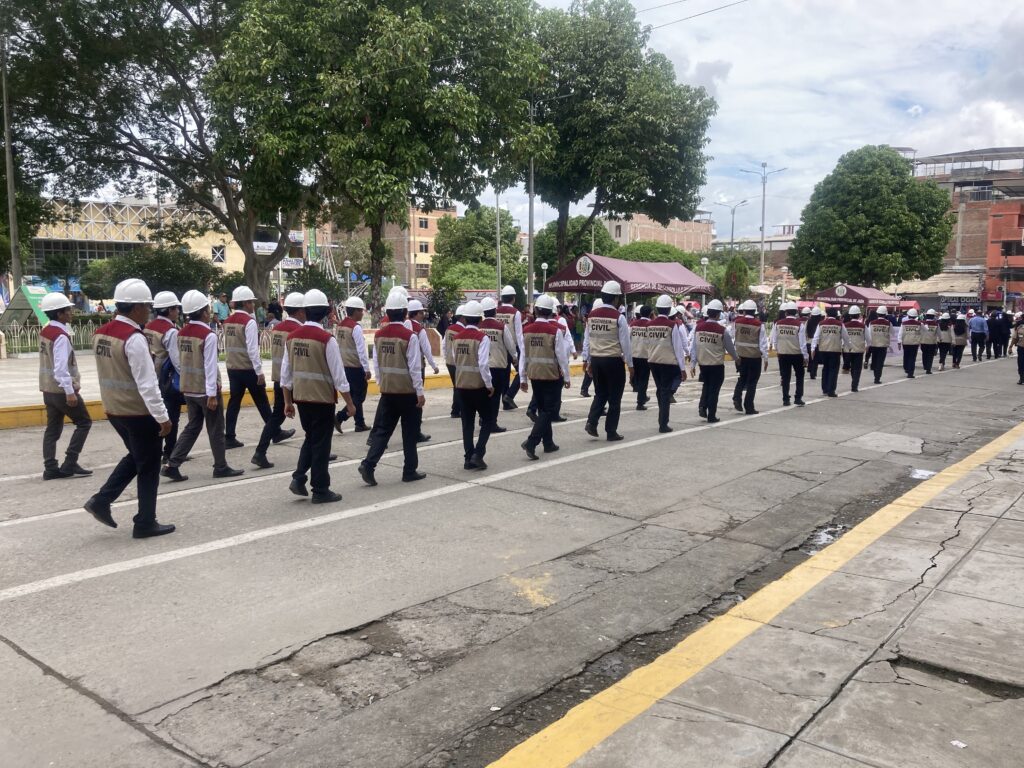
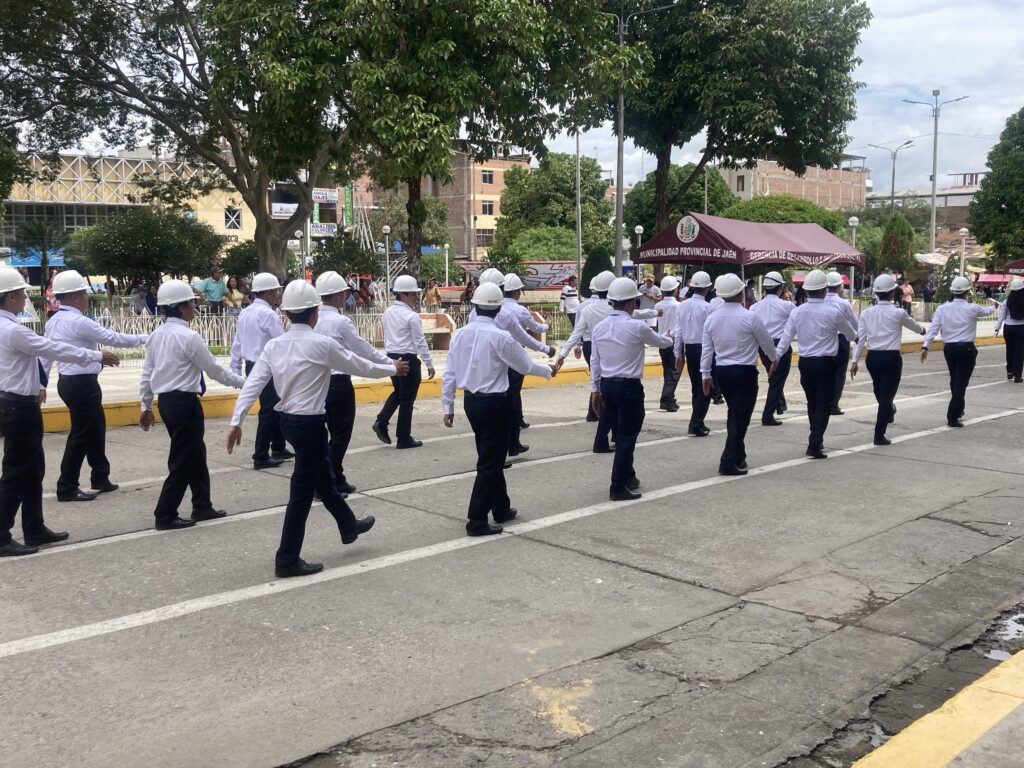
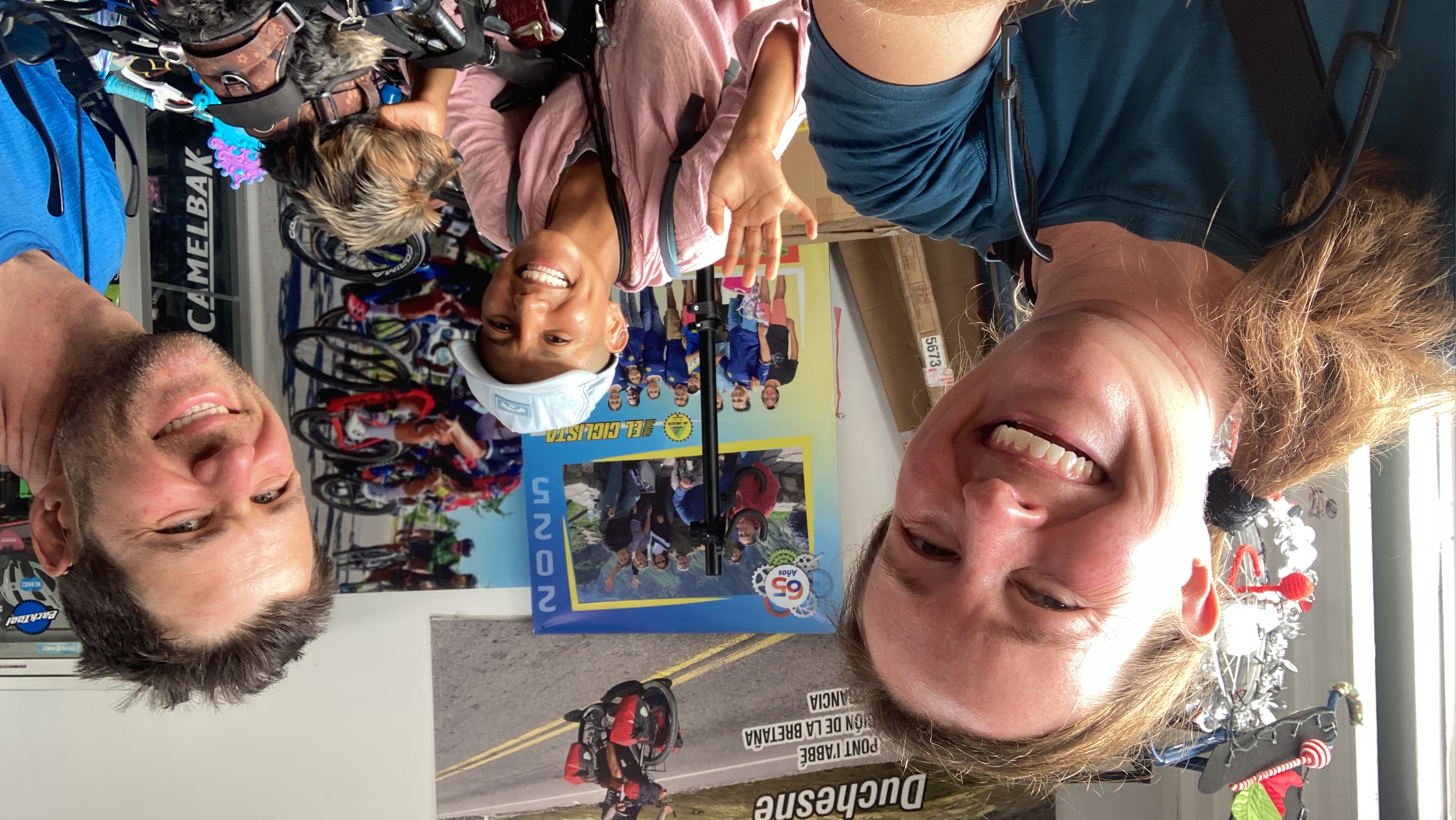
We took a few motokar taxis ourselves 🙂Patricia pays our motokar taxi driverWe had to pop into the Honda dealer to see how much a new motokar went for…about $2,200.Cathedral in Jaen with (accurate) clocktower.University graduation parade around the town square in Jaen, Peru – here come the nurses.Civil engineersElectrical & Mechanical engineers We met another bicycle traveller in Jaen – this is Carolina who started in Peru and is headed to Mexico with her dog 🙂
From Jaen we rode down to the Maranon River, followed it for a ways and then turned toward our next town of Bagua Grande which is along the Utcubamba River – both of these rivers are part of the Amazon River watershed. The Amazon is the world’s largest river by water volume and second longest to the Nile. Peru is divided into departments, similar to US states, and we are currently in Amazonas.
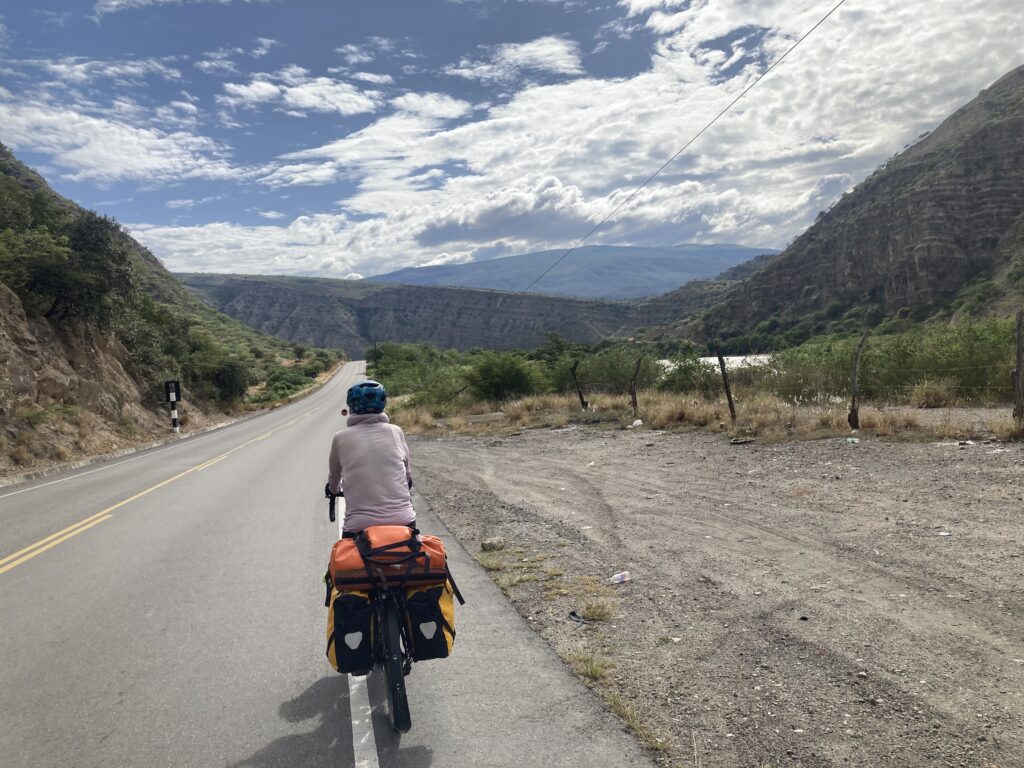
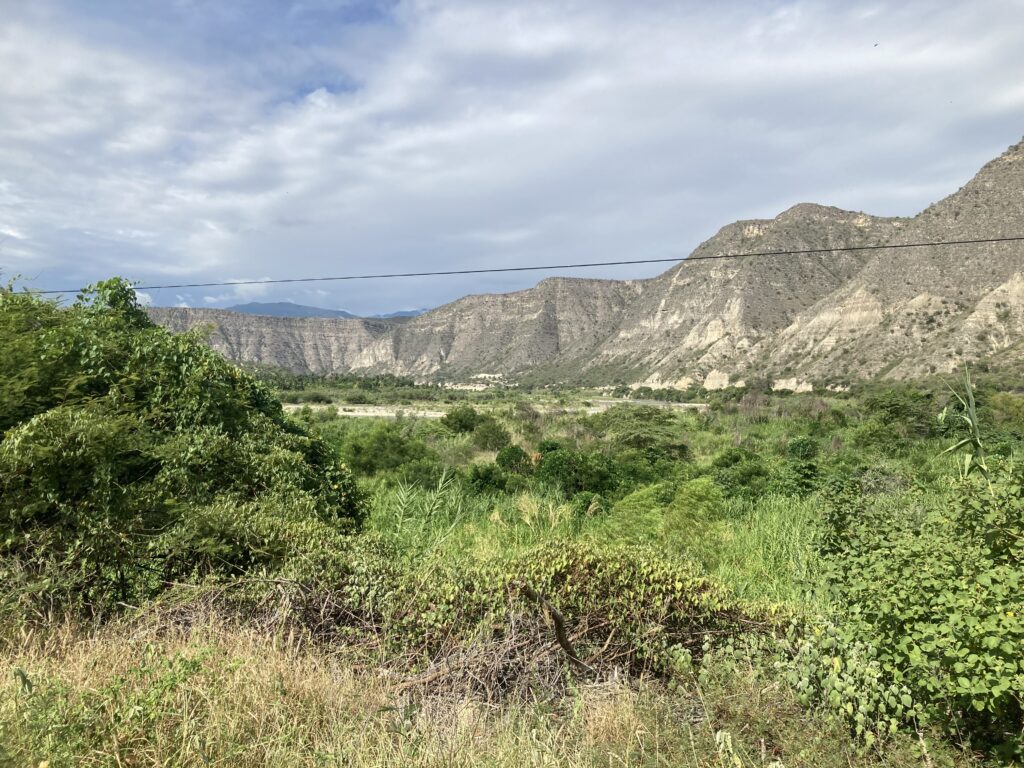
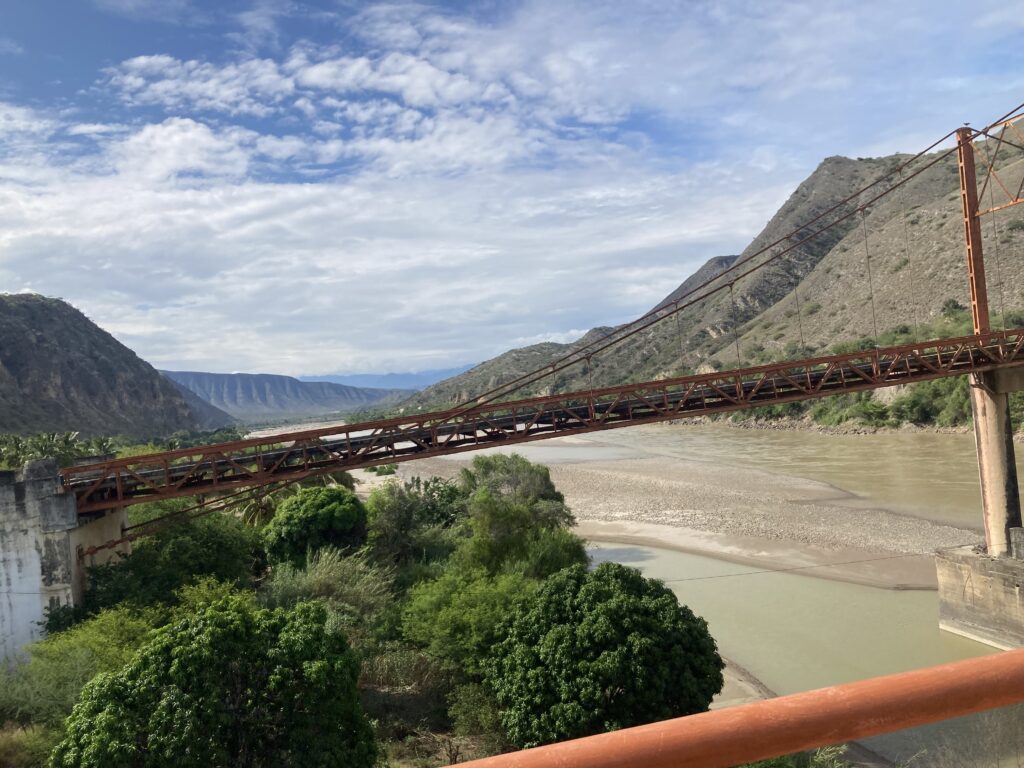
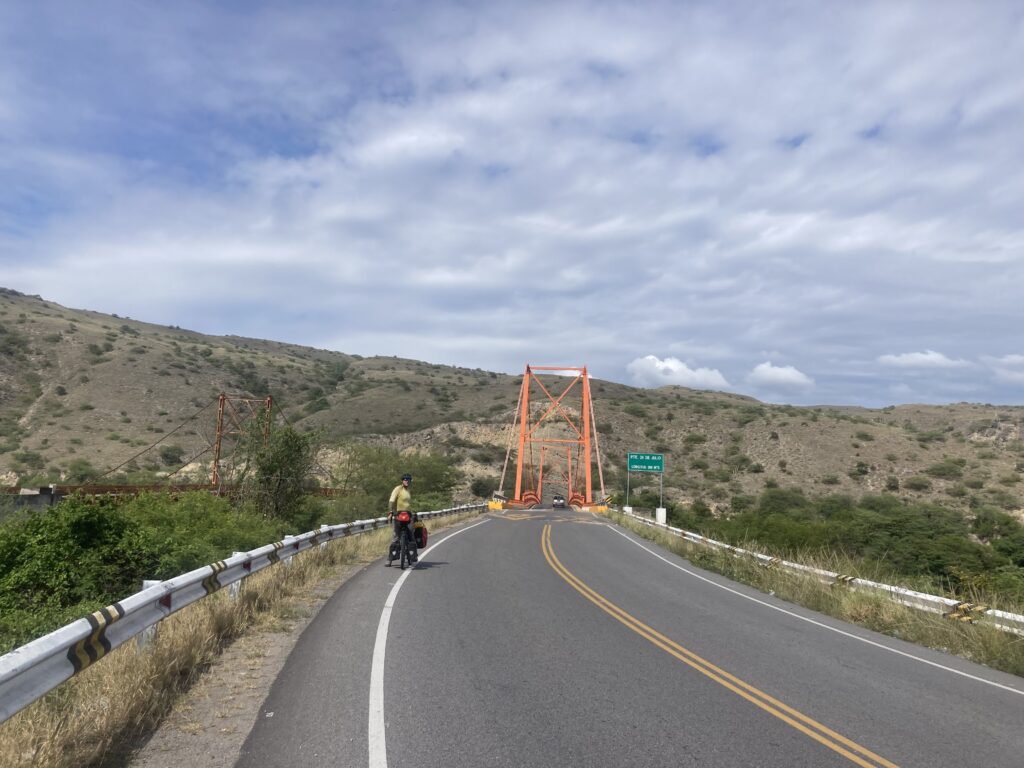
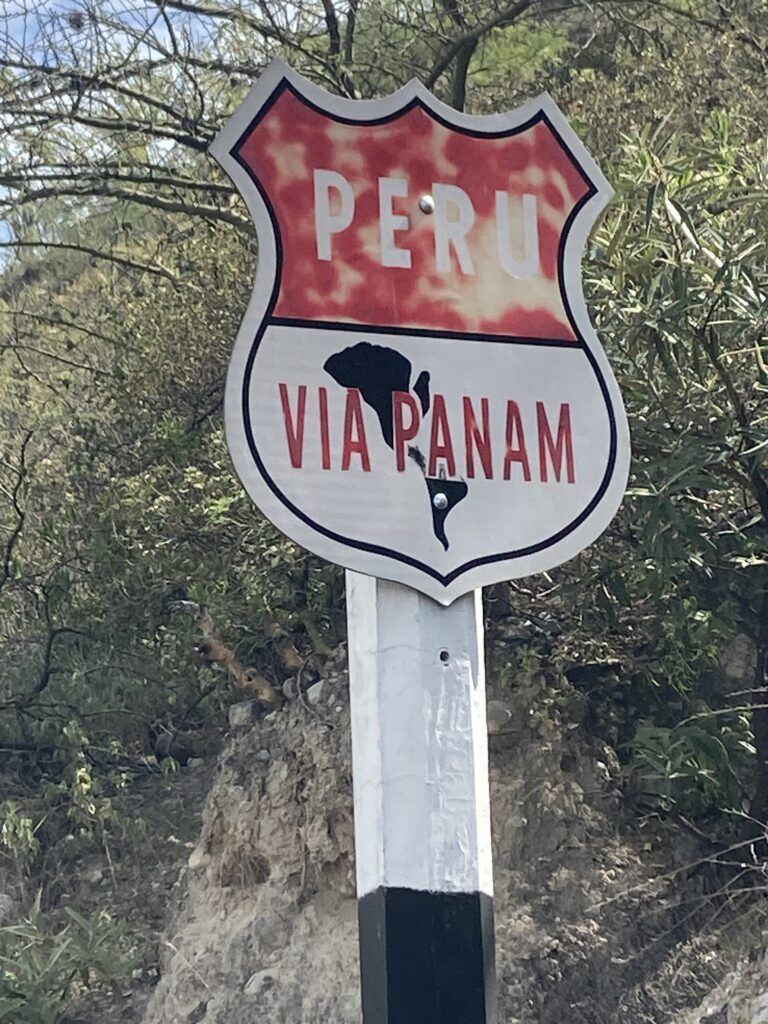
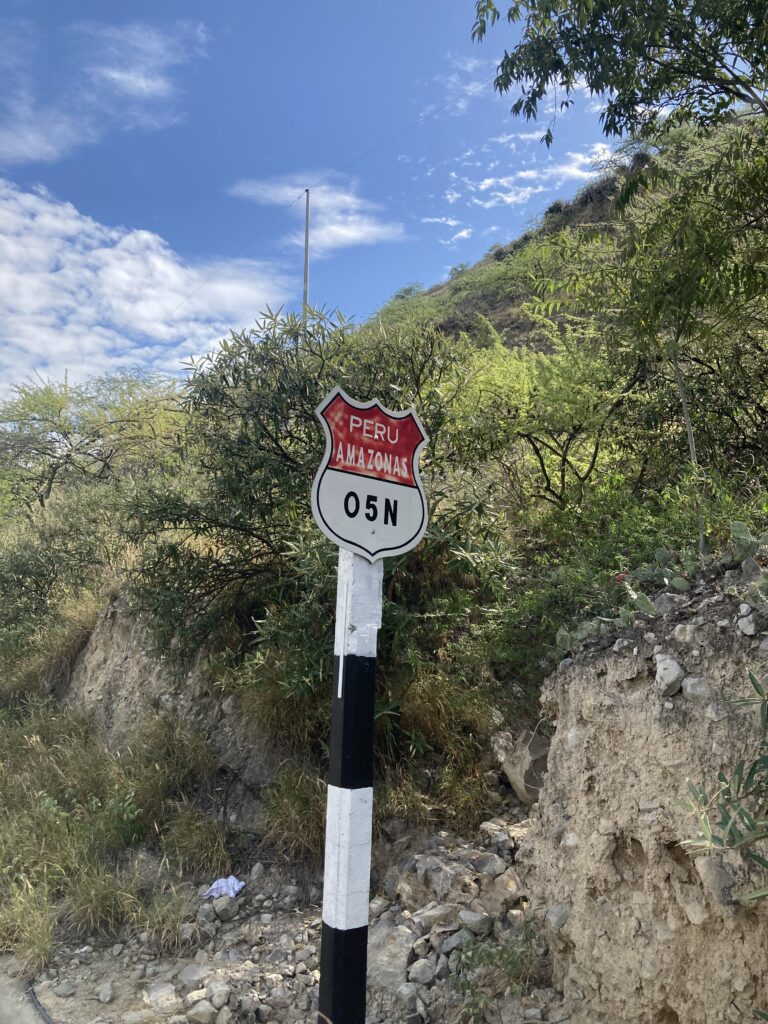
Patricia rides out of Jaen, Peru with all the motokars Patricia rides along the Maranon River east of Jaen, Peru – the Maranon is part of the Amazon River basin…all this water will flow into the Amazon and eventually to the Atlantic Ocean.In Jaen we were in “high jungle” but now we seem to be in a bit more desert climate – complete with cacti. Who would have thought…cactus in the Amazon!Crossing the Maranon River which flows into the Amazon River – please excuse the slightly askew picture hehe…taking pictures while bicycling is tricky 🙂 Old bridge on the left and new bridge on the right over the Maranon RiverWe thought the PanAmerican Highway was more toward the coast in Peru…but we found this sign…and we’ve learned not to take the highway signage too seriously 🙂 We are on the 5N in the Amazonas department of Peru.It’s a Saturday night and our hotel is having a fiesta until 1am tomorrow – should be an interesting night
For the next two days we road along the Utcubamba River – while we were still at lower elevation the temperatures were pretty hot (in the 90s F) so we set the alarm for 4:30am to be on the road by 6am for our ride out of Bagua Grande. Fortunately (or unfortunately?), it was drizzling in the morning so it stayed cool but the splashing, even with fenders, covered us with road grime.
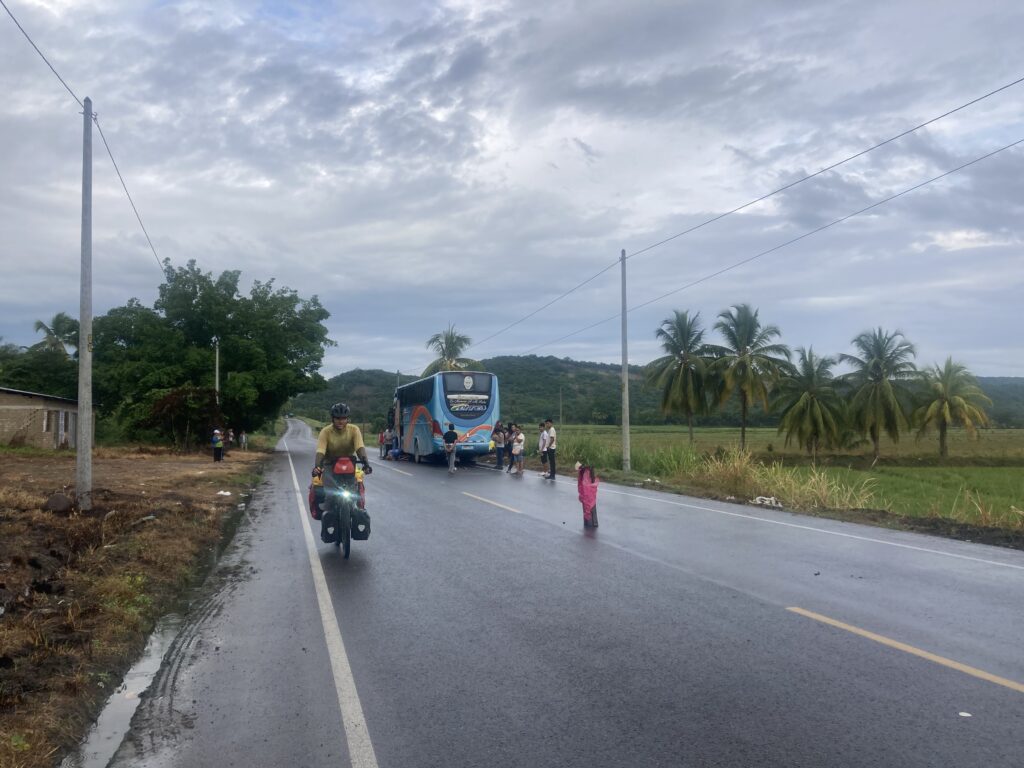
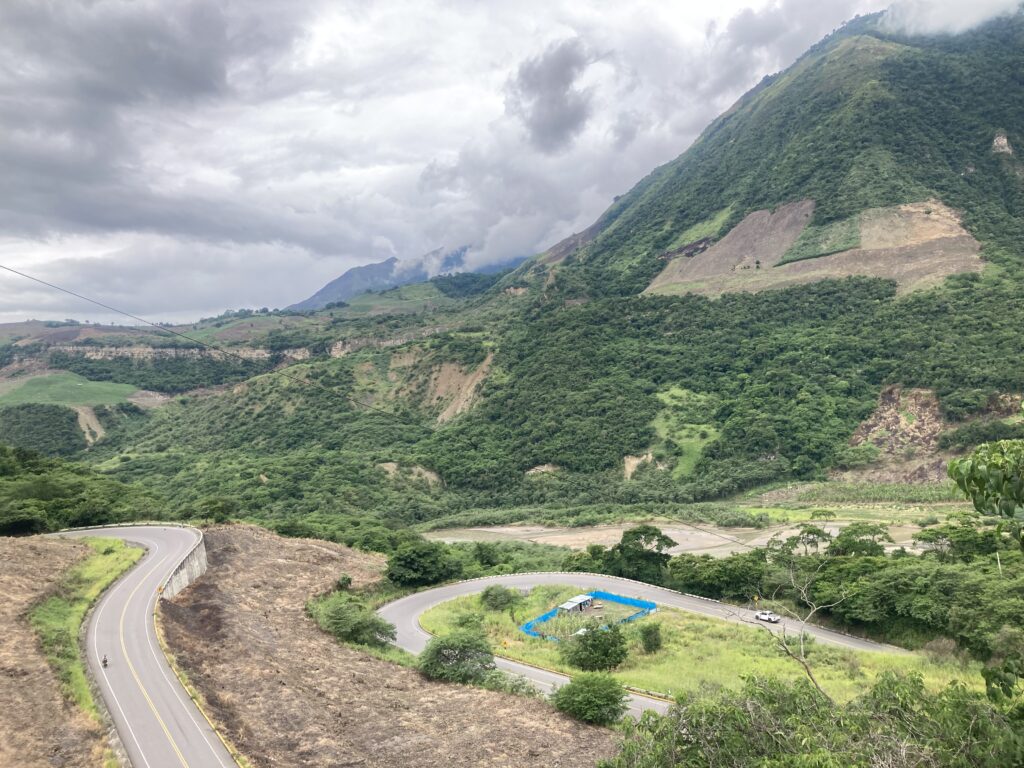
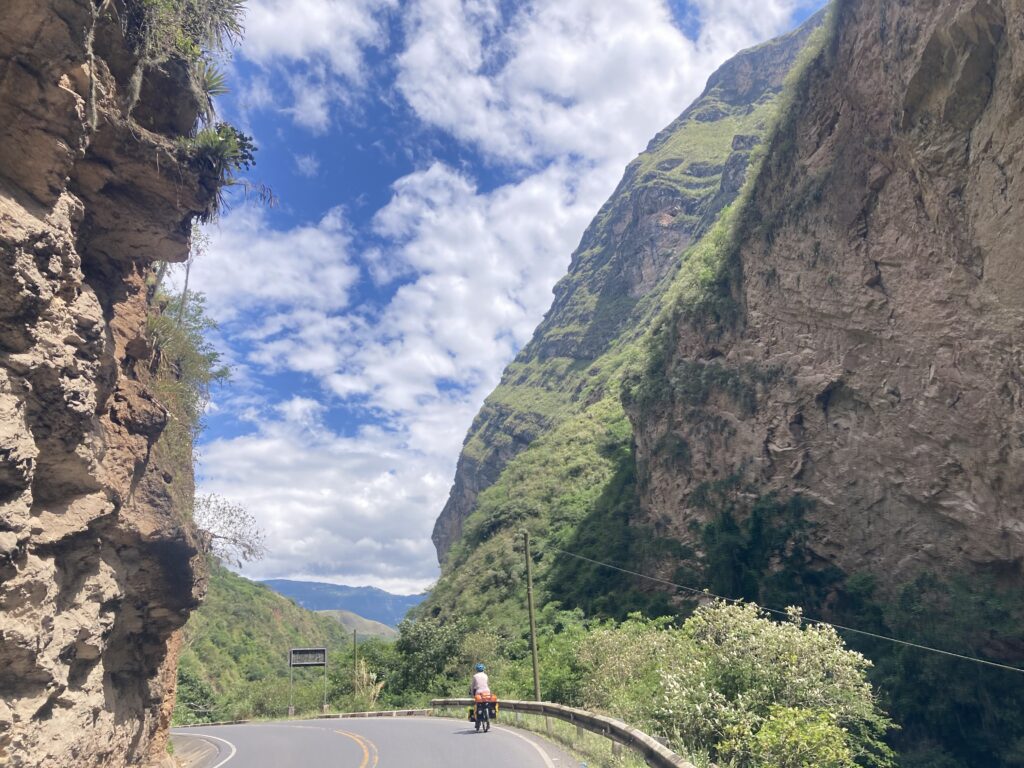
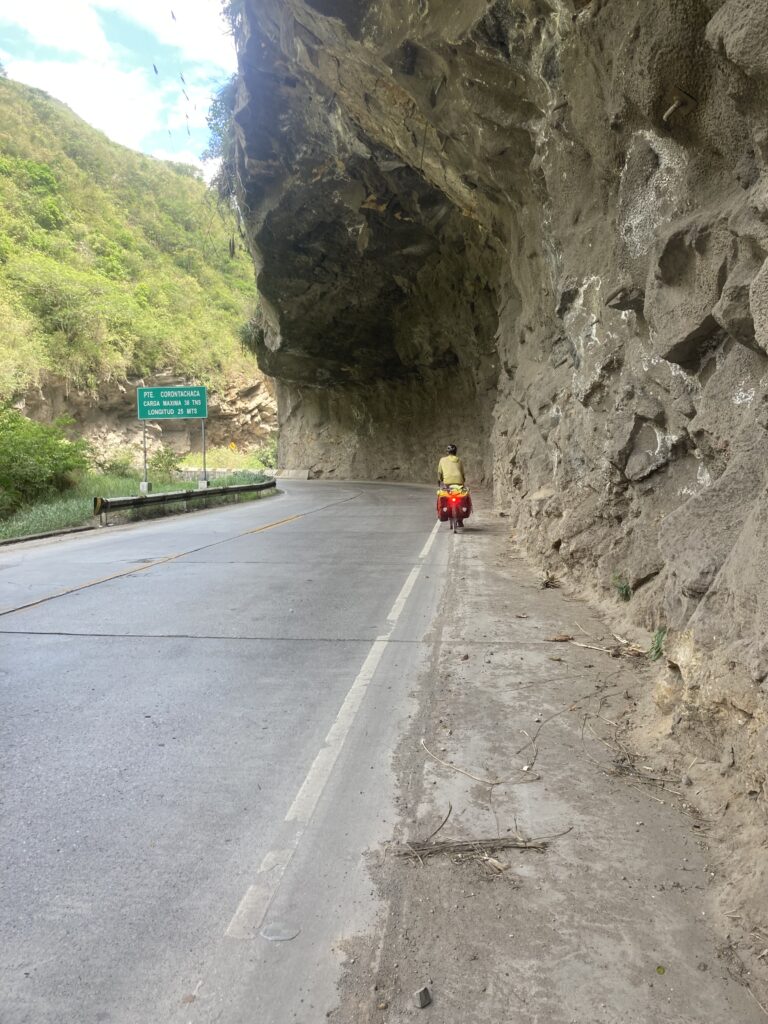
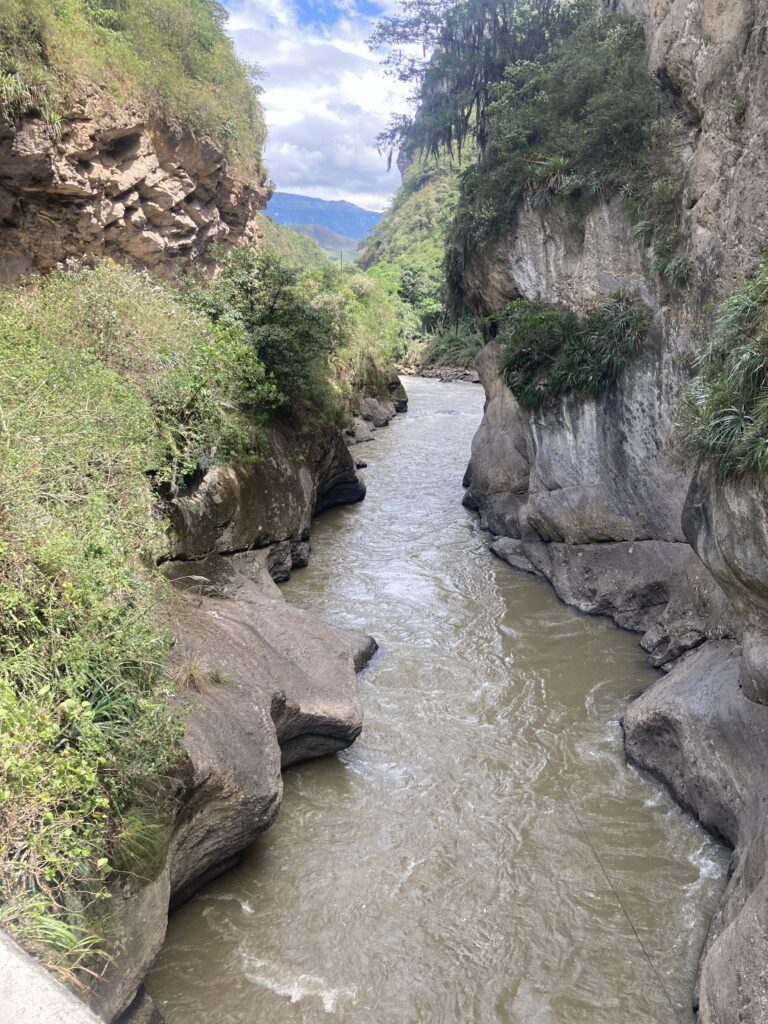
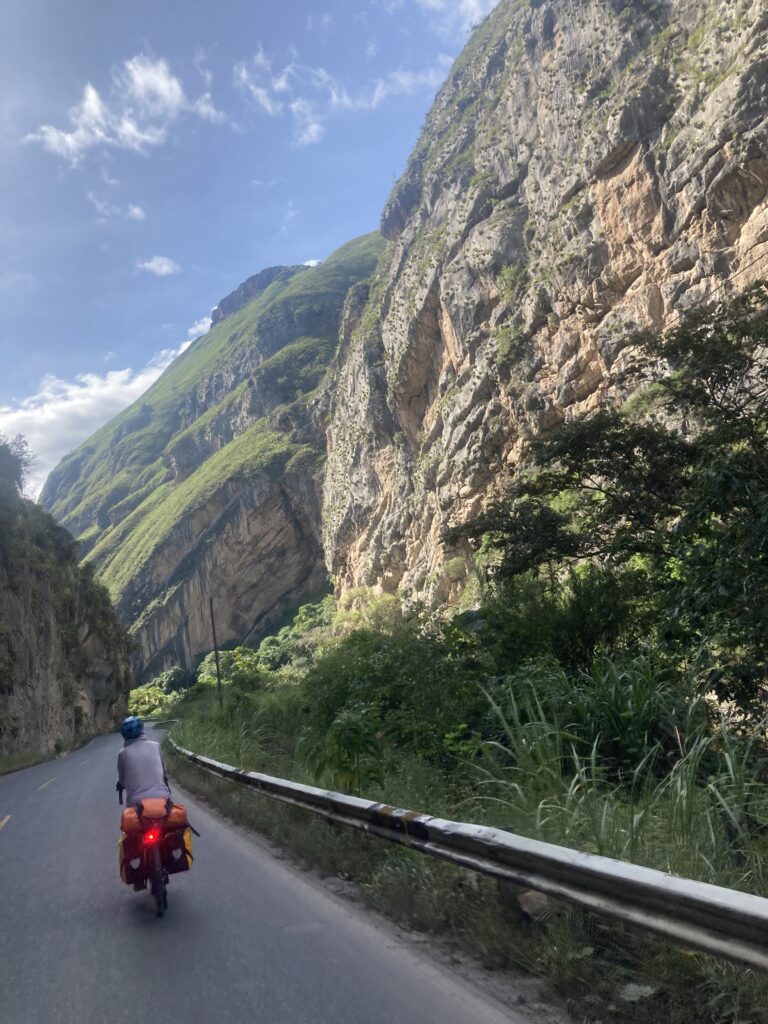
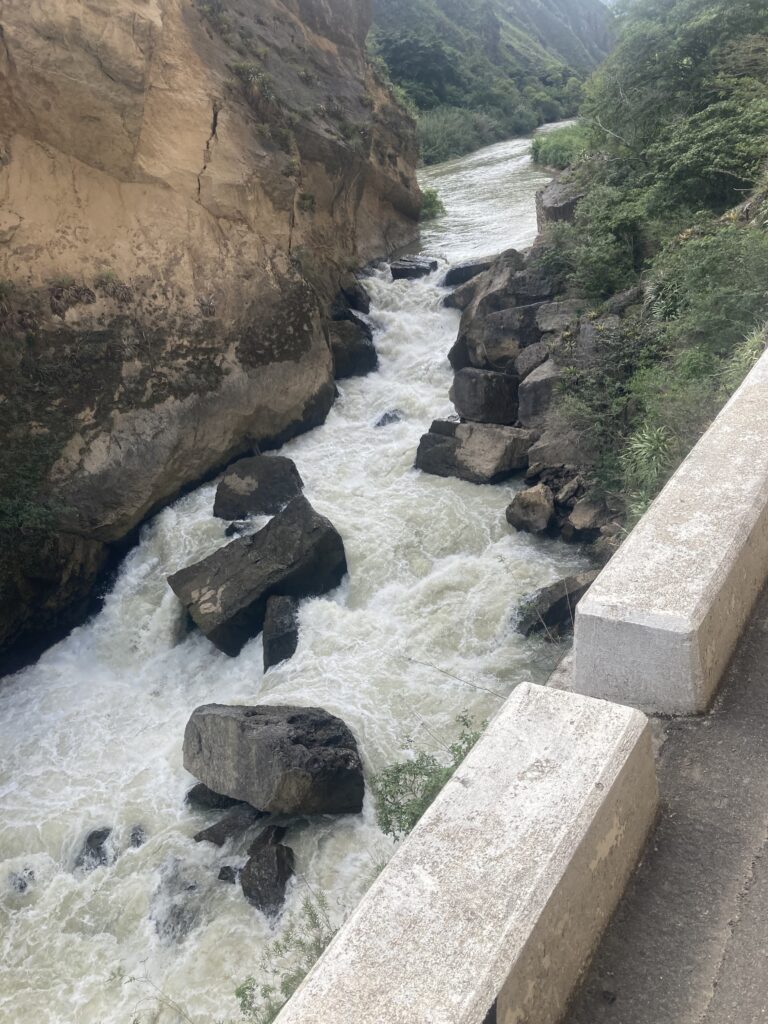
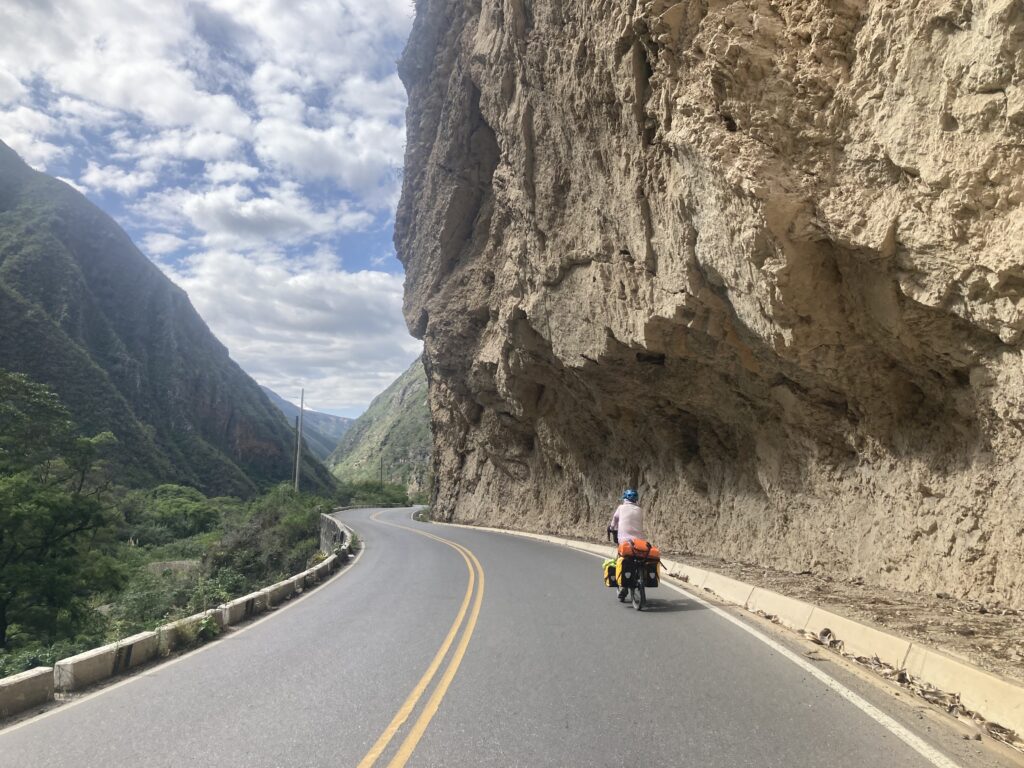
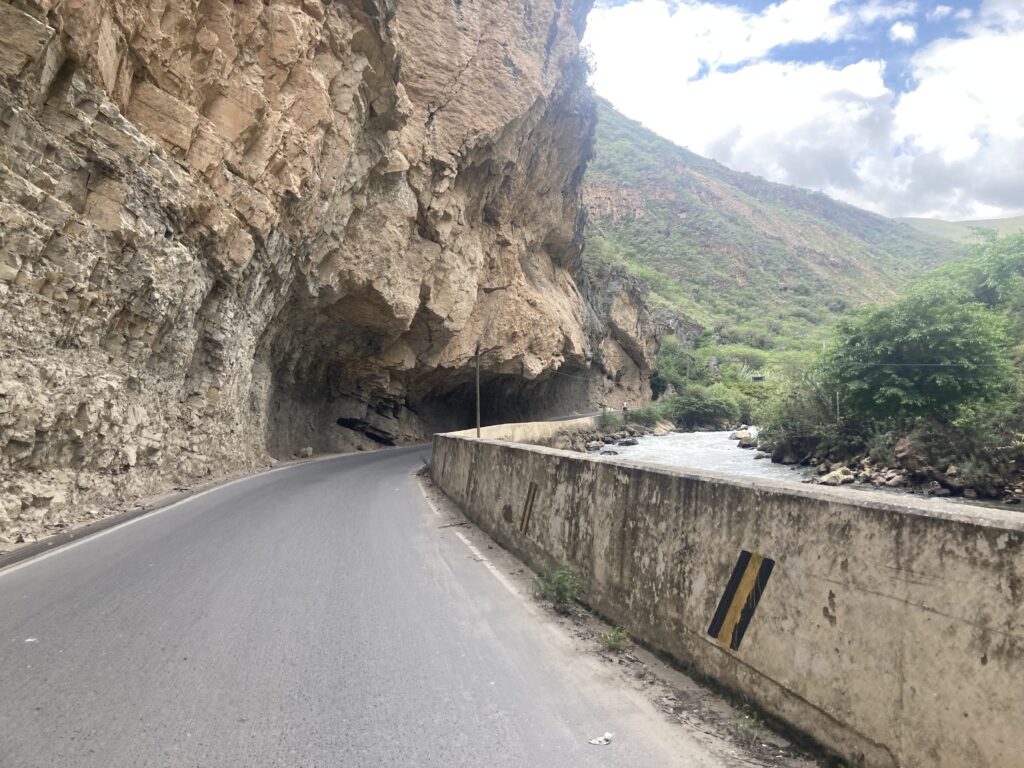
In the drizzly early morning riding out of Bagua Grande Dustin passes a broken down bus – many of the passengers watched as we went by. Common in Latin America this bus is being repaired on-site, there were three people under the bus fixing it. Center of the screen is a log wrapped in pink plastic to alert the traffic. Riding toward the mountains – thankfully for cooler temperatures! This area of the Andean Amazon is known for it’s cloud forests where the mountains are perpetually shrouded in clouds thereby regulating the temperature and moisture. We had a fun multi-switchback downhill – can you find Patricia on the left of this image?Most of the day was a riding through a gorge formed by the Utcubamba River. If the rock seemed stable enough only the area needed for the road was carved out – we liked the shade 🙂 Utcubamba River gorge. This area of Northern Peru, Amazonas, is famous for its archeological sites and waterfalls.
We spent the night in Pedro Ruiz, named after a famous Peruvian scientist/inventor/leader, at a quaint hospedaje. The excitement of the evening was the news that the road, our road, would be closed at mid-night! The locals were protesting poor road conditions and neglect of necessary repairs from the government. They assured us on bicycles we’d “probably be fine” but the lack of information about what was going on still worried us.
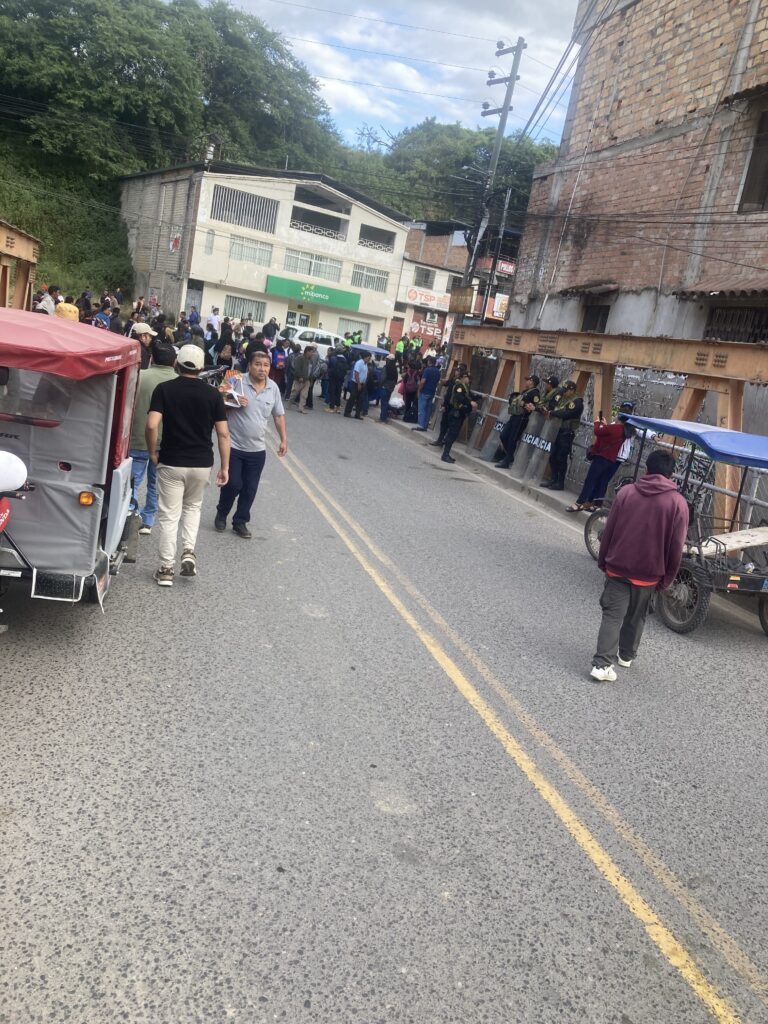
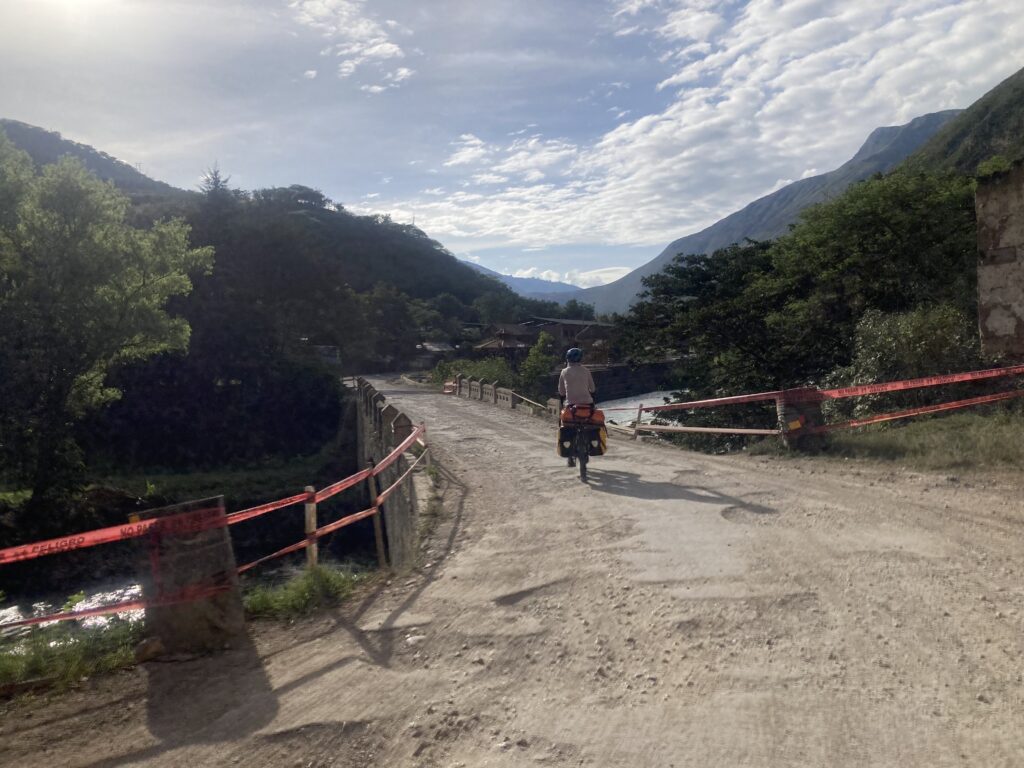
The next morning when we were ready to start riding we rolled out onto the street to see the excitement. The only bridge in the direction we were heading was blocked by locals, the riot gear shrouded police were ready to jump into action, and the trucks and busses were not allowed to turn and go across the bridge. We walked our bicycles toward the bridge and hoped for the best and thankfully we were waved through. We’re pretty sure our hotel proprietor was watching to ensure they let us pass 🙂
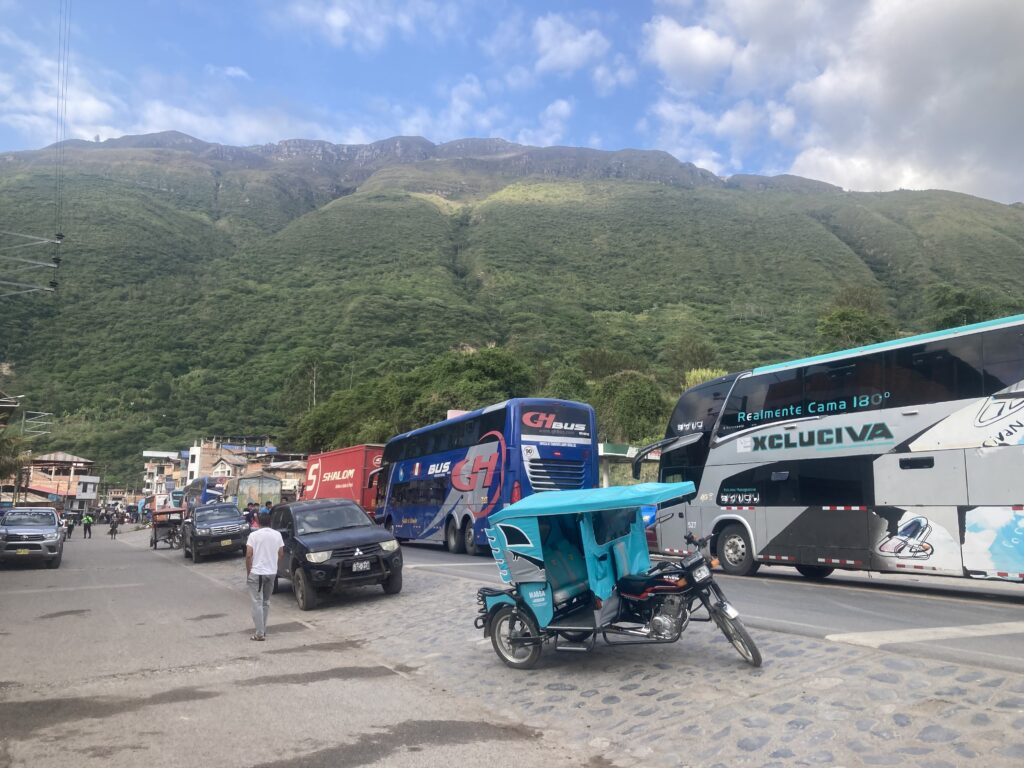
Busses and trucks back up the street when they are not allowed to turn and go across a bridge blocked by locals protesting neglected road repairs.Locals blocked the only bridge in the direction we were heading to protest bad roads – police, complete with riot gear, were at the ready on right.
Once we passed through the roadblock we realized that we would have an amazing day of almost completely car-free riding through the Utcubamba Valley! The roadblock situation changed from a stressor to a delight very quickly 🙂
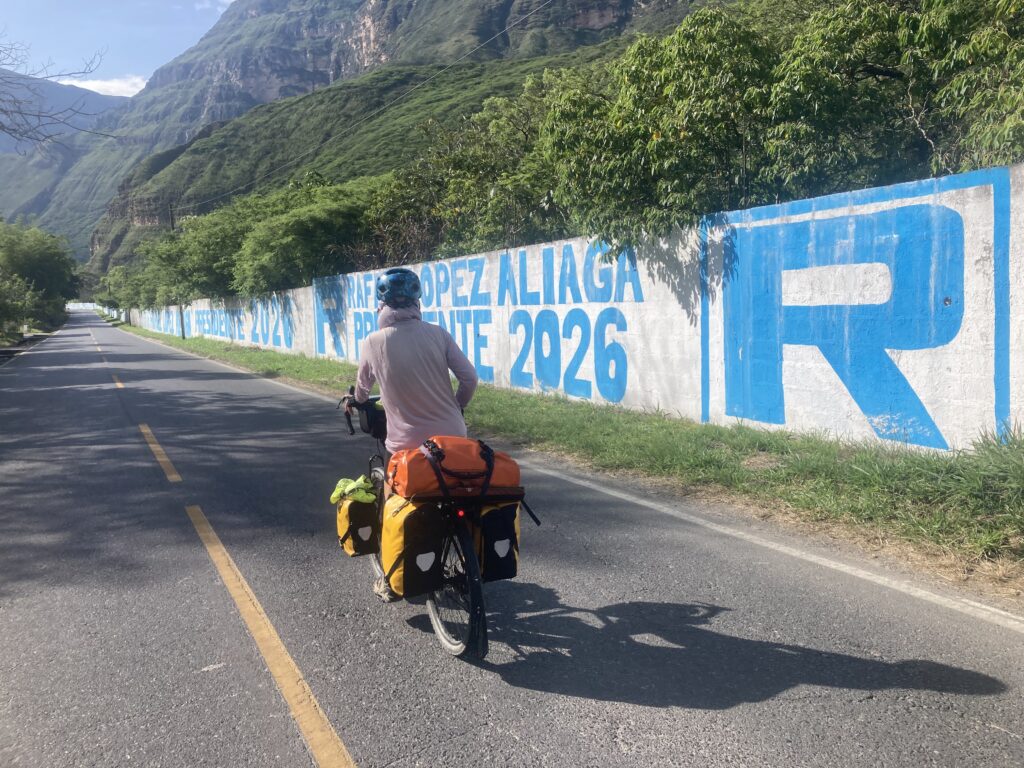
Patricia rides through the Utcubamba Valley with almost no traffic because of a locals’ roadblock. Political ads are often painted on walls & buildings. This painted wall went on for quite a while. One of the gorges of the Utcubamba River. Don’t get too close to the edge…the barrier blocks are only about 12″ highRiding through the Utcubamba River valley on our way to Nuevo Tingo, Peru.
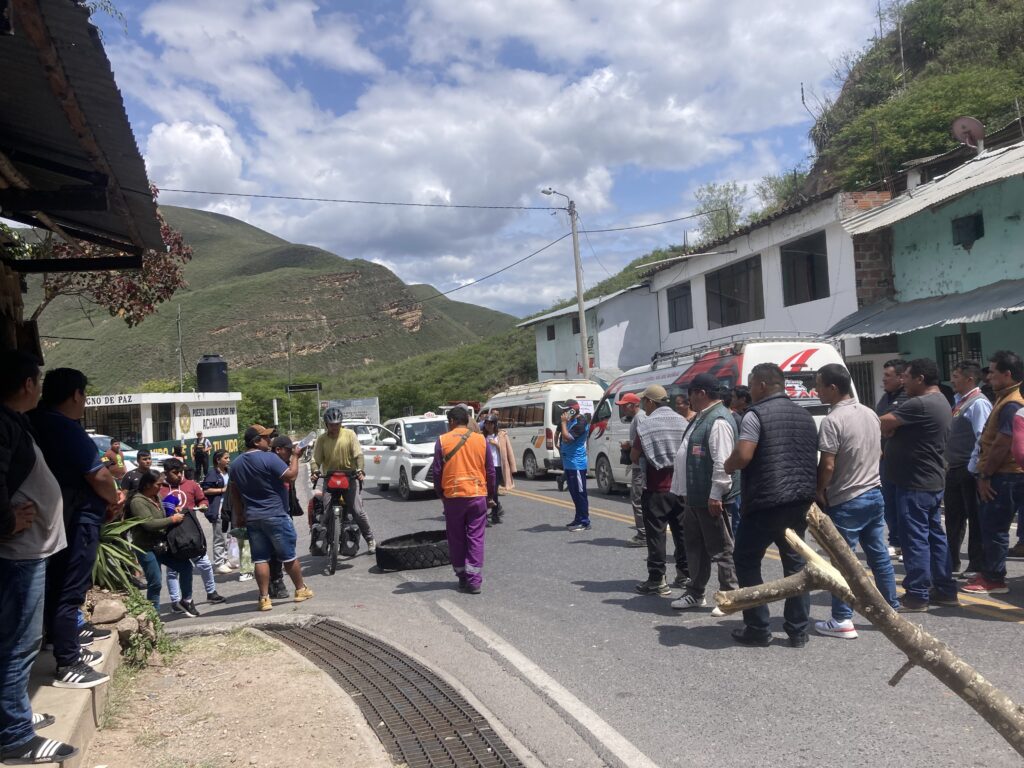
We gradually climbed along the river for many blissful vehicle-free kilometers until Patricia came up to some inter-city vans making a u-turn and they told her “No pase” (you can not pass). She pedaled up to the front of the line of cars and found another road block with many people standing in the middle of the road blocking traffic. When they saw her they quickly waved her through to the other side. Once to the other side she told one of the organizers “Esparando a mi esposo” (I am waiting for my husband). This kind fellow went to the rest of the crowd and told them that Dustin would be on his way soon & they should let him through. Turns out the guy that helped us out was also a bicycle tourists who had ridden 45 days through Colombia & Ecuador!
Dustin is allowed to pass through the roadblock – notice the large tire pulled into the road. Also the stick in the lower right of this picture was just the end of a large log the locals had pulled across the road.
Once we were through roadblock #2 it was a bumpy ride on the road they were protesting about and then a switch backed climb to reach the town of Nuevo Tingo. It’s called “New” Tingo because the town was moved to the top of a hill in the 1990s after being flooded by the Utcubamba River.
A bike lean shade rest During parts of the ride along the Utcubamba River the rocks overhung the road – can you see Patricia waaaay up there?The road into Nuevo Tingo was pretty bad…we often can’t take pictures on bad roads because both hands are required to keep the bike upright. This section was recently regraded.
Kuelap cultural site
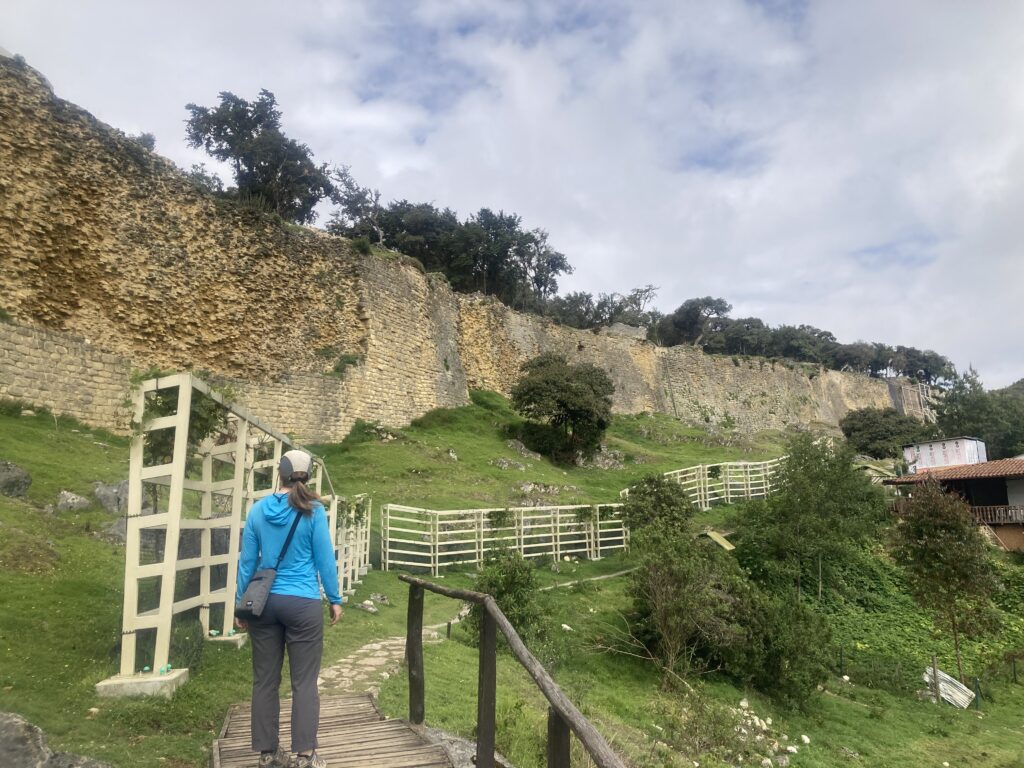
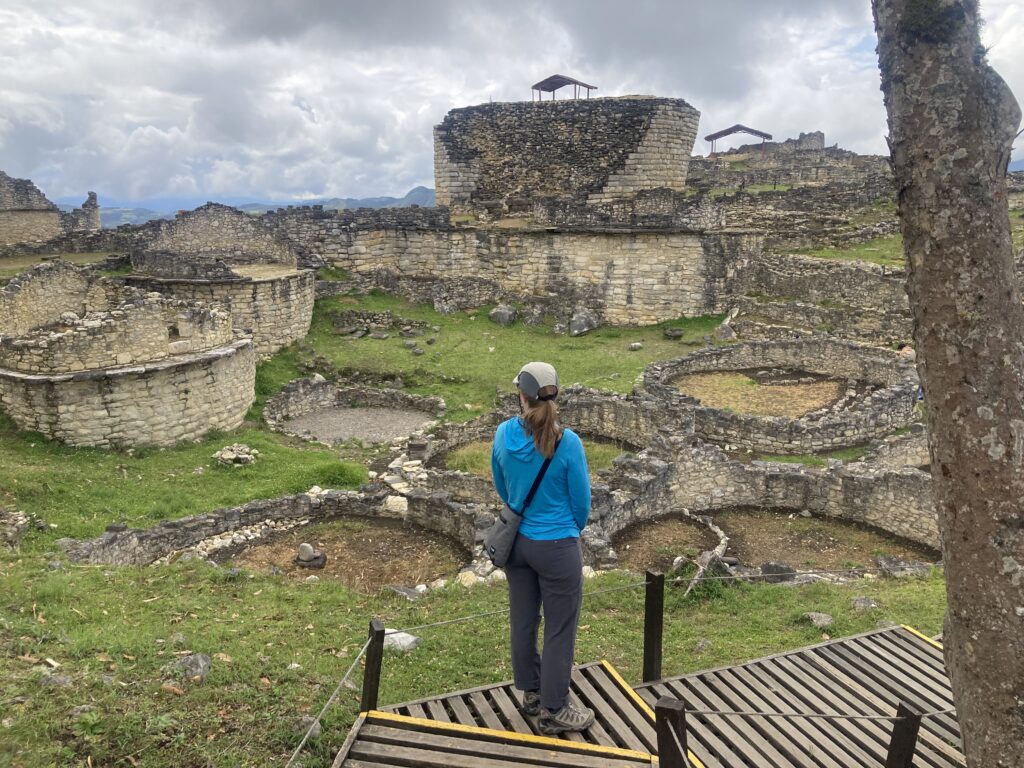
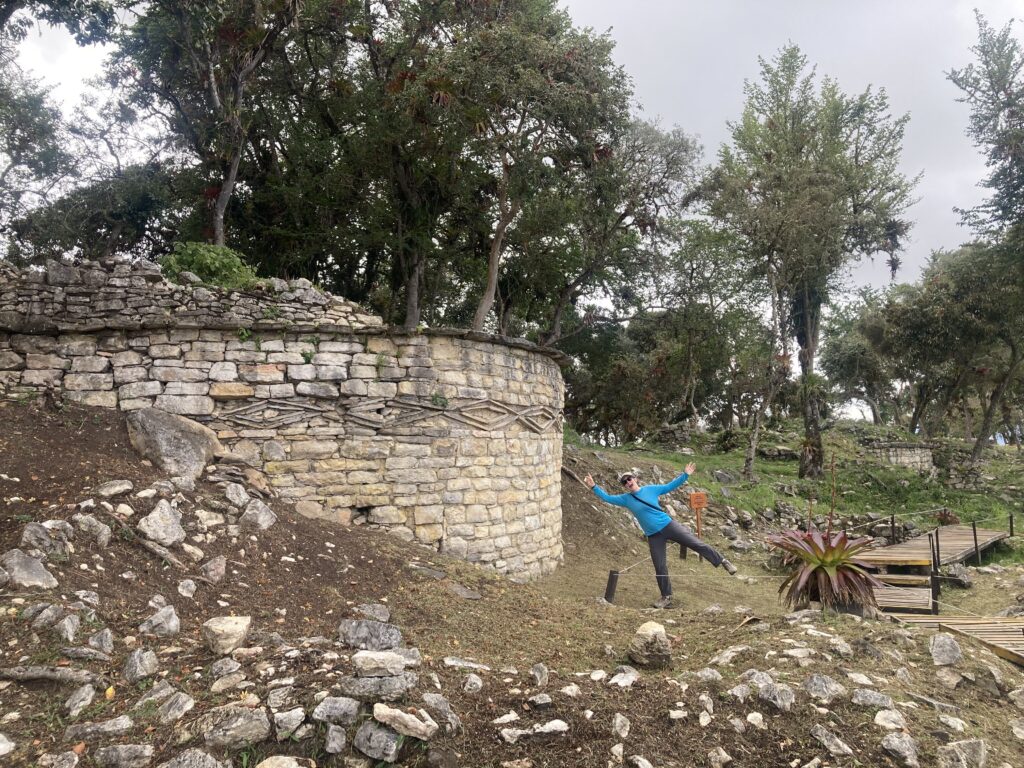
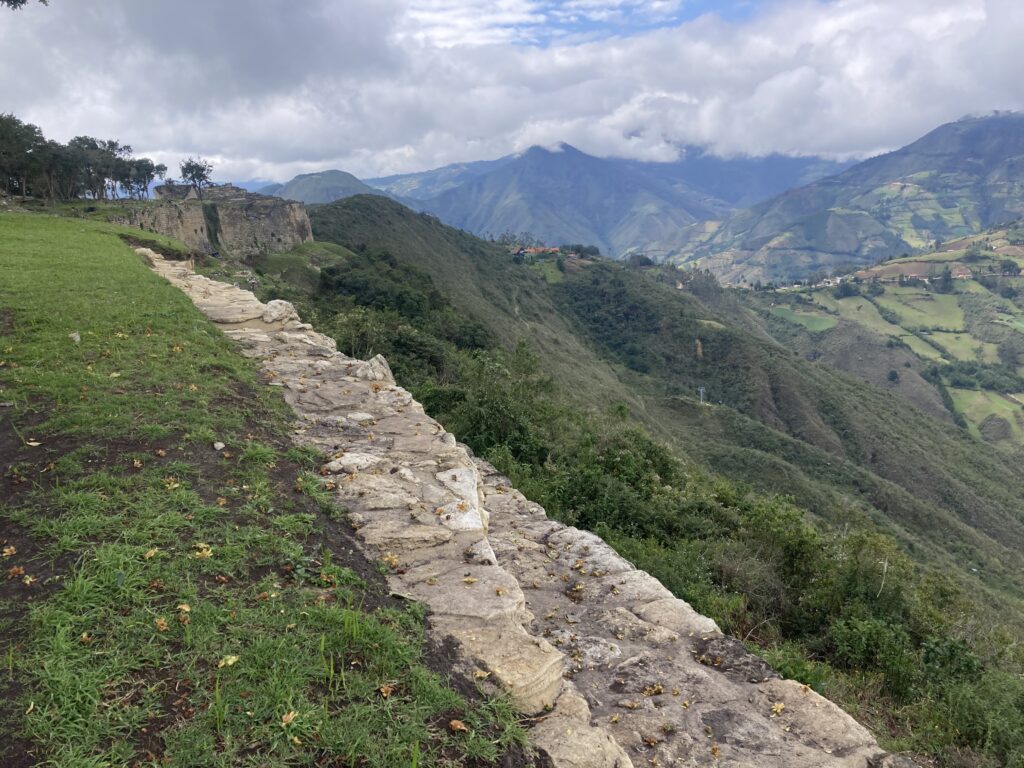
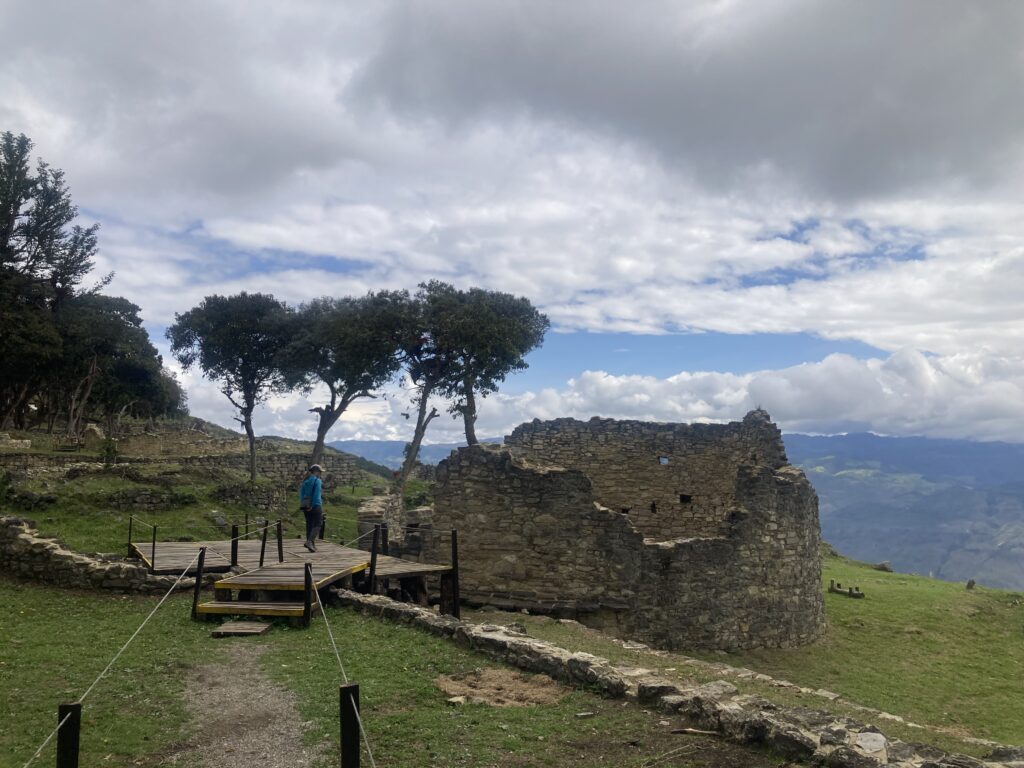
We had specifically come to Nuevo Tingo to go to Kuelap cultural site. Often called the “Machu Picchu of the north”, Kuelap was built by the Chachapoya people over 900+ years. It is older, larger, and at higher altitude than Machu Picchu but it is less accessible so does not get nearly the number of visitors as its famous sister Inca site. The Chachapoyas, known as Warriors of the Clouds, were eventually conquered by the Incas just prior to the Spanish invasion.
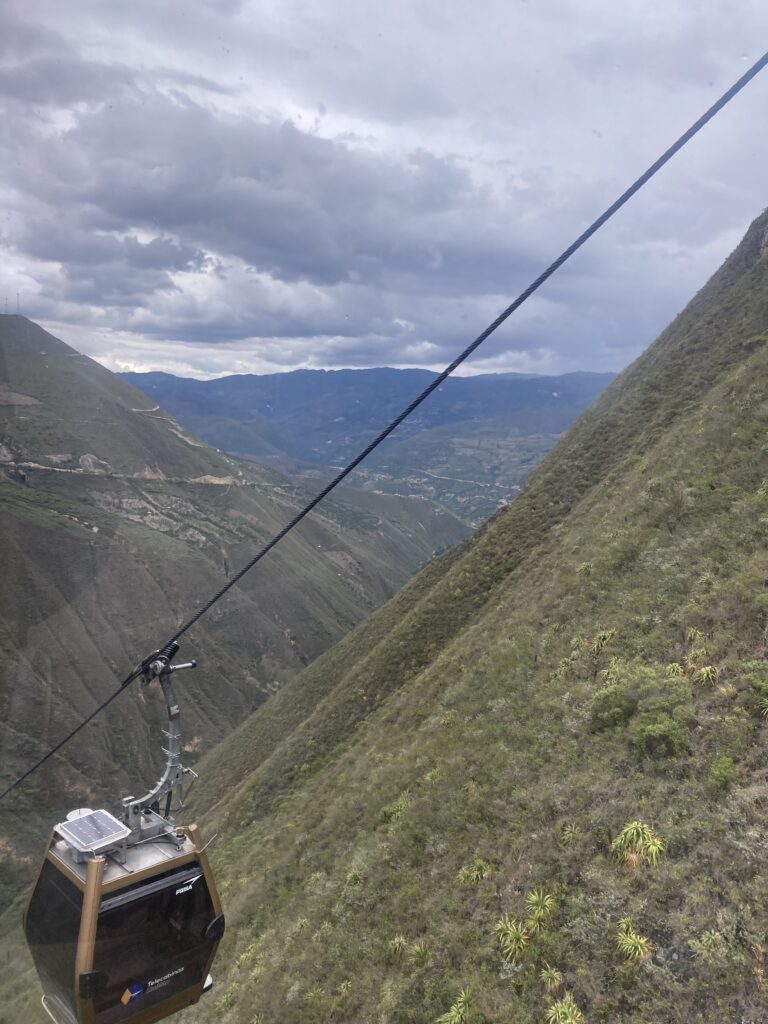
In order to reach the walled fortress we walked uphill to the cable car station, took a 10 minute bus, and then a 20 minute cable car (currently the only one operating in Peru – they’re installing another one near Cusco) up to the base of Kuelap. To reach the fortress we had to hike up just over a mile (1.4km). We walked the entire grounds for another 2-3 km and repeated the journey in reverse to get back down. By the end of the visit we estimated we walked about 5 miles (8km).
As a result of the roadblocks, and it being off-season, there were almost no tourists. It was epic – we had an amazing cultural site all to ourselves!
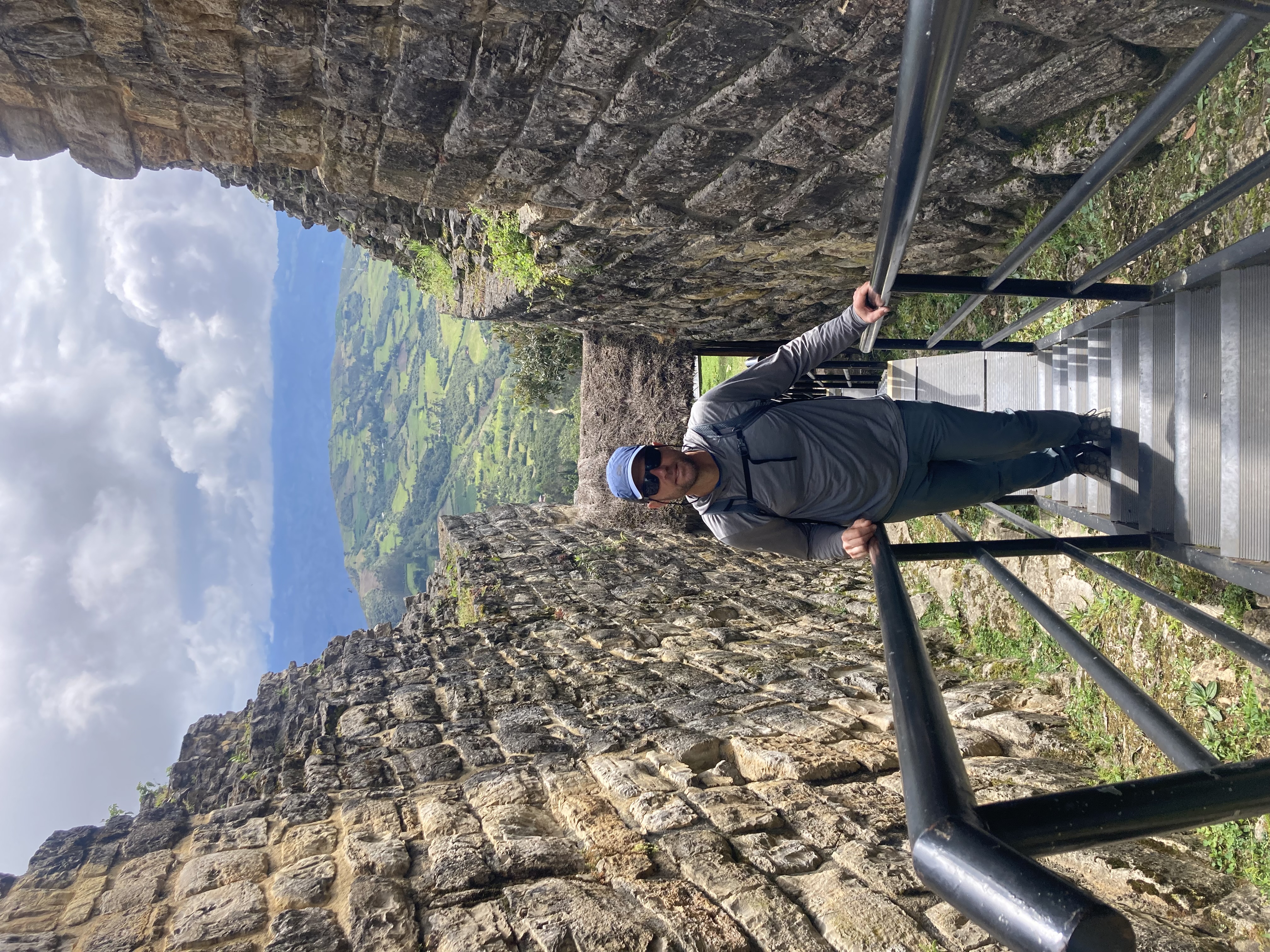
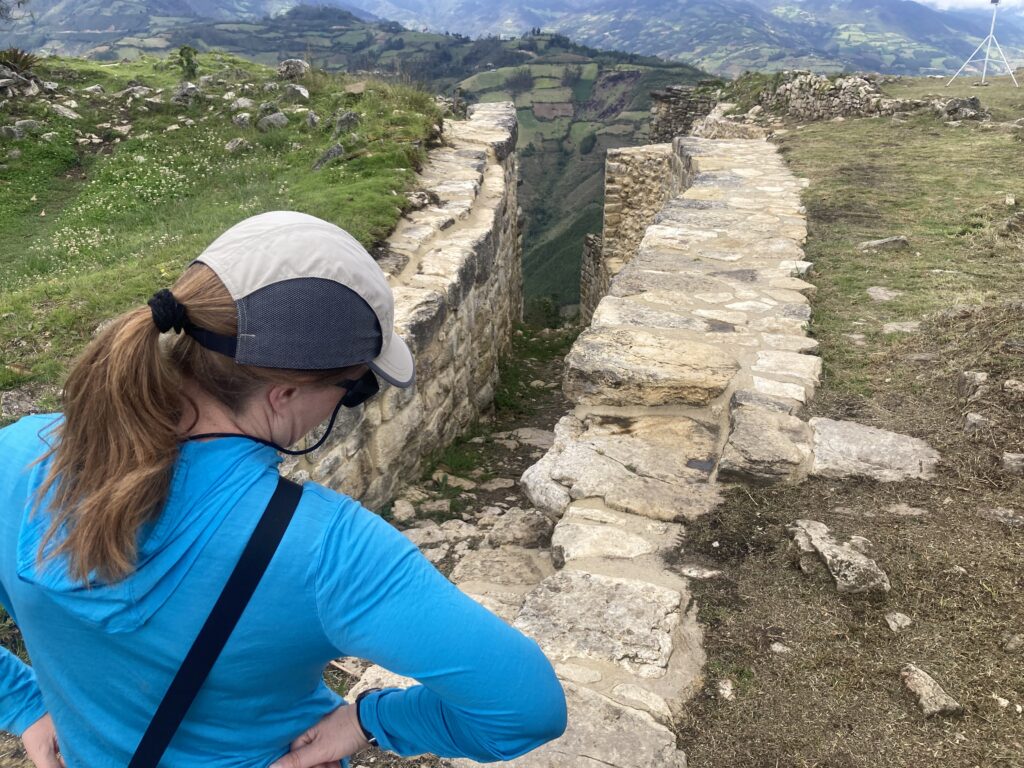
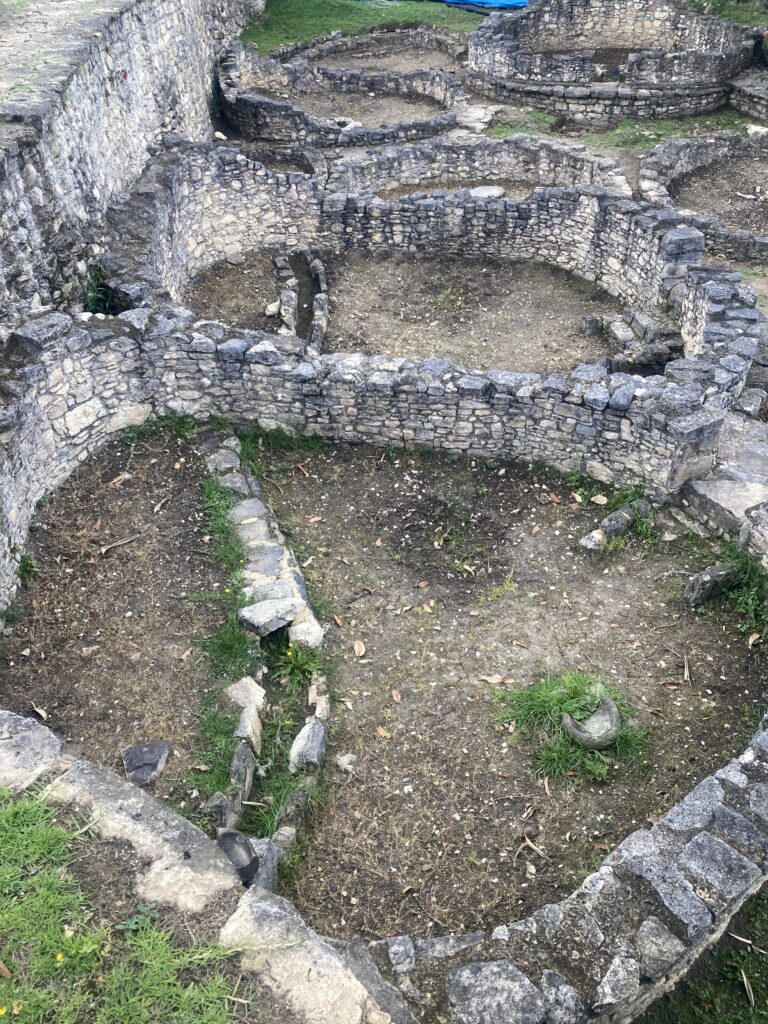
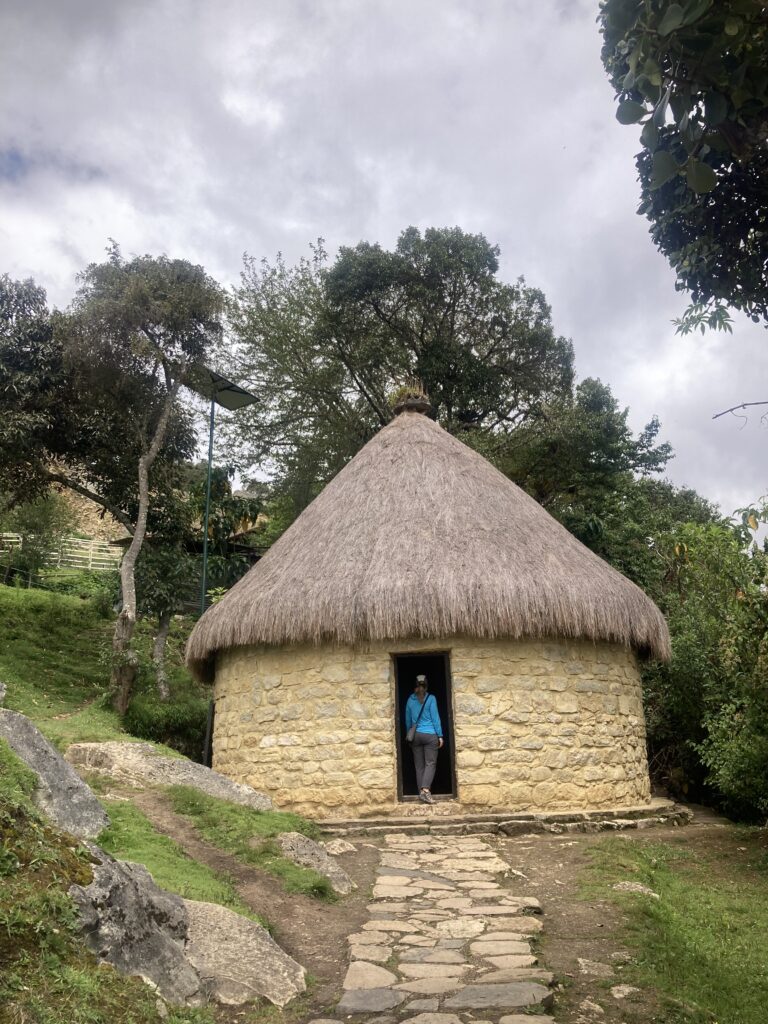
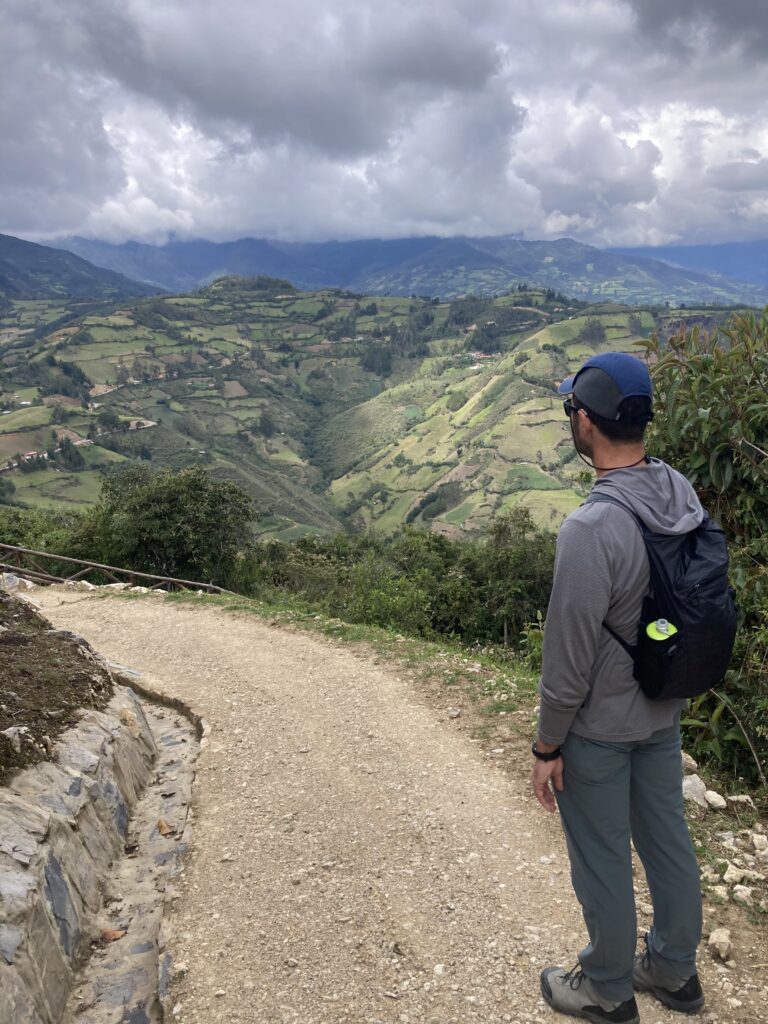
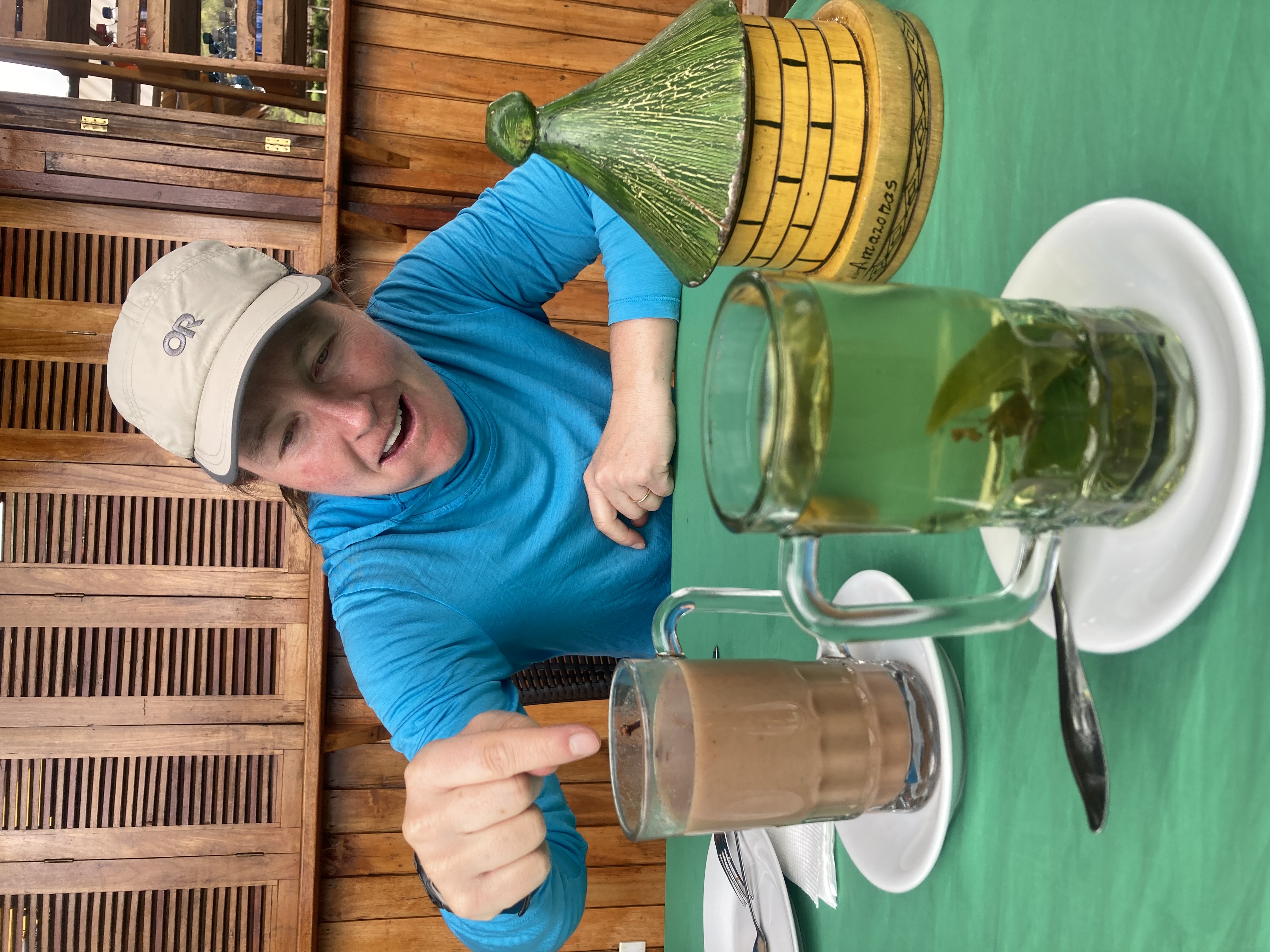
After a 10 minute bus ride we took a cable car for 20 minutes – it was SO steep!Then we hiked from the cable car up to the fortress We entered the fortress by one of two east entrances – these entrances became narrower & narrower until they only admitted one person. Kuelap is mostly foundations of round structures which were residential & then a handful of quadrilateral structures used for temples/stages. There was also one entrance on the west side – once again becoming narrower & narrower until only one person could be admitted.The foundations of a few residential structures – the culvert type separation running across the house was used to hold small animals for food (mostly “cuy” guinea pig)Some of the houses got decorative with the stonework. Kuelap was massive – the pictures do it no justice…here we attempt to show size and altitude perspectiveOne of the residences with more wall still intact – also this photo gives a bit more perspective of the altitude (we were at 10,000 feet)Outside of the fortress there was a replica of what a home would have looked like in operation with a straw roof & inside it showed sleeping and cooking areas. Hiking back down to the cable carFor refreshment after all that hiking we had a bite to eat and some beverages – here Patricia is showing the cloves that are added to a traditional chocolate drink. The green one is coca tea – the coca leaf is widely used by locals as a mild stimulant and remedy for various ailments.
Back in town Nuevo Tingo was a sleepy small town on a perfect grid system – we later learned that the town was moved uphill (that’s why it’s “nuevo” new Tingo) in the 1990s after the Utcubamba River flooded the original town.
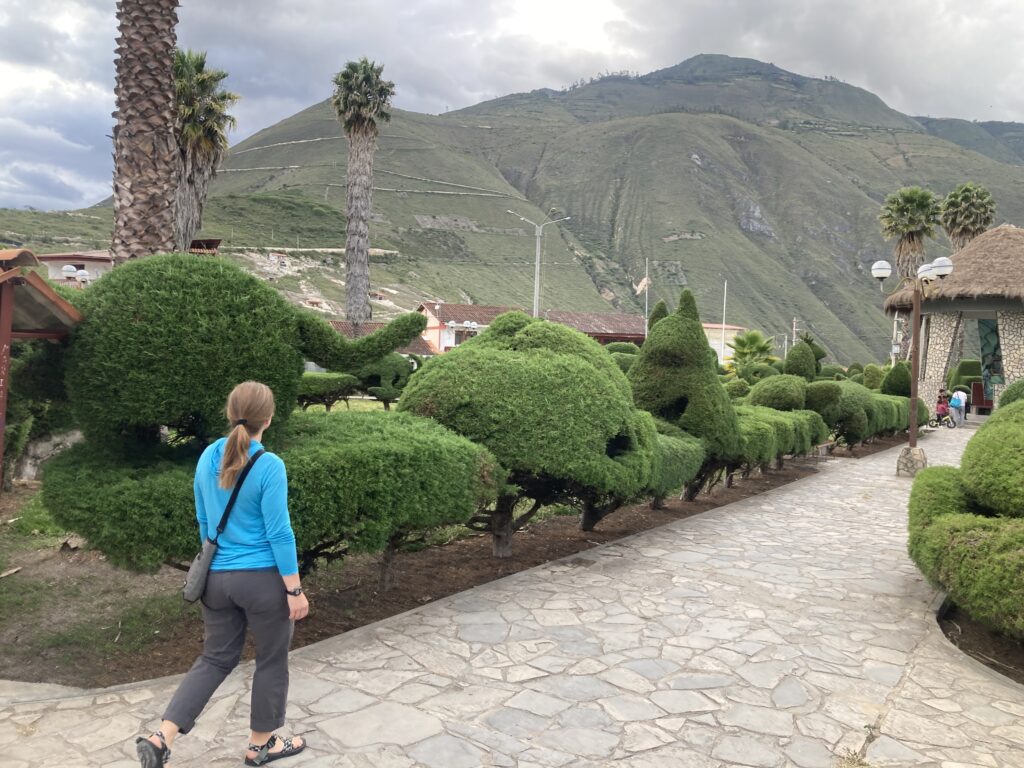
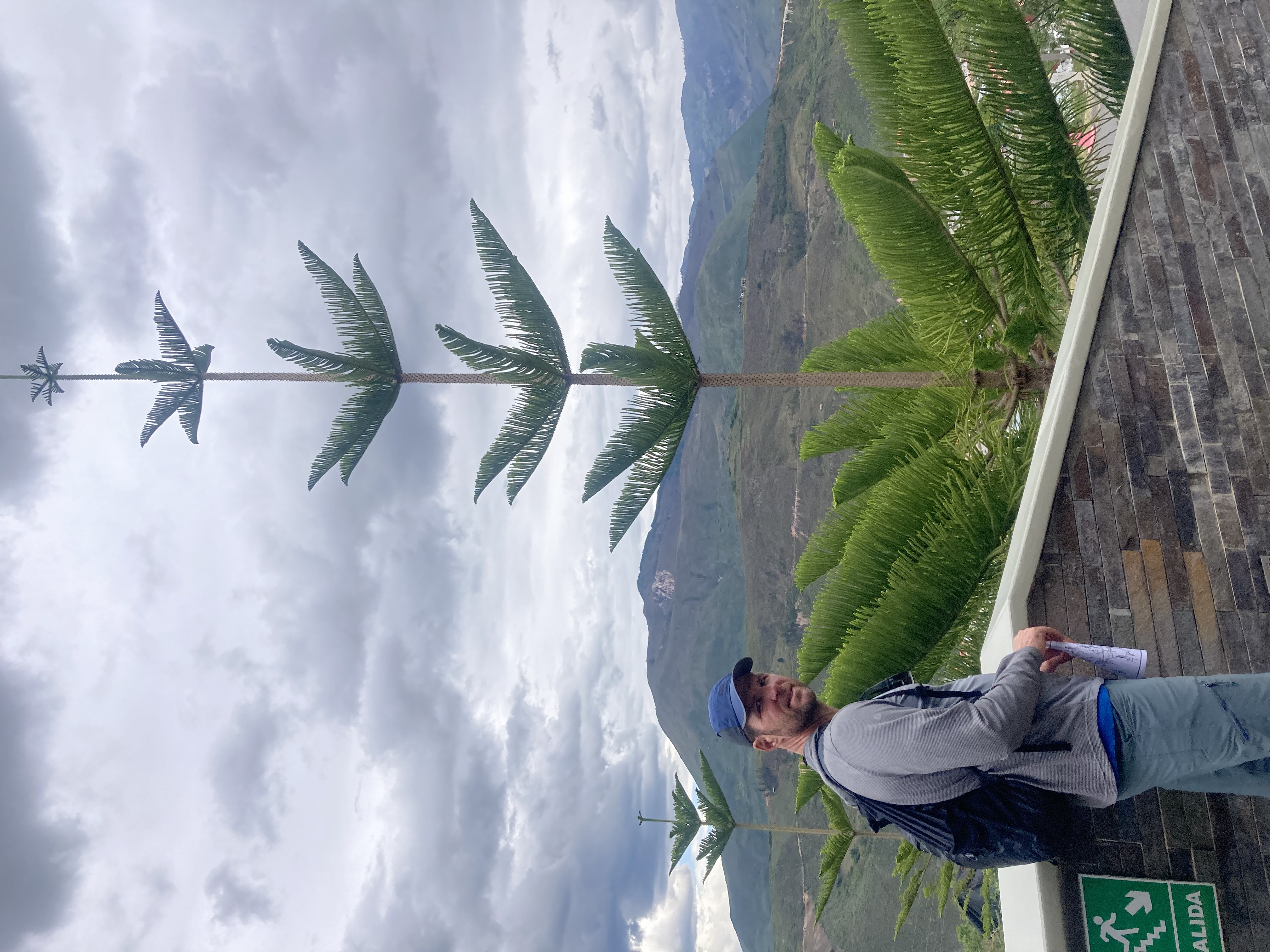
Town square in Nuevo Tingo with topiary gardensDustin with a Norfolk Island Pine? – not really a pine but unique looking tree
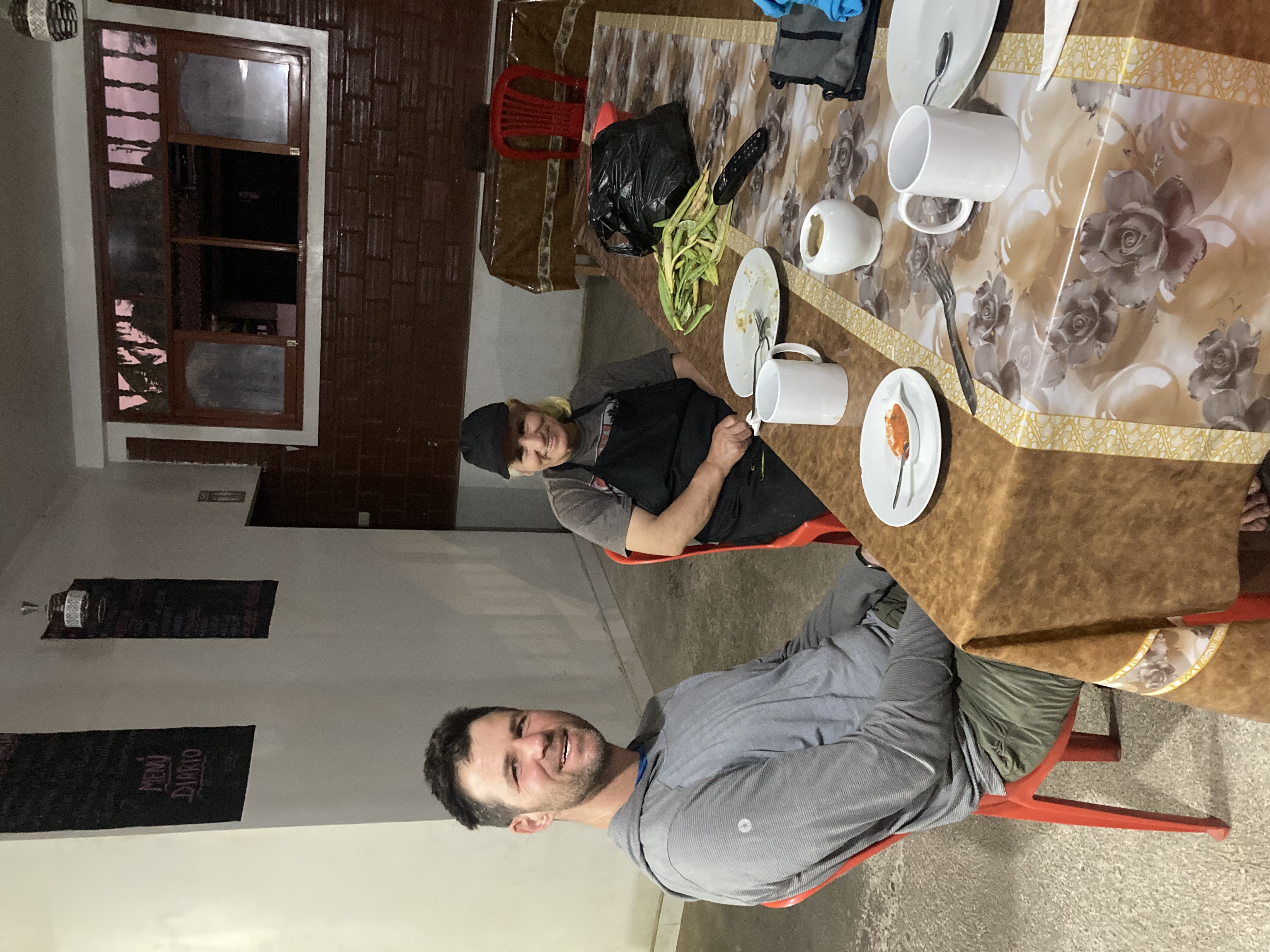
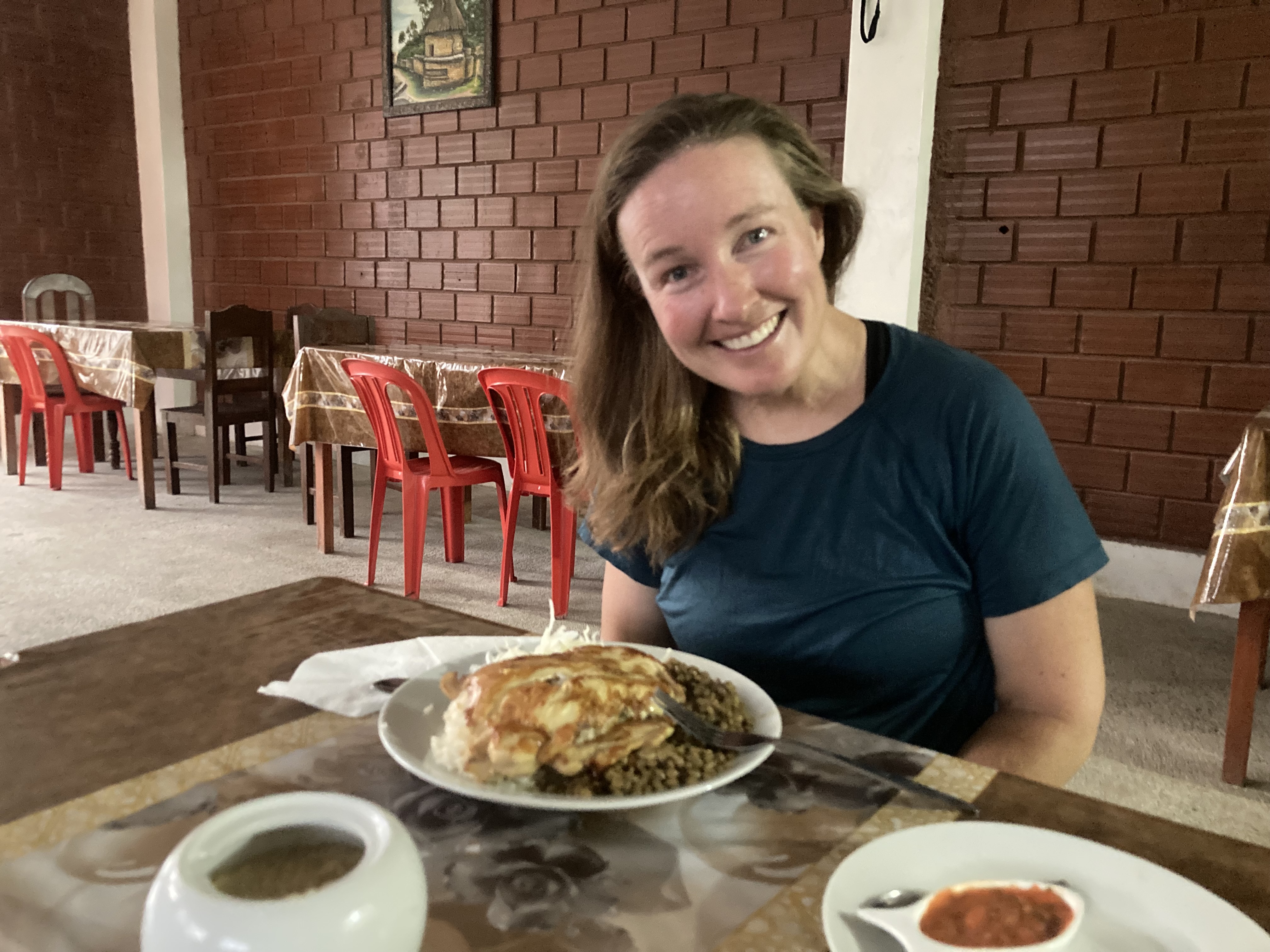
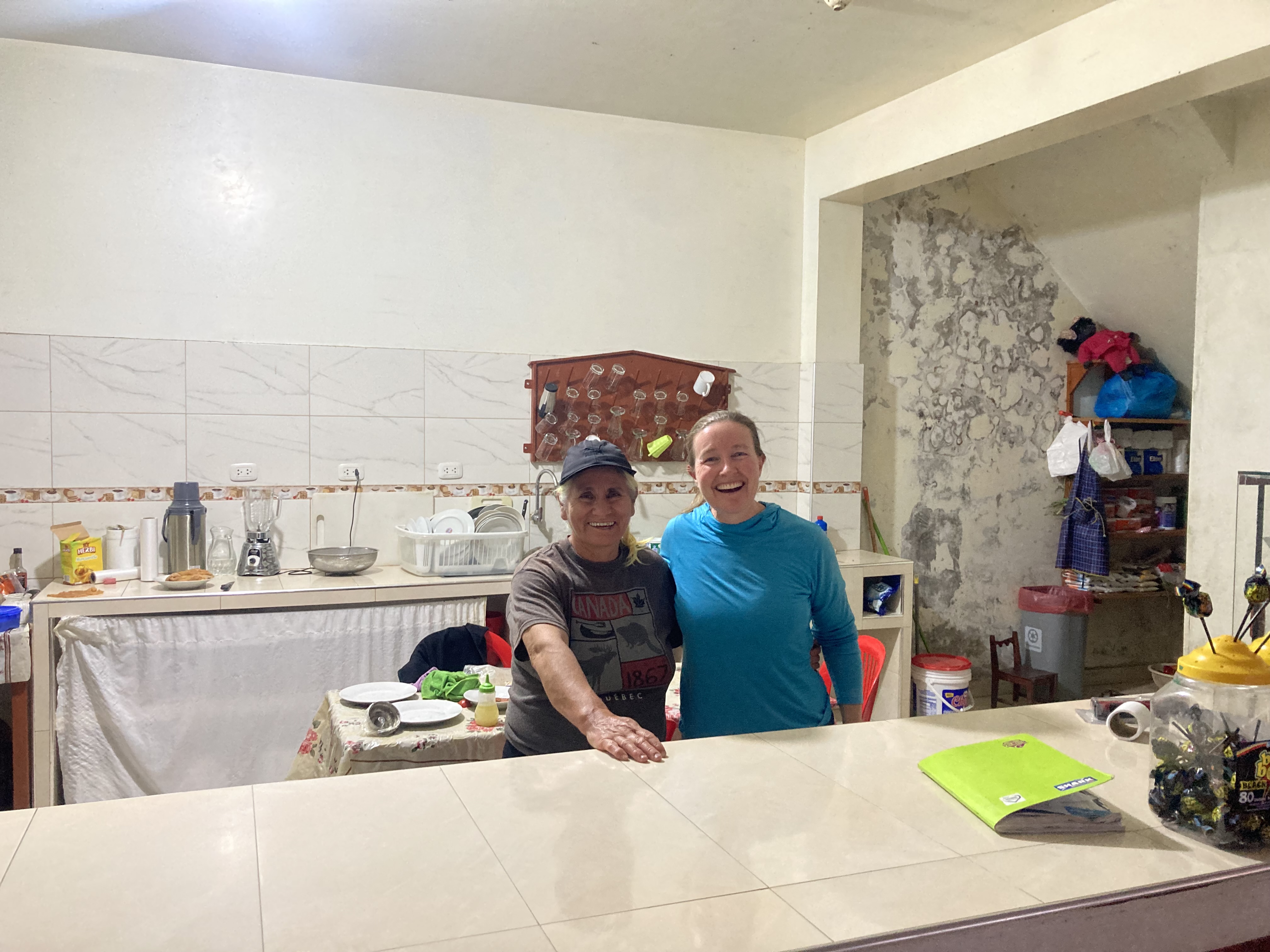
The cable car up to Kuelap is closed on Mondays which happened to be the day we arrived in Nuevo Tingo so most of the town was shut down. It was slim pickings for a place to eat dinner until we found “Senora” and her restaurant. We typically go to more frequented places because we know the food has been moving and not sitting around thereby limiting our food-borne illness risk, but with not many choices on a Monday we decided to give her restaurant a try. We were the only people eating at her restaurant but she was so nice & her place was very clean. The food was good local fare at a reasonable price. With a trip like this we just get so tired of making decisions and figuring out new surroundings (hotel, shower, water, food, wifi, route, etc) that sometimes consistency is comfort. We ending up eating with senora THREE times while we were in Nuevo Tingo!
Senora shells her frijoles for tomorrow’s meals while she sits and talks with us. Our third meal with Senora – chicken, lentils, rice & cabbage saladPatricia gets a picture with Senora after the third time we ate at the same place – she was a delight & her food was homestyle comfort.
Our next stop was Leymebamba, another small sleepy town in the Chachapoya region of northern Peru. It was an “easy” ride of 50km (30 miles) along the last of the Utcubamba River. When we arrived in Leymebamba we realized how tired we were after an “easy” ride so we decided to take another rest day before we attempted the next three *very* difficult cycling days. Visiting Kuelap (at 10,000 feet) with all the hiking and stair climbing must have exhausted our legs so a rest day in Leymebamba was calling.
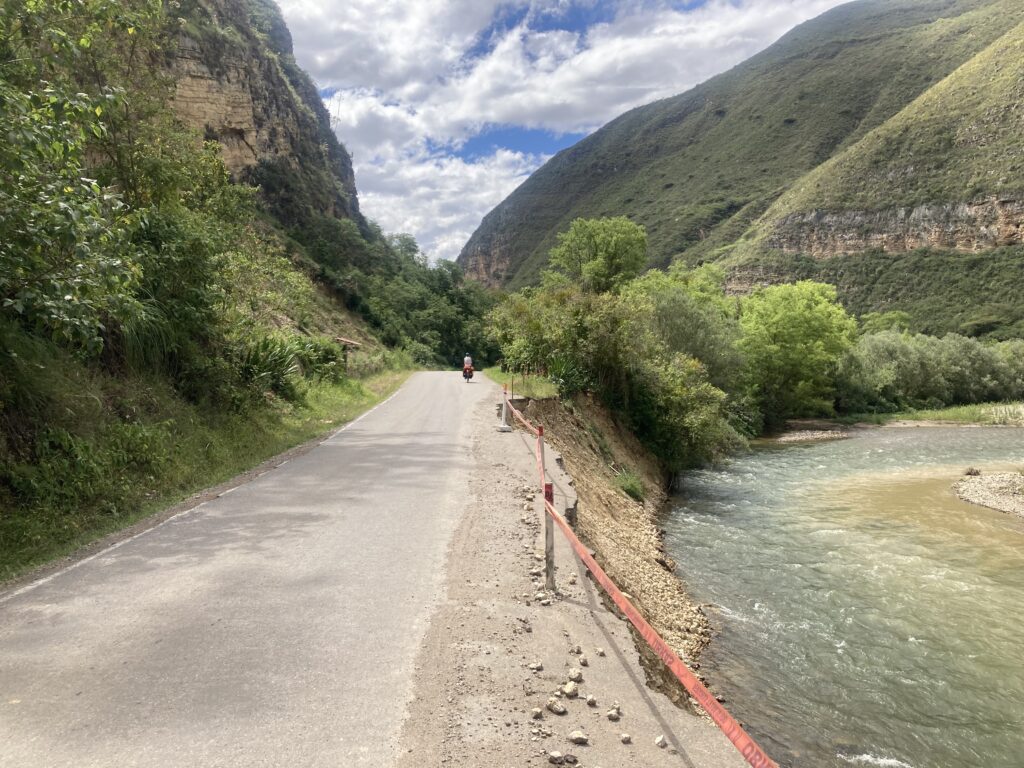
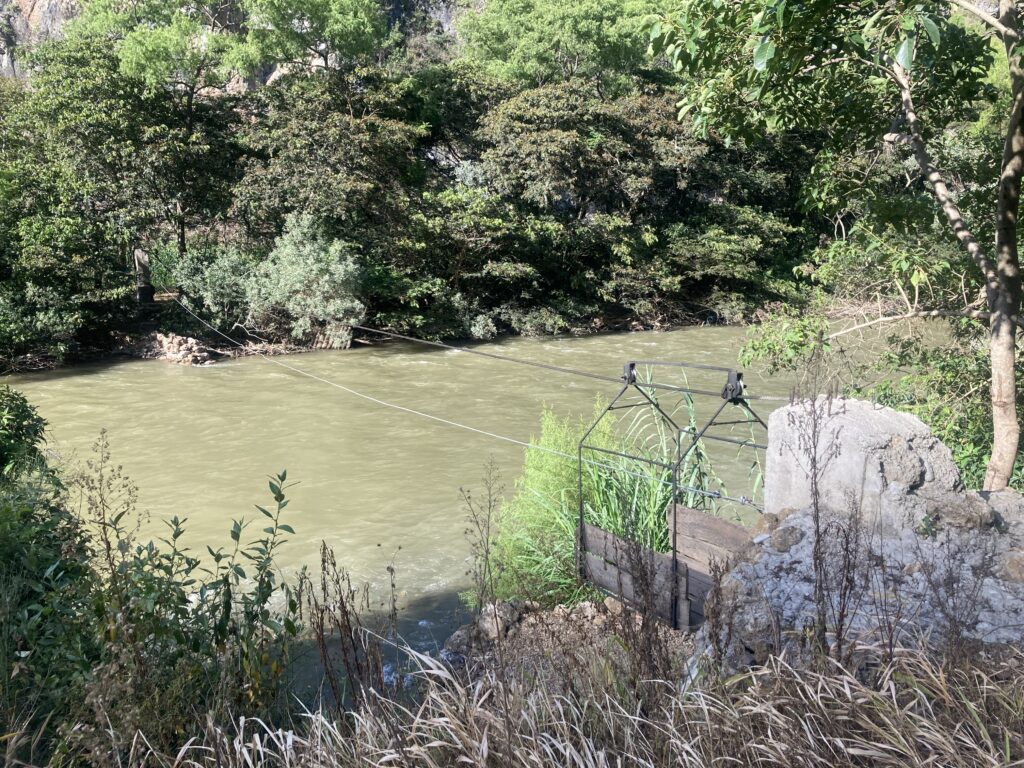
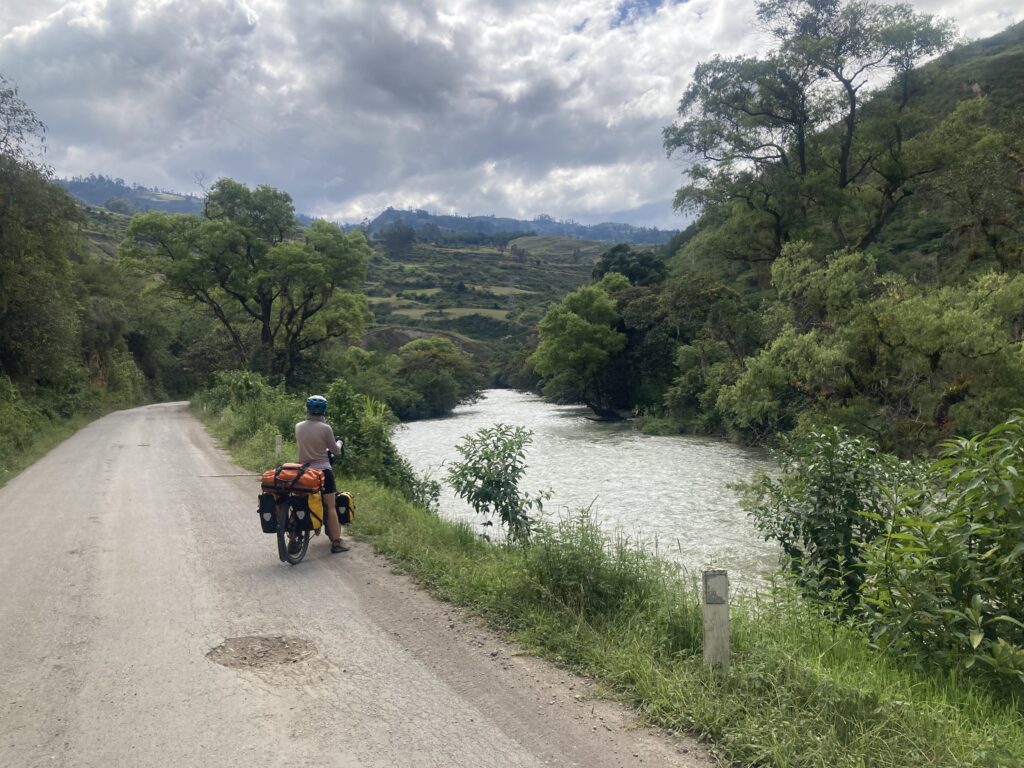
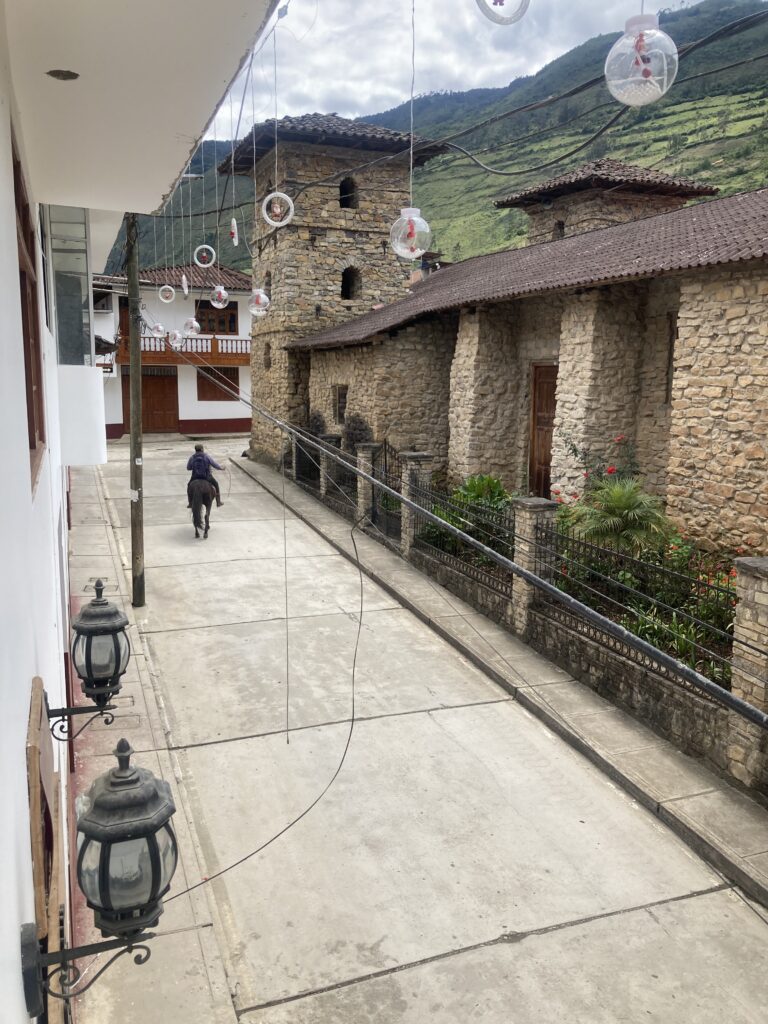
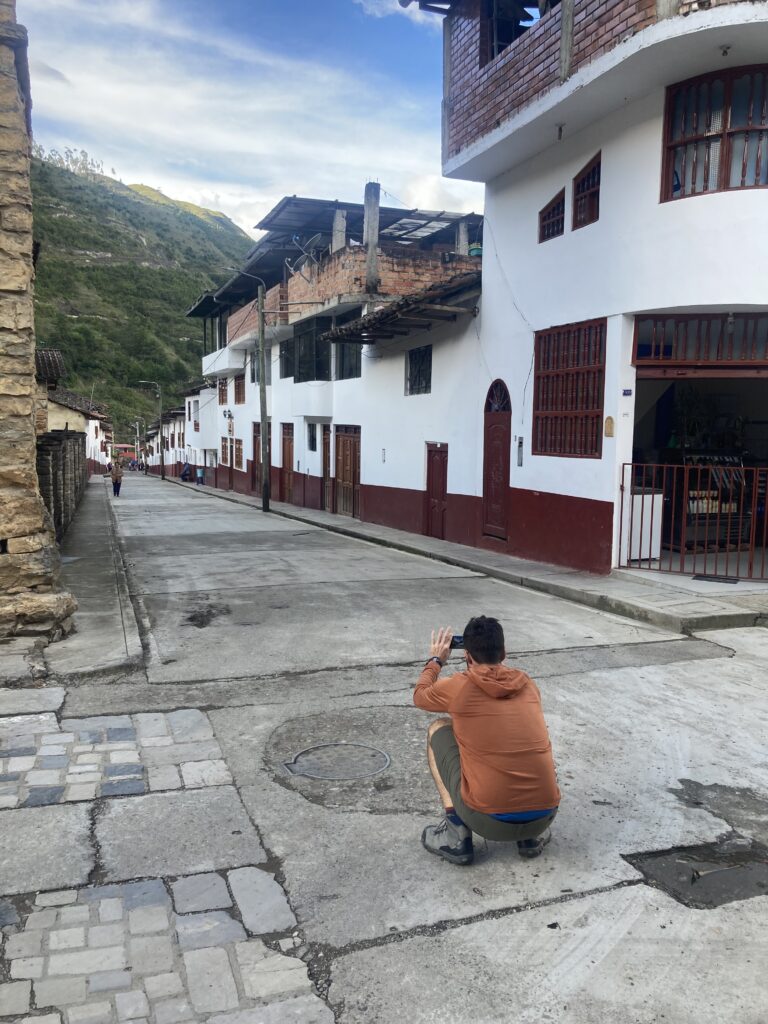
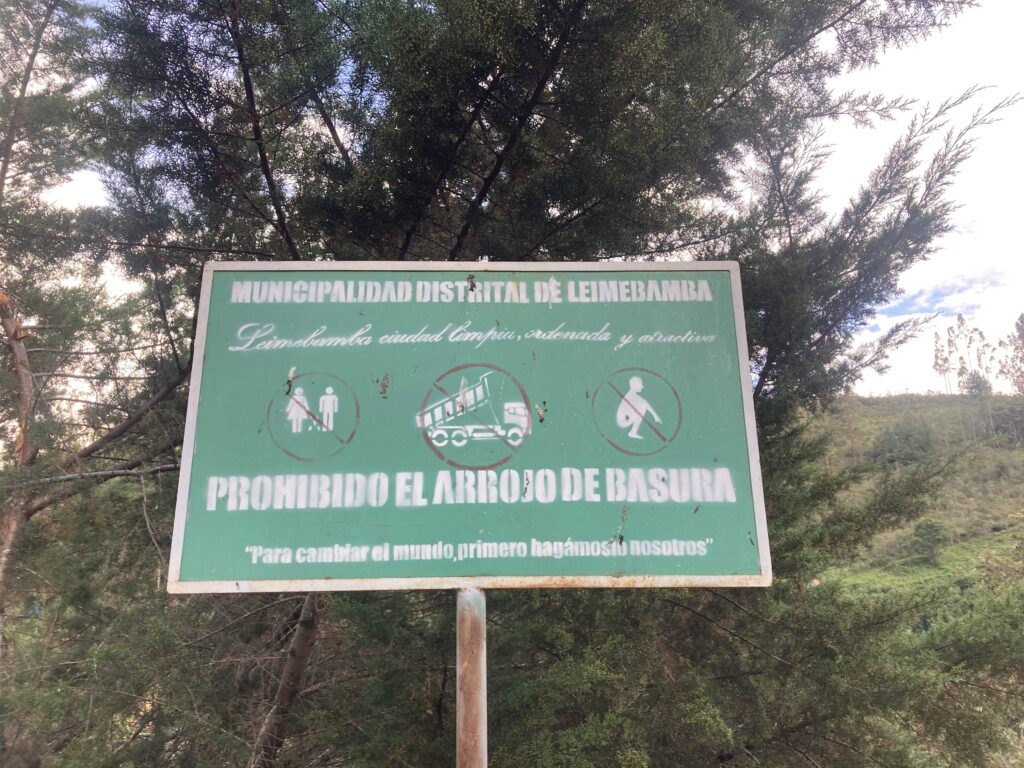
Gliding on good pavement on the downhill out of Nuevo Tingo, Peru – before the road got rough…The road & bridges were pretty rough on the way to Leymebamba, Peru – no wonder why the locals were protesting and blocking the roads trying to get the government’s attention. We cycled past many eroded areas of the road next to the Utcubamba river – this was a mild one…on the really scary ones we dare not let go of the handlebars to take a picture. Many of these cart on a cable pulley systems were along the Utcubamba River. Utcubamba River scene on the way to LeymebambaRiding through a small village on the way to Leymebamba, PeruFrom our delightful hotel’s window in Leymebamba – a man rides a horse through town…he might have been chasing down the two previous horses that passed without riders? On the right is the town church.Dustin squats to take a picture of a street in Leymebamba – our hotel is the third building down on the right.Squatting is prohibited (see previous image)
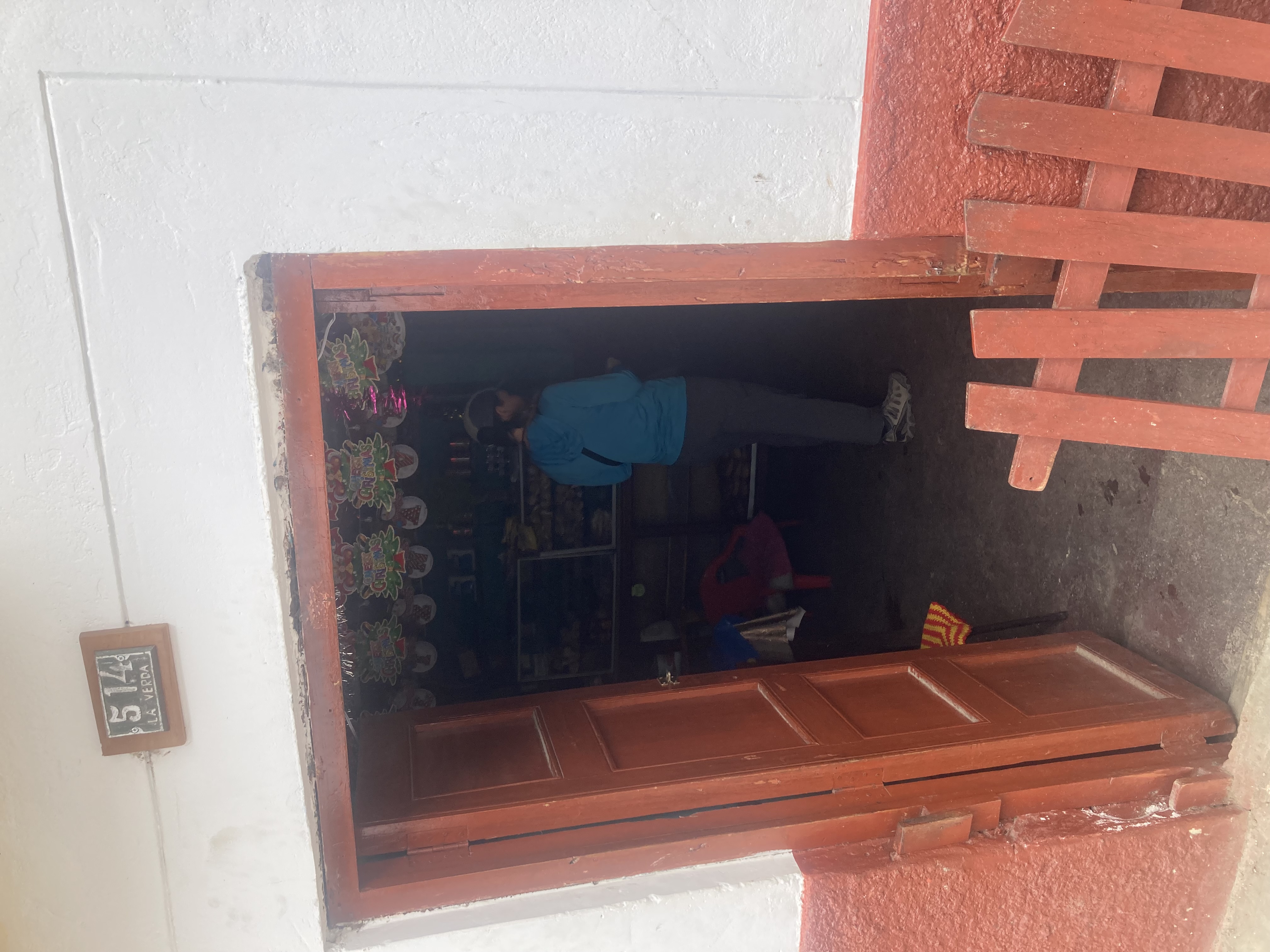
We’ve found provisioning to be an extra challenge so far in Peru. As compared with Ecuador there don’t seem to be branded grocery stores in each town. Instead there are small mom & pop tiendas each with its own flair and etiquette. It is somewhat of a game in each town to visit all the tiendas to find our supplies for that evening and the next day’s ride. Well, Leymebamba proved an extra challenge because almost none of the stores are labeled – you see an open door and you just peer inside to see if its a restaurant, store, or possibly someone’s living room. As Americans being trained to respect our neighbors’ privacy at first we felt awkward looking inside each open door but when you’re hungry you’ll do what it takes.
Finally finding the bread store – we only walked past it three times and had to ask several locals. There is no sign & it was rather dark inside. Many local shops use gates to keep dogs (and people?) out.
Leymebamba has a highly rated museum about the Chachapoya people located 4km out of town all uphill. We went to the town square, where there never seems to be an absence of transportation, and attempted to get a ride to the museum…for 15 minutes we looked for a ride with no luck – this was crazy there is *always* someone willing to give you a ride in Latin America. Finally, Patricia flagged down a local farmer/cheesemaker? with a truck and he asked where we were going. In her best Spanish Patricia replied that we would like to go to the museum – he gestured no problem & we hopped in for a ride after he moved his machete out of the way for us to sit. At the museum we tried to pay him for the lift and he refused to accept any money.
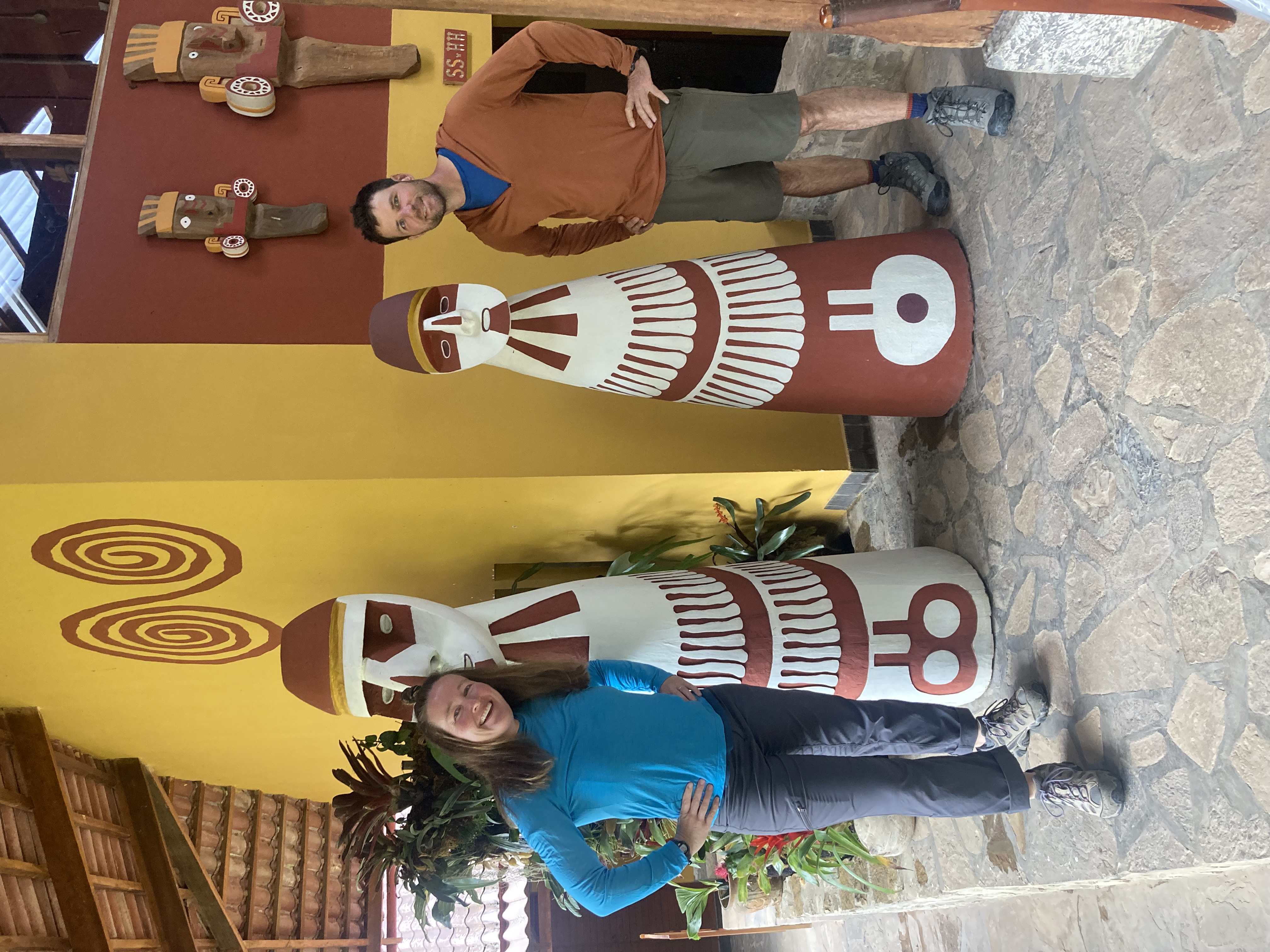
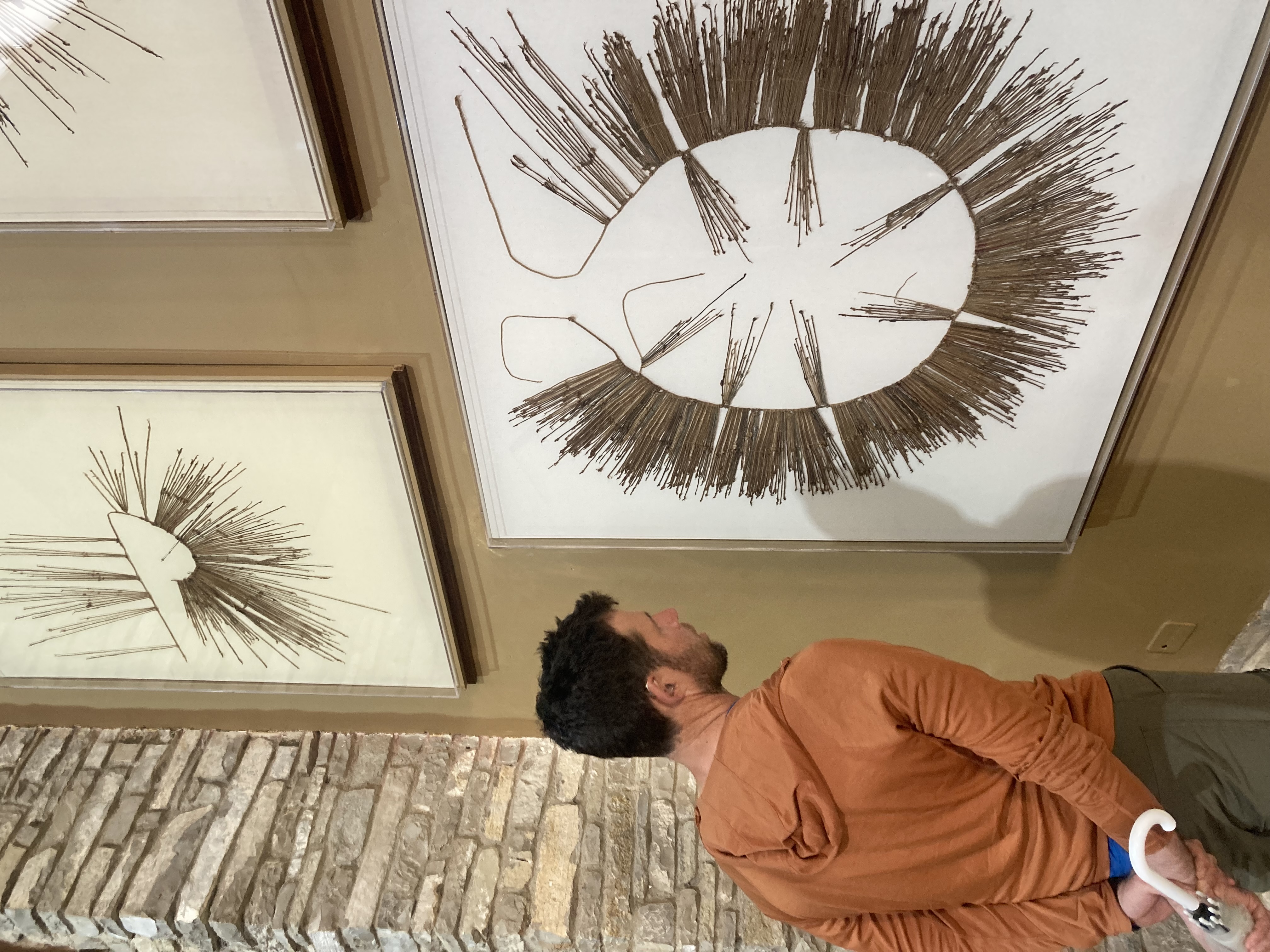
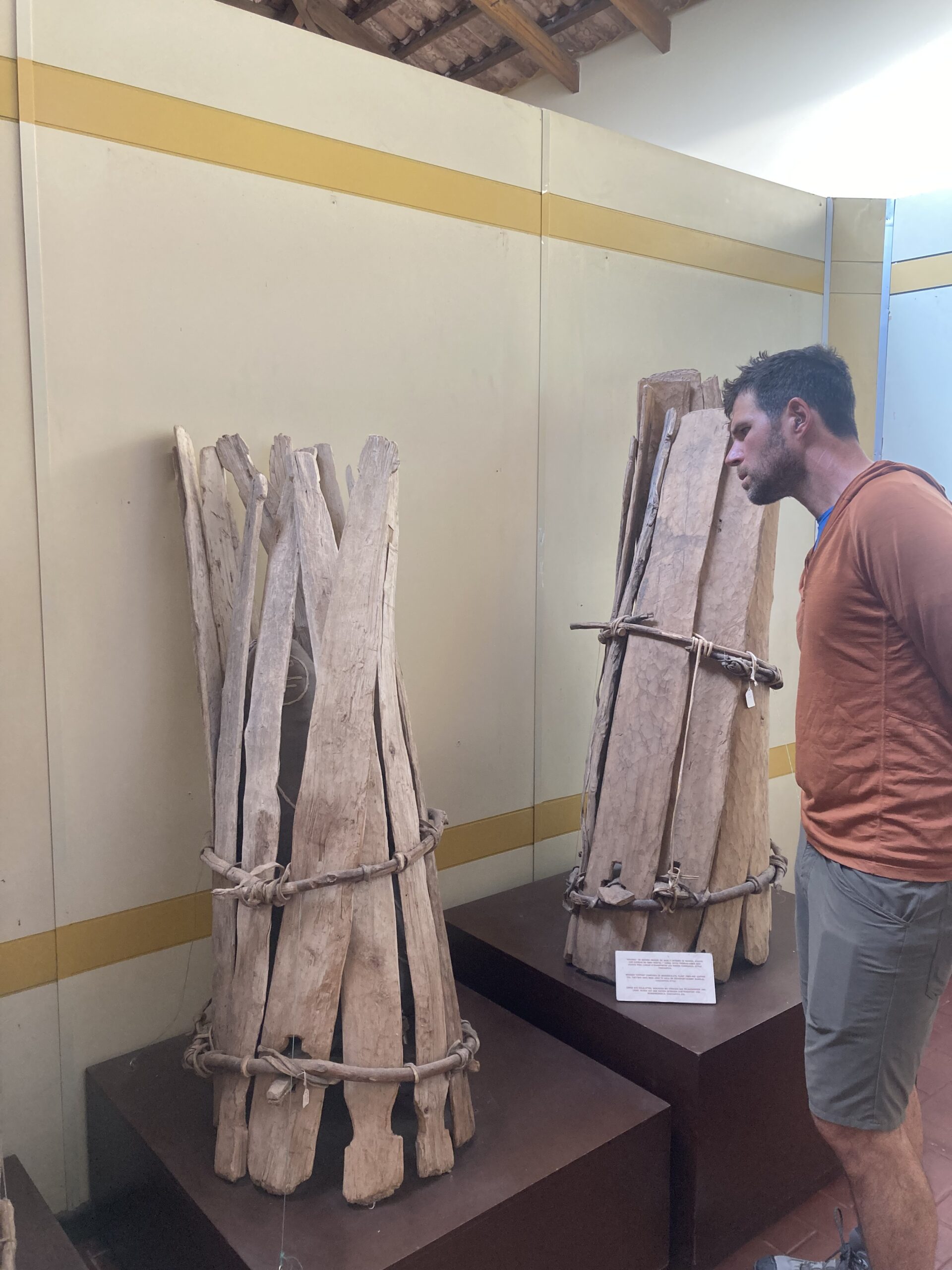
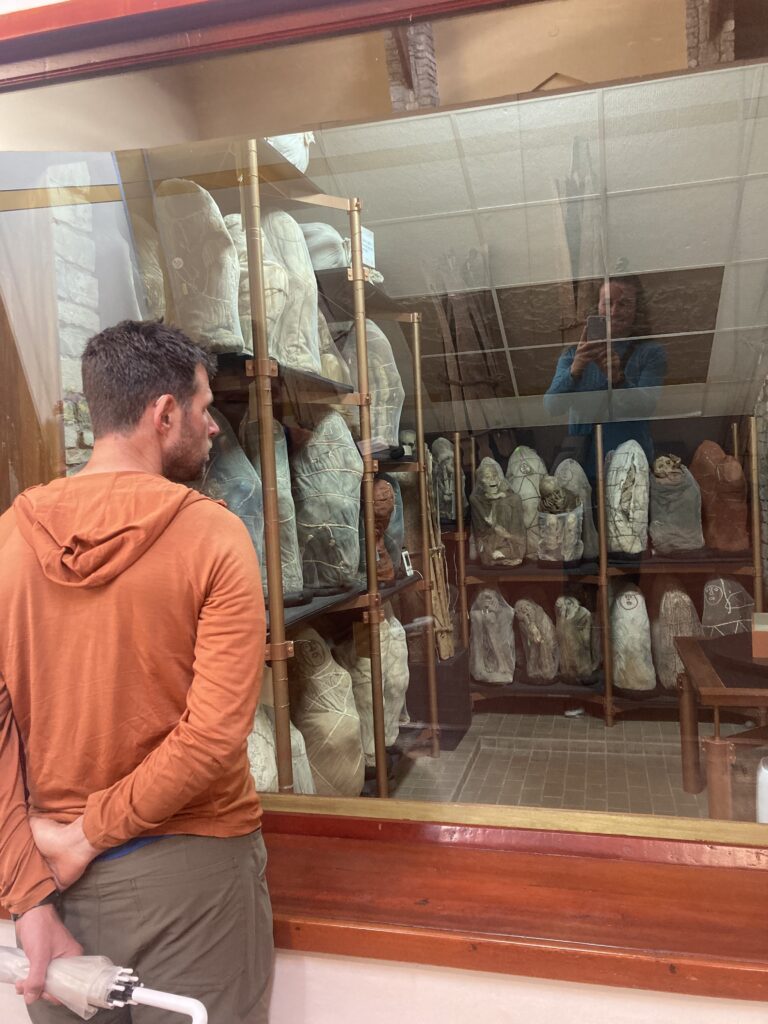
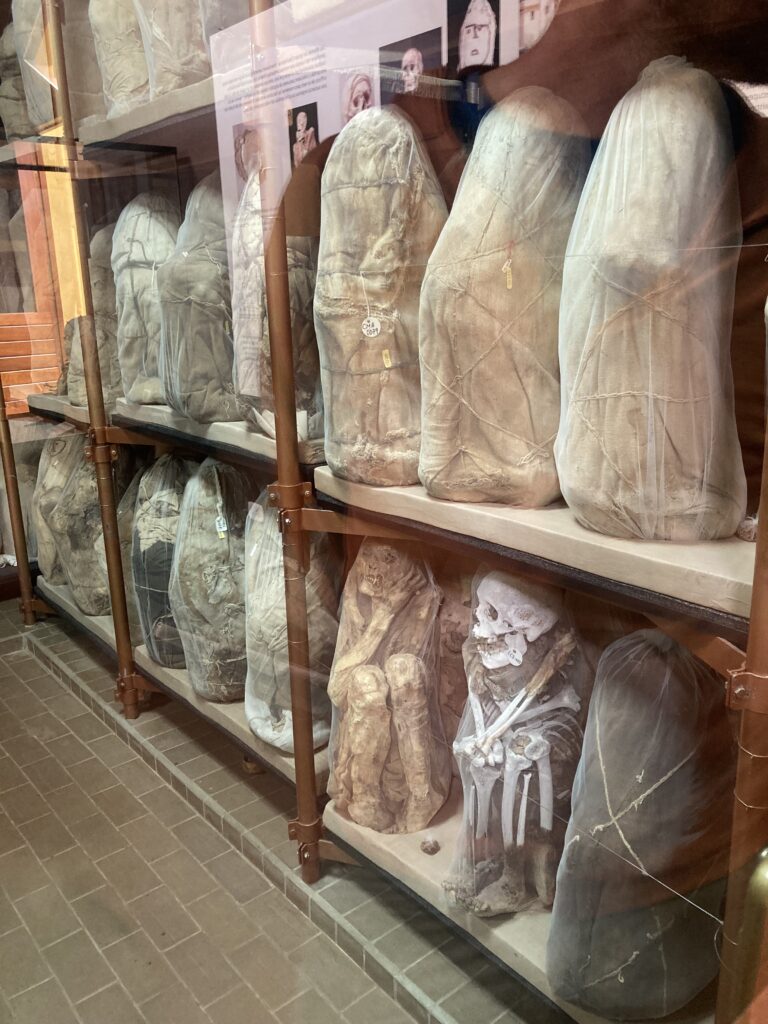
The museum in Leymebamba was great – full of information & artifacts mainly from the Chachapoya people who pre-dated the Incas. The sculptures are replica Sarcophagi found on a difficult to reach cliff where they were protecting the dead. Dustin inspects a “book” of the Chachapoya people – the size & spacing of the knots tells the story. Mummy coffins of the Chachapoya people – they were thought to have transported their mummy bundles in these slatted coffins. The museum had 219 mummy bundles – these were found in various “funeraria” high on cliffsides in mausoleums. Many of the bundles had human faces embroidered onto them. The mummy bundles were in a climate controlled room but we could look through the glass (hence poor picture quality with reflections).
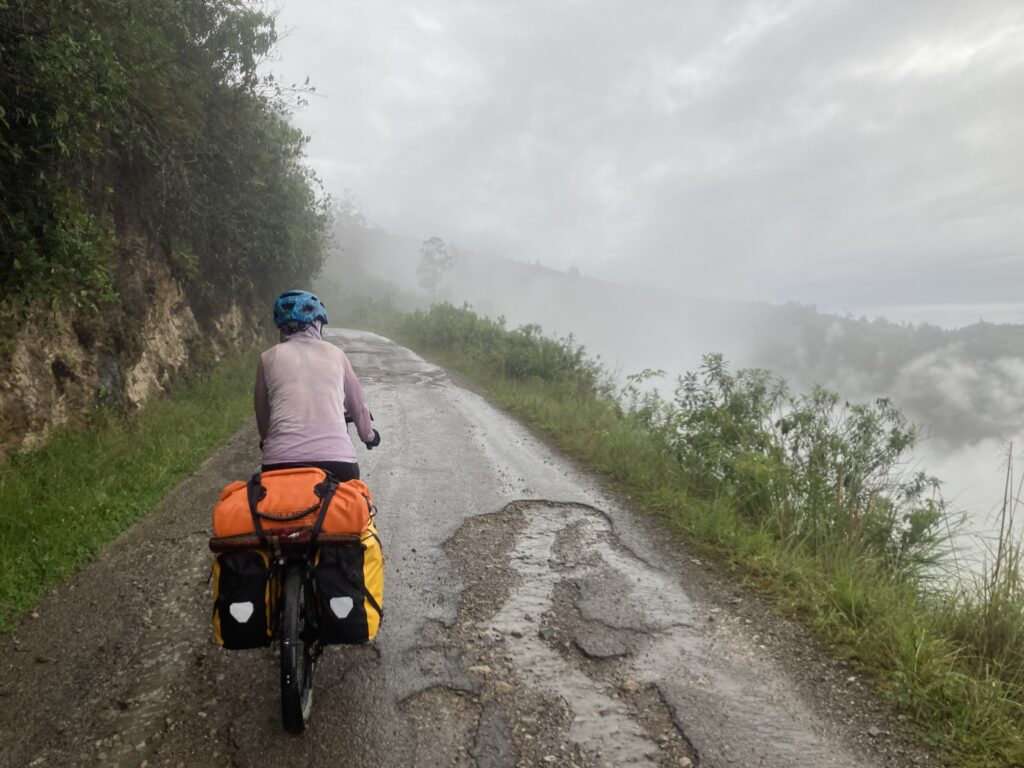
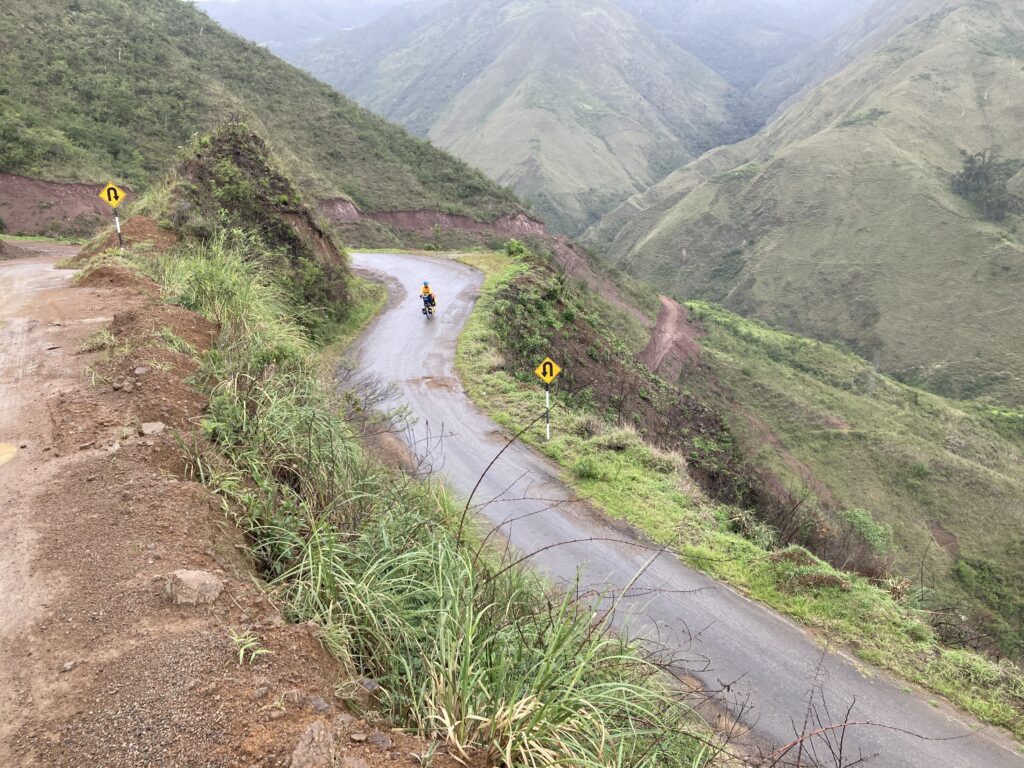
From Leymebamba we did a difficult but epic ride to Balsas along Peru’s 08B road – also known as Peru’s Death Road and one of the World’s most dangerous roads (according to dramatic youtubers). We climbed for 29km (18 miles) straight up thankful that it was raining which kept us cooler and the sun at bay for the climb. We set the alarm for 4:30am and were pedaling just after 6am because we knew we had a huge riding day ahead of us.
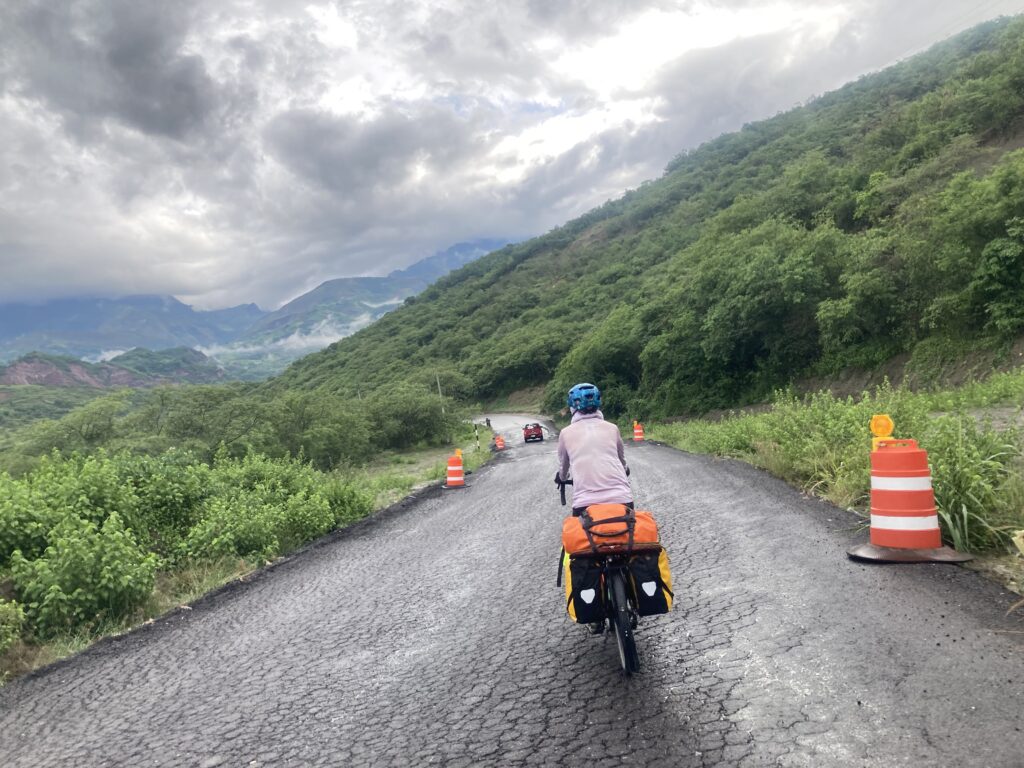
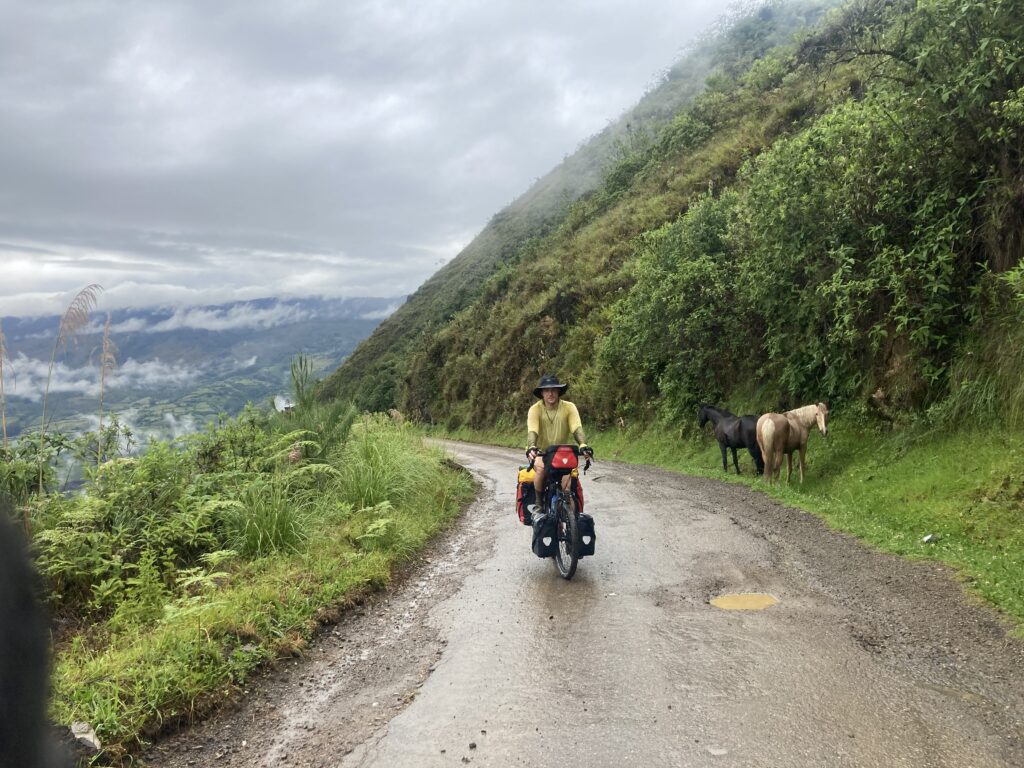
Finally we rolled into the town of Balsas around 4pm – it wasn’t just the uphill that was difficult…the downhill presented many challenges as well. It took us nearly 4 hours to go down 60km because the two direction road was narrow, had broken asphalt and almost no guardrails with 1,000 foot drop-offs. Since there was no room for error we took this downhill pretty slowly.
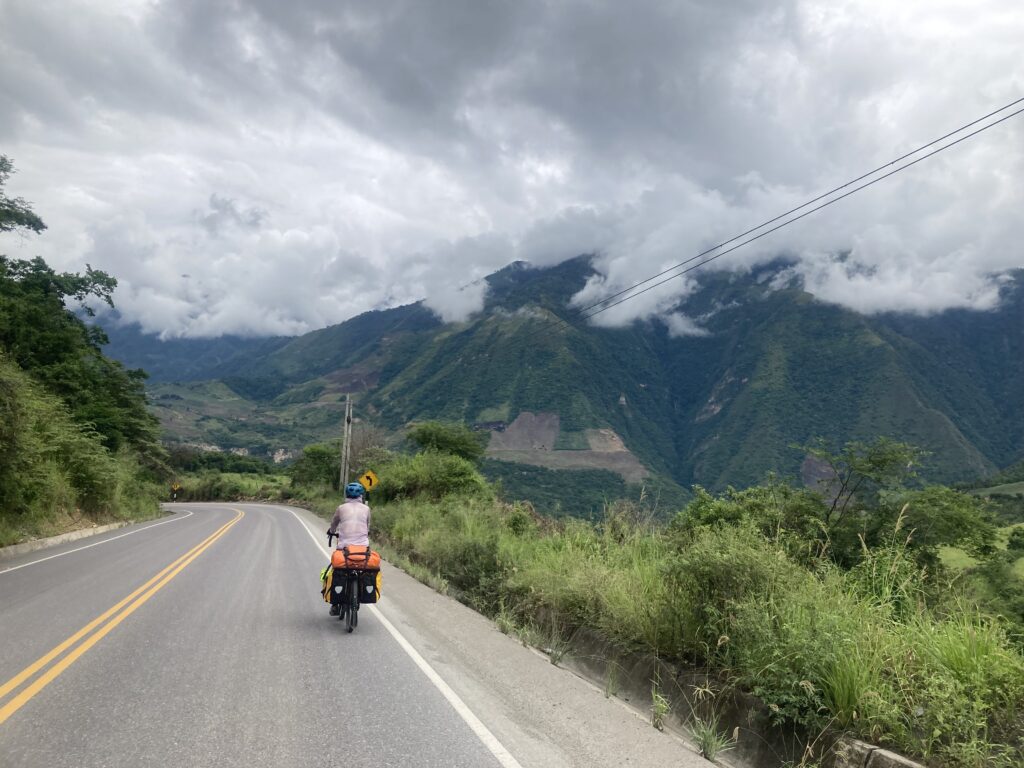
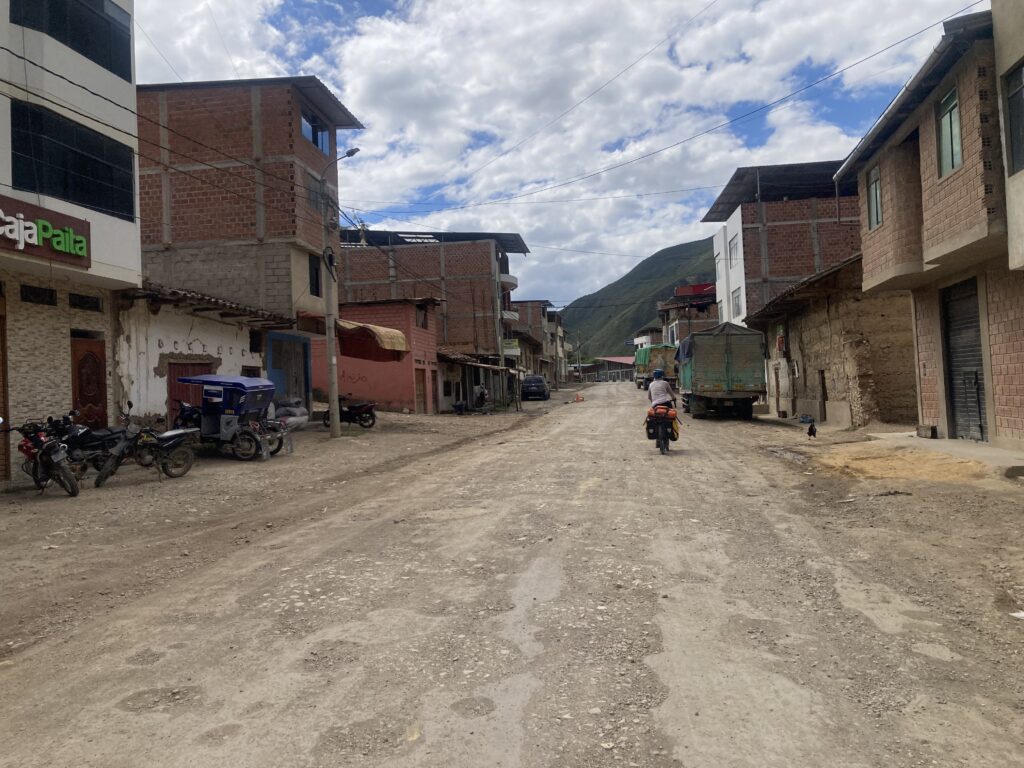
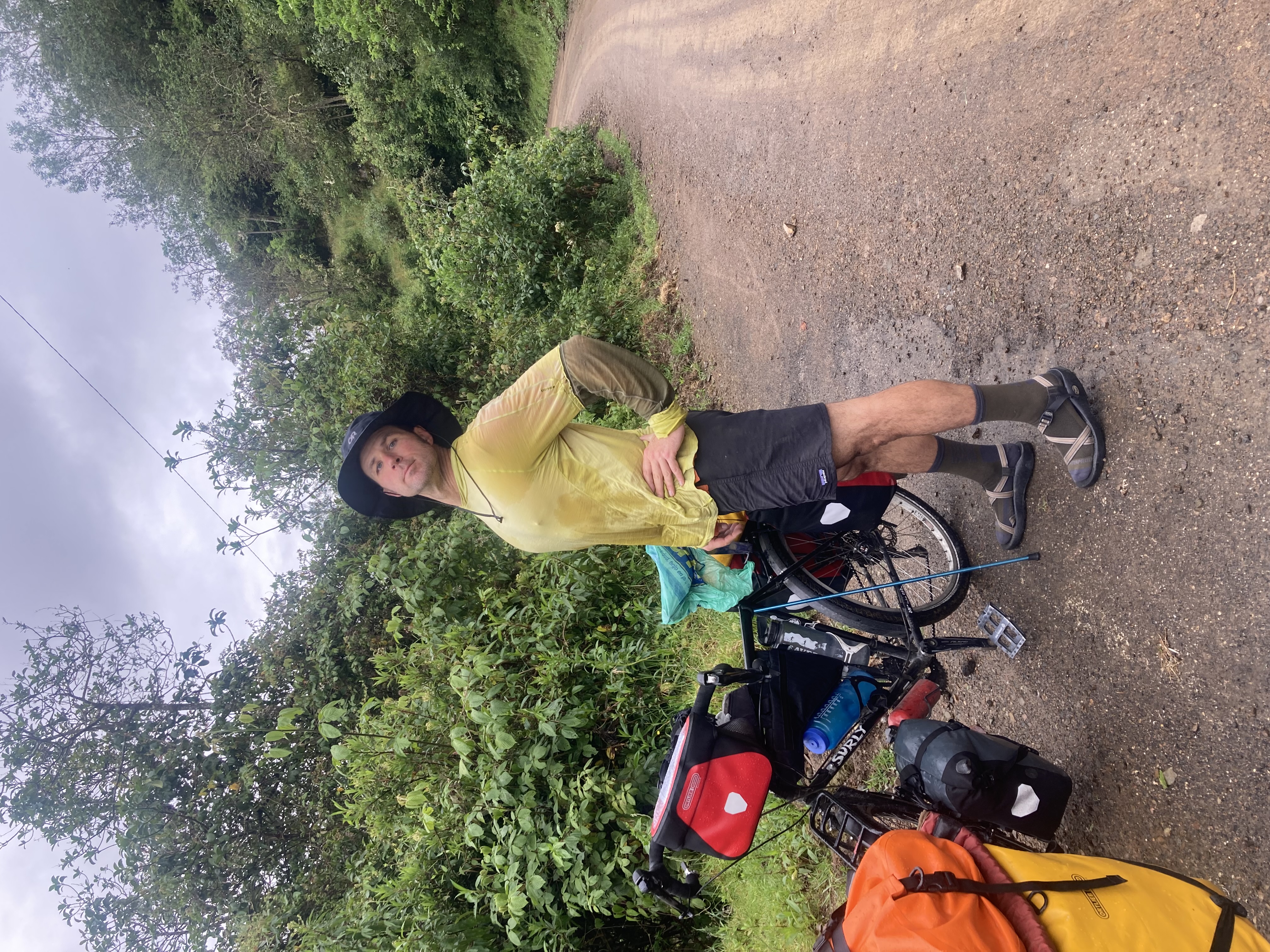
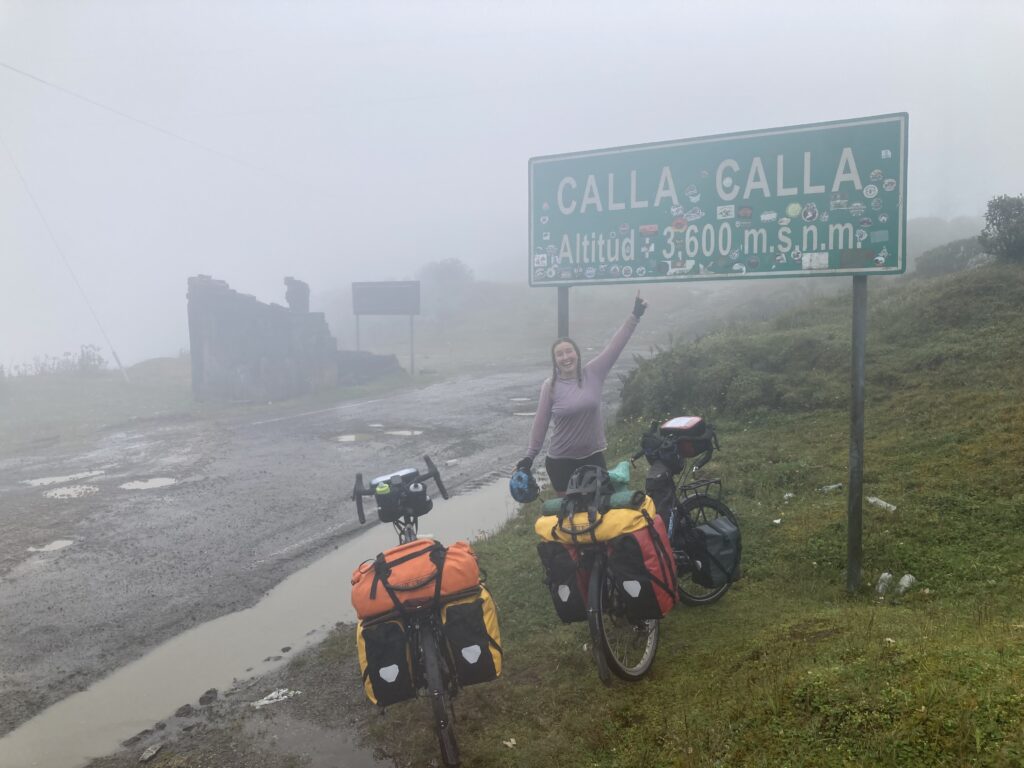
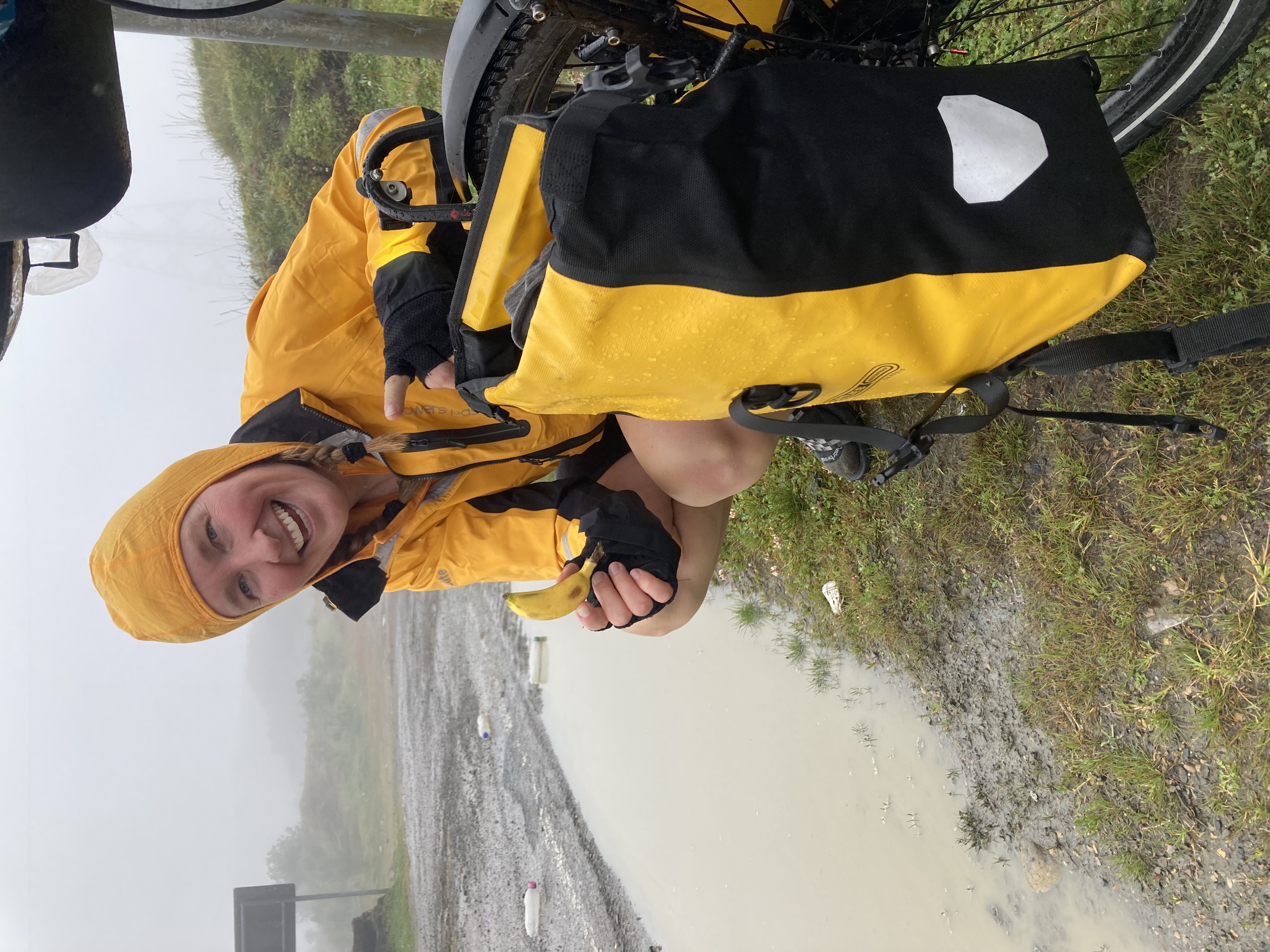
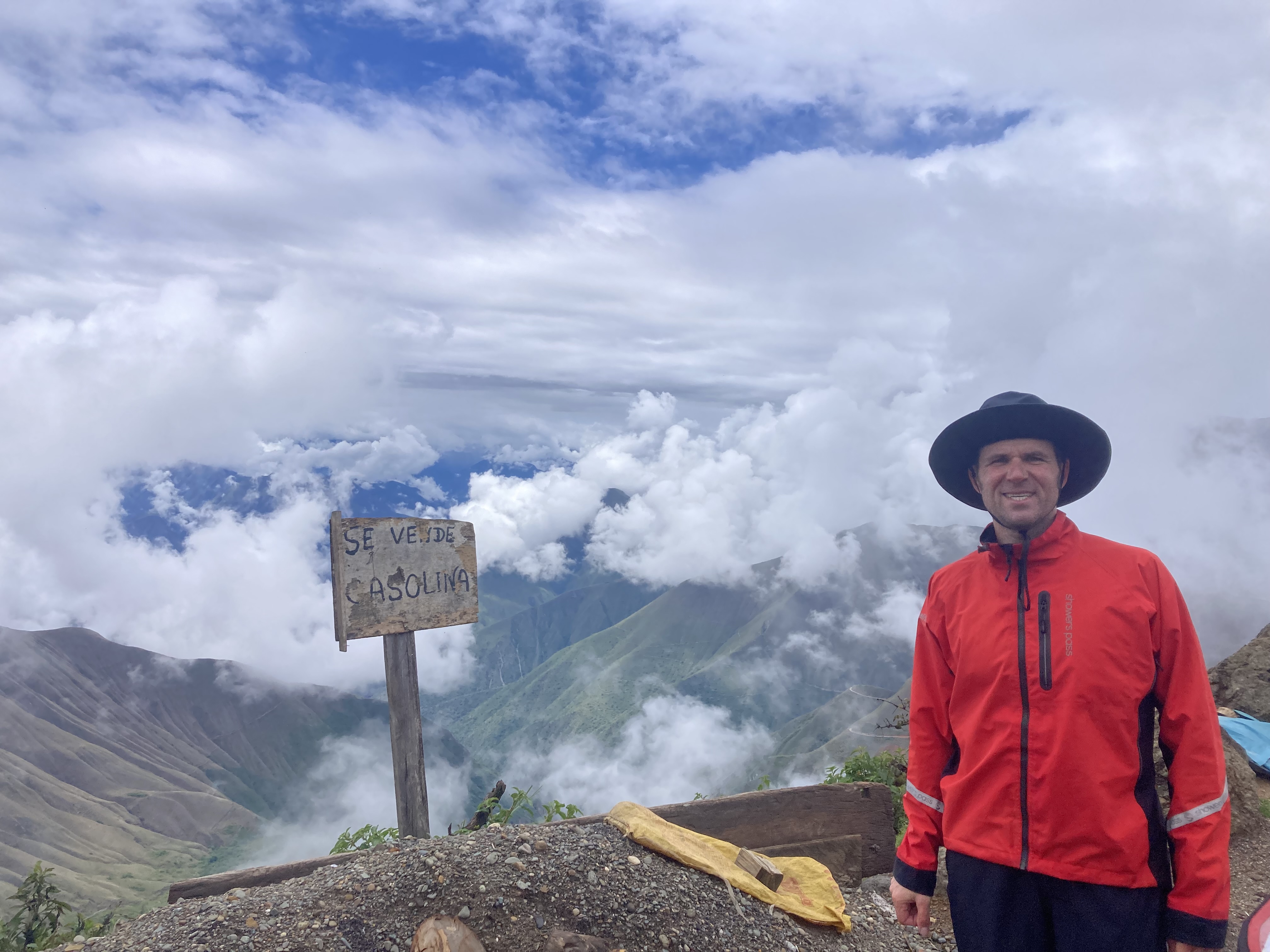
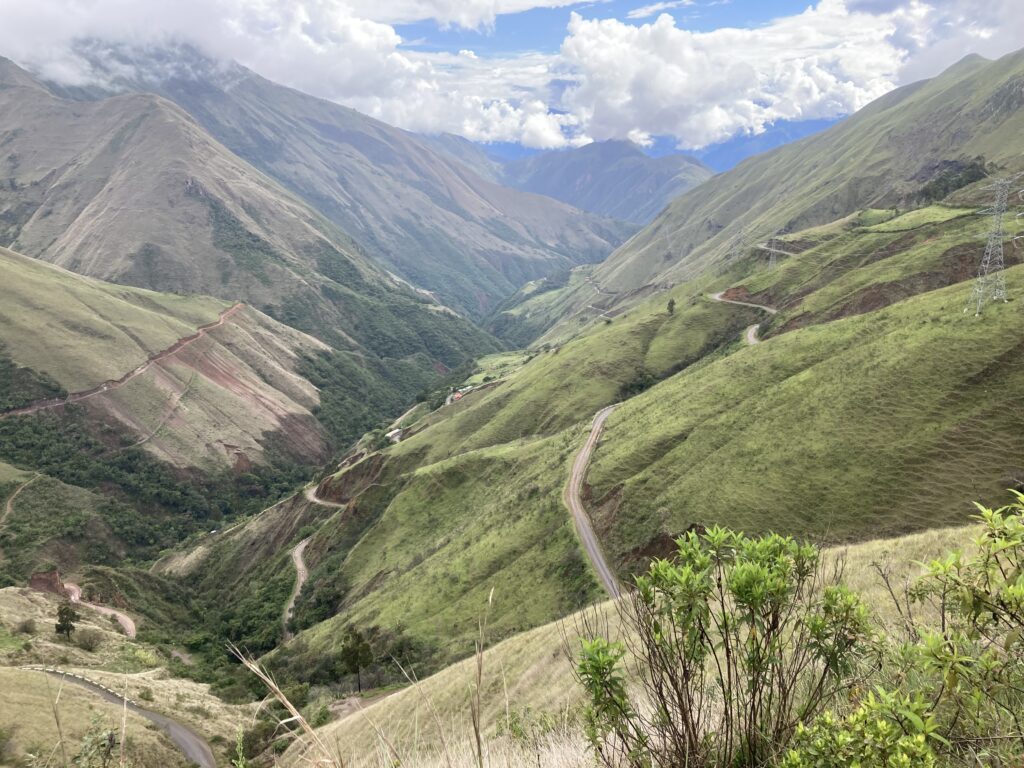
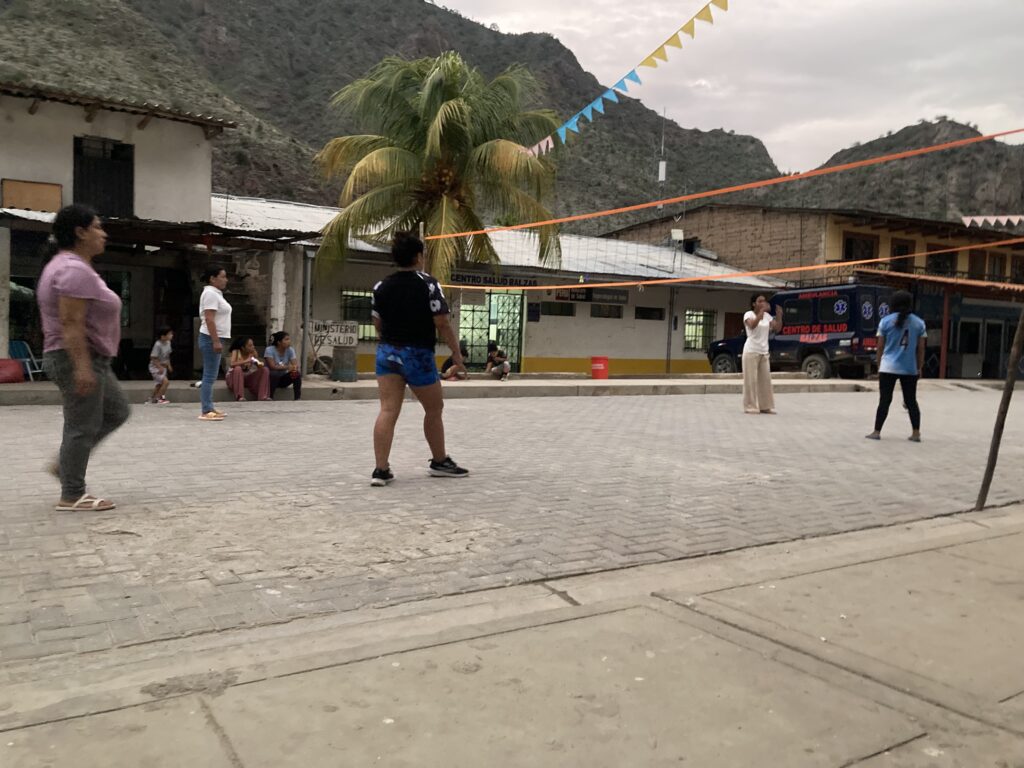
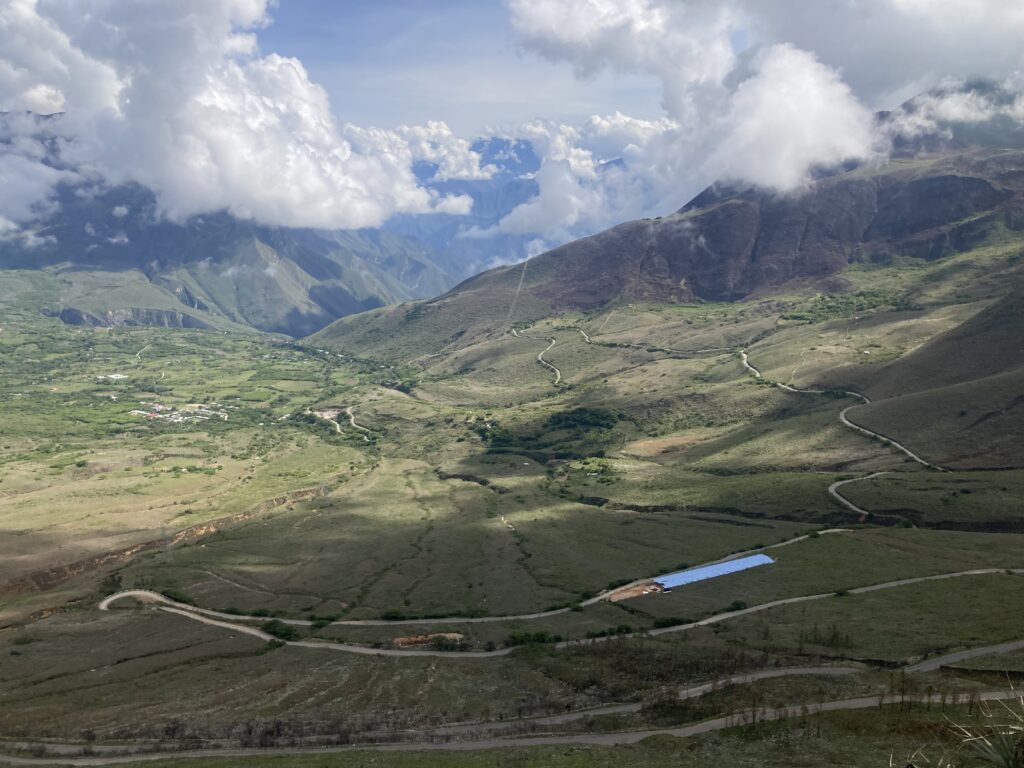
We set the alarm for 4:30am and were on the road a little after 6am because we knew it would be a long day – here Patricia climbs into the clouds in rain. Interestingly the Chachapoyas who ruled the area for almost 900 years were called the “Warriors of the Clouds”Still climbing…still raining.Dustin modeling our chosen attire for the day – we knew it would be wet so we opted for socks & sandals. Dustin wore shorts – super rare!After 5 hours of climbing, including a few breaks, we made it to Calla Calla pass at 3,600 meters (about 12,000 feet). We’d heard there were amazing views from this pass but we were shrouded in clouds. At the pass we did a gear change and noticed Patricia’s gear, and mini-banana, were trending yellow!About 10km into the downhill the clouds started to dissipate and we were getting some awesome views. The sign at our restaurant reads “Se vende gasolina” (we sell gasoline).Patricia rolls one of the downhills – don’t fall off the edge! Multiple switchbacks of our road can be seen on the left of this valley – we went back and forth numerous times dropping from 3,600 meters to a mere 800 meters. As we dropped the temperature came up substantially. There were many blind corners on the road – you could hear most vehicles coming as they would honk their horns in blind turn situations. From the top of the pass we fully “rugged up” because of the rain and colder temperatures. Here Dustin stops to take off all of his gear because the temperature has increased so much. The road varied in quality significantly and we rode pretty slow to be able to adapt to changing road conditions (and not to fall off the edge!). After many kilometers of brake pulling downhill Dustin had to stop and adjust his brakes. Actually he ended up changing his rear brake pads when we arrived in Balsas – he had only installed this set 31 days ago (only 17 riding days!). The Andes downhilling is burning up some brakes! Don’t worry – we carry 4 extra sets of brake pads because we knew this would be an issue 🙂 We were so tired this is the only picture we took in Balsas – everyday the women have a volleyball game right on the street. All different ages, various types of shoes or none, they lift the net when a moto needs to drive through & they take down the net when a truck needs to drive through. It was super fun to watch – they were really good!
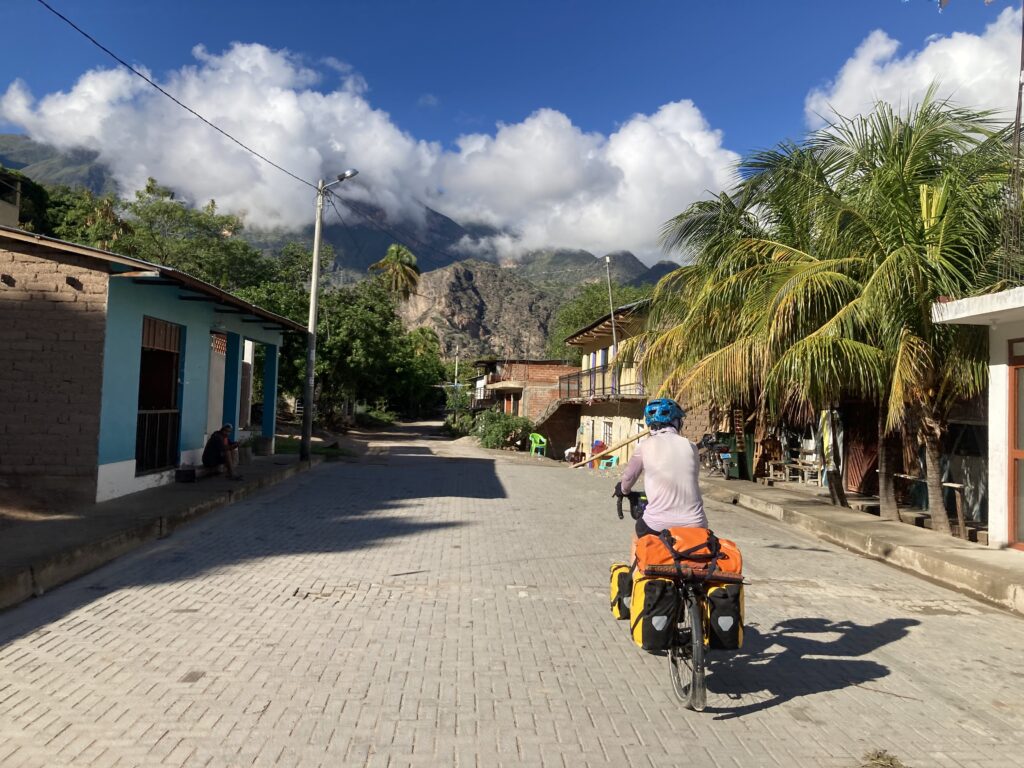
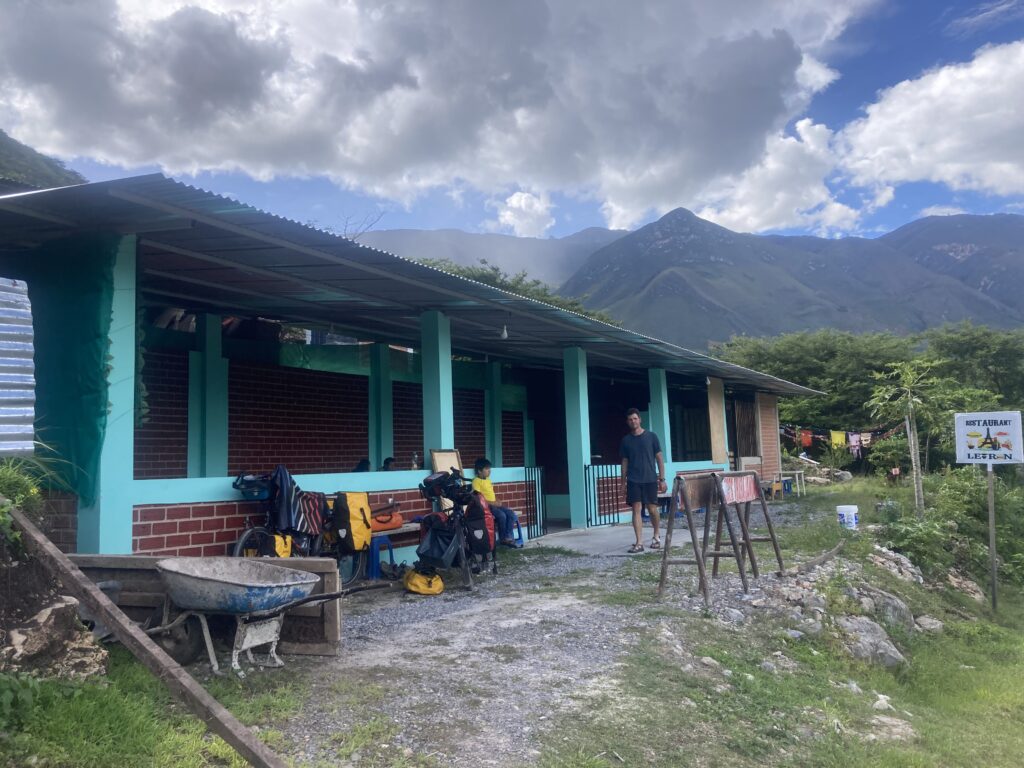
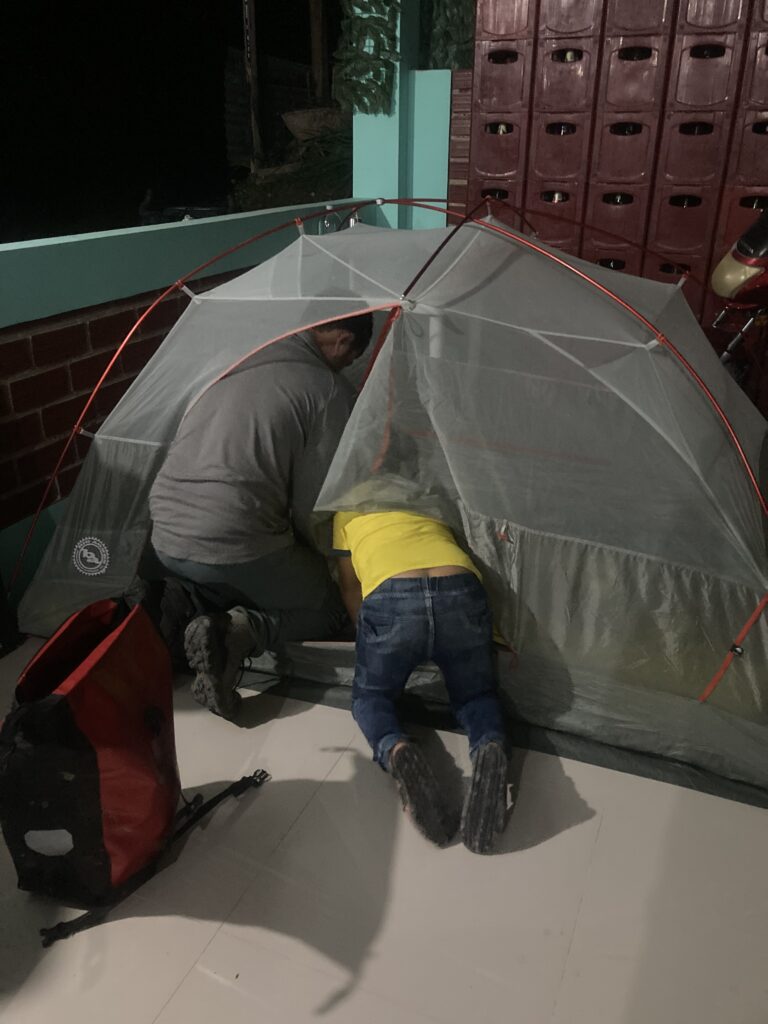
We survived our night in Balsas although it was not our best accommodation – we did each have a fan to try and beat the heat. With a decent night’s sleep we departed Balsas for Celendin – we knew we would not likely make it the entire distance because this ride required almost 8,000 feet of climbing. This climb was *very* tough and we left Balsas late morning so the heat of the day had already started. We sweated our way up the hill, exhausting almost all the water we carried, wishing there was rain & clouds like the day previous. We actually only made it 21 kilometers (almost 13 miles) before we found a delightful restaurant that would allow us to camp for the night.
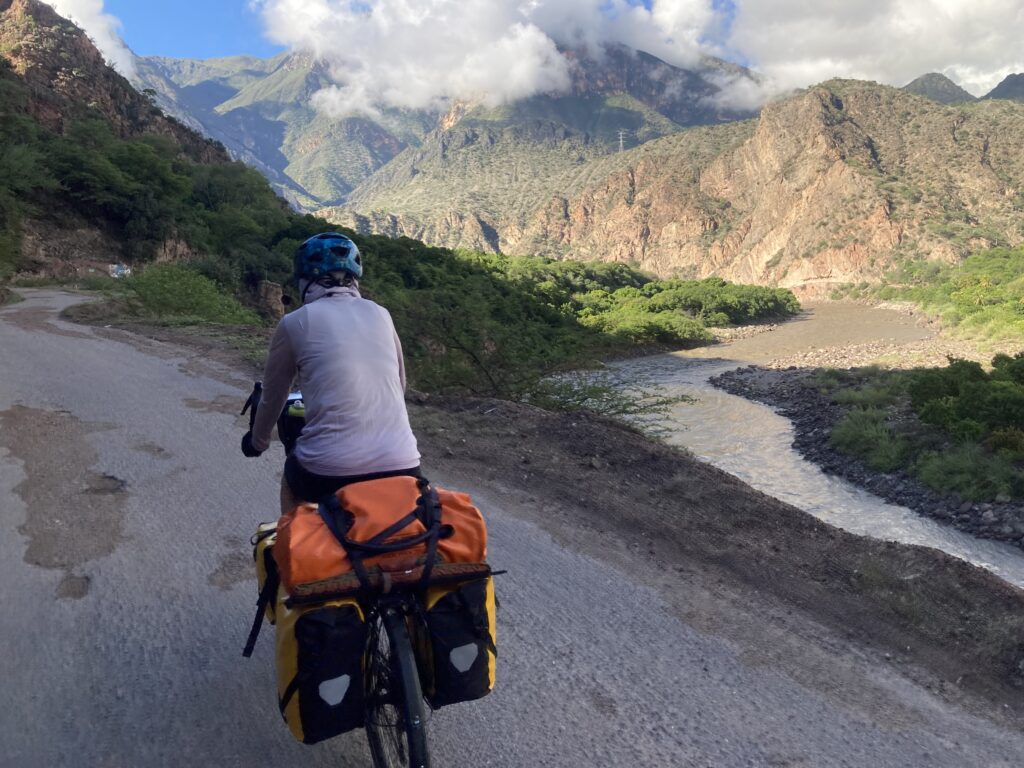
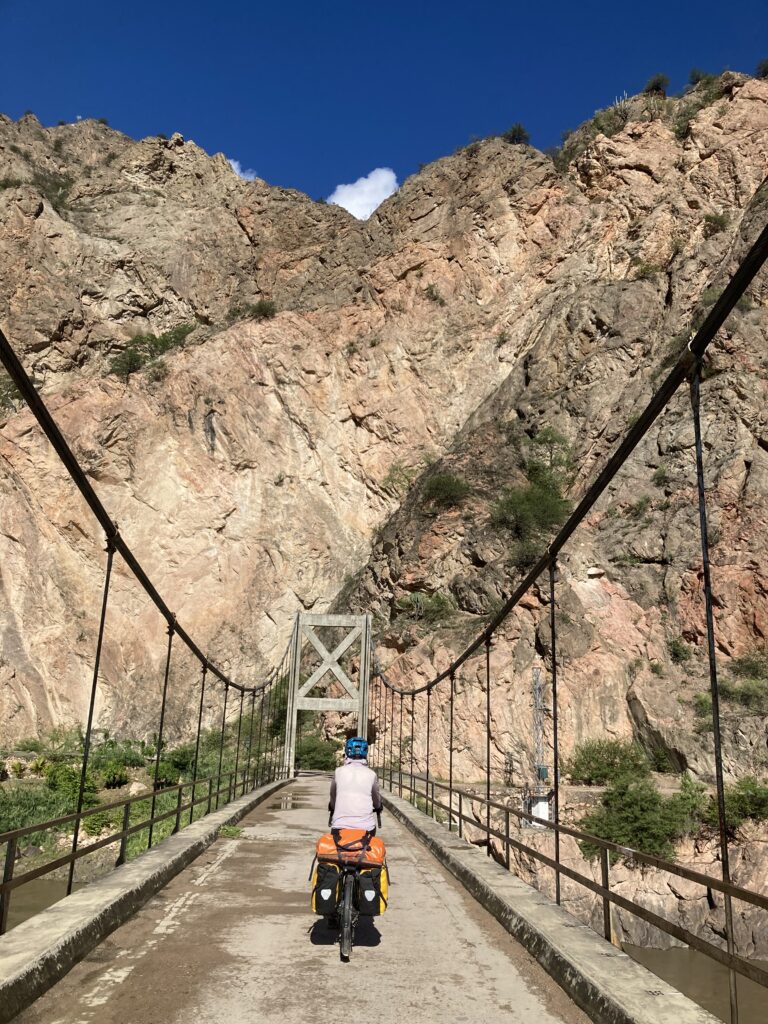
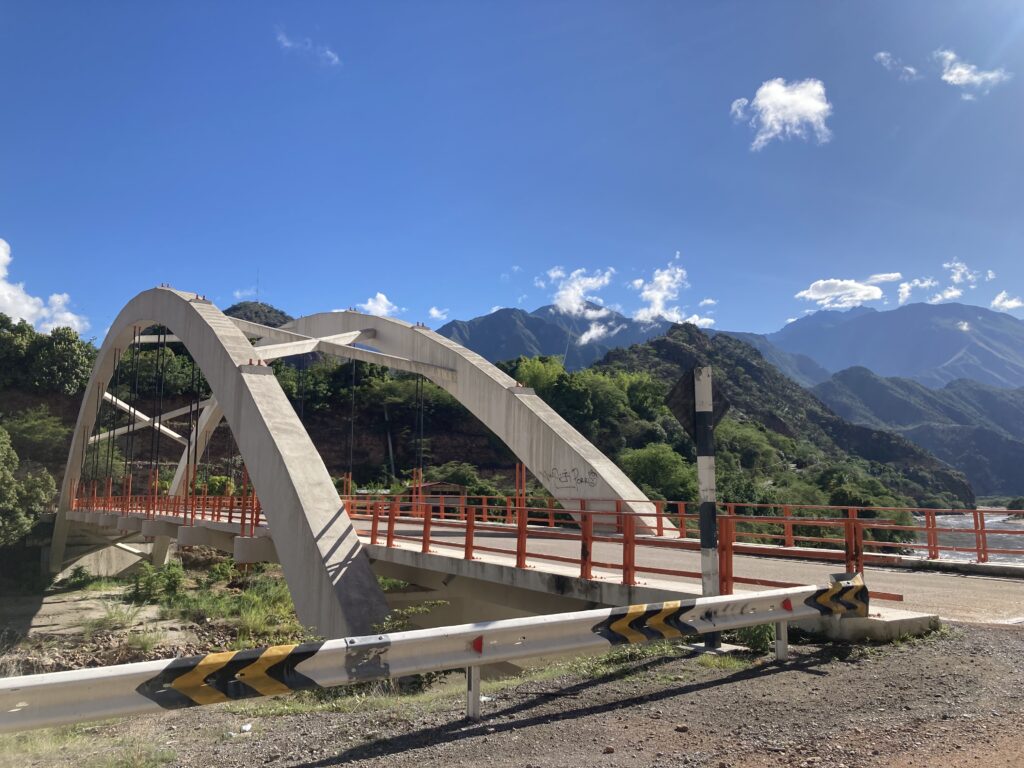
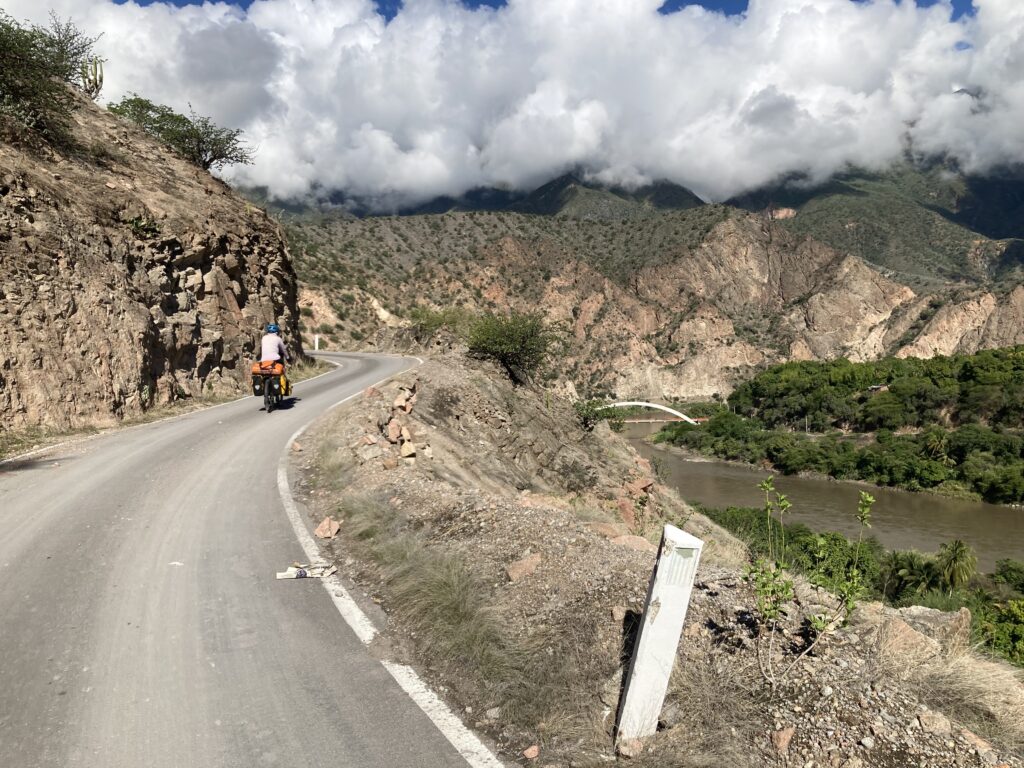
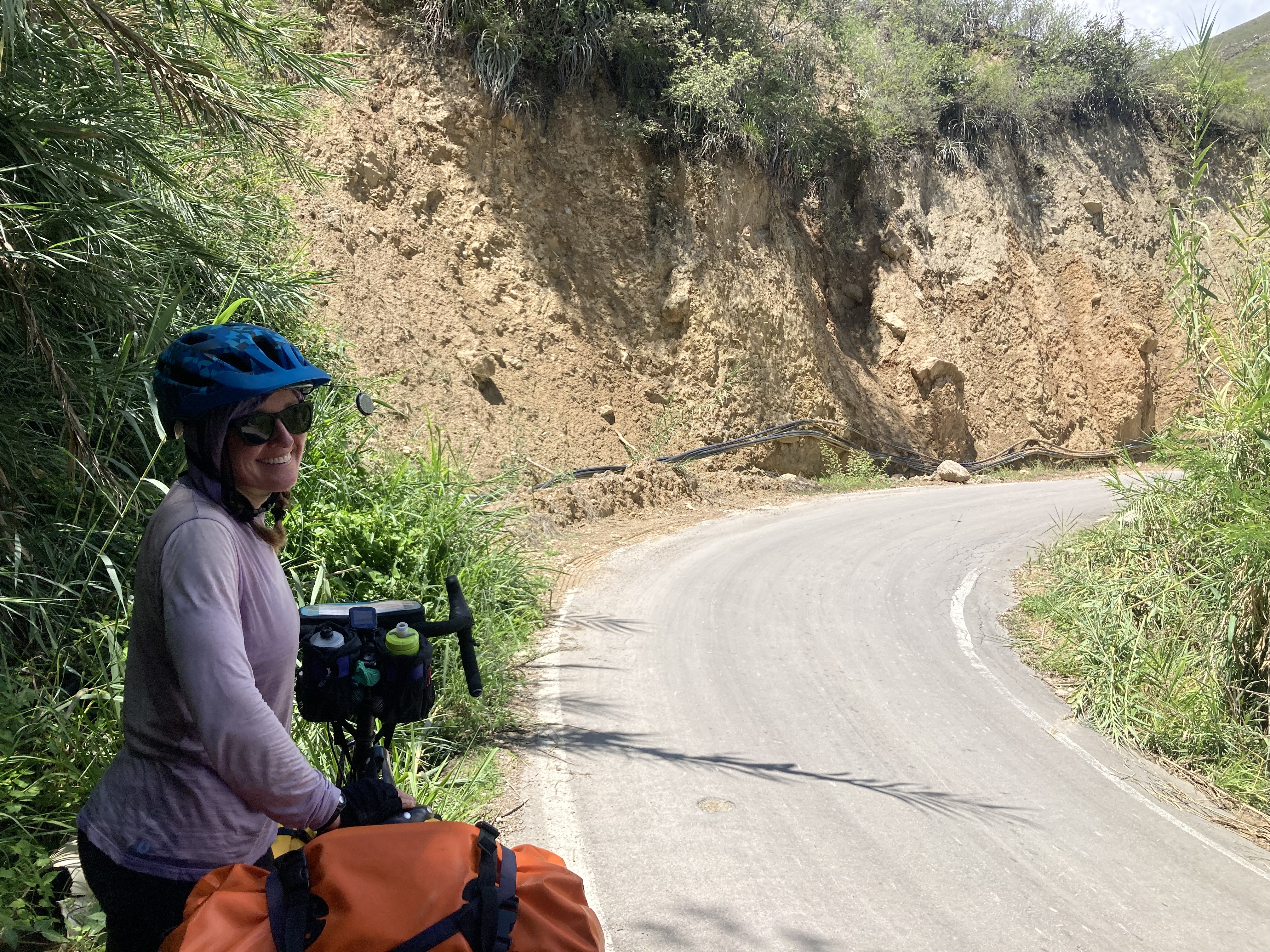
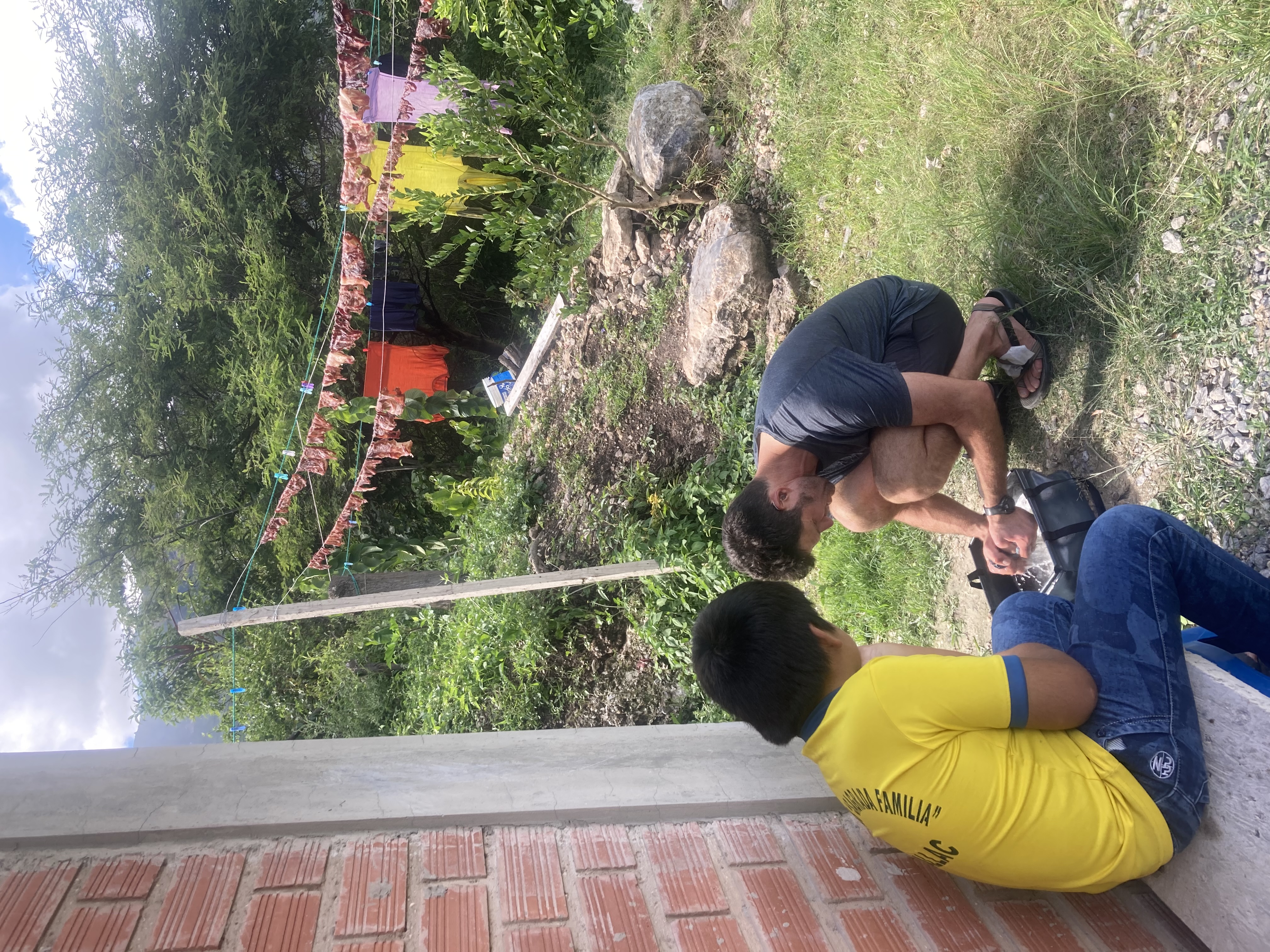
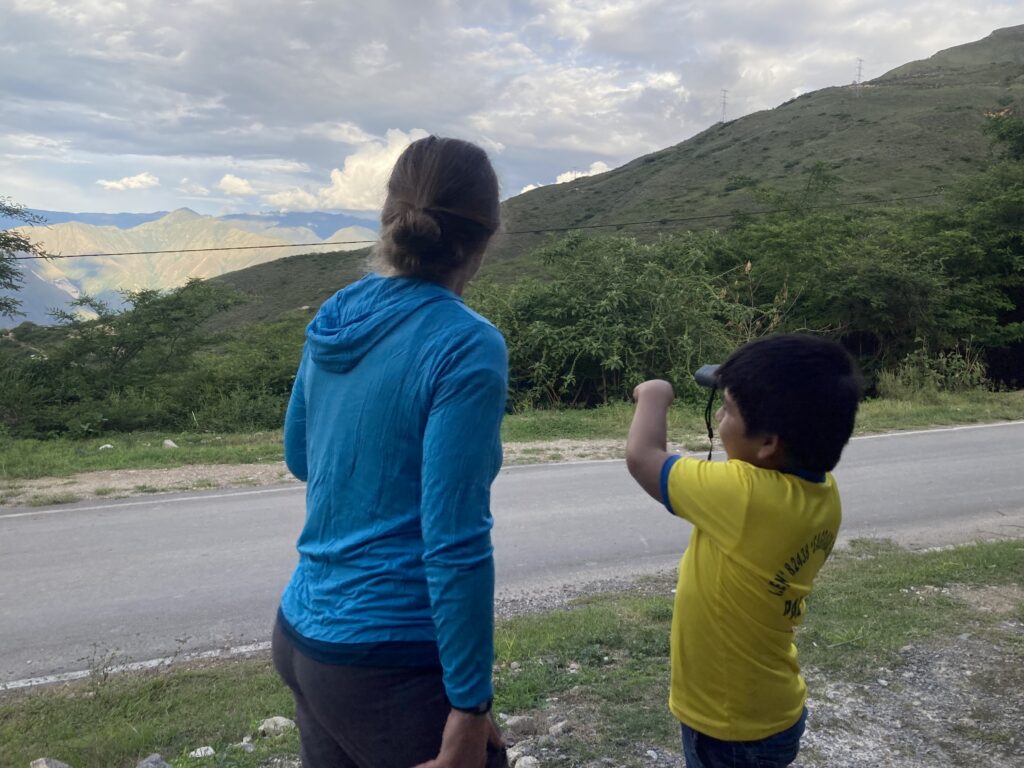
Rolling out of Balsas, Peru heading back up into those mountainsOur last ride along the Maranon River (Amazon River basin)Crossing the Maranon on the “old” bridgeNew fancy two-lane bridge was installedRounded our first, of many, switchbacks for the dayWe started down there at the river, approximately center of the screen. Narrow roads for two way traffic & steep drop-offsPatricia found us a patch of shade for a much needed break. Notice on the cutout wall all the black hosing – water was fed to homes from the rivers & streams.Our delightful restaurant that allowed us to camp for the night. We bought lunch & dinner from them & shopped at their tienda for supplies.Dustin does laundry while 8 year old Michael looks on. Our laundry is drying behind the hanging meat. We had some of this meat for dinner – “cecina” is like a cross between beef jerky and bacon…rather chewy but not too bad. Patricia teaches Michael how to look through our binoculars to find the “carretera” (highway) across the valley. Although he kept calling it the “pista”…which we haven’t heard used since Mexico 🙂
After a good nights rest on the floor of the restaurant we were off pedaling uphill again by 7am. Our electric kettle was happy because it seemed the restaurant was at 110v, like the USA, and not the 220v we’ve come to expect in Peru – we keep limping the poor kettle along hoping it makes it to Lima in March.
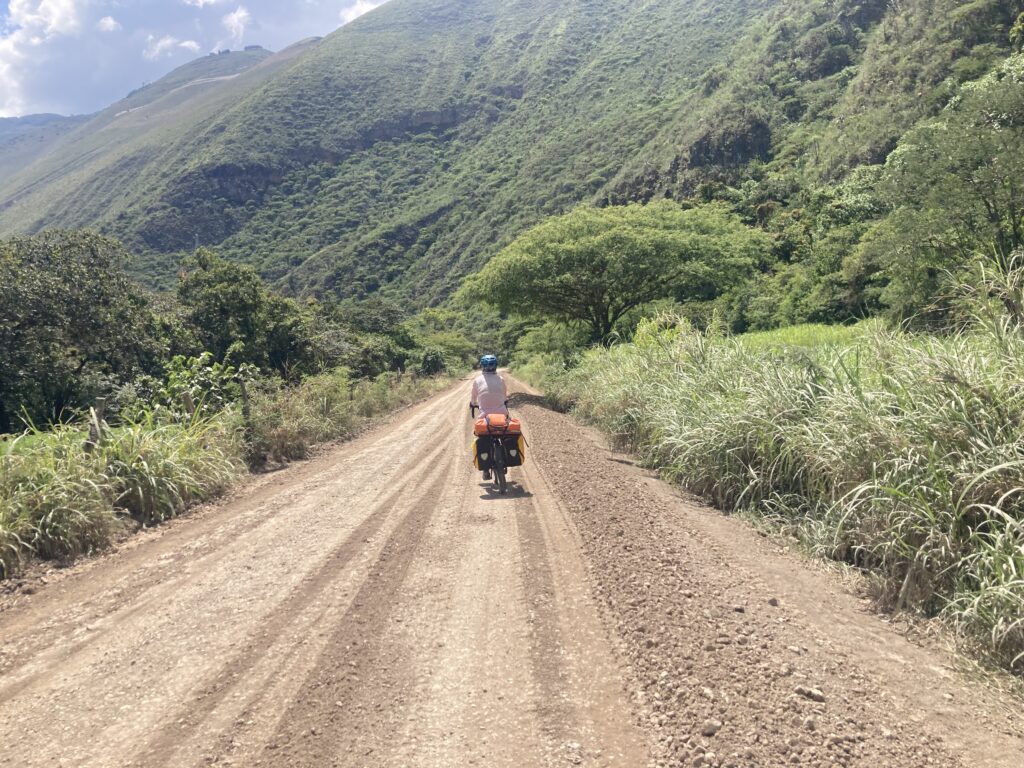
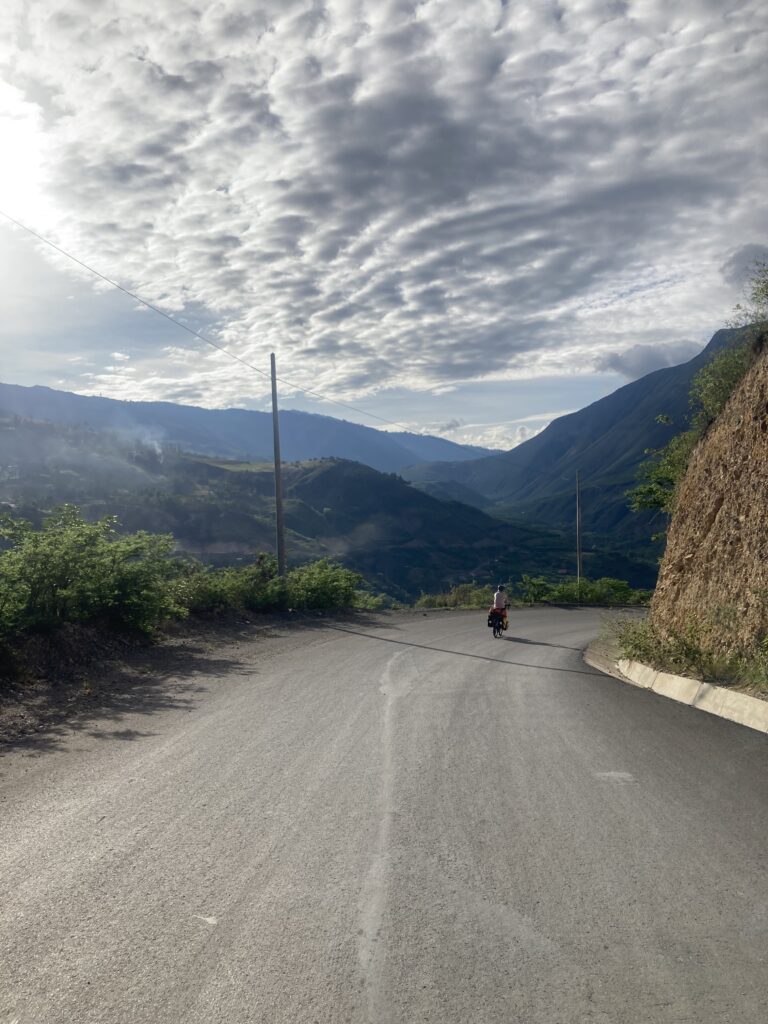
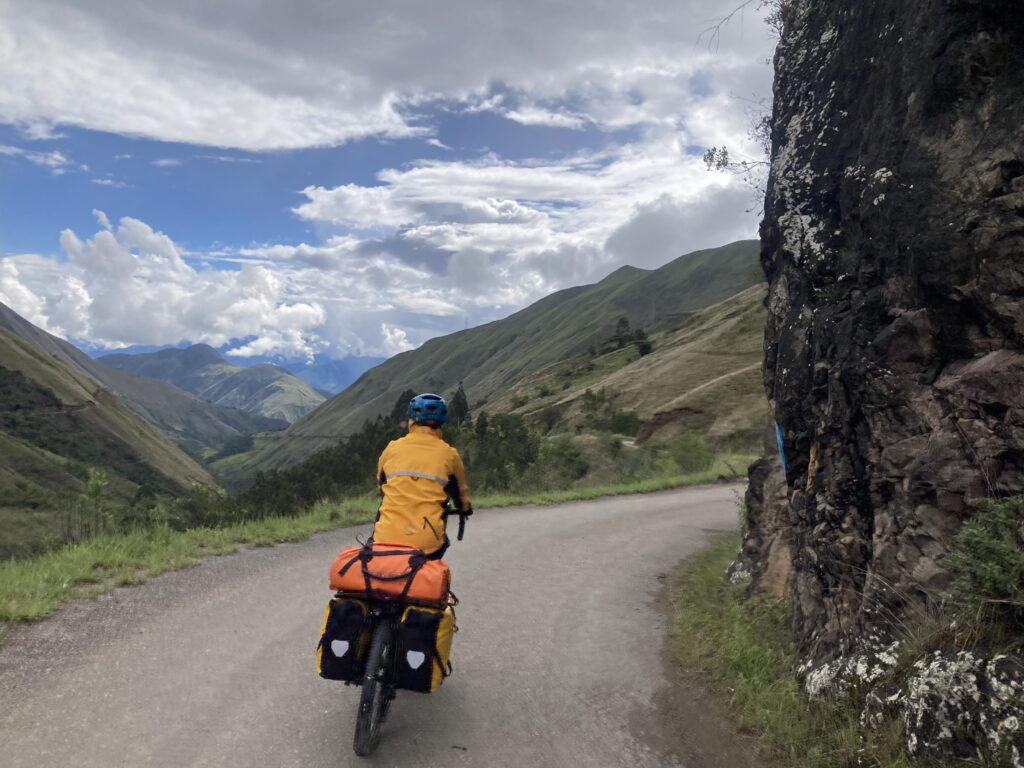
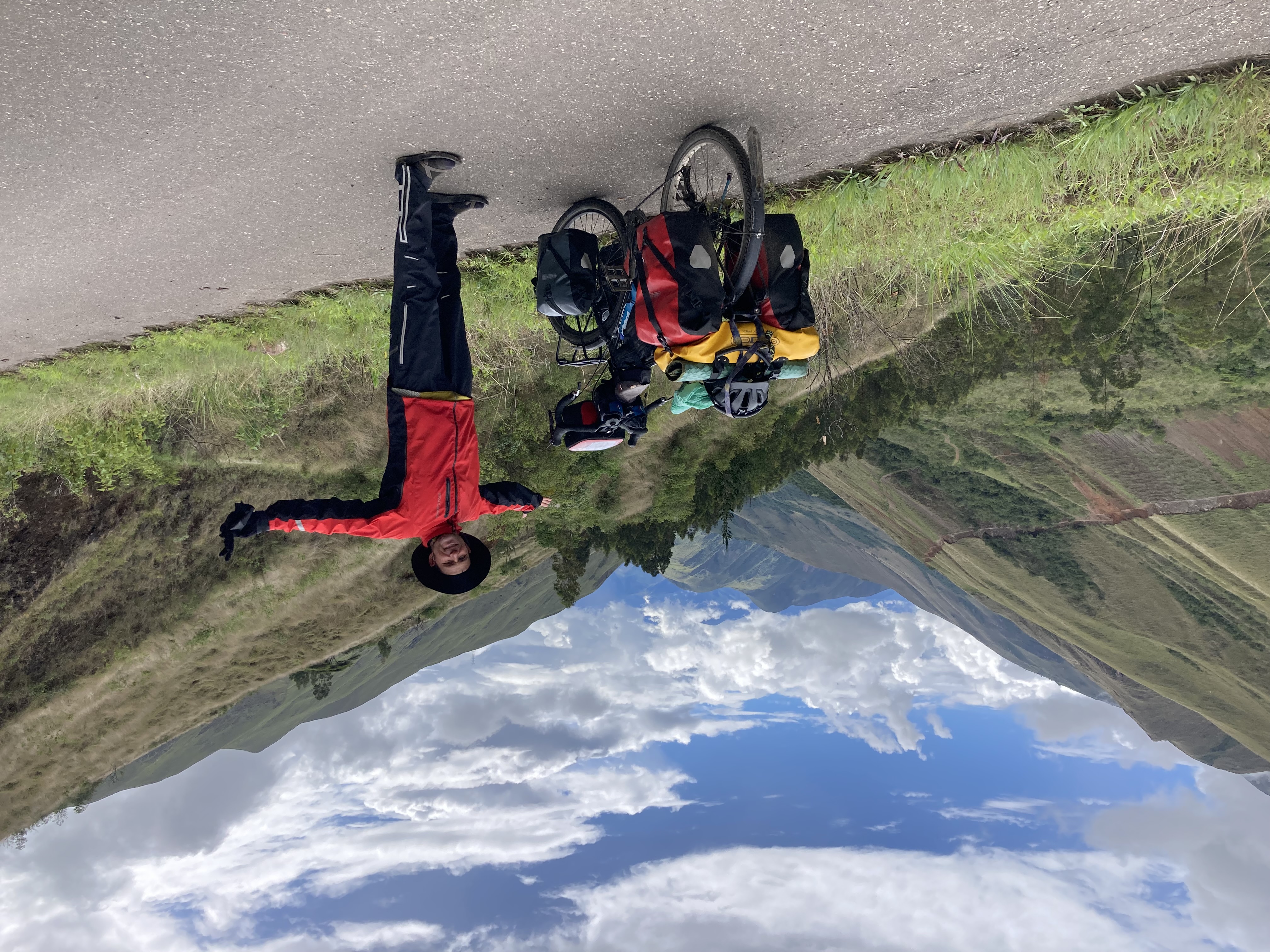
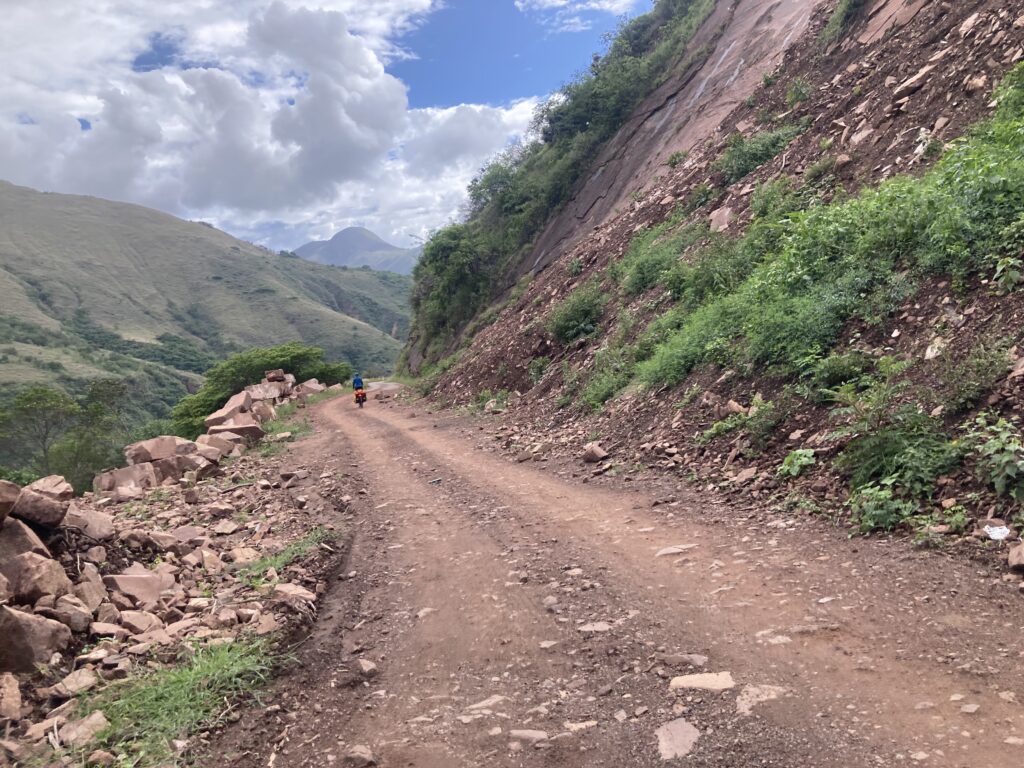
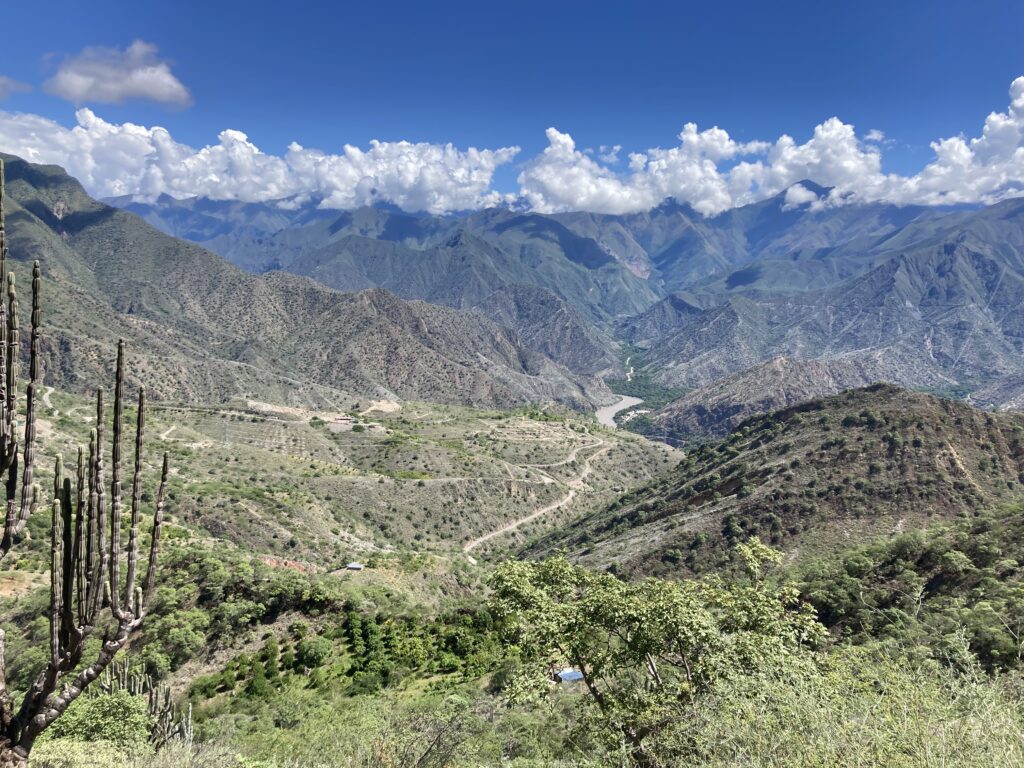
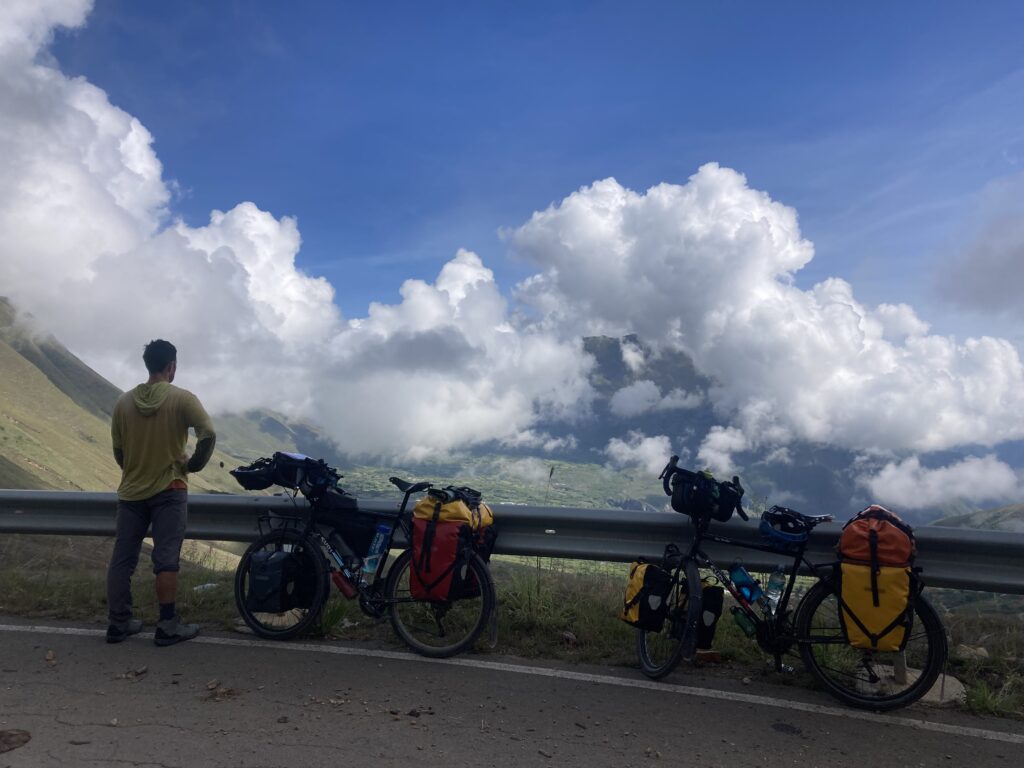
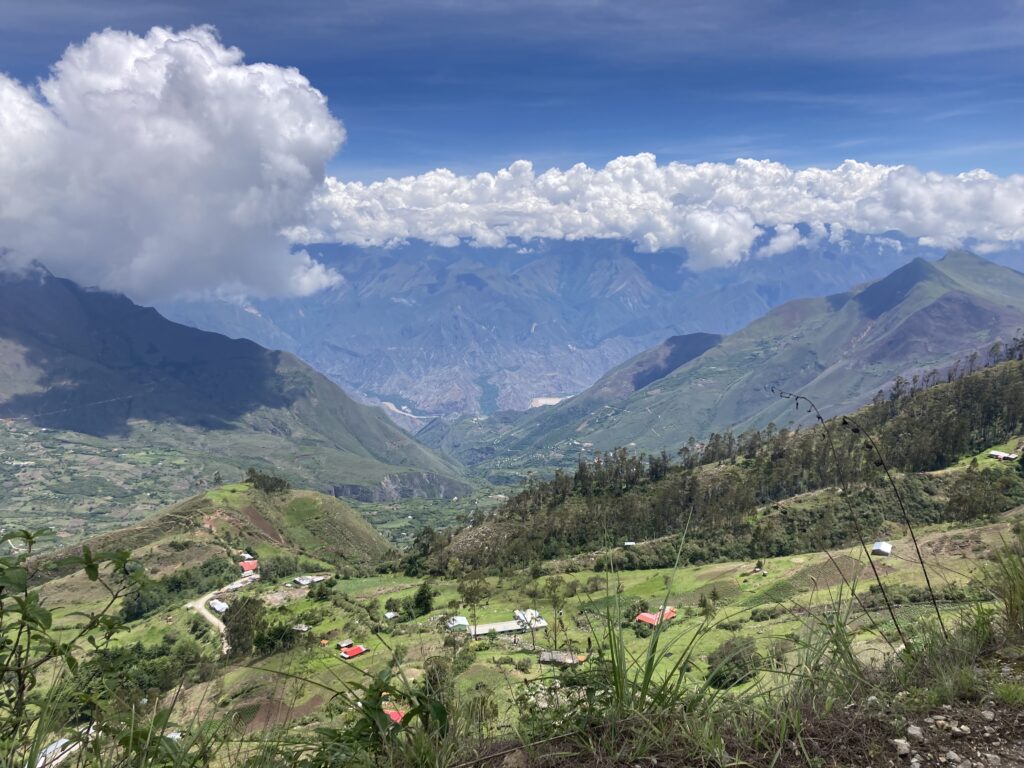
We rode uphill for almost 25 km (15 miles) and the weather was perfect, views were epic, drivers were kind – it was a fantastic day to be a bicycle tourist in the Peruvian Andes. The best part about this ride was the ability to see our road in the valley and see how far we’d come. When we reached the top of the pass we could still see Balsas where we had stayed two nights previously. Clouds would come and go but for the most part we could easily see our road winding its way through the mountains.
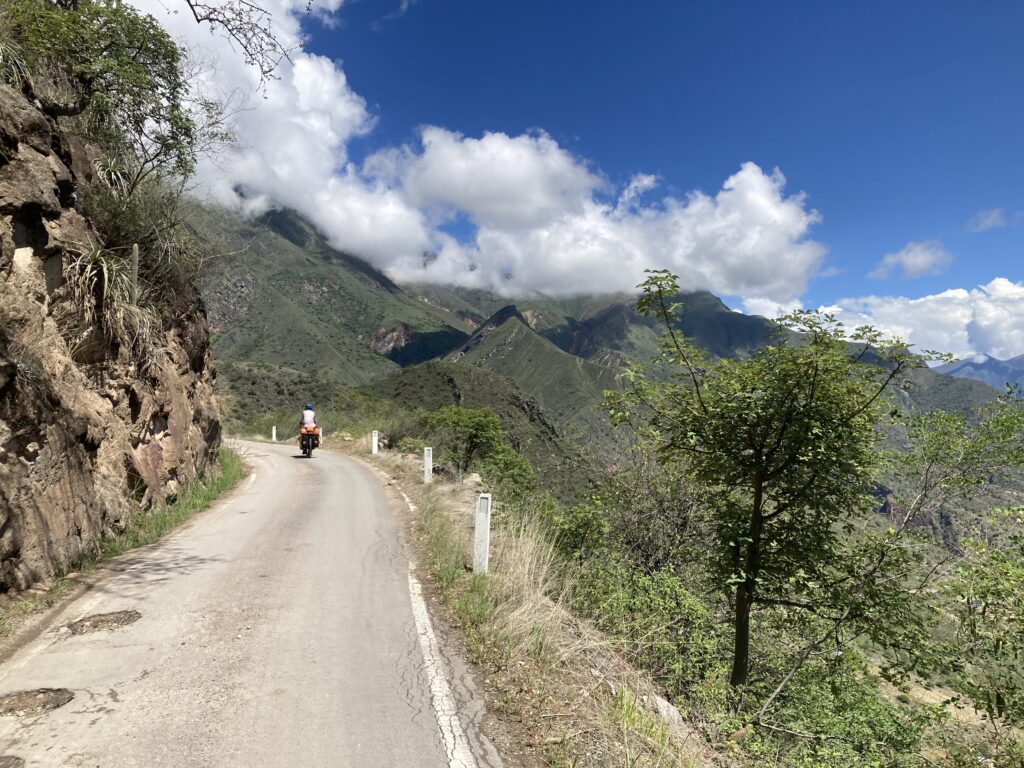
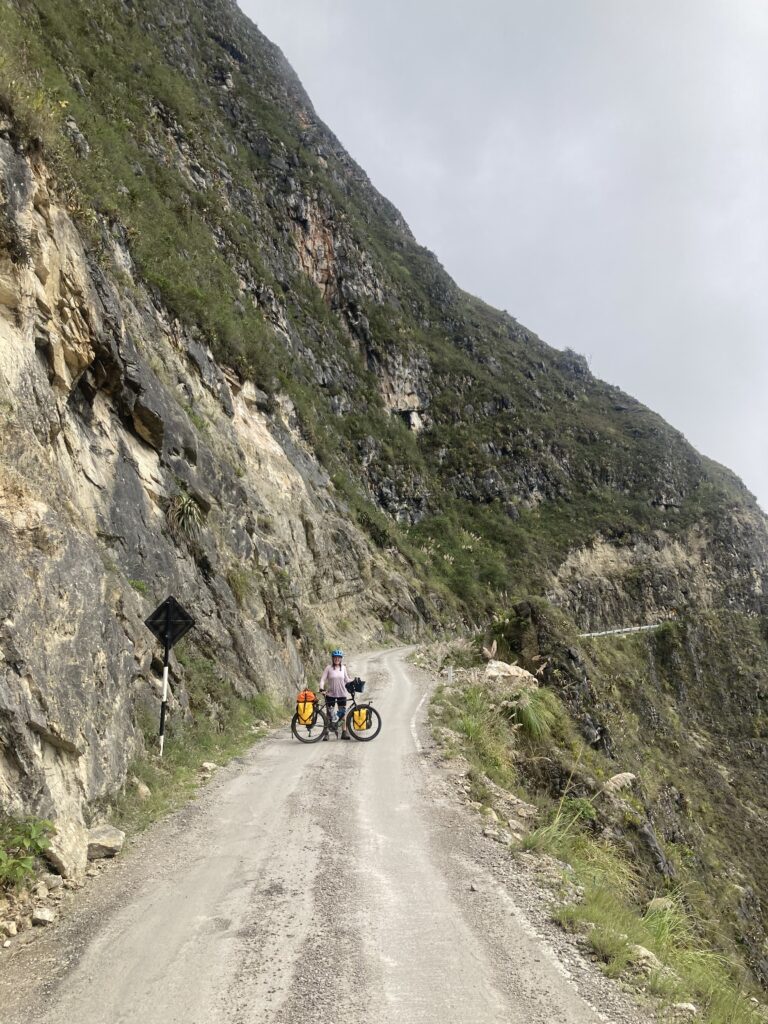
The challenging part about this road was that it was *very* narrow at times, serviced two-way traffic, and there were almost no guardrails and we were frequently cycling next to 1,000 foot drop-offs. The room for error was quite small so we took it slow to ensure our safety. We were encouraged, and thanked, by many locals with waves, honks, & thumbs-up. After we’d started into the route over a week ago we learned this road, Peru 08B, is called “Peru’s Death Road” by dramatic YouTubers, and it is listed as one of the world’s most dangerous highways. We made sure to take it slow 🙂
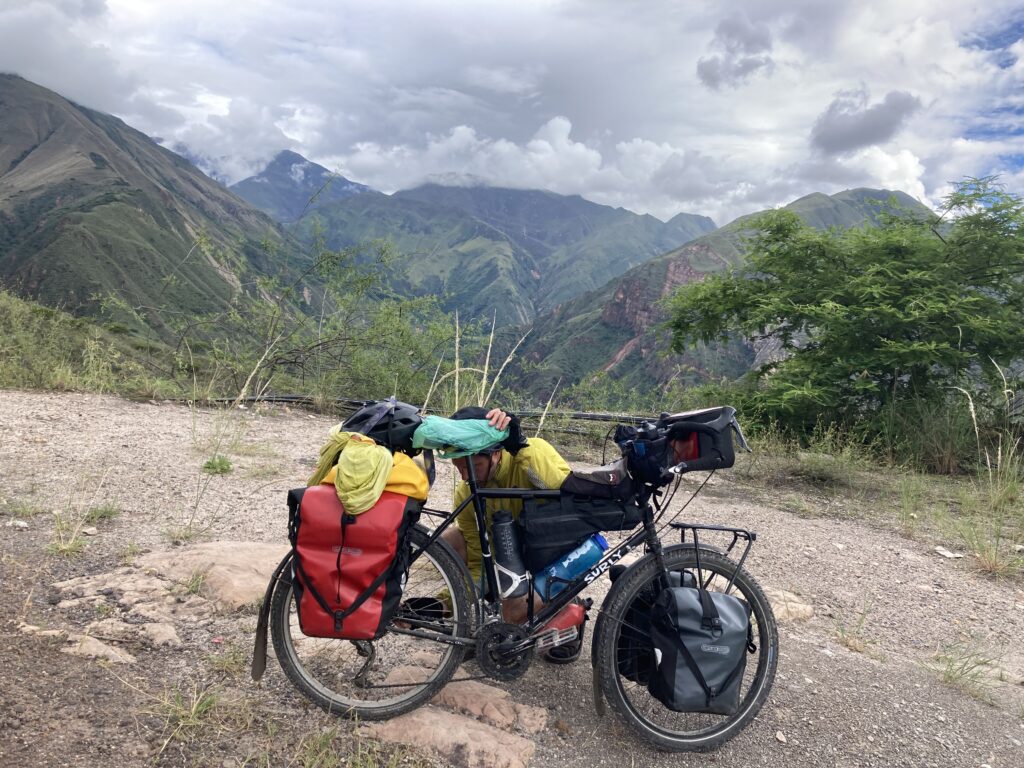
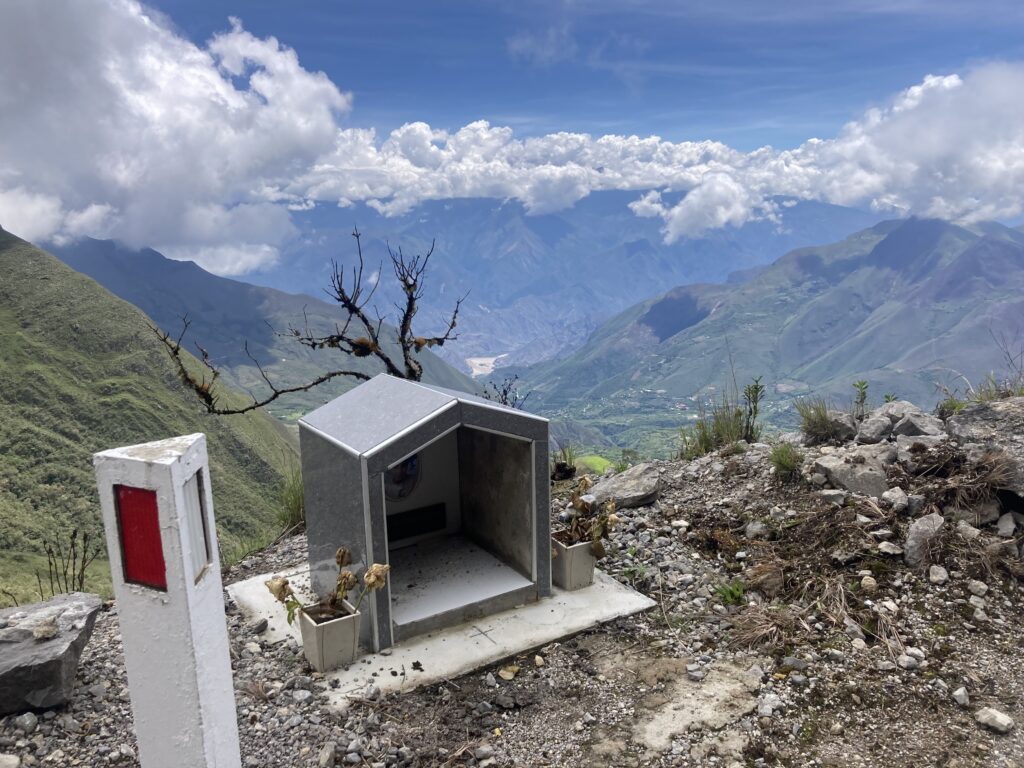
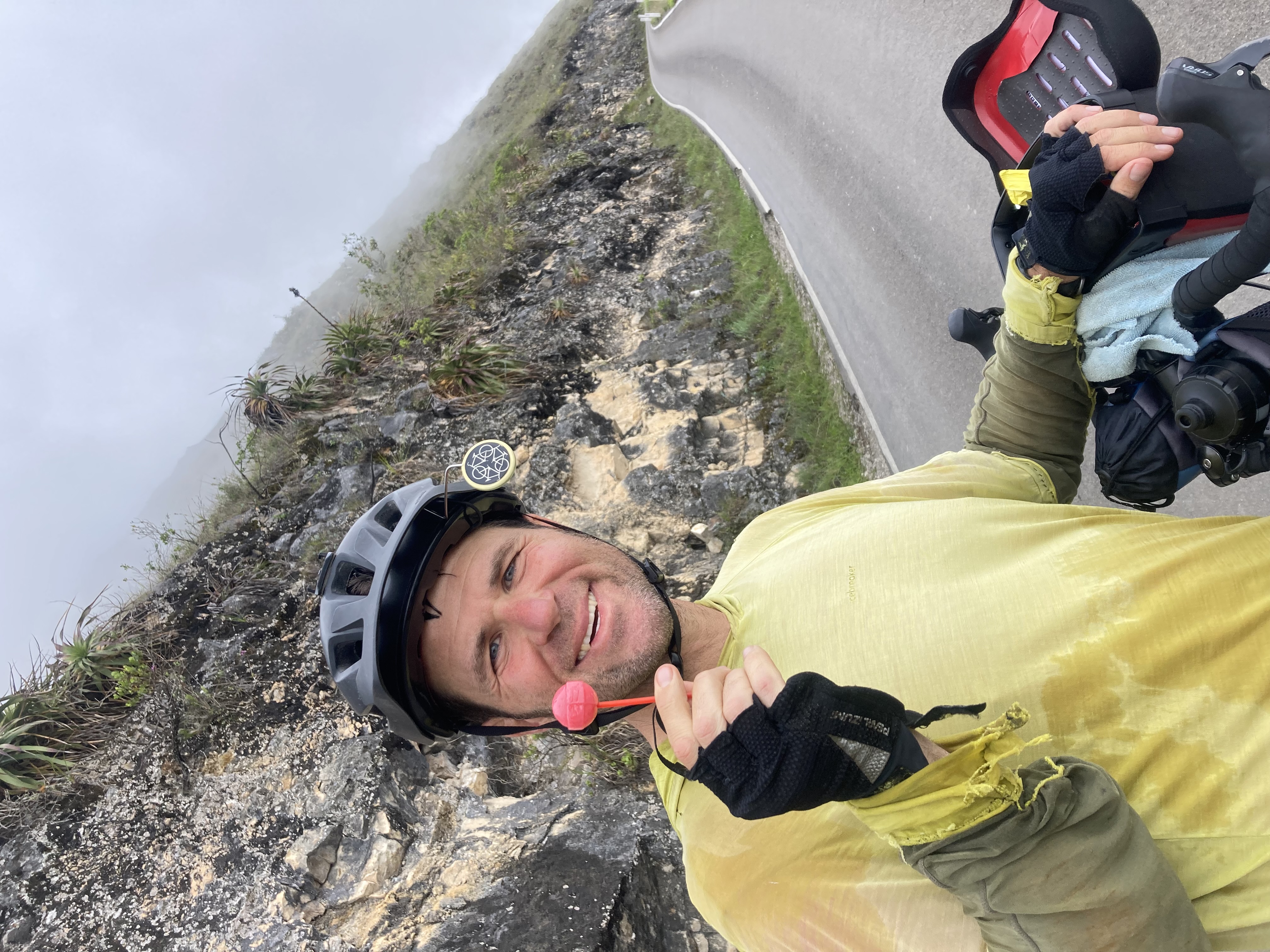
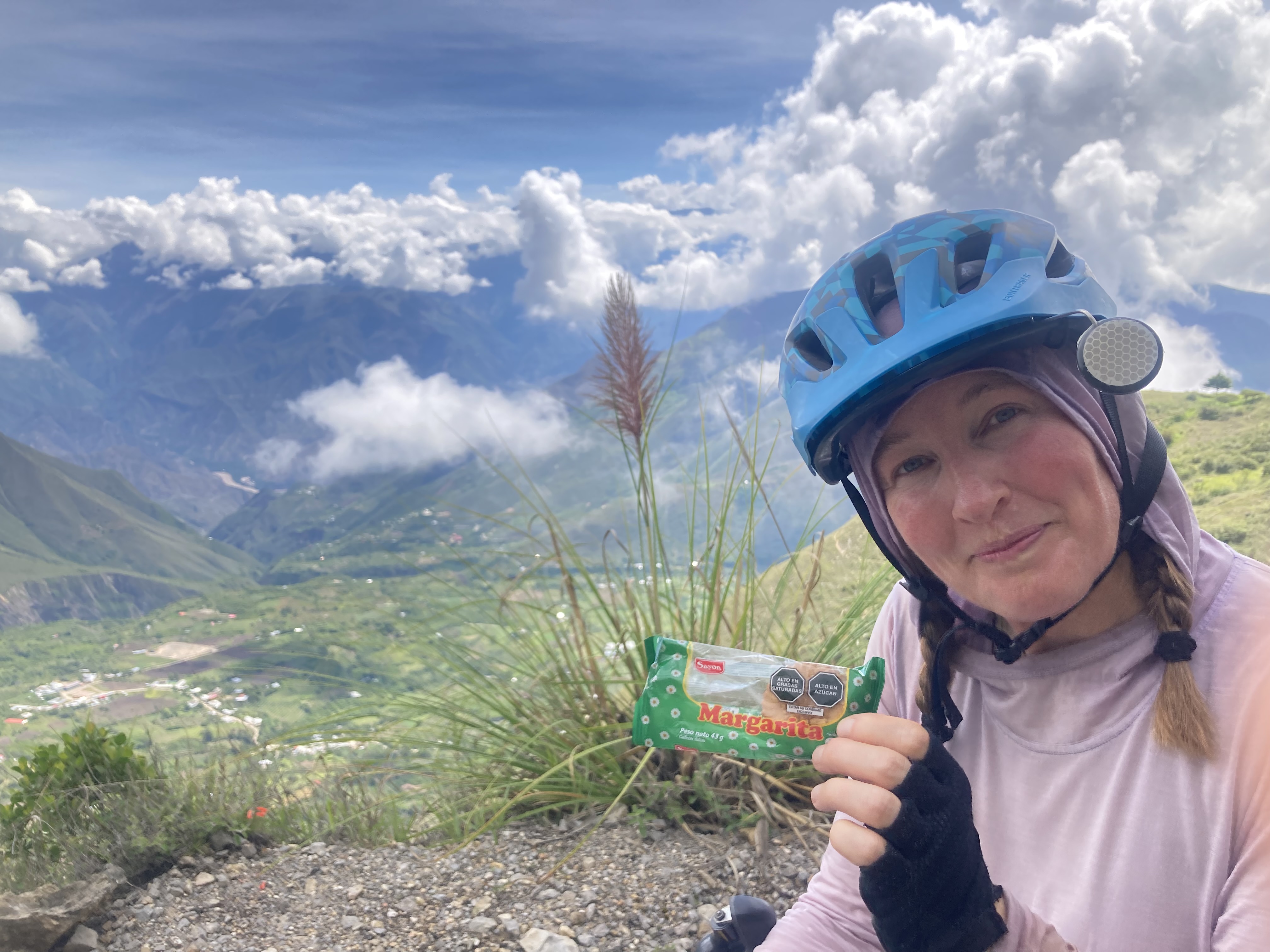
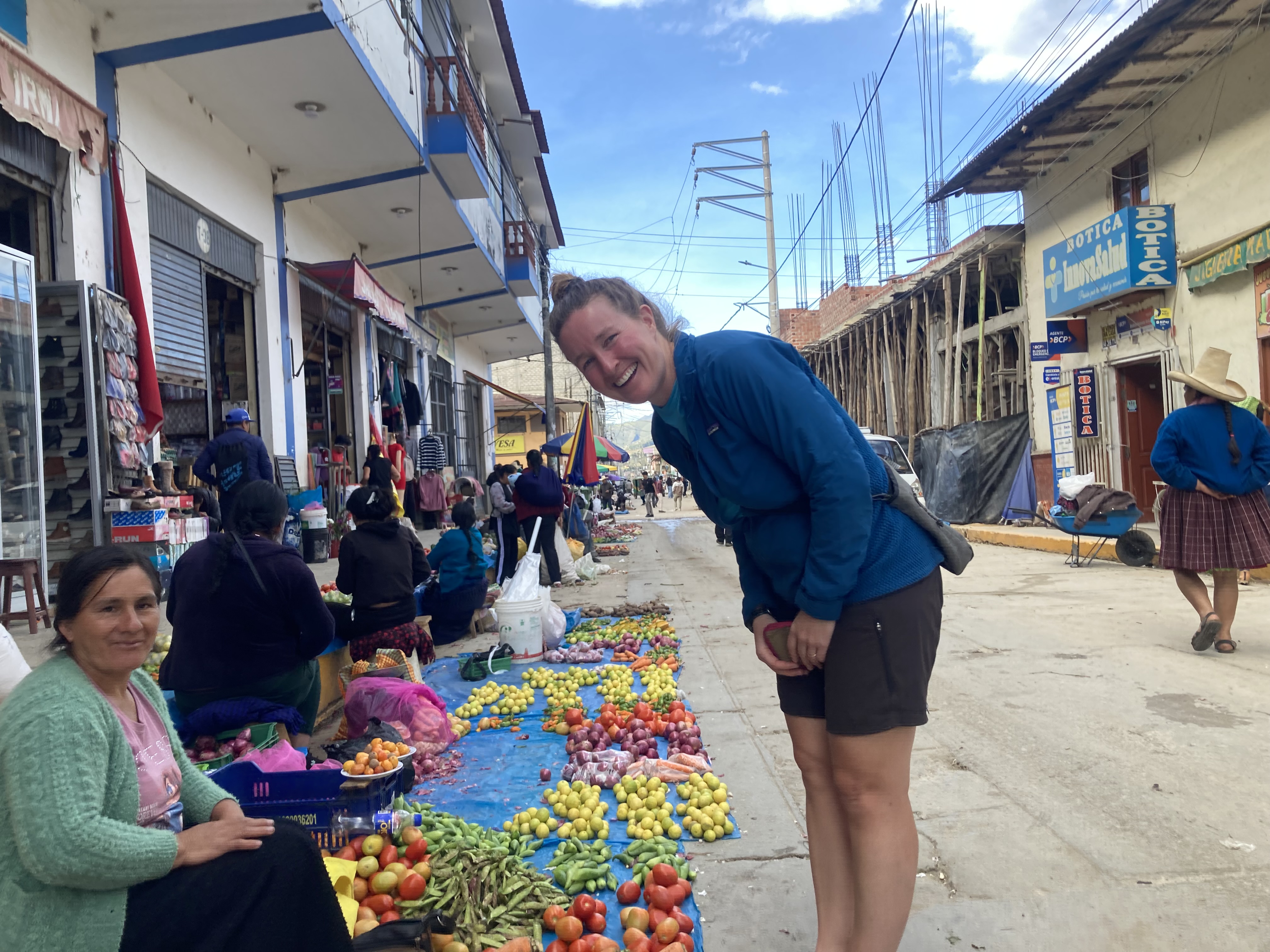
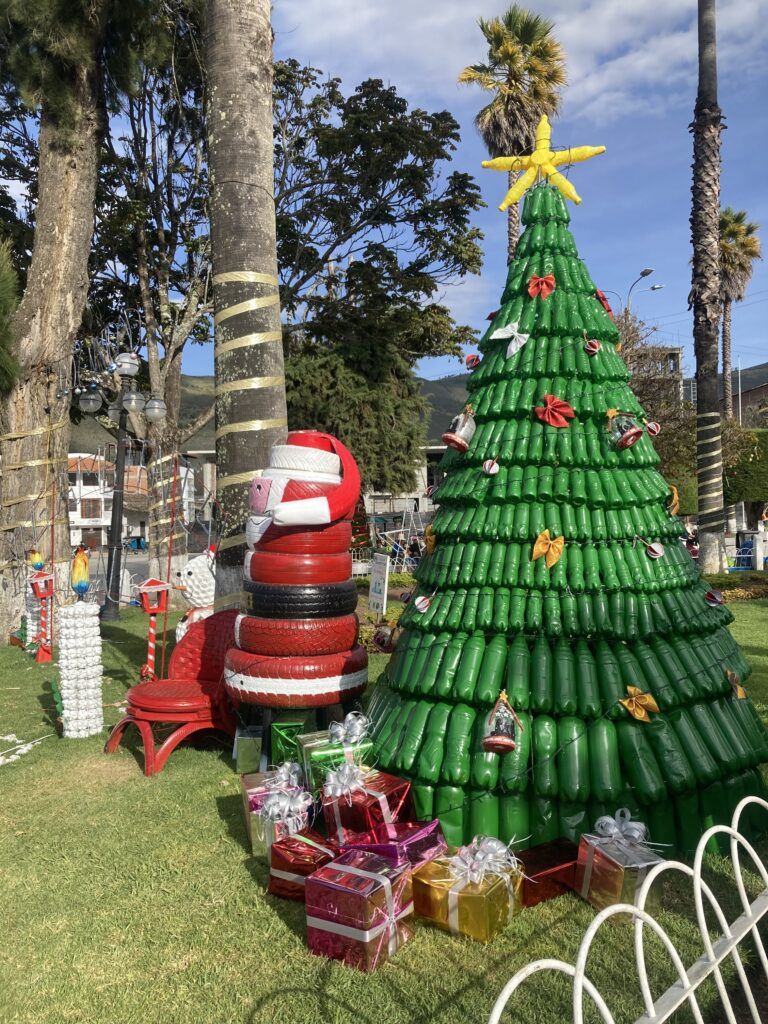
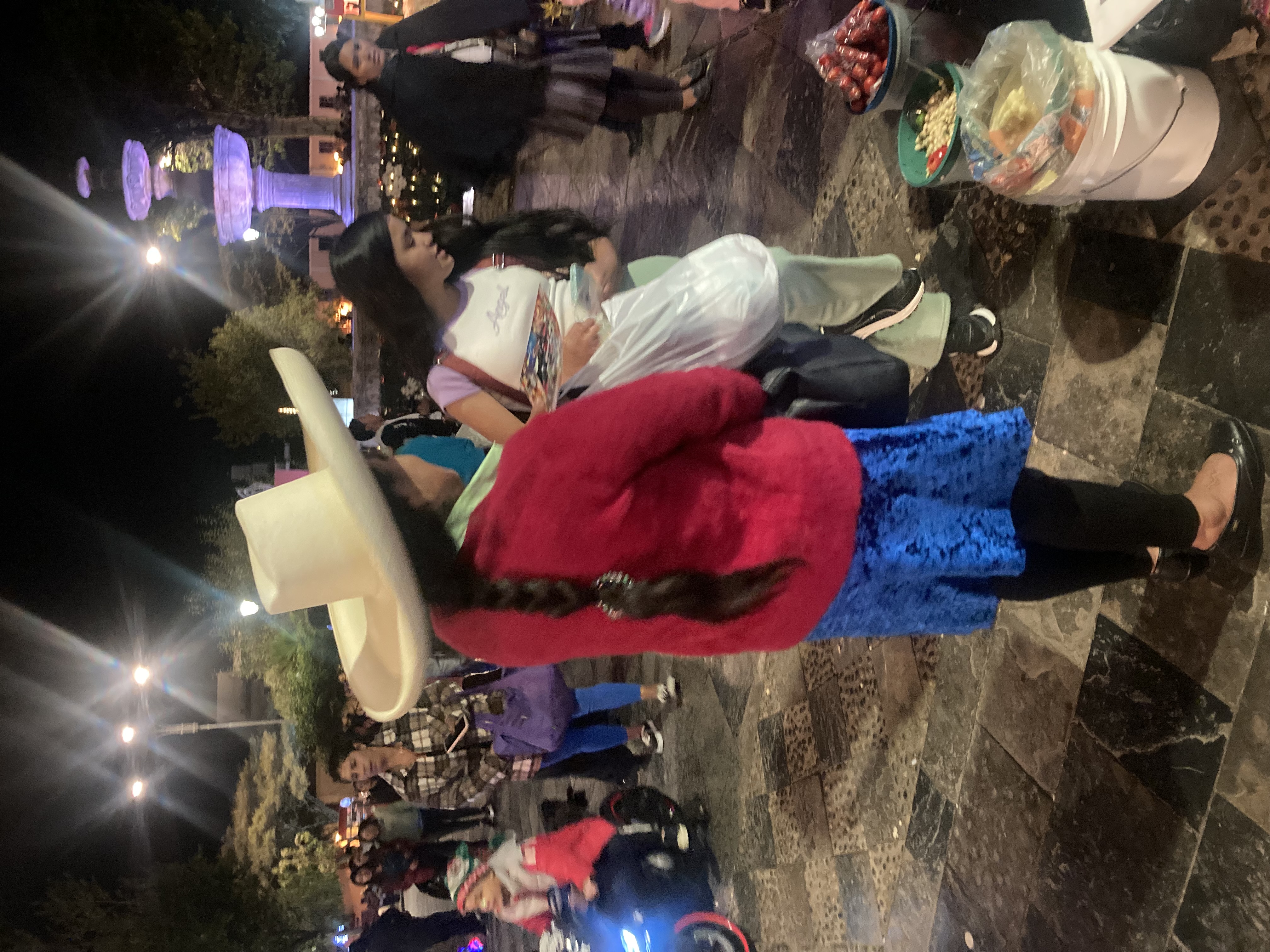
First break stop of the day – admiring how far we’d come & how far we had yet to go!Can you see our road? The lines on the bottom of this image are parts of the long switchbacks & you can see the road snake through the valley before dropping off into the gorge. This is a two-way road with *very* steep drop-offs – called Peru’s Death Road by dramatic YouTubers & listed as one of the world’s most dangerous highways. For us the traffic was very light and (mostly) respectful – we learned some of the collectivos, essentially 10-ish person vans, transporting people from one town to another were ruthless and when we saw one coming we we simply got to the side and stopped to allow them to pass. Over three days we climbed from the top of the ridge in the distant clouds to the bottom of the valley at the river and back up to the next pass. It was 13,000 feet of climbing over three days on heavily loaded touring bikes – the views were spectacular!After we’d started this segment of riding we learned this highway, Peru 08B, is called Peru’s Death Road – along the way we did see many shrines to people who had passed traveling this route. We’ve been asked, “How do you keep going?” – blowpops & margaritas…sometimes we pull over and say “I need TWO margaritas” or “it’s blowpop time” 🙂 So happy to finally, after two days of climbing, be over the second pass and can see Celendin down in the valley, a modest sized town where we will stay for two nights to recover. We found the Celendin market and bought some mangoes. Notice on the right side of the picture the woman wearing a giant hat – Celendin is famous for these hats. Christmas decorations made out of reused material – tree is plastic bottles & Santa is made of painted tires.
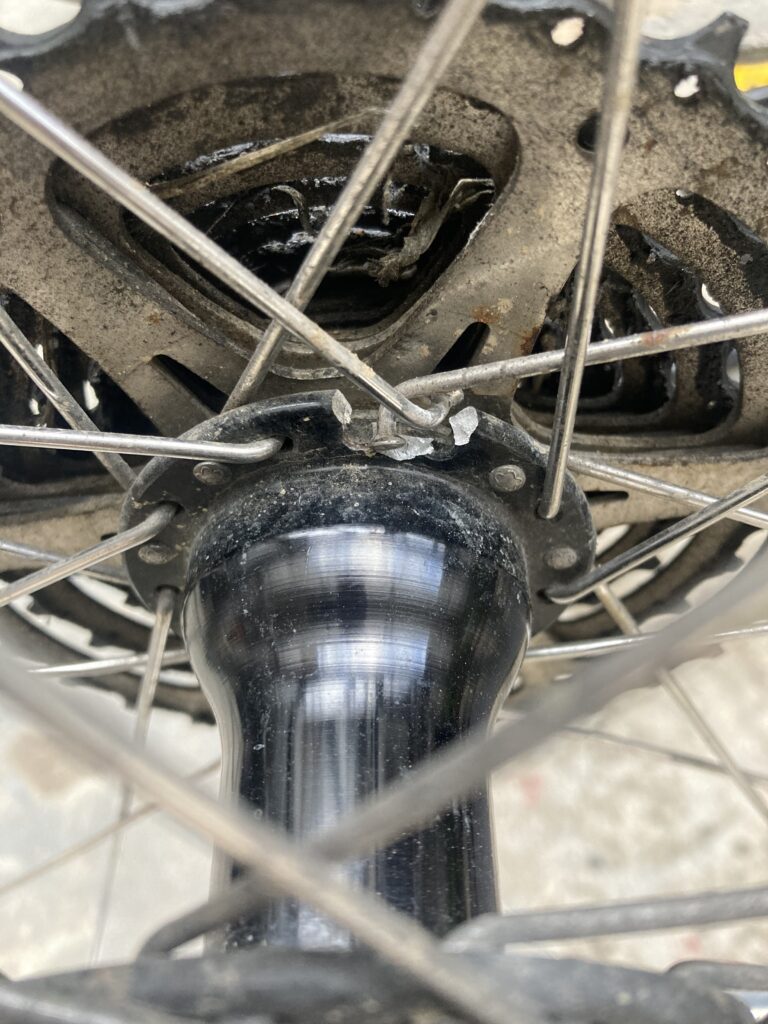
While prepping the bikes for our next ride to Cajamarca we noticed the rear hub on Dustin’s bike had failed. This potentially could be a major issue as the hub holds the spokes which holds the wheel together. We were in Celendin, a smaller town of 25,000 people, with limited bicycle shops and parts. So not knowing when this piece broke we’d already bicycled on it so we decided to ride the 103km (62 miles) to Cajamarca where we’d have more access to bicycle shops & parts. We changed the wheel from Dustin’s bicycle to Patricia’s to reduce the weight load on the wheel and Patricia likely would hear an additional failure before Dustin.
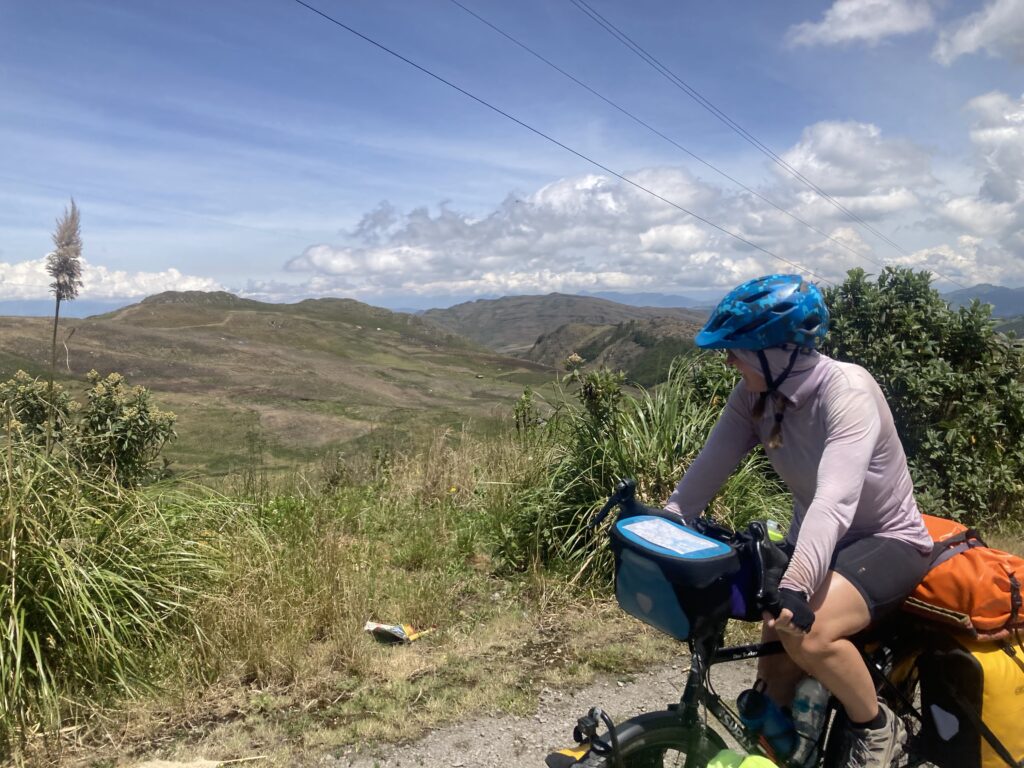
So the next morning we took off, riding on the broken hub, for a 50km (30 mile) climb up to 12,300 feet elevation and then downhill into the town of Cajamarca where we planned to stay a few days over the Christmas holiday.
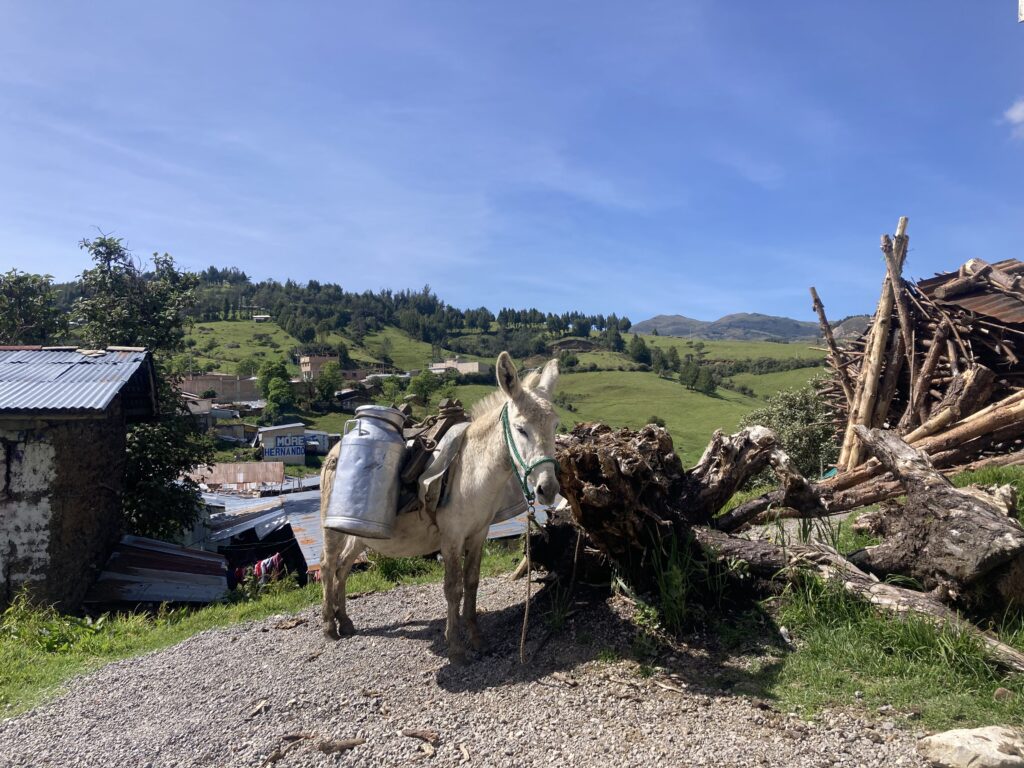
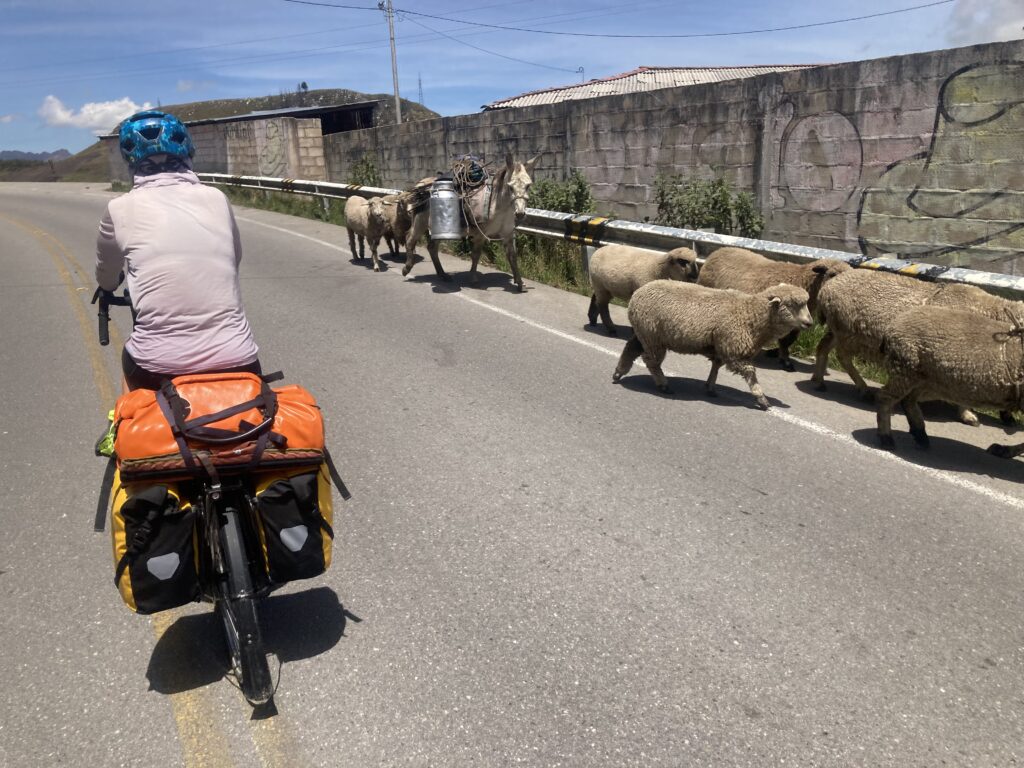
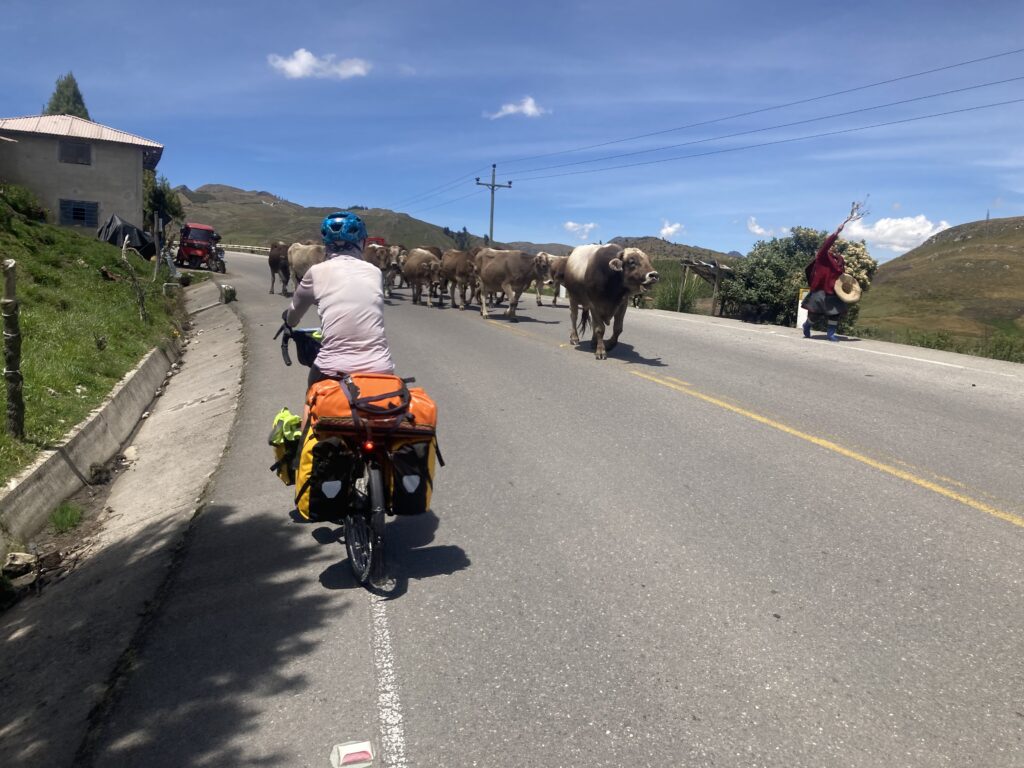
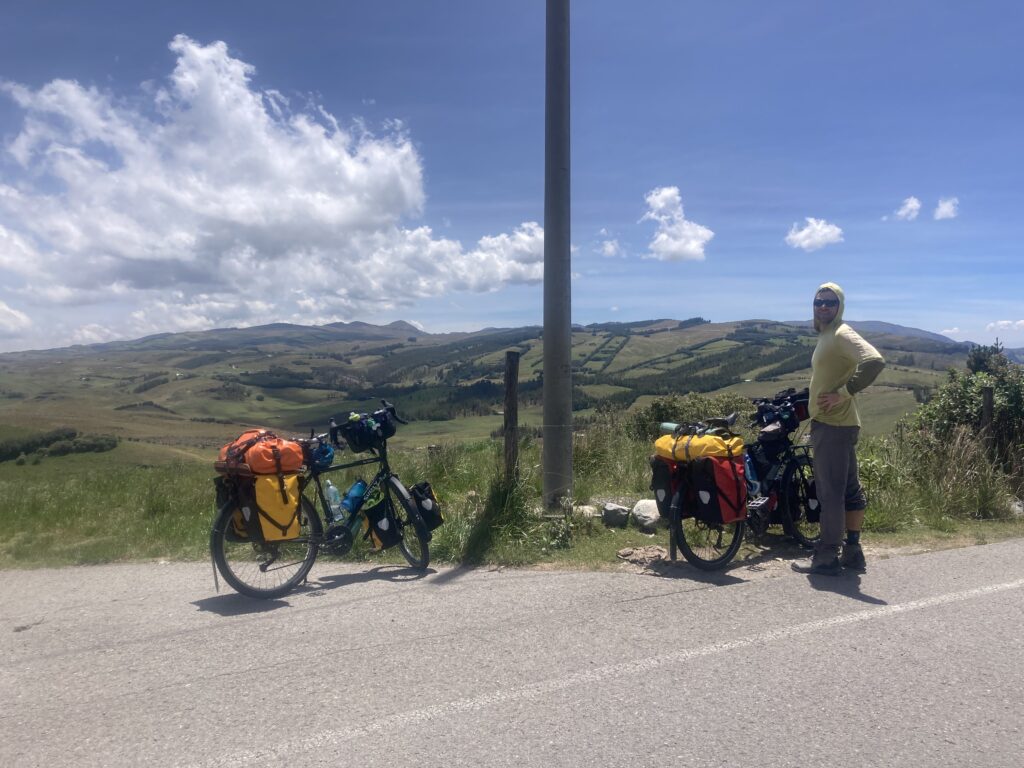
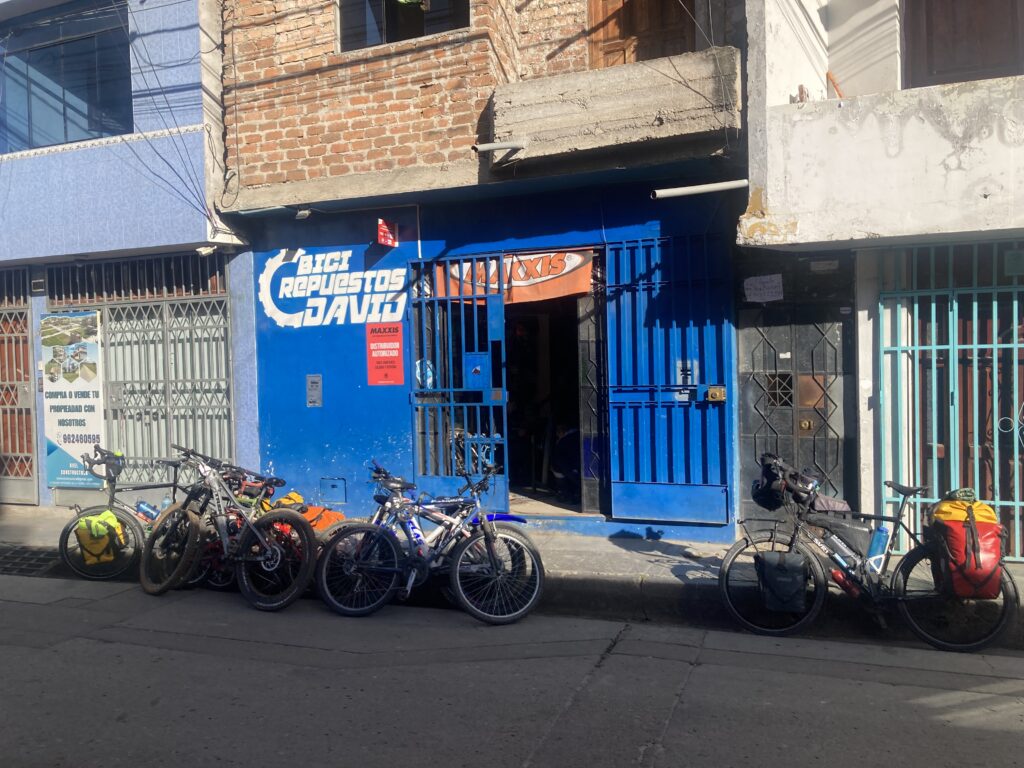
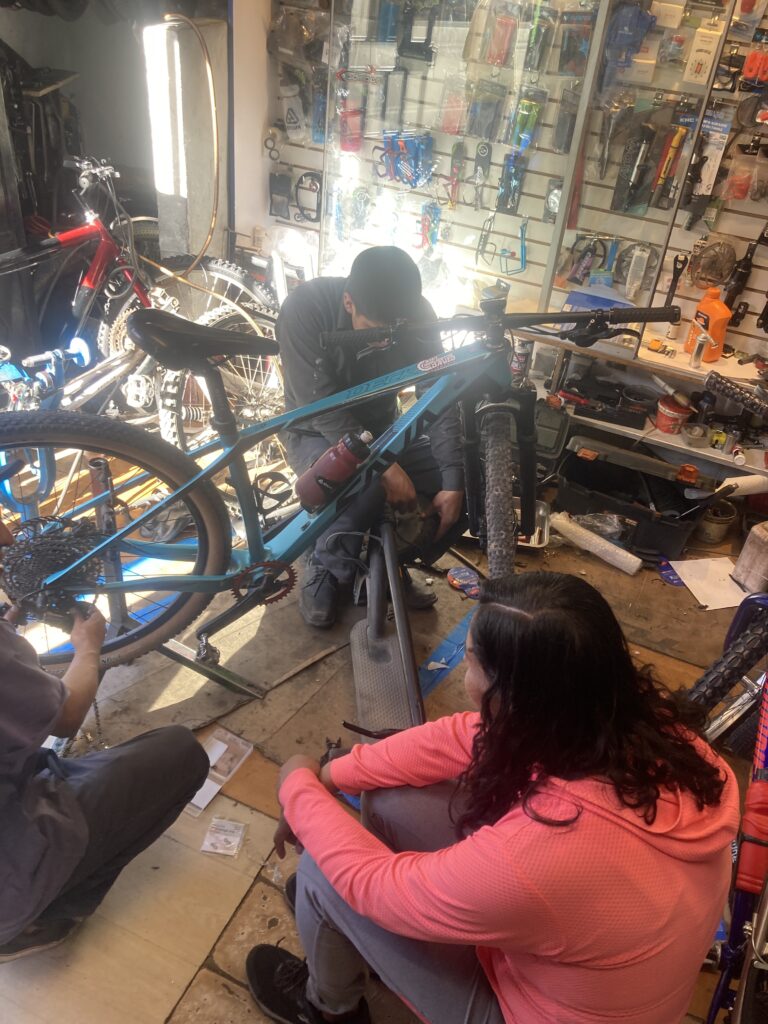
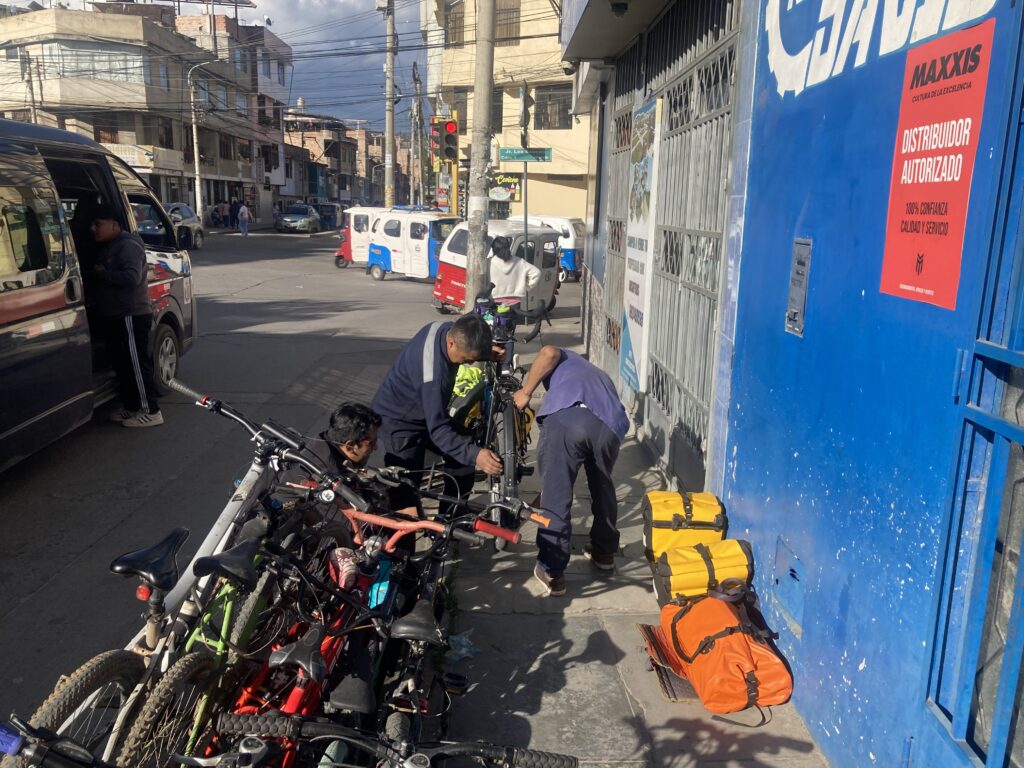
On our ride out of Celendin we observed many milk cans waiting by the side of the road to be picked up by the milk truck. This is how they get to the road. The traffic was light enough that farmers were moving their animals along the road. Just around the next bend cattle were being moved along the road. Almost to the top of a 50km (30 mile) climb.Break after summiting the 12,300 foot passAfter our long downhill into Cajamarca we stopped at a couple bicycle shops looking for a new hub that would fit our wheel. This shop “Bici David” was tiny but had a ton of parts – here two repairs are happening at the same time. The scooter is being repaired under the bicycle. With no room inside the shop, Patricia’s bike which now had the wheel with the broken hub is worked on outside on the sidewalk.
The shop did not have the hub we needed in stock so the calls & messages to all the local, and country-wide, shops started. Now we just waited to figure out what to do to fix the wheel. Meanwhile we enjoyed touring around Cajamarca and witnessing how Christmas is celebrated in a different culture. One major observation was the focus on the nativity scene in Cajamarca.
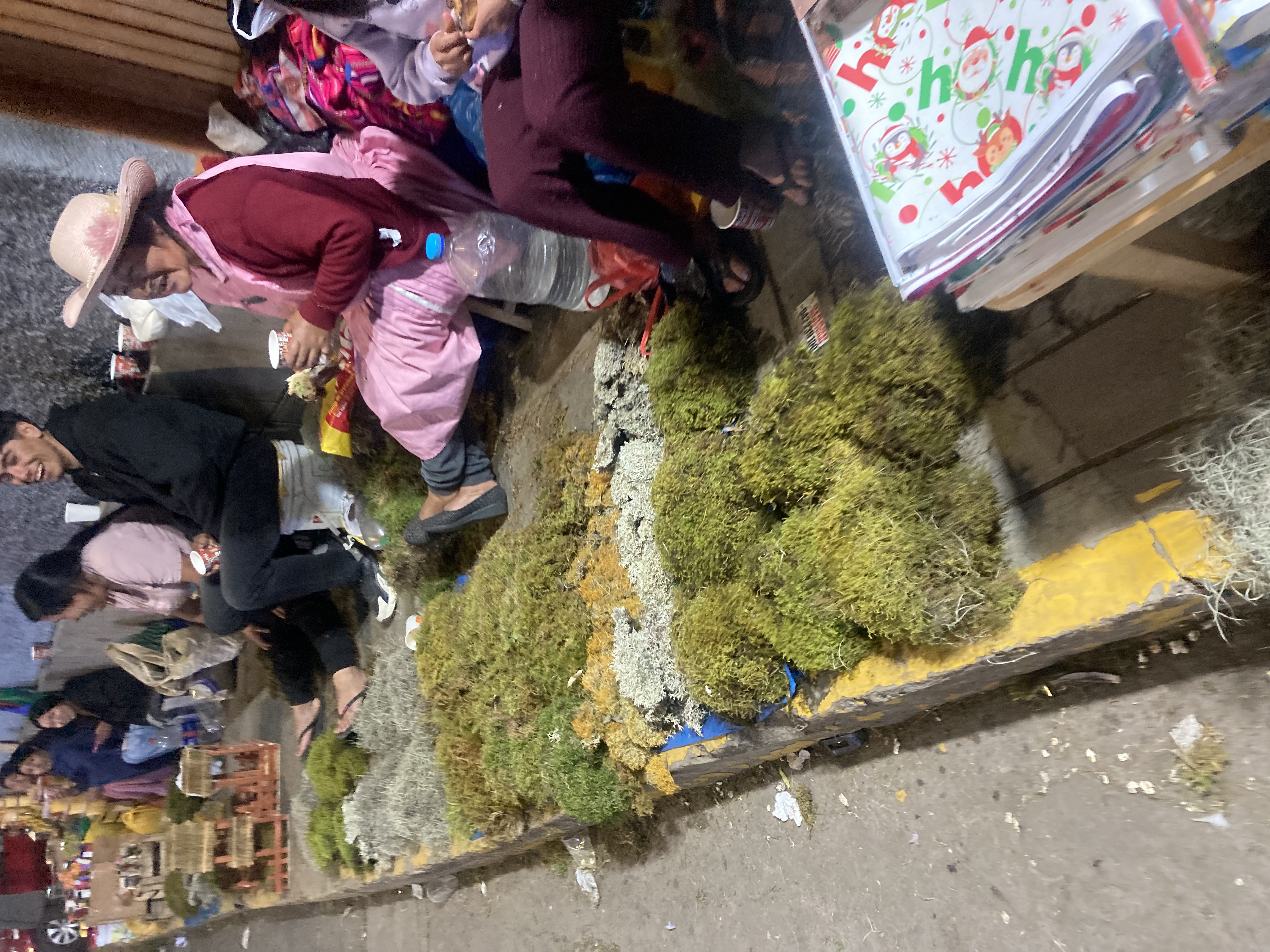
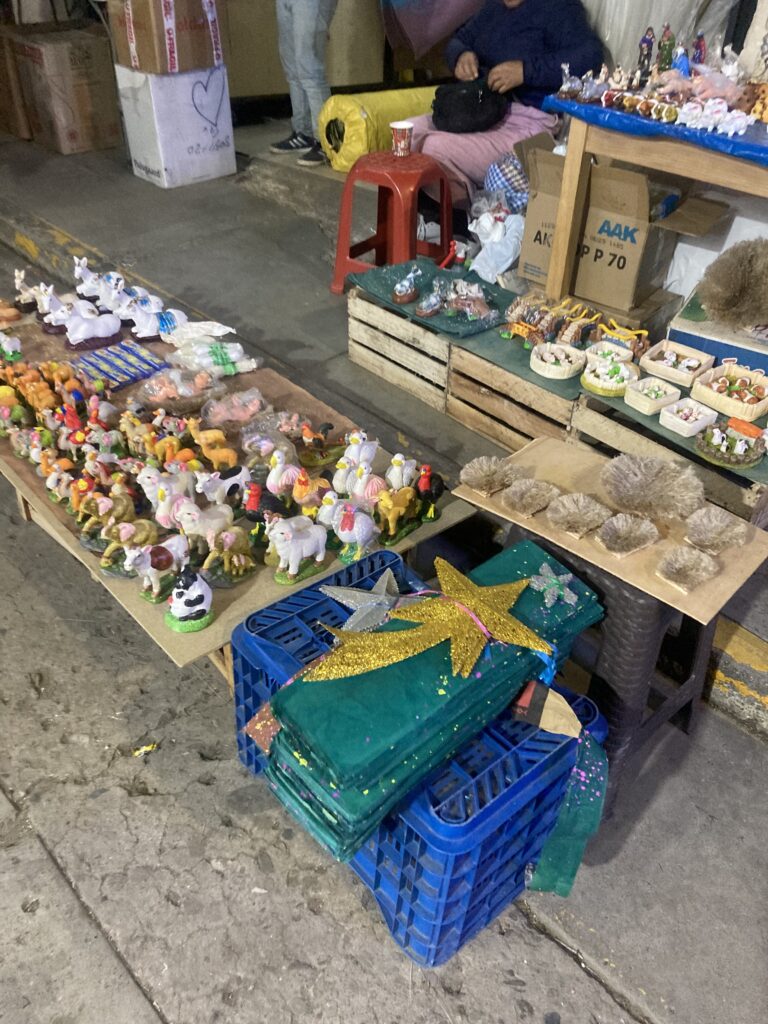
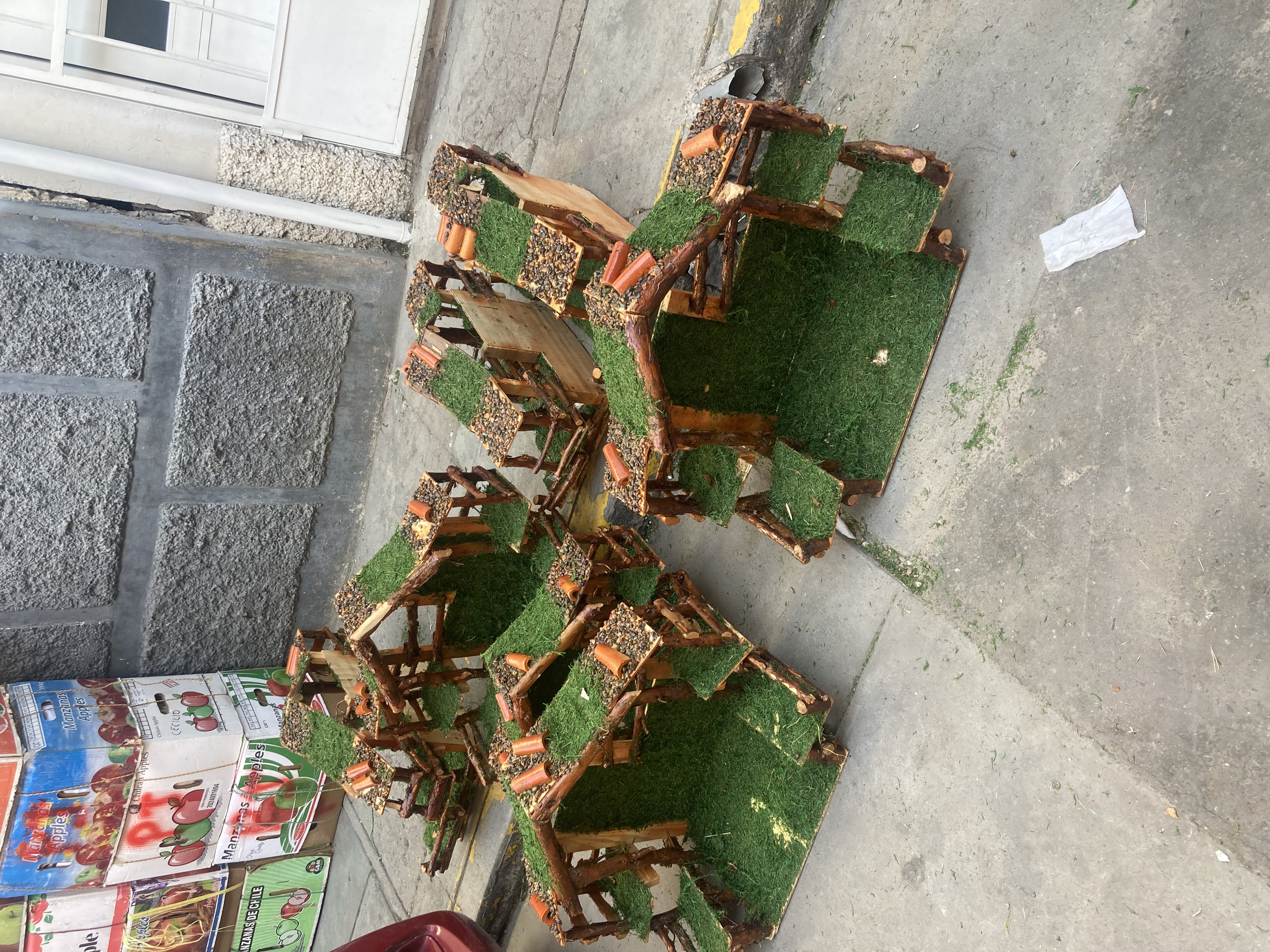
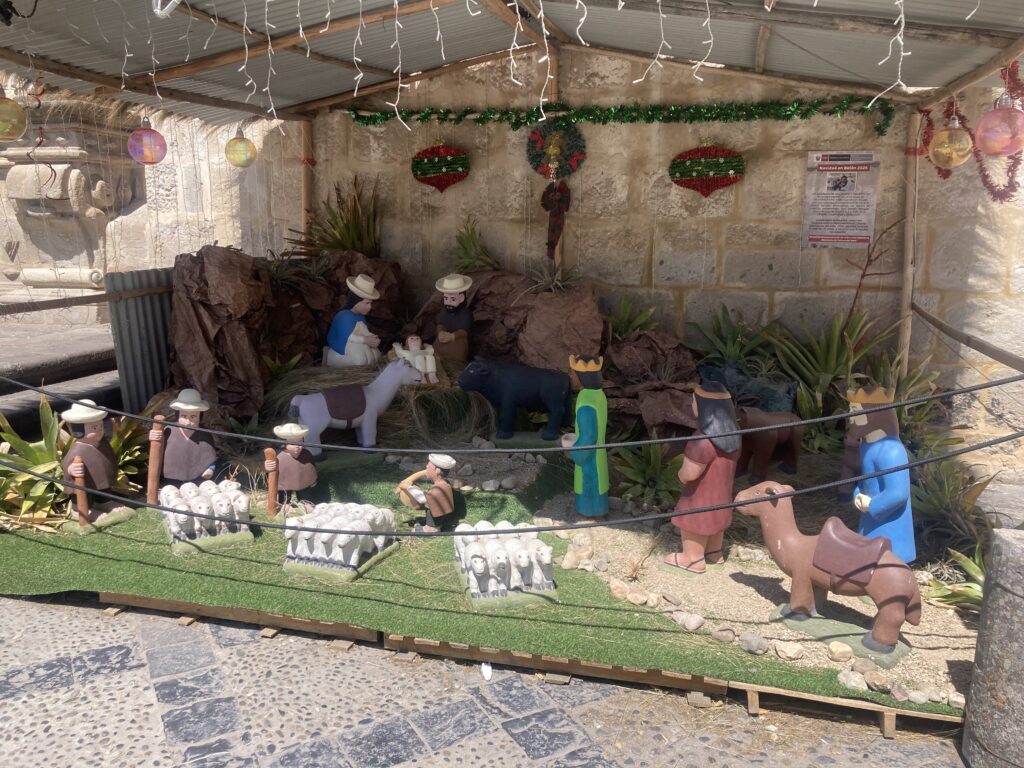
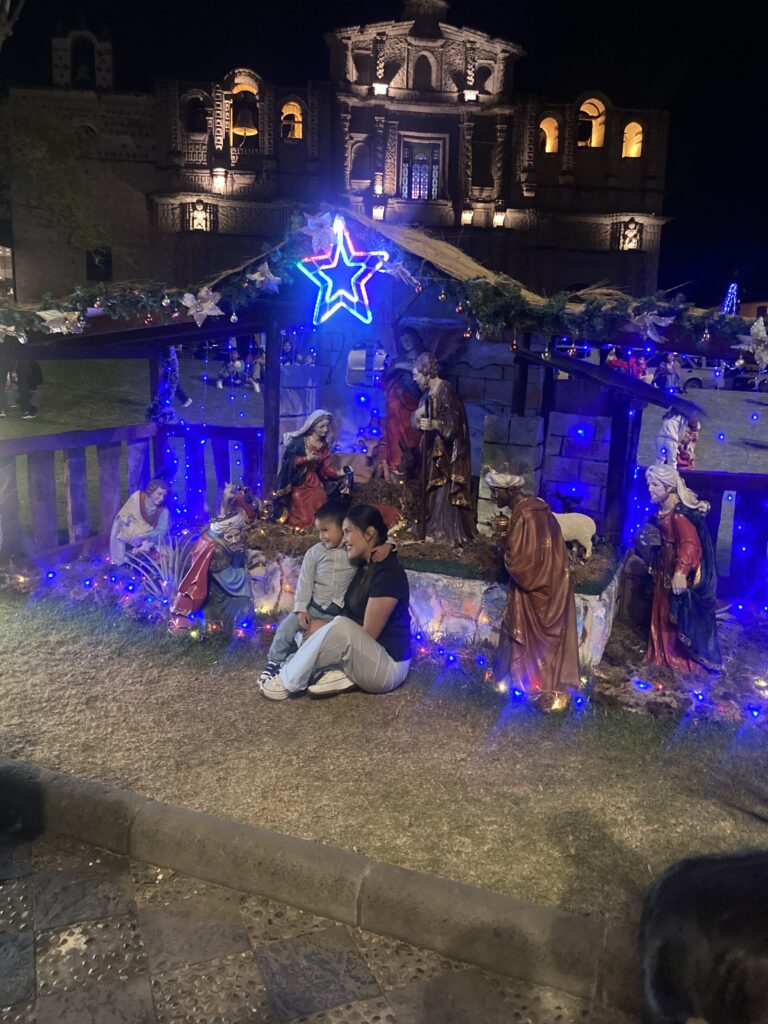
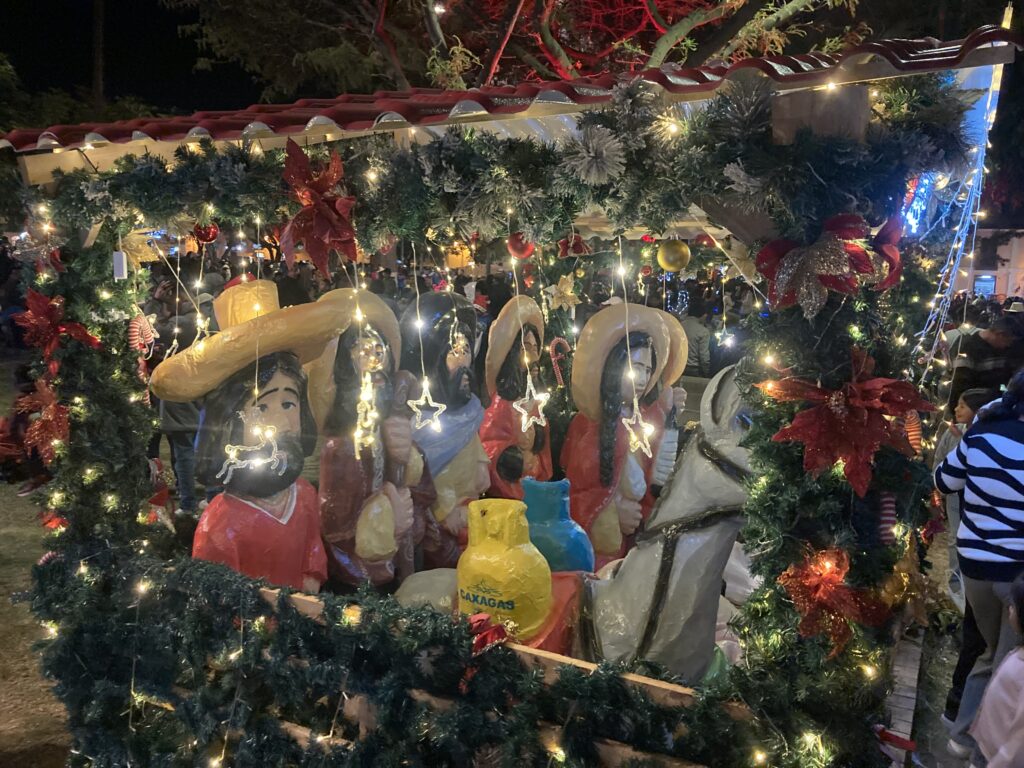
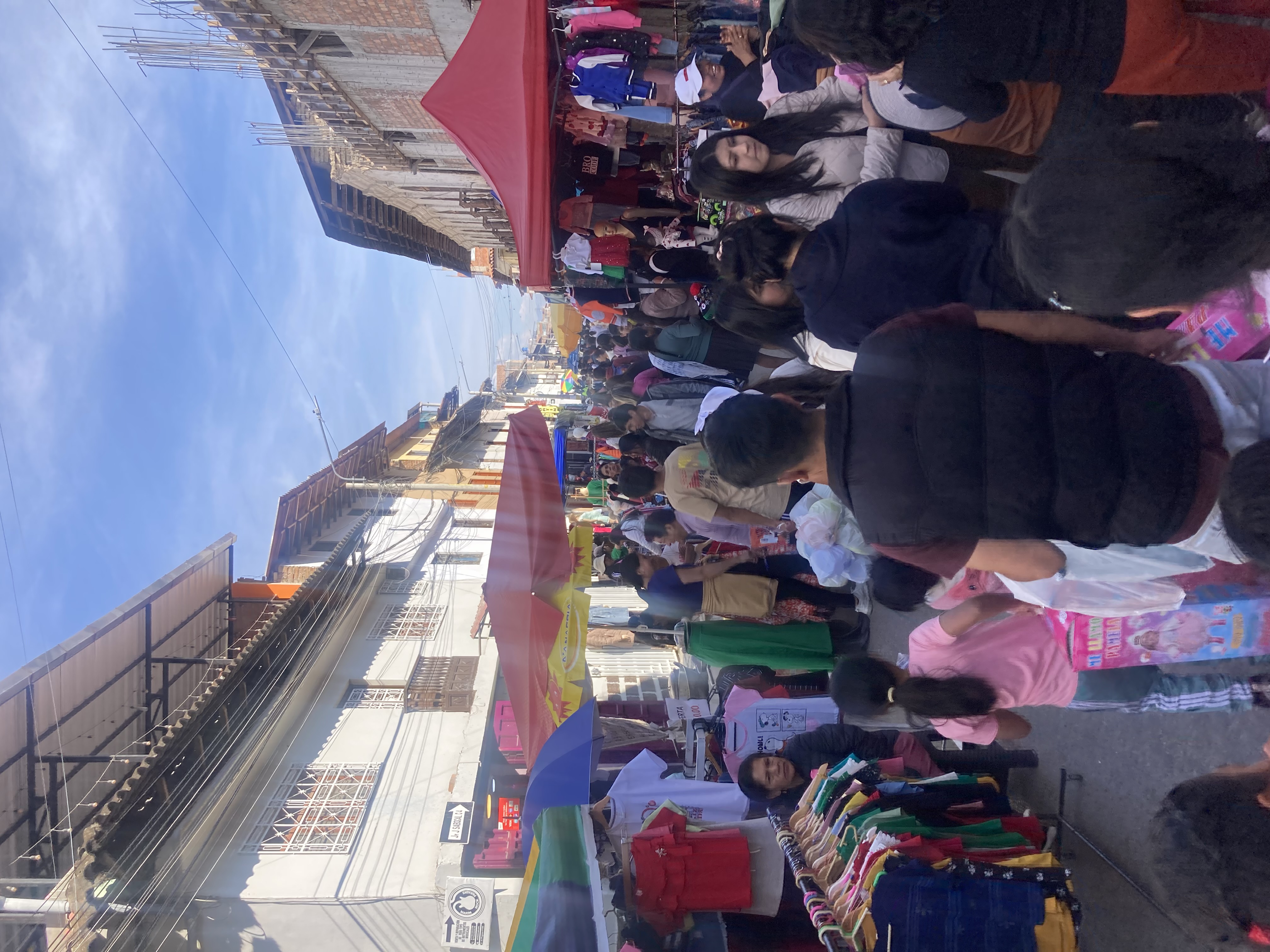
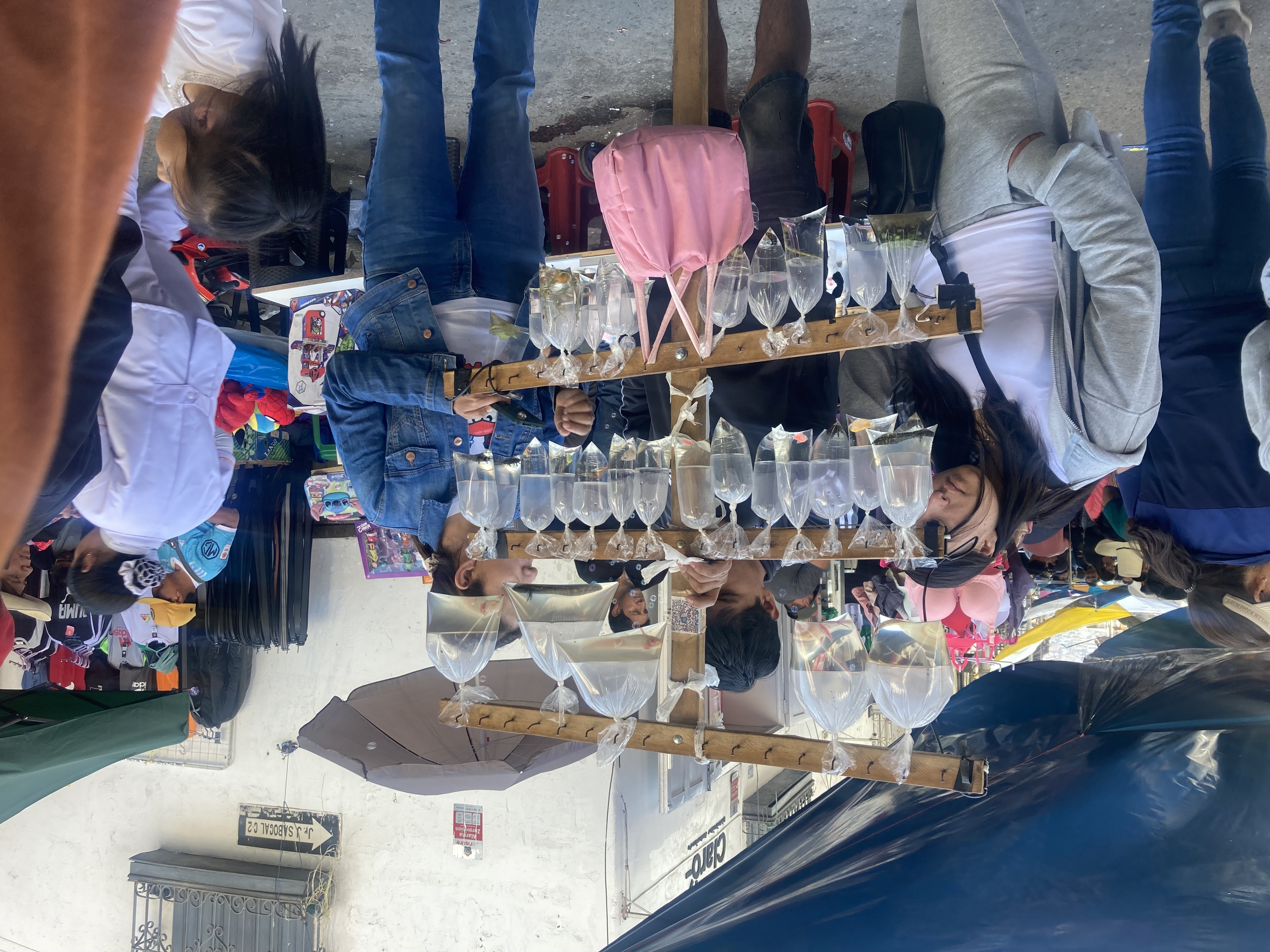
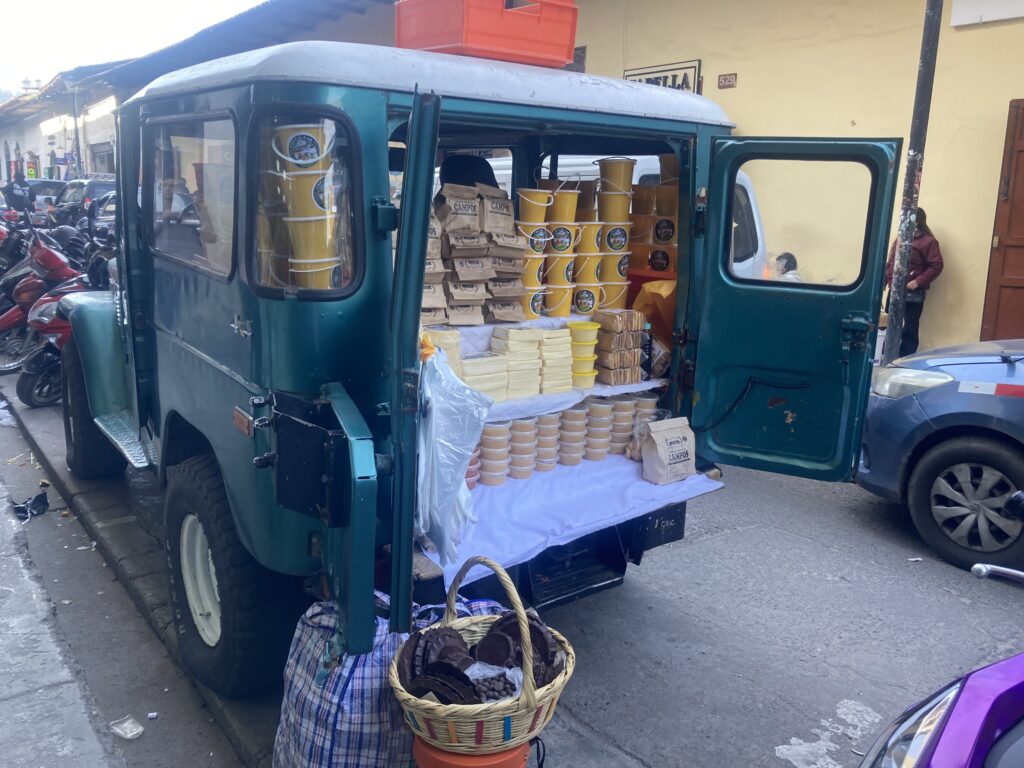
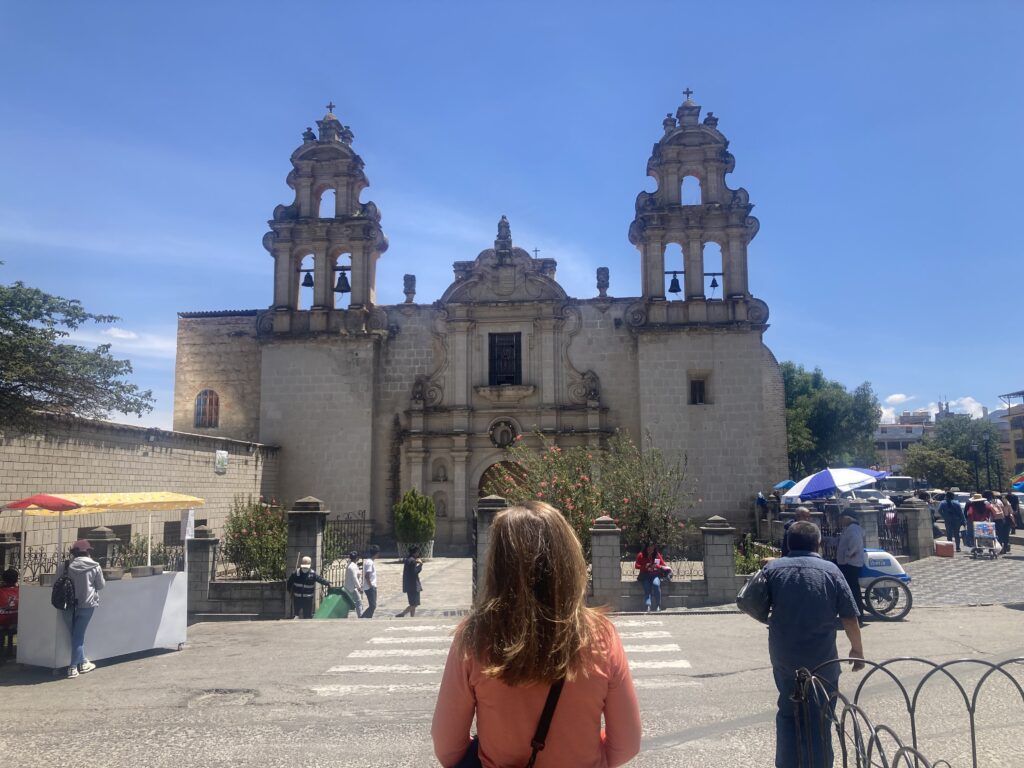
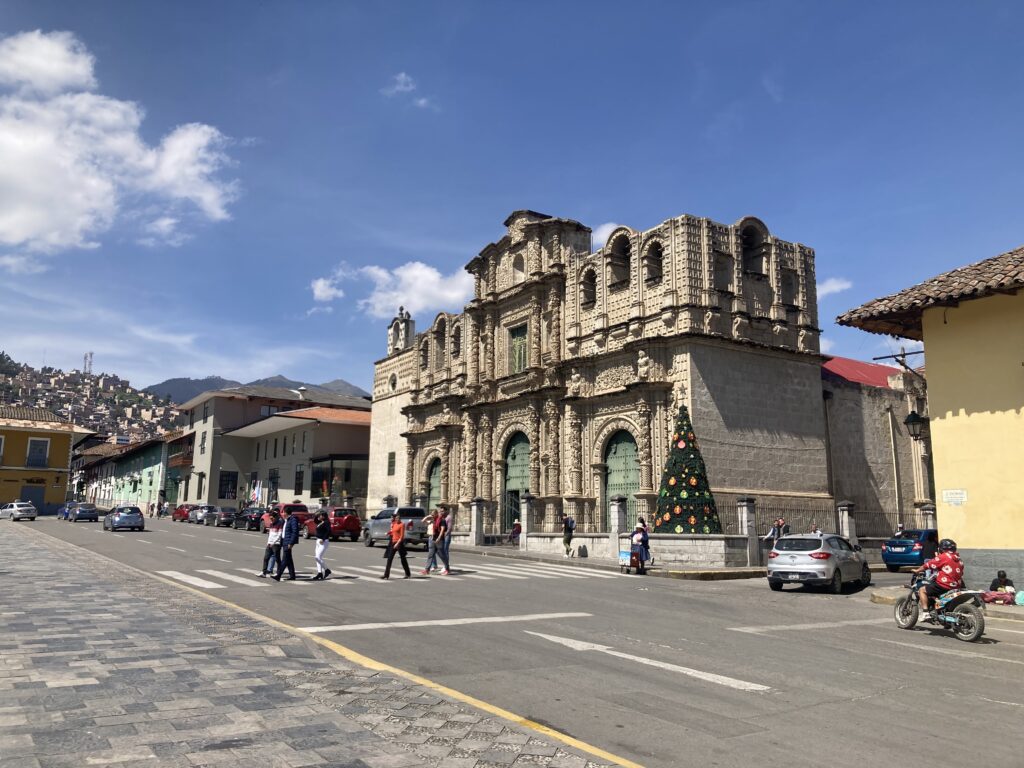
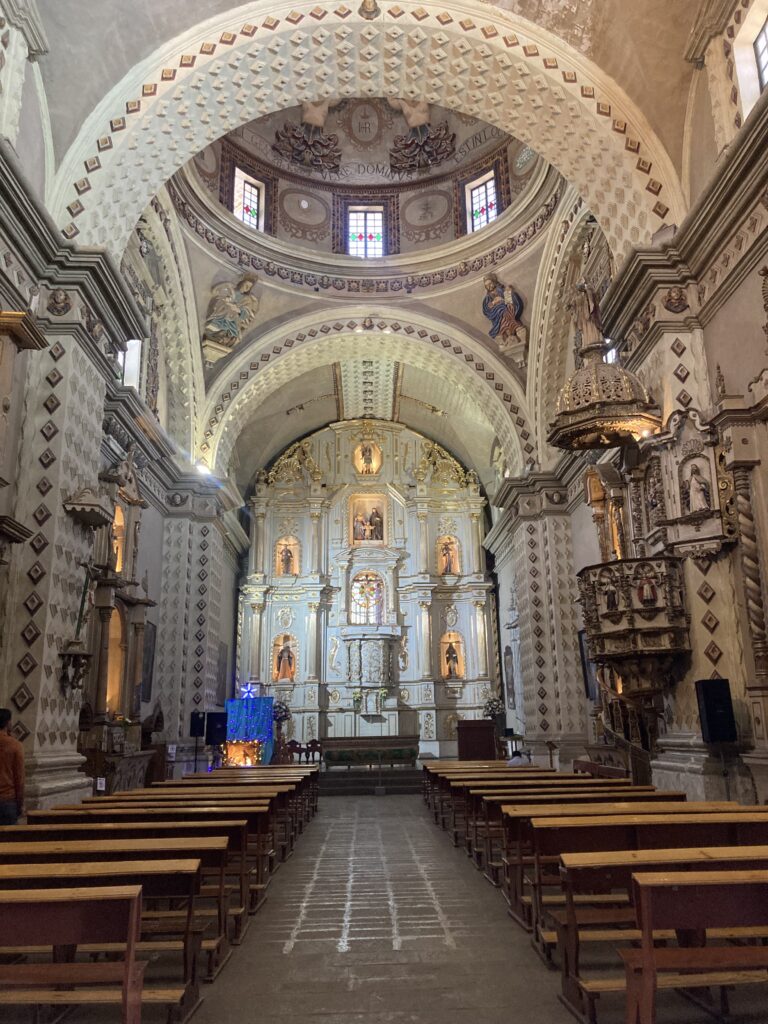
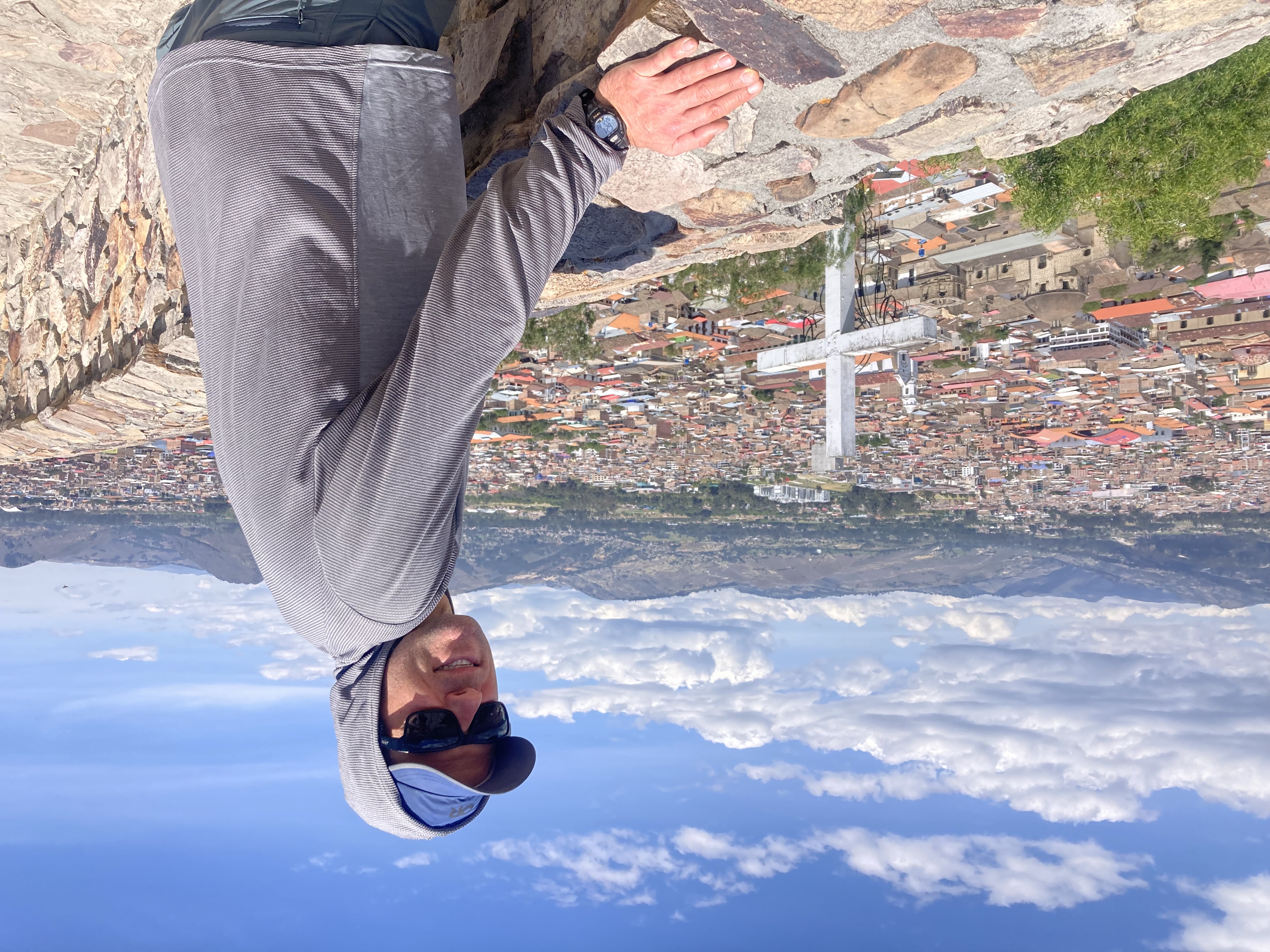
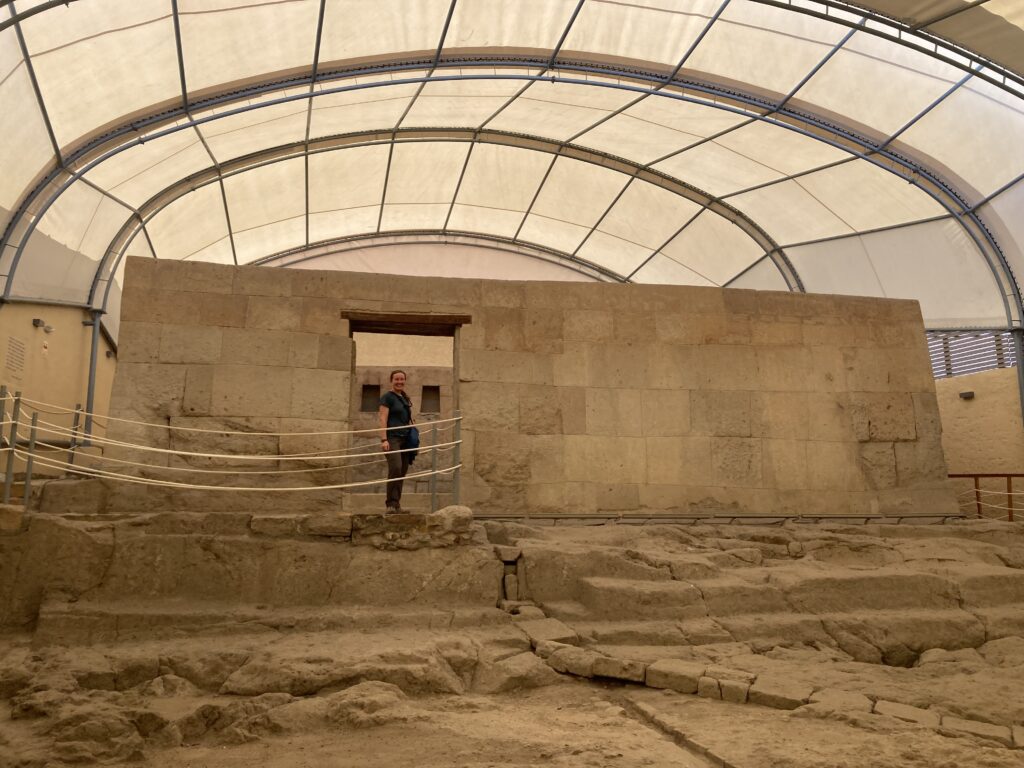
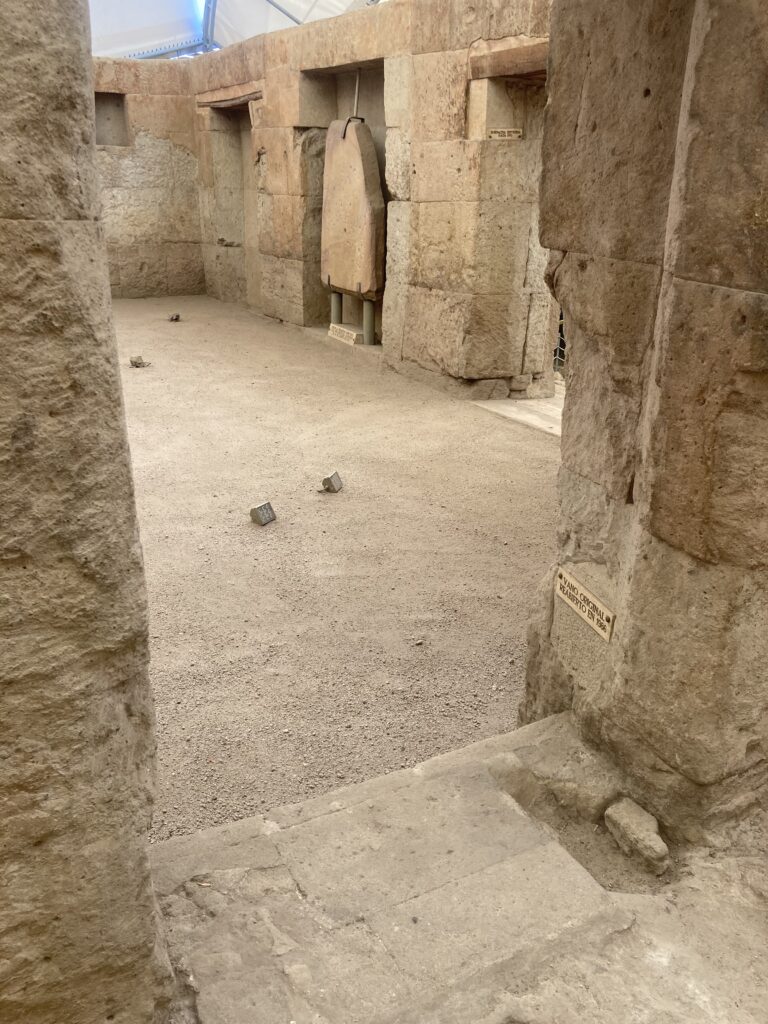
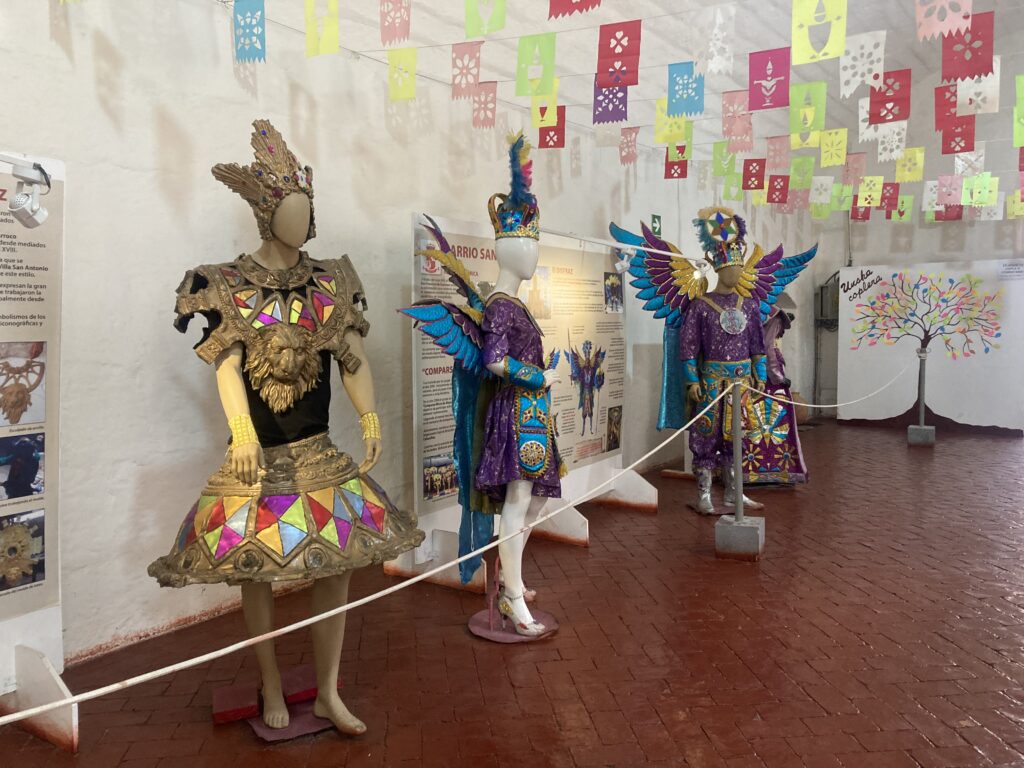
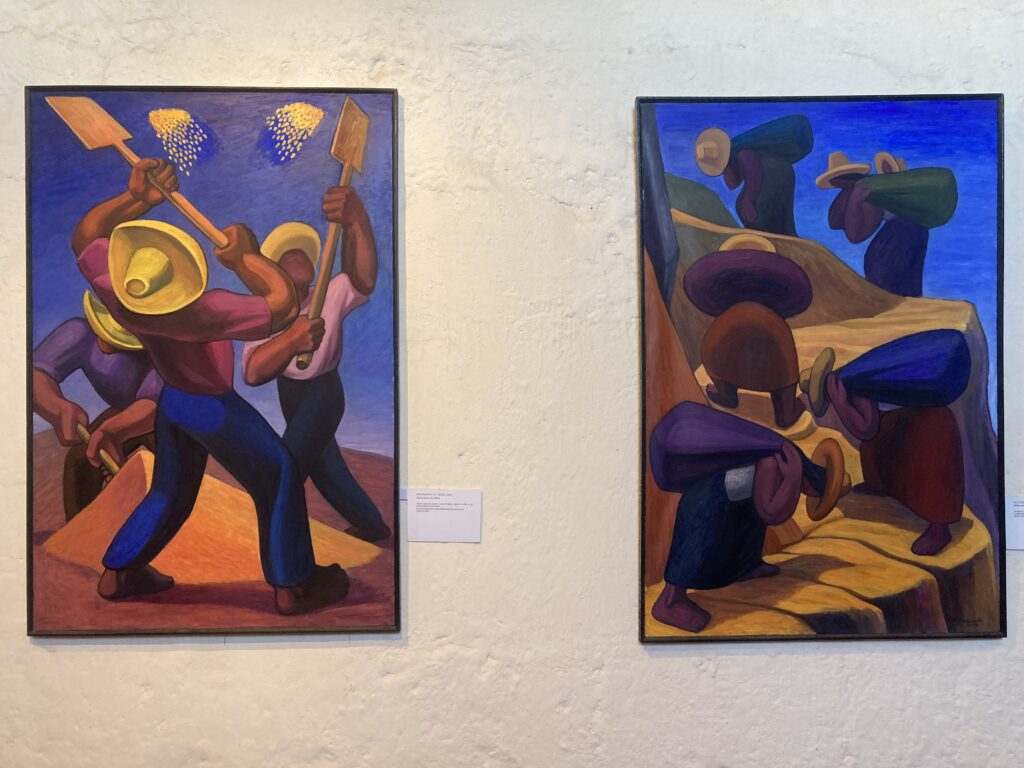
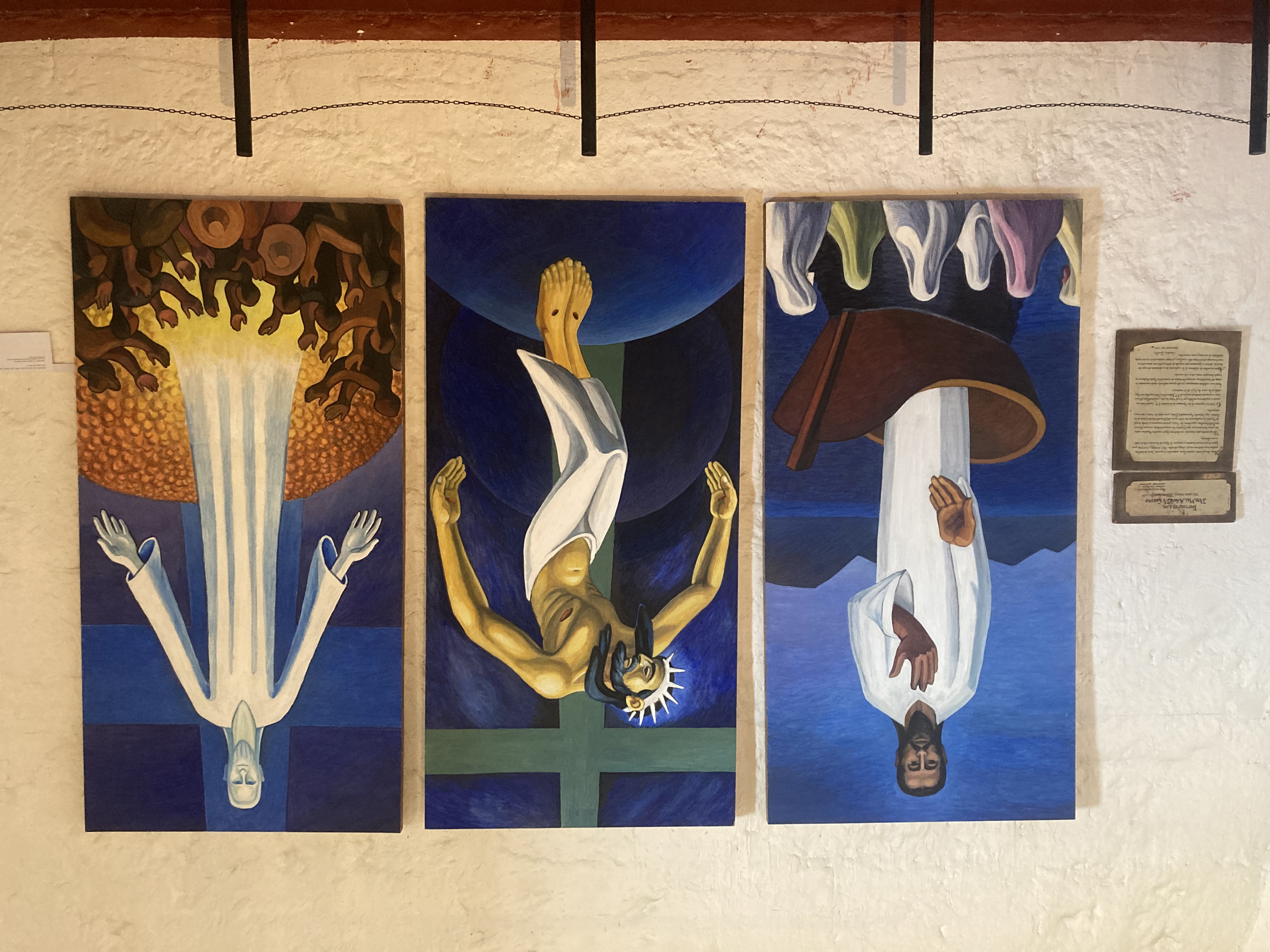
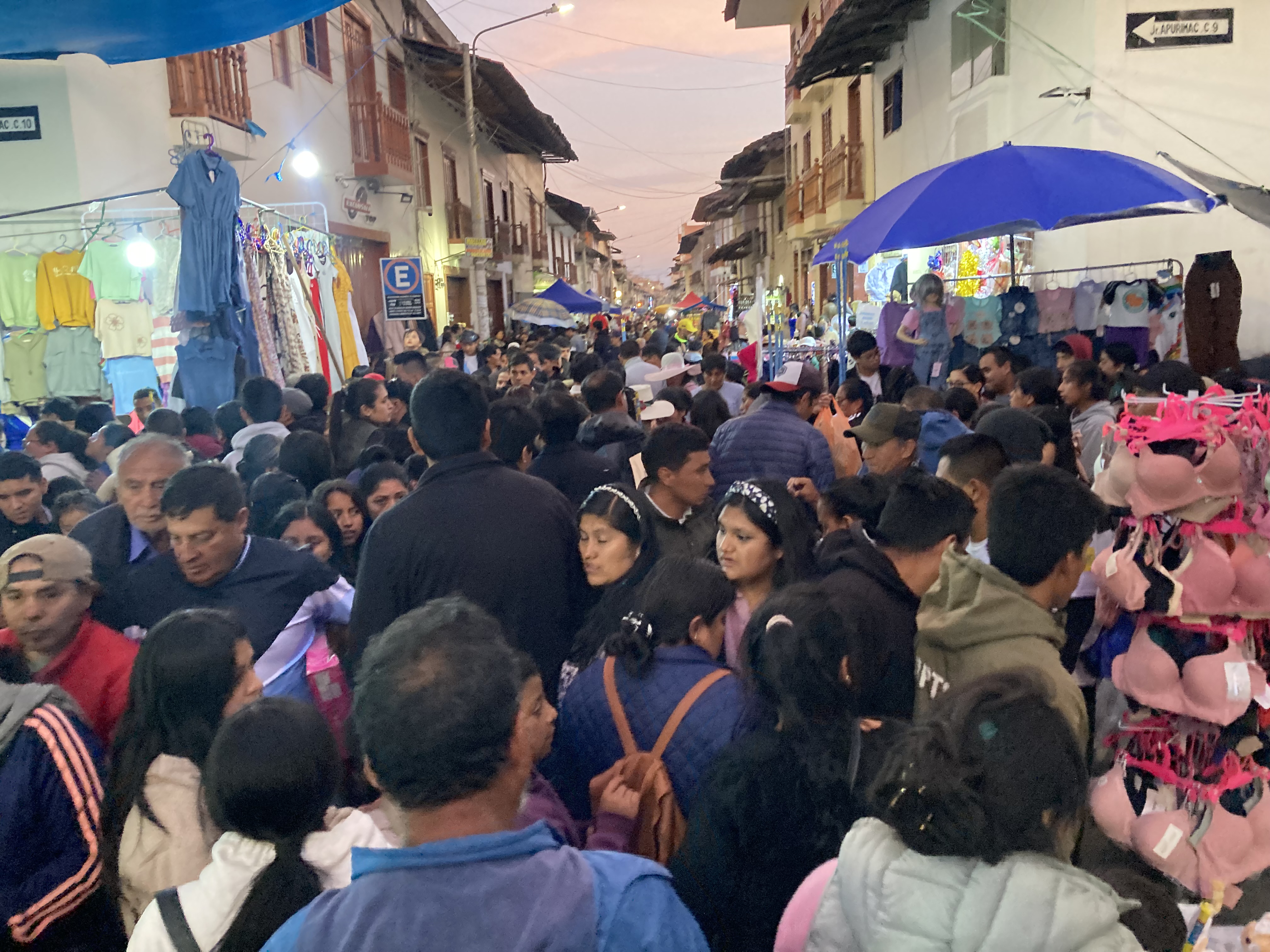
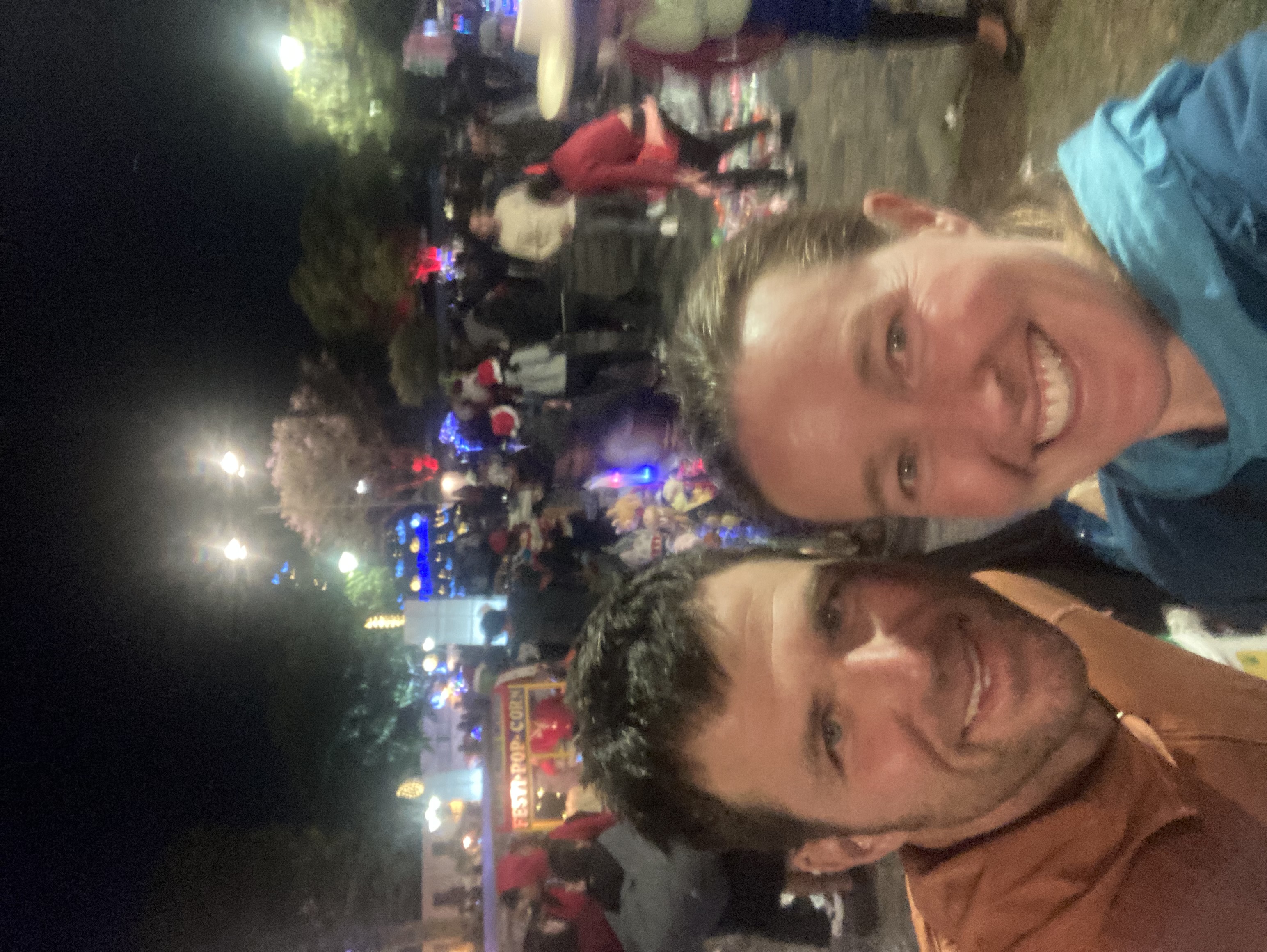
Mosses & plants are sold on the street for create-your-own nativity scenes. A variety of figurines for sale used to created nativity sets. Mangers for sale on the street to make nativity scenes. People lined up to take family photos with the several nativities in the main central square In this nativity, sponsored by the local gas company (yellow & blue gas canisters), everyone is wearing the traditional sombreros. Streets were packed day and night with Christmas shoppersOn the streets we could find *anything* we could have wanted. Here a boy sells fish in baggies. Vehicles were even turned into shops – here cheese & chocolate (in the basket) are sold.Some of the churches of CajamarcaView of Cajamarca, Peru from Santa Apolina Hill which was used by the Chavin people as early as 1200 BC. One of interesting landmarks of Cajamarca is the El Cuarto del Rescate (Ransom Room) which is considered to be the place where the Inca empire came to an end with the capture of Inca Emperor Atahualpa and eventual execution. Culture was strong in Cajamarca – on the left shows costumes typical of Carnival (celebration before Lent) and a local artist who depicted the struggles of local people as well as Christian art. Christmas Eve in Cajamarca – the streets were absolutely packed & the Plaza de Armas was the place to celebrate with food, light up trinkets, & pictures with Santa or the Grinch 🙂
After the Navidad holiday we were able to reconnect with the bike shop and apparently none of the shops that were contacted carry our specific hub – this was no surprise because the hub was pretty difficult to find in the US as well. So now we had three options:
Order the part from the US and have it shipped or muled (when someone traveling here brings it) to Peru. This option would take upwards of a month or more.
Keep riding on the broken hub – we put this question to “Bicycle Travelers” on Facebook to see if anyone had similar experience. We quickly had a ton of responses – some helpful and many judgemental of our situation without seeking to first understand. After we had rapidly received over 100 comments Patricia turned off commenting. A few people had been in similar situations and rode it out offering helpful advice. One commenter said, based on the image we had posted, there maybe other cracks in the hub already happening which had us carefully inspect the rest of the hub. We did actually find another hairline fracture in the hub!
Build a completely new wheel with the parts available locally – this would have us build a 32 spoke, instead of 36, wheel requiring a new rim, hub, and spokes. A 32-spoke wheel is weaker and less forgiving if a spoke brakes – it doesn’t seem like a big deal but when the bike plus rider is around 300 lbs an extra strong wheel helps.
We had the Christmas holiday to consider our options and based on the areas we planned to ride, decided to have a completely new wheel built with 32 spokes.
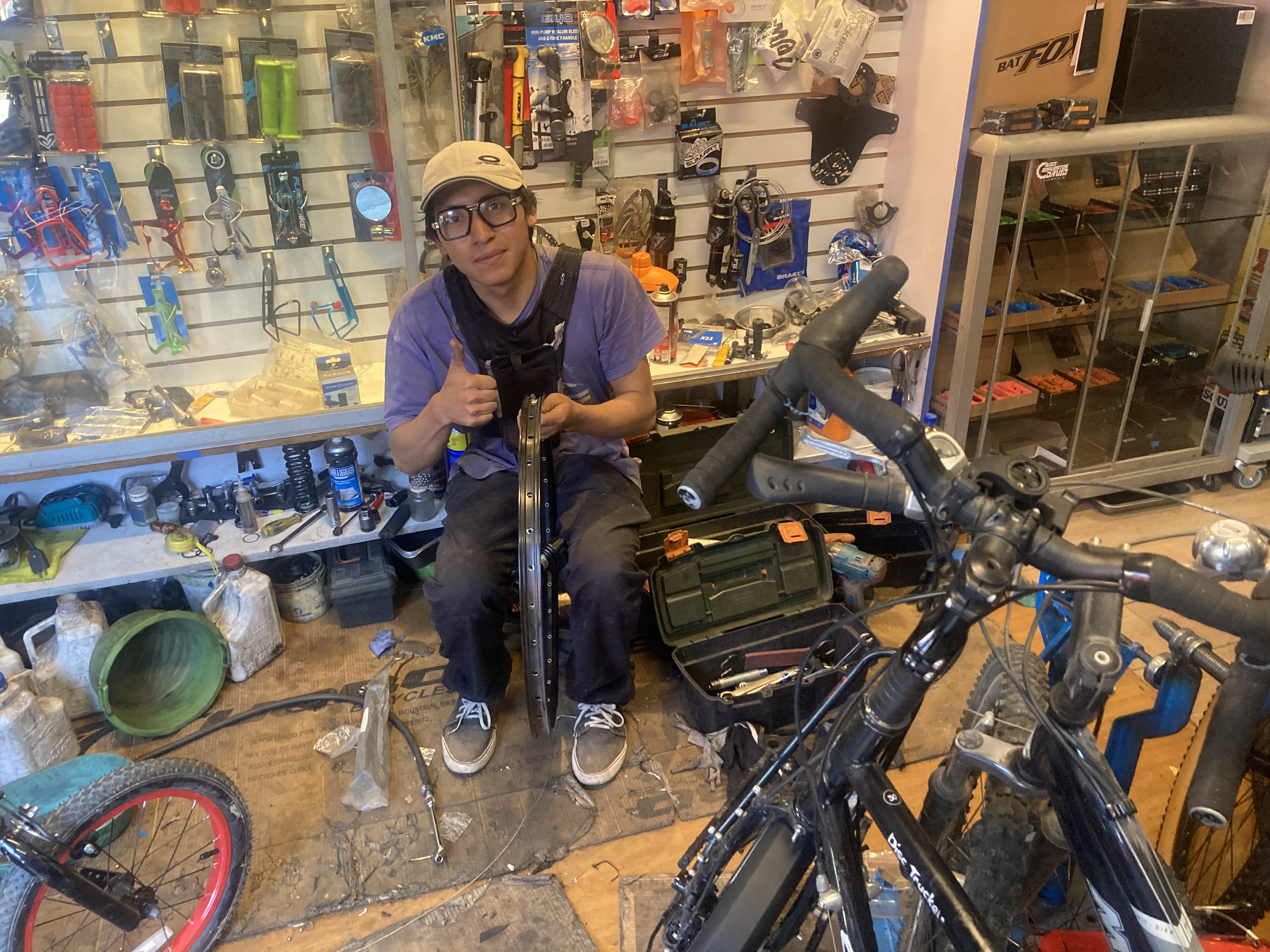
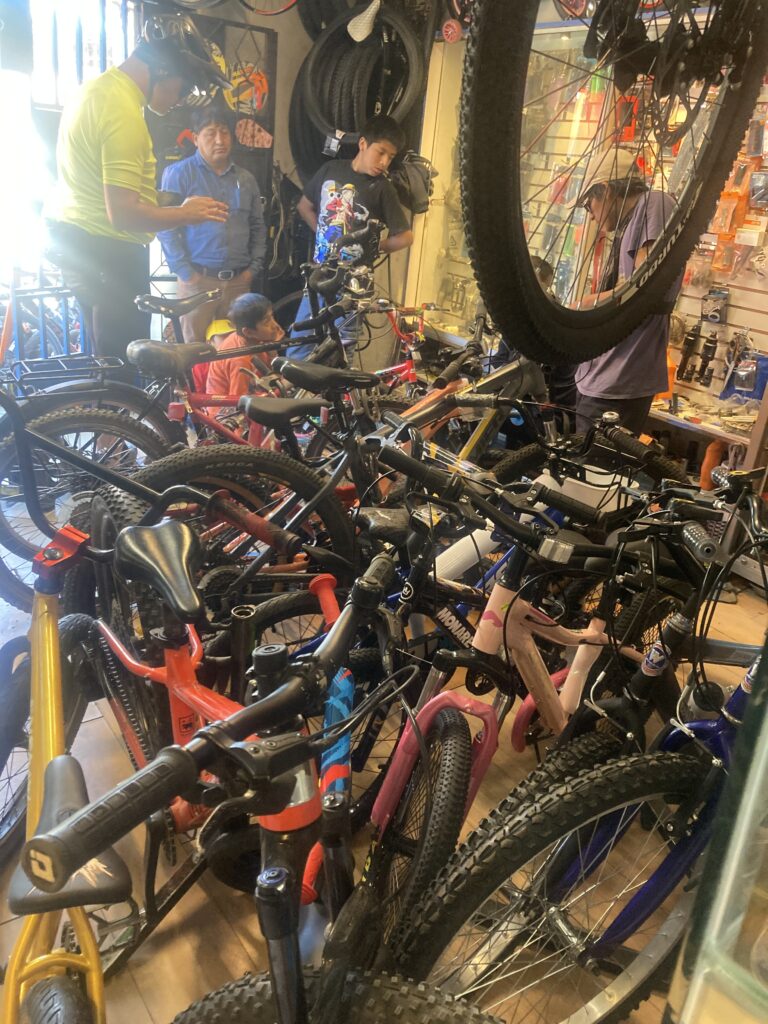
This is Andreas, our wheel builder – working in the midst of a chaotic bicycle shopThis is the bicycle shop – there is almost no room to work but these guys are so good that people wait on the sidewalk for their help. Patricia’s bike is at the front of the pile. The guy in the yellow shirt is buying gloves and paying for them with his phone (super common in Peru), the family of 4 is waiting to have the brakes fixed on the tiny red bicycle and Andres in the purple shirt is starting our new wheel.
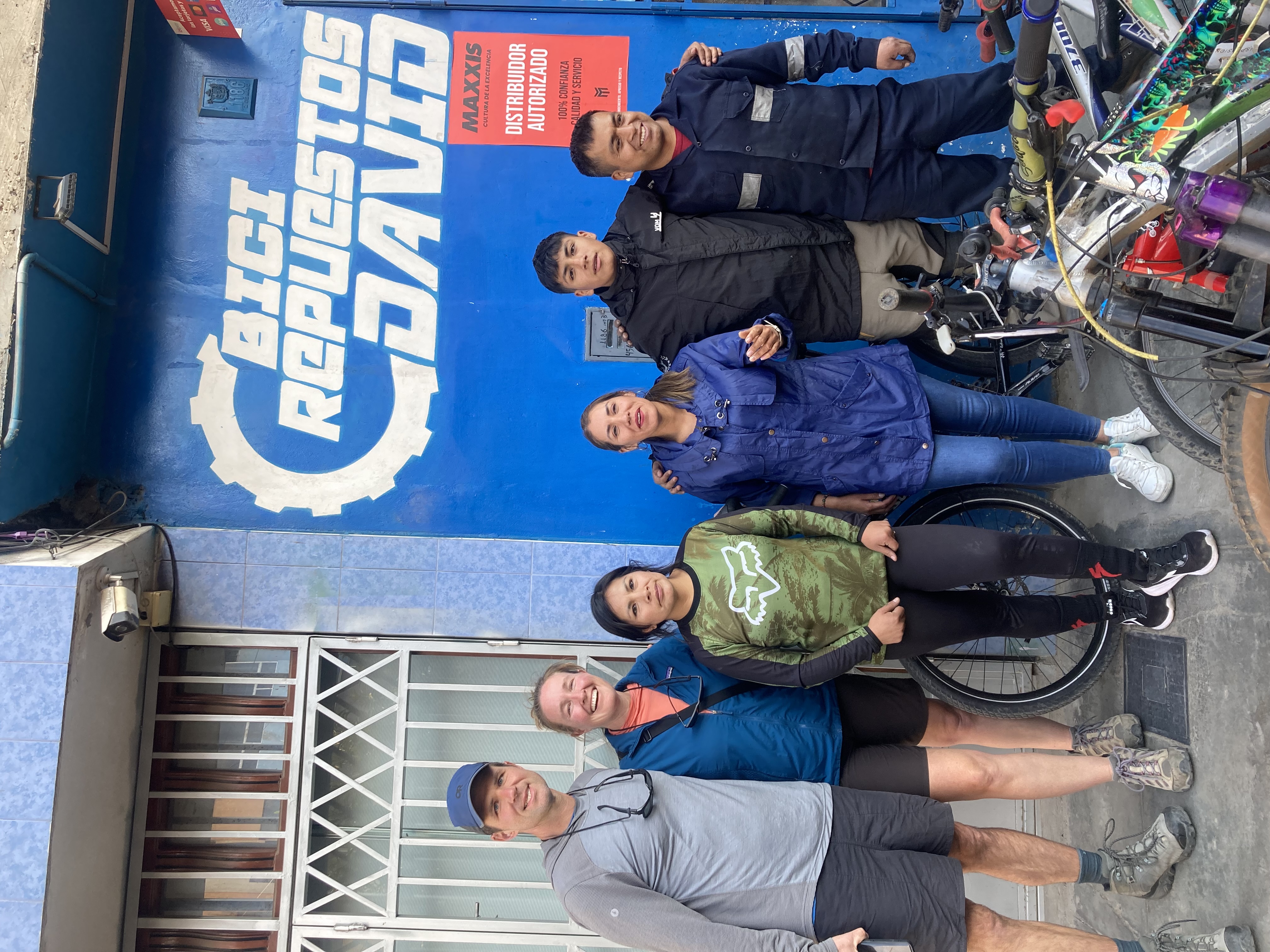
When we went back to pick up the bicycle they were super excited to have us & they had an English speaking friend stay around to help translate. They even wanted pictures of us in front of their bicycle shop. David & his wife, Flor, certainly reminded us of how much good humanity is in the world – they showed us so much hospitality, not only with the bicycle but also invited us for Christmas dinner. We didn’t end up taking them up on the Christmas dinner offer because it was from 10:30pm to midnight!
The Bici David crew wanted a picture with us – David, Flor & their bike racing son are on the right. In the green is their English speaking friend, Macarena. The bicycles in the foreground are locked together in the street – this is a common way of identifying a bicycle shop in Latin America.
We are continuing our journey south tomorrow headed toward the remote Canon del Pato hoping the rain continues to be mild. We knew we were coming here in the rainy season and so far we’ve really been quite lucky – current forecasts are showing a strengthening La Nina in the Pacific which would certainly be to our benefit with less rain in the central and southern Andes of Peru. If the rain becomes miserable (remember misery is optional!) we will head toward the coast where it is much drier. Dustin might secretly be hoping for rain because there are good surfing opportunities on the Peruvian coast 😉
31 thoughts on “Day 446 – 462: San Ignacio, Peru to Cajamarca, Peru”
Crazy cool! All of it!
Thanks Sandy! Glad you’re enjoying the blog 🙂
Amazing trip! Loved reading your blog as always
Dennis and Irene
Thanks Dennis & Irene!
Enjoy your own South American adventures 🙂
Happy Holidays and New Year to you both.
Concerning broke bikes, good thing you are both young, patient/ patience and flexible. LOL.
Young (at heart?). Patient. Flexible. There really is so much truth to that statement 🙂
You guys are awesome AND an inspiration to us all. Safe travels and write when you can!! – Jack & Janet from the early beginnings of your travels (Great Basin Nevada)
Great to hear from you – glad you’re still following along! Great Basin was not a planned part of the trip (we were supposed to go down California) – we’re so happy to have experienced GB and met wonderful people like you!
What an amazing adventure. Continue to stay safe and have a happy and healthy holiday season.
Thanks for your continued prayers and encouragement!
I am sitting on the couch being an armchair traveler! Enjoying your tales and pictures of your adventure. . Your travelogue makes me feel that I am riding with you! While the thermometer here says, “-37 below zero Fahrenheit!” a welcome read of two sojourners! Soon will you be in Chile? Remember my nephew and family live there.
Whoa – its certainly been a cold snap in Fairbanks!
Chile likely won’t be until October 2026 but thanks for the reminder…always great to have contacts if anything happens.
Fantastic! Thank you for sharing all of this!
Thanks Ron & Debbie!
Wow! I really enjoyed this section of your trip with whe visits to the ancient sites and the spectacular views. So beautiful and amazing! Thank you for sharing. May you continue to have great travels and meet wonderful people.
Still meeting wonderful people – our faith in humanity is strong!
Merry Christmas and joy to you in the year ahead. May the adventures be of your choosing.
Thank you for the photos and narrative!
Hoping to keep choosing our adventures!
Merry Christmas!
Exciting! Interesting! Admirable! Memorable! May your new wheel provide the support to carry you on the roads ahead.
So far so good on the new wheel!! Fingers crossed 🙂
Rita and I are amazed at your trip, especially in Peru. 2,900 year old towns, beautiful churches, and friendly people.
Handling the broken hub was a huge challenge in my book.
(We’ll be in Peru in May, 2026.)
Bob & Rita Aksamit
We’ll just miss you – we’re leaving Peru in March and hope to return in August.
You’ll LOVE it – Peru has been amazing!
This journey, and the history involved, are fascinating! I am Googling some of the places you are in, to find out how old they are. I think it’s so cool to stand where others stood over a thousand years ago. I enjoy seeing the ruins of the places as well.
You two must have nerves of steel to do all that you have had to do on this journey. Our prayers continue to be with you for safety and protection.
Nerves of steel is one way to put it 😉
You’re reporting is incredible We’ve learned so much. Love getting your updates.
Thanks for the comment – glad you are enjoying our “labor of love” 🙂
Love following your journey and seeing the beautiful places and people you are experiencing! Thankful for your “share” and wishing you both the best in the new year!
Thanks Sam & Mary!
Seems like you are in the land of Oz – instead of “lions and tigers and bears. oh my!” it’s “dangerous roads, difficult climbs and heat/humidity!”
However, your pictures of the scenery indicate you have found the Emerald City!
Would have been nice if the Wizard had fixed your bike…
Crazy cool! All of it!
Thanks Sandy! Glad you’re enjoying the blog 🙂
Amazing trip! Loved reading your blog as always
Dennis and Irene
Thanks Dennis & Irene!
Enjoy your own South American adventures 🙂
Happy Holidays and New Year to you both.
Concerning broke bikes, good thing you are both young, patient/ patience and flexible. LOL.
Young (at heart?). Patient. Flexible. There really is so much truth to that statement 🙂
You guys are awesome AND an inspiration to us all. Safe travels and write when you can!! – Jack & Janet from the early beginnings of your travels (Great Basin Nevada)
Great to hear from you – glad you’re still following along! Great Basin was not a planned part of the trip (we were supposed to go down California) – we’re so happy to have experienced GB and met wonderful people like you!
What an amazing adventure. Continue to stay safe and have a happy and healthy holiday season.
Thanks for your continued prayers and encouragement!
I am sitting on the couch being an armchair traveler! Enjoying your tales and pictures of your adventure. . Your travelogue makes me feel that I am riding with you! While the thermometer here says, “-37 below zero Fahrenheit!” a welcome read of two sojourners! Soon will you be in Chile? Remember my nephew and family live there.
Whoa – its certainly been a cold snap in Fairbanks!
Chile likely won’t be until October 2026 but thanks for the reminder…always great to have contacts if anything happens.
Fantastic! Thank you for sharing all of this!
Thanks Ron & Debbie!
Wow! I really enjoyed this section of your trip with whe visits to the ancient sites and the spectacular views. So beautiful and amazing! Thank you for sharing. May you continue to have great travels and meet wonderful people.
Still meeting wonderful people – our faith in humanity is strong!
Merry Christmas and joy to you in the year ahead. May the adventures be of your choosing.
Thank you for the photos and narrative!
Hoping to keep choosing our adventures!
Merry Christmas!
Exciting! Interesting! Admirable! Memorable! May your new wheel provide the support to carry you on the roads ahead.
So far so good on the new wheel!! Fingers crossed 🙂
Rita and I are amazed at your trip, especially in Peru. 2,900 year old towns, beautiful churches, and friendly people.
Handling the broken hub was a huge challenge in my book.
(We’ll be in Peru in May, 2026.)
Bob & Rita Aksamit
We’ll just miss you – we’re leaving Peru in March and hope to return in August.
You’ll LOVE it – Peru has been amazing!
This journey, and the history involved, are fascinating! I am Googling some of the places you are in, to find out how old they are. I think it’s so cool to stand where others stood over a thousand years ago. I enjoy seeing the ruins of the places as well.
You two must have nerves of steel to do all that you have had to do on this journey. Our prayers continue to be with you for safety and protection.
Nerves of steel is one way to put it 😉
You’re reporting is incredible We’ve learned so much. Love getting your updates.
Thanks for the comment – glad you are enjoying our “labor of love” 🙂
Love following your journey and seeing the beautiful places and people you are experiencing! Thankful for your “share” and wishing you both the best in the new year!
Thanks Sam & Mary!
Seems like you are in the land of Oz – instead of “lions and tigers and bears. oh my!” it’s “dangerous roads, difficult climbs and heat/humidity!”
However, your pictures of the scenery indicate you have found the Emerald City!
Would have been nice if the Wizard had fixed your bike…
Carry On!
Jeanette
We’ll keep carrying on 🙂
Thanks for the comment!
We are carrying on carrying on 🙂